
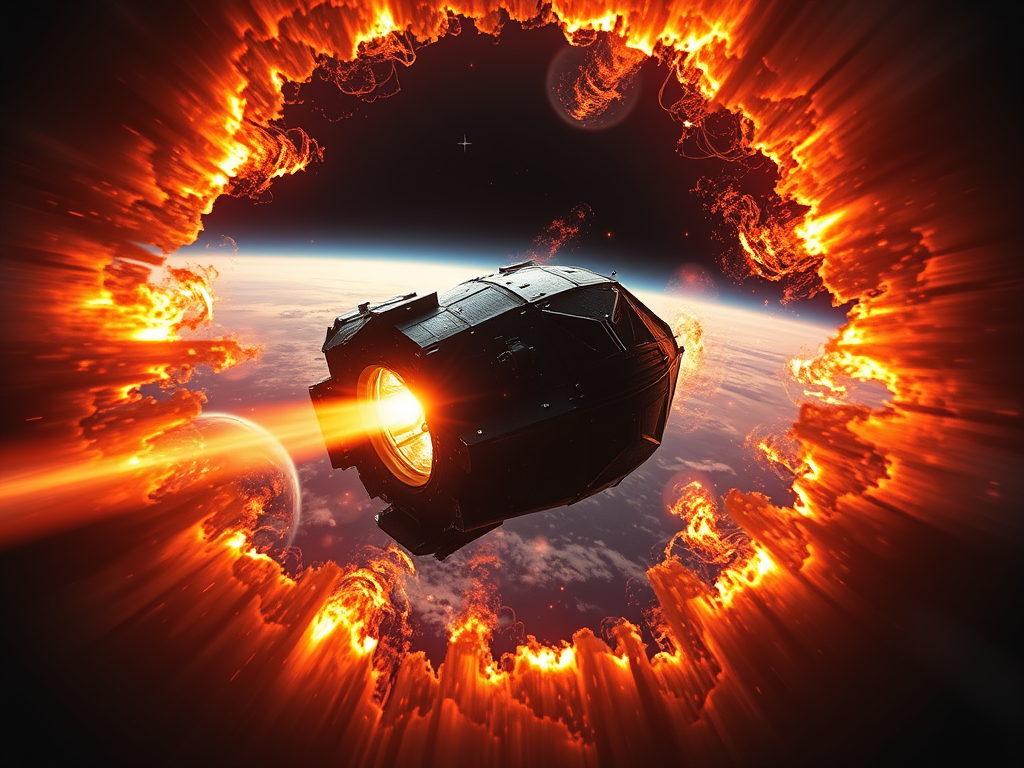
The return of humanity to the Moon is no longer a distant dream of science fiction; it is a meticulously engineered reality currently sitting on the launchpad. As the Artemis II mission prepares to carry four astronauts—Reid Wiseman, Victor Glover, Christina Koch, and Jeremy Hansen—around the lunar far side, the stakes have never been higher. Unlike the uncrewed Artemis I mission, which tested the hardware in the cold vacuum of space, Artemis II introduces the most unpredictable variable in exploration: the human element.
To keep this crew safe while traveling farther from Earth than any human in history, NASA and its international partners must navigate a gauntlet of NASA moon mission obstacles. From the blistering heat of reentry to the invisible daggers of deep-space radiation, the technical hurdles are immense. This article explores the top 10 technical challenges that the crew and ground teams must overcome to ensure this historic lunar flyby mission is a success.
1. The “Spalling” Mystery: Reentry Heat Shield Integrity
One of the most pressing Artemis II technical challenges involves the Orion spacecraft’s primary defense against the fiery return to Earth: its heat shield. During the Artemis I mission, the capsule returned from lunar distance at speeds approaching 25,000 miles per hour, creating a plasma trail hotter than the surface of the sun. While the capsule survived, engineers discovered “spalling”—unexpected chunks of the protective Avcoat material had broken off rather than eroding smoothly as planned.
Think of the heat shield like the brake pads on your car. They are designed to wear down to absorb the friction and heat of stopping. However, if those brake pads started cracking and losing large chunks instead of wearing away like chalk, you would be rightly concerned. For Artemis 2 crew safety, NASA has spent years analyzing this phenomenon. The challenge isn’t just about the thickness of the shield, but how gases trapped within the material vent during the intense heat of reentry. Engineers have modified the reentry trajectory to a “lofting” profile to minimize the stress on the shield, ensuring the crew module doesn’t turn into a falling star before it hits the water.
2. Sustaining Life: Orion Spacecraft Life Support Systems
While Artemis I proved the ship could fly, Artemis II must prove it can breathe. The Orion spacecraft life support system, officially known as the Environmental Control and Life Support System (ECLSS), is a complex web of machinery designed to provide pressurized air, clean water, and a livable temperature. One of the most critical hurdles identified during pre-flight testing involved the CO2 scrubbing units and the motor valve circuitry that controls them.
If you’ve ever been in a crowded room with no ventilation, you know how quickly the air feels “heavy.” In a spacecraft, that feeling is lethal. Without a functioning scrubber, the carbon dioxide exhaled by the four astronauts would quickly build up to toxic levels. A failure in the valve electronics could paralyze the entire system. NASA’s challenge has been to “human-rate” these systems, ensuring that every pump, sensor, and circuit has multiple backups. This is essentially building a miniature, self-sustaining ecosystem inside a vessel the size of two large SUVs, where a single leaky valve could mean the difference between a mission and a tragedy.
3. The Invisible Enemy: Deep Space Radiation Protection
Once the crew leaves the protective “bubble” of Earth’s magnetic field, they are exposed to the harsh environment of cislunar space. This is where deep space radiation protection becomes a life-or-death technical requirement. Unlike the International Space Station, which sits safely within the Van Allen belts, Artemis II will face Galactic Cosmic Rays (GCRs) and potential Solar Particle Events (SPEs)—high-energy bursts from the sun that can damage human DNA and fry sensitive electronics.
To visualize the danger, imagine walking through a silent, invisible hailstone storm where the stones pass right through your body. To combat this, the Orion capsule features a specialized “storm shelter” created by rearranging cargo and water supplies to create a dense barrier. The technical challenge lies in balancing the weight of this shielding with the rocket’s lift capacity. Every pound of lead or polyethylene added for protection is a pound of fuel or supplies lost. Engineers must use sophisticated modeling to ensure that the Artemis 2 crew safety is maintained without making the spacecraft too heavy to leave Earth’s orbit.
4. The Giant’s First Steps: SLS Rocket Performance
The Space Launch System (SLS) is the most powerful rocket ever built, but it is also a complex beast of “heritage” and “new” technology. A significant hurdle for the mission is the perfect execution of the SLS rocket performance during the initial ascent. This involves the flawless ignition of four RS-25 engines (originally from the Space Shuttle) and two massive solid rocket boosters.
The technical challenge here is often found in the plumbing. During “wet dress rehearsals,” NASA has historically struggled with liquid hydrogen leaks. Hydrogen is the smallest molecule in the universe and is notoriously difficult to contain, especially when chilled to -423 degrees Fahrenheit. If the SLS has even a pinhole leak, the mission is scrubbed. The ground teams must manage the “cryogenic transition”—the process of loading super-cold fuel into a warm rocket—without causing the metal to crack or the seals to fail. For the Artemis II crew, the first eight minutes of flight will be a test of whether decades of engineering can finally handle the sheer power of three train-loads of fuel exploding in a controlled direction.
5. Navigating the Void: Free Return Trajectory Precision
Artemis II will not orbit the Moon in a traditional sense; instead, it will utilize a “hybrid free return trajectory.” This is a masterpiece of orbital mechanics where the spacecraft uses the Moon’s gravity as a natural slingshot to pull it back toward Earth. The technical challenge is the margin for error: if the engine burn that sends them toward the Moon (the Trans-Lunar Injection) is off by even a fraction of a percent, the crew could either miss the Moon entirely or, worse, be set on a path that never returns to Earth.
Navigation in deep space is like trying to hit a moving bullseye while standing on a spinning merry-go-round. The crew must rely on space navigation systems that use “optical navigation,” where the spacecraft takes photos of the Earth and Moon to triangulate its position. While GPS works on Earth, it is useless 240,000 miles away. The technical hurdle is ensuring that the onboard computers can calculate these complex gravitational maneuvers in real-time, allowing the crew to make “mid-course corrections” with the Service Module’s engines to stay on the invisible “highway” back home.
6. Staying Connected: The Overburdened Deep Space Network
Communication is the lifeline of any space mission, but for Artemis II, the deep space communication network is under unprecedented strain. NASA’s Deep Space Network (DSN)—a series of giant radio dishes in California, Spain, and Australia—is the only way to talk to Orion once it leaves Earth’s orbit. However, many of these dishes are decades old, and one of the largest antennas at the Goldstone complex recently suffered structural damage.
The technical challenge is bandwidth. On Artemis II, the crew wants to send back high-definition video and massive amounts of telemetry data, but they are competing for time with the James Webb Space Telescope and dozens of other robotic missions. To overcome this, Orion is testing laser communication technology (optical comms). Imagine upgrading from an old dial-up modem to a fiber-optic cable; it allows for much more data, but the laser beam must be pointed with surgical precision across thousands of miles. If the spacecraft wobbles even slightly, the “call” is dropped, leaving the crew in a terrifying silence.
7. The Living Room in the Sky: Spacecraft Habitability
Spending 10 days in a confined space with three other people is as much a technical challenge as it is a psychological one. The Orion capsule provides about 330 cubic feet of living space—roughly the size of two minivans. Within this small volume, the crew must eat, sleep, exercise, and use the “waste management system” (the space toilet).
The technical hurdle here is the “human-machine interface.” Every switch, screen, and storage locker must be accessible in microgravity. Engineers have to ensure that the air circulation is perfect so that pockets of carbon dioxide don’t form around a sleeping astronaut’s head. Furthermore, the “habitability” includes the noise levels. Constant humming from pumps and fans can lead to fatigue and errors. Ensuring the crew remains sharp and healthy in such a cramped, noisy environment is a fundamental requirement for the human spaceflight challenges inherent in cislunar travel.
8. The Great Escape: Launch Abort System Reliability
Safety in spaceflight is about having a “Plan B” for the “Plan A.” For the Artemis II crew, that Plan B is the Launch Abort System (LAS). This is the pointed tower sitting on top of the Orion capsule during launch. If the SLS rocket begins to fail on the pad or during the climb to orbit, the LAS must ignite its solid-fuel motors in milliseconds to pull the crew away from the exploding rocket.
The technical challenge lies in the battery reliability and the electrical systems that trigger the abort. During recent tests, NASA found deficiencies in the performance of the electrical systems within the abort tower. If the batteries can’t provide the “punch” needed to fire the motors, the system is useless. Engineers must guarantee that these components can sit on a vibrating, freezing rocket for hours and still function perfectly in a split-second emergency. It’s the ultimate parachute—one that you hope never to use, but one that must be 100% reliable.
9. The Skip Reentry: Managing Atmospheric Friction
Coming home from the Moon isn’t a straight dive; it’s a “skip.” To manage the incredible heat and G-forces of returning to Earth, Orion will perform a skip reentry maneuver. The capsule will hit the upper atmosphere, “skip” back out into space briefly to bleed off speed and heat, and then dive back in for the final descent.
Think of skipping a flat stone across a pond. If the angle is too steep, the stone sinks (the capsule burns up); if the angle is too shallow, the stone flies off into the woods (the capsule bounces into deep space). The technical challenge is the guidance system’s ability to control the capsule’s “lift.” By rolling the capsule, astronauts can change the direction of its aerodynamic lift, steering themselves toward the recovery zone in the Pacific Ocean. This requires incredibly precise timing and hardware that can withstand the rapid transition from the cold of space to the 5,000-degree heat of atmospheric friction—twice.
10. The Final Mile: Recovery and Splashdown Logistics
The mission isn’t over when the parachutes open. The final technical challenge is the splashdown recovery in the Pacific Ocean. Once the Orion capsule hits the water, it must remain upright (aided by uprighting bags) and maintain a stable environment until the U.S. Navy arrives.
The hurdle here is the “post-landing” period. After 10 days in microgravity, the astronauts’ bodies will be weak, and they will likely suffer from “space sickness” as they re-adjust to Earth’s gravity. The technical systems must keep the capsule cool in the tropical sun while ensuring that toxic fumes from the propulsion system don’t enter the cabin. Meanwhile, the recovery teams must approach a bobbing, 20,000-pound spacecraft in high seas and safely extract the crew. This “final mile” involves a complex dance between NASA divers, Navy ships, and the spacecraft’s own remaining power systems, ensuring the crew’s first breath of Earth air is a safe one.
Further Reading
- “Apollo 8: The Thrilling Story of the First Mission to the Moon” by Jeffrey Kluger
- “The Apollo Murders” (Fiction/Technical realism) by Chris Hadfield
- “Handprints on Hubble: An Astronaut’s Story of Invention and Determination” by Kathryn D. Sullivan
“Marketing the Moon: The Inner Story of the Apollo Program” by David Meerman Scott and Richard Jurek




Leave a Reply