
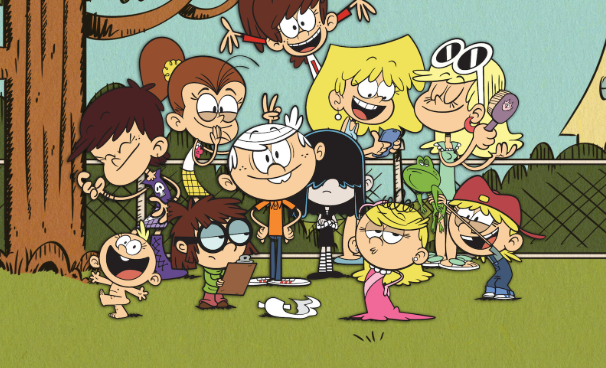
In the world of modern animation, few shows have captured the chaotic energy of a large family quite like The Loud House. Debuting on Nickelodeon in 2016, the series follows the life of Lincoln Loud, an 11-year-old boy navigating the everyday insanity of living with ten sisters—each with a distinct, often clashing, personality. Created by Chris Savino, the show stood out immediately for its heart, its humor, and its unique visual identity.
As of March 2026, The Loud House franchise has grown into a massive multi-media property, spanning over eight seasons, a successful spin-off, a Netflix movie, and even a live-action television series. It has become a cornerstone of Nickelodeon history, often rivaling the ratings of titans like SpongeBob SquarePants. Whether you are a fan of the “Loud” siblings or an aspiring animator curious about its success, here are ten fascinating facts about the show that redefined family sitcoms for a new generation.
1. The Original Concept Featured a Family of Rabbits
Before it was a show about humans, the Loud family was almost a warren of rabbits. When Chris Savino first pitched the idea to Nickelodeon, he envisioned Lincoln as a rabbit with 25 sisters. The logic was simple: rabbits are known for having large litters, which would naturally explain the overwhelming number of siblings.
However, a development executive at Nickelodeon suggested that the show would be more relatable and grounded if the characters were human. Savino agreed, scaling the number of sisters down from 25 to 10 to make them more manageable and distinct. This change was pivotal for the Loud House characters, as it allowed the writers to explore human dynamics, sibling rivalries, and the emotional complexities of a “big family” in a way that resonated with kids worldwide. The rabbit concept wasn’t entirely lost, though; it has been referenced in several “meta” jokes and dream sequences throughout the series, serving as a fun nod to the show’s animation history.
2. Breaking Records by Toppling “SpongeBob”
For nearly two decades, SpongeBob SquarePants was the undisputed king of Nickelodeon ratings. However, in its first year, The Loud House did the unthinkable: it surpassed SpongeBob in the ratings for several weeks. This was a massive achievement for a new “Nicktoon,” signaling a shift in what audiences were looking for—grounded, character-driven stories over surrealist humor.
The success of the Loud House franchise proved that there was a deep hunger for stories about family life. By focusing on the “survival” aspect of being the middle child, the show tapped into a universal experience. This ratings juggernaut led to the show being renewed repeatedly, and as of 2026, it remains one of the longest-running animated series on the network. For a beginner to the series, understanding this impact is key; it isn’t just another cartoon; it is a cultural pillar that revitalized traditional family sitcom storytelling in an animated format.
3. A Visual Style Inspired by Classic Sunday Comics
One of the first things viewers notice about the show is its distinct look. The animation style of The Loud House is a love letter to the “Sunday Funnies”—classic newspaper comic strips like Peanuts, Beetle Bailey, and Hagar the Horrible. The characters have thick outlines, and the backgrounds often feature “half-tone” dots and muted colors that mimic the feel of newsprint.
This aesthetic choice was intentional to make the show feel timeless and nostalgic. By using a comic book layout—often utilizing split screens and “action bubbles”—the show creates a fast-paced, energetic vibe that mirrors the chaos of the household. This visual world building also makes the show feel “scannable” and easy on the eyes, which contributed to its immediate popularity. It’s a rare example of a modern show using digital animation to pay homage to a “low-tech” medium, bridging the gap between old-school art and new-school technology.
4. The Real-Life Inspiration Behind the “Loud” Name
The name “Loud” isn’t just a perfect descriptor for a house with eleven kids; it is rooted in the creator’s personal life. Chris Savino grew up in a family with ten children, and many of the early episodes were based on his actual experiences growing up in a crowded house. The “Loud” surname was chosen because it captured the auditory reality of his childhood.
Furthermore, the names of the sisters—Lori, Leni, Luna, Luan, Lynn, Lucy, Lana, Lola, Lisa, and Lily—all share the “L” initial, which has become a hallmark of the series. This naming convention helps build the “brand” of the family, making the Loud siblings feel like a cohesive unit even when they are at each other’s throats. For intermediate fans, knowing that the show’s “chaos” comes from a place of reality adds a layer of authenticity to the writing. It’s not just “cartoon logic”; it’s a reflection of the beautiful, messy reality of large-scale sibling dynamics.
5. A Landmark Moment for LGBTQ+ Representation
The Loud House made headlines and earned praise for being one of the first major animated shows on a children’s network to feature a married same-sex couple. Howard and Harold McBride, the parents of Lincoln’s best friend Clyde, were introduced in the episode “Overnight Success” without fanfare or a “special lesson” narrative. They were simply portrayed as loving, slightly overprotective parents.
This was a significant moment for inclusive storytelling in children’s media. The show treated the McBrides with the same normalcy as any other characters, focusing on their personalities rather than their orientation. This approach garnered the show a GLAAD Media Award nomination and solidified its reputation as a progressive, modern series. For many families, this representation made the show a “go-to” resource for teaching children about the diversity of real-world families, proving that the Loud House franchise is as socially conscious as it is funny.
6. The Successful Spin-Off: “The Casagrandes”
The world of the show was so rich that it spawned a highly successful spin-off titled The Casagrandes. Focusing on Lincoln’s friend Ronnie Anne Santiago and her multi-generational Mexican-American family in Great Lakes City, the spin-off allowed Nickelodeon to explore a different cultural perspective while staying within the “Loud” universe.
The Casagrandes was praised for its authentic portrayal of Hispanic culture, food, and traditions. It ran for three seasons and concluded with a feature-length movie on Netflix in 2024. The success of this spin-off demonstrated the “evergreen” potential of the Loud House franchise; it proved that the formula of “chaotic family life” could be adapted to different cultures and settings. As of 2026, characters from both shows frequently crossover, creating a shared universe that keeps the fans of both series engaged and invested in the broader Loud House lore.
7. The Leap into Live-Action
In 2021, the franchise took a bold step by releasing a live-action movie, A Loud House Christmas. The film was so successful that it led to a full-fledged live-action series titled The Really Loud House, which premiered in 2022. Seeing animated characters “come to life” is always a risk, but the casting—particularly Wolfgang Schaeffer as Lincoln—was widely praised for capturing the essence of the cartoons.
The live-action show uses a mix of practical sets and “cartoon-style” editing to maintain the frantic energy of the original. This transition is a rare feat in the animation industry; usually, shows move from live-action to animation, not the other way around. By 2026, The Really Loud House has established itself as a separate but parallel pillar of the franchise, appealing to an audience that enjoys the “Disney Channel” style of live-action sitcoms while keeping the core DNA of the Loud House siblings intact.
8. Each Sister Represents a Distinct Archetype
A major reason for the show’s longevity is the “ensemble” nature of the cast. The writers utilized character archetypes to ensure that every viewer could find someone to relate to. You have the “Bossy Elder” (Lori), the “Fashionista” (Leni), the “Rockstar” (Luna), the “Comedian” (Luan), the “Athlete” (Lynn), the “Goth” (Lucy), the “Tomboy” (Lana), the “Pageant Queen” (Lola), the “Genius” (Lisa), and the “Baby” (Lily).
However, as the series progressed, these archetypes were broken down. Lisa Loud, for instance, isn’t just a “smart kid”; she often struggles with social cues and the ethical implications of her experiments. Leni Loud, while “ditzy,” is shown to have immense emotional intelligence and kindness. This deep character development is what keeps the show interesting at an “intermediate level.” The characters aren’t static; they age, they change their interests, and their relationships with Lincoln evolve, making the Loud House episodes feel like chapters in a real life story.
9. The Importance of “The Man with the Plan”
Lincoln Loud’s central character trait is that he is “the man with the plan.” Because he is outnumbered 10 to 1, he often has to use elaborate schemes, “Rube Goldberg” devices, or psychological manipulation to get what he wants (like the remote control or the last slice of pizza).
This “plan-making” serves as the primary engine for the show’s storytelling techniques. Most episodes follow a “plan gone wrong” structure, where Lincoln’s attempts to control the chaos only make it worse. However, the resolution almost always involves Lincoln realizing that his family is more important than his individual goal. This “11th-grade level” theme of individual vs. collective is what gives the show its heart. It teaches children that while life in a big family requires strategy, it ultimately functions on compromise and unconditional love.
10. A Global Phenomenon and “Nicktoons” Legacy
As of 2026, The Loud House is broadcast in over 80 countries and translated into dozens of languages. Its themes of family, sibling rivalry, and “finding your voice” are universal. The show has won multiple Daytime Emmy Awards and has become a staple of Nickelodeon’s global branding.
The show’s legacy is that it proved “traditional” animation (2D style) still has massive power in a world dominated by 3D CGI. It paved the way for other character-driven shows and showed that you don’t need magic or superheroes to tell a compelling story—sometimes, just trying to get to the bathroom in a house with ten sisters is adventure enough. The Loud House franchise has cemented its place in history as the definitive family cartoon of the 21st century, ensuring that the names of the Loud family will be remembered alongside the Simpsons and the Flintstones.
Further Reading
- The Loud House: Saving the Day by Various Authors (Graphic Novel Series) — A great way to see more “day in the life” stories of the siblings.
- The Art of The Loud House by Nickelodeon — A deep dive into the comic-strip-inspired visual design and character sketches.
- Nickelodeon: 40 Years of Delivering Fun by Jerry Beck — Provides context for where The Loud House fits in the network’s history.
- The Loud House: Family Tree by Various — A guide for younger readers to understand the complex connections and traits of the 11 siblings.




Leave a Reply