
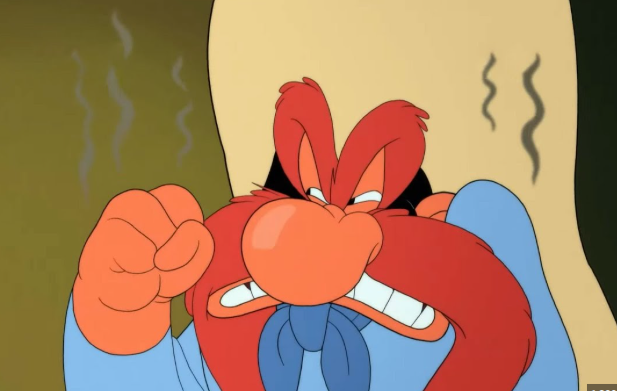
Great Galloping Gallstones! 10 Explosive Facts About Yosemite Sam That Even Die-Hard Fans Missed
When the dust settles on the iconic orange-and-yellow rings of the Looney Tunes title card, few characters command the screen with as much raw, unbridled fury as Yosemite Sam. He is the ultimate “short-tempered” antagonist—a pint-sized powerhouse of rage with a mustache that defies the laws of physics and a pair of six-shooters that seem to have a mind of their own. For decades, Sam has served as the perfect foil to Bugs Bunny’s cool, collected wit, providing the high-stakes friction that made the Golden Age of Animation truly sparkle.
But Yosemite Sam is more than just a loud-mouthed cowboy. He is a masterclass in character design and comedic timing. Created during an era when animation was shifting from simple slapstick to sophisticated character-driven humor, Sam represented a new kind of threat for the “wascally wabbit.” While other villains might be easily outsmarted or merely misunderstood, Sam is a force of pure, distilled persistence. He doesn’t just want to catch Bugs; he wants to conquer the world, win the gold, or rule the seas—and he’s willing to blow himself up a thousand times to do it.
Whether you grew up watching Saturday morning cartoons or discovered him through later revivals, Yosemite Sam remains a cornerstone of pop culture. To truly appreciate this “rootin’ tootin’” legend, one must look behind the ink and paint to the creative minds and vocal gymnastics that brought him to life. Here are ten definitive facts about the angriest man in animation history.
1. The Alter Ego of Legend: Friz Freleng’s Self-Parody
The most fascinating fact about Yosemite Sam’s creation is that he was essentially a caricature of his creator, the legendary director Friz Freleng. Freleng was a titan at Warner Bros. Animation, known for his impeccable sense of musical timing and his relatively short stature. Colleagues often joked that Freleng had a “short fuse” to match his height, a trait that became the foundational blueprint for Yosemite Sam.
Freleng didn’t just inspire the personality; he inspired the look. Like Sam, Freleng had red hair and was famously expressive when frustrated. While the director was a consummate professional, his animators loved the idea of channeling his intensity into a character who could literally “pop his top.” By leaning into this self-parody, Freleng created a character that felt authentic in his rage. When Sam screams at a door that won’t open or a horse that won’t stop, he is expressing a very human, very relatable frustration with the inanimate world, albeit turned up to eleven for comedic effect.
2. Why Elmer Fudd Just Wasn’t Cutting the Mustard
Before Yosemite Sam burst onto the scene, Bugs Bunny’s primary human adversary was Elmer Fudd. However, the creative team at Warner Bros. began to notice a recurring problem: Bugs was becoming too good at his job. Elmer Fudd, with his soft voice and gullible nature, was simply too easy to fool. The power dynamic was lopsided; it felt less like a contest of wits and more like Bugs was picking on a slow-witted neighbor.
Friz Freleng decided that Bugs needed a “real” villain—someone who was genuinely dangerous, loud, and aggressively mean. Yosemite Sam was designed to be the “anti-Elmer.” Where Elmer was soft, Sam was hard. Where Elmer whispered, Sam roared. Crucially, Sam was smarter (or at least more determined) than Elmer, which forced Bugs to be even more clever to survive. This shift saved the Bugs Bunny shorts from becoming repetitive, introducing a genuine sense of conflict and “high stakes” that allowed the comedy to reach new, more explosive heights.
3. The Vocal Torture of Mel Blanc
Mel Blanc, known as “The Man of a Thousand Voices,” considered Yosemite Sam to be the most physically demanding character in his entire repertoire. To achieve that signature gravelly, throat-shredding rasp, Blanc had to put immense strain on his vocal cords. He often described the process as “screaming at the top of his lungs while gargling gravel.”
Because the role was so taxing, Blanc would typically save his Yosemite Sam recording sessions for the very end of the day. He knew that after thirty minutes of voicing Sam, his throat would be too raw to perform the smoother, more melodic voices of characters like Barney Rubble or Porky Pig. Despite the physical toll, Blanc loved the character’s energy. He understood that the comedy of Sam wasn’t just in what he said, but the sheer, vibrating intensity of how he said it. Every “varmint” and “consarnit” was delivered with a lung-bursting commitment that has never been truly replicated by subsequent voice actors.
4. A Mustache with a Life of Its Own
In the world of character design, silhouette is everything. Yosemite Sam’s silhouette is dominated by two things: his massive ten-gallon hat and his floor-length red mustache. This mustache isn’t just facial hair; it functions as a secondary character and a physical manifestation of his ego. It is one of the few instances in animation where a character’s hair is used to express complex emotions, often twitching or bristling before Sam even opens his mouth.
Animators used the mustache to emphasize Sam’s movements. When he falls, the mustache often acts as a parachute; when he’s angry, it flares out like a cobra’s hood. Interestingly, despite his name suggesting a specific origin, the mustache remained a constant even when Sam was cast in different roles. Whether he was a pirate, a knight, or a desert sheik, the facial hair remained his defining badge of fury. It served as a visual shorthand for his “short man” complex, effectively making him look larger and more intimidating than his actual height would allow.
5. The “Shape-Shifting” Professional Actor
Unlike many cartoon characters who are tethered to a single profession or setting, Yosemite Sam was treated by the Warner Bros. staff as a “professional actor.” This allowed them to place him in any time period or genre without breaking the internal logic of the Looney Tunes universe. While he is most famous as a Western outlaw, he has a remarkably diverse “filmography” within the animated shorts.
In various episodes, he appears as “Sea-Goin’ Sam” (a pirate), “Black Knight Sam” (a medieval villain), and even “Chilkoot Sam” (a Yukon prospector). This versatility made him an invaluable tool for writers. They could take the core personality—the rage, the ego, and the hatred of rabbits—and drop it into a pirate ship or a Roman coliseum. No matter the costume, the audience always knew exactly who they were dealing with. This “actor” approach is a hallmark of the Golden Age, where character consistency was prioritized over narrative continuity.
6. The Art of the “Cartoon Cuss”
One of Yosemite Sam’s most endearing traits is his unique vocabulary. Because Looney Tunes were intended for general audiences, the writers had to find creative ways for a hot-tempered outlaw to “curse” without actually using profanity. This led to the creation of the “Yosemite Sam-ism”—a string of nonsensical, rhythmic insults and pseudo-expletives.
Phrases like “Rackin’ frackin’ varmint,” “Great galloping gallstones,” and “Long-eared galoot” became iconic. These weren’t just random words; they were carefully crafted to fit the rhythm of Mel Blanc’s delivery. The “cartoon cussing” allowed Sam to sound genuinely dangerous and frustrated while remaining perfectly appropriate for children. This linguistic creativity added a layer of charm to the character, turning his outbursts into a form of verbal slapstick that is as much a part of his identity as his six-shooters.
7. The Physics of the “Backfire”
If you analyze Yosemite Sam’s many defeats, a recurring theme emerges: his own weaponry is his greatest enemy. Sam is almost always undone by the very tools he uses to intimidate others. Whether it’s a cannon that refuses to fire until he looks down the barrel or a fuse that burns at an inconsistent speed, Sam is a victim of “cartoon physics” that seem specifically designed to punish his hubris.
This is a classic trope of the “Persistent Antagonist.” Because Sam is so aggressive, the universe itself must conspire against him to restore balance. This often results in “blackface” gags (common in the era) where an explosion leaves him charred and soot-covered. The comedy comes from the predictability of the backfire; the audience knows the bomb will go off at the worst possible moment, and Sam’s increasingly desperate attempts to prevent it only make the eventual “boom” more satisfying. It’s a lesson in comedic irony: the man who lives by the gun is constantly embarrassed by the gunpowder.
8. The “Short Fuse” and the Psychology of Height
Yosemite Sam is the quintessential representation of “Napoleon Complex” in popular culture. His entire personality is built around overcompensating for his small stature. This is why his hat is so tall, his boots are so big, and his voice is so loud. He is a man who refuses to be overlooked, and his rage is his way of demanding space in a world that he feels is looking down on him.
Bugs Bunny, being much taller and more physically relaxed, serves as the perfect psychological trigger for Sam. Bugs doesn’t even have to try to annoy him; his mere existence as a “calm” entity drives Sam into a frenzy. This dynamic is relatable to anyone who has ever felt “small” in a situation. Sam’s explosive reactions are a hyperbolic version of the frustration we feel when we lack control. By making Sam’s rage so extreme, the animators turned a potential tragedy of insecurity into a comedy of errors.
9. The “Bugs Bunny” Rivalry Dynamics
While Elmer Fudd hunts for sport and Wile E. Coyote hunts for food, Yosemite Sam’s rivalry with Bugs Bunny is almost always about respect and dominance. Sam usually starts the episode in a position of perceived power—he’s the captain of the ship, the sheriff of the town, or the owner of a massive estate. Bugs is usually just a “trespasser” or a traveler who has taken a wrong turn at Albuquerque.
The conflict arises when Bugs refuses to acknowledge Sam’s authority. This is the ultimate insult to Sam’s ego. Bugs treats Sam like a nuisance rather than a threat, which is what truly fuels the fire. The brilliance of their dynamic is that Bugs rarely uses physical violence to win; he uses Sam’s own momentum against him. He tricks Sam into running off cliffs, entering explosive rooms, or agreeing to ridiculous terms. It is a battle between “Zen-like” calm and chaotic fury, and in the Looney Tunes universe, the calm mind always wins.
10. Evolution, Censorship, and the Six-Shooters
In the modern era, Yosemite Sam’s relationship with his iconic firearms has undergone significant scrutiny. In the mid-20th century, a cowboy with two pistols was a standard archetype of American heroism and villainy. However, as cultural sensibilities shifted, the depiction of guns in children’s media became a point of contention for networks and parents’ groups.
Over the years, various iterations of the character have seen his guns edited out or replaced with “softer” weapons like mallets or flags that say “Bang!” Interestingly, many fans argue that removing the guns actually changes the core of the character. Sam’s guns were never meant to be realistic depictions of violence; they were noise-makers—props used to punctuate his shouting. Despite the changes in broadcast standards, Sam’s “rootin’ tootin’” spirit has remained intact. He has proven that his character is defined not by what he carries in his holsters, but by the fire in his belly and the “rackin’ frackin’” volume of his voice.
Further Reading
- Chuck Amuck: The Life and Times of an Animated Cartoonist – Chuck Jones
- Reading the Rabbit: Explorations in Warner Bros. Animation – Kevin S. Sandler
- The 50 Greatest Cartoons: As Selected by 1,000 Animation Professionals – Jerry Beck
- Warner Bros. Animation Art: The Characters, the Creators, the Limited Editions – Jerry Beck and Will Friedwald
- 10 Things You Didnt Know About Logans Run (1976)
- Podcast Episode: Classic Films And Horror Icons
- 10 Things You Didnt Know About The Fifth Element (1997)
- 10 Things You Didnt Know About 2001 A Space Odyssey (1968)
- 10 Things Every Fan Should Know About Sabrina Carpenter
- 10 Things You Should Know About Foghorn Leghorn – Looney Tunes
- 10 Things Every Fan Should Know About Bad Bunny
- 10 The Exorcist III (1990) Movie Facts You Didn’t Know
- 10 Scream (1996) Movie Facts That Changed Horror
- 10 The Crown TV SHOW Facts That Keep People Watching



