
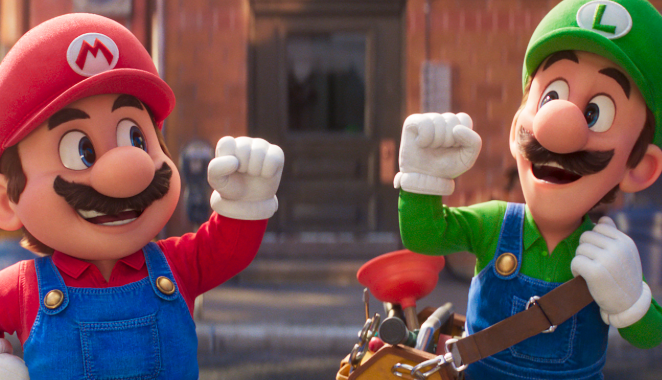
The release of The Super Mario Bros. Movie in 2023 wasn’t just a cinematic event; it was a cultural phenomenon that bridged generations of gamers. After the “colorful” (to put it mildly) 1993 live-action attempt, Nintendo was famously protective of its crown jewel. However, the collaboration between Nintendo and Illumination Entertainment—the studio behind Despicable Me—finally brought the Mushroom Kingdom to life in a way that felt authentic, vibrant, and bursting with nostalgia. While most fans caught the obvious references, the movie is layered with deep-cut Super Mario Bros Movie 2023 easter eggs and production secrets that even the most dedicated “Nintendoologists” might have missed.
In this guide, we’ll dive into the hidden details in Mario movie history, exploring everything from voice acting surprises to the evolution of character designs. Whether you’re a newcomer curious about the Super Mario Bros Movie voice cast or a veteran looking for Mario movie production secrets, these ten insights will change the way you see the film.
1. The Charles Martinet Cameo is Deeper Than You Think
For over three decades, Charles Martinet was the soul of Mario, providing the iconic “Wahoo!” that defined the character. When it was announced that Chris Pratt would take over the role for the Super Mario Bros Movie 2023, the fan community was understandably divided. However, the filmmakers paid a beautiful tribute to Martinet by casting him in two distinct roles. First, he voices Giuseppe, a citizen of Brooklyn who looks exactly like Mario’s original sprite from the 1981 Donkey Kong arcade game. Giuseppe even performs a “Jumpman” pose, a direct nod to Mario’s original name.
More importantly, Martinet voices Mario and Luigi’s father. This choice carries heavy symbolic weight; the man who “gave birth” to Mario’s voice in the games literally plays his father on screen. It’s a passing-of-the-torch moment that anchors the film’s evergreen search intent for fans wanting to know how the movie honored its roots. By including Martinet in these pivotal, albeit brief, roles, the production acknowledged that while the voice might change, the legacy is permanent.
2. Princess Peach Was Redesigned to Be a Proactive Hero
In the early days of the NES, Princess Peach (or Princess Toadstool, as she was known) was often the quintessential “damsel in distress.” For the Super Mario Bros Movie 2023, the team at Nintendo and Illumination knew they needed a more modern interpretation. This wasn’t just a “girl power” trope; it was a return to the character’s capabilities seen in games like Super Mario Bros. 2 and Super Mario 3D World.
The filmmakers focused on Peach’s leadership and tactical skill, portraying her as the seasoned veteran of the Mushroom Kingdom who trains the “rookie” Mario. Her character design was subtly adjusted to reflect this—her facial expressions are more determined, and her athletic prowess during the training course sequence highlights a character who is more than capable of protecting her kingdom. This evolution is one of those fundamental aspects of the movie that resonated with audiences, showing that even a 40-year-old character can find new depth.
3. The “Peaches” Song Was a Last-Minute Improvisation
One of the most viral moments of the film was Bowser’s power ballad, “Peaches.” Performed by the legendary Jack Black, the song became a global chart-topper and a staple of Bowser Peaches song history. Interestingly, the original script didn’t feature a full-blown musical number. The directors initially wanted Bowser to sing a short, silly song to show his softer (and weirder) side.
When Jack Black joined the project, he suggested leaning into his “Tenacious D” roots. He collaborated with the directors to turn a small gag into a 1980s-style rock ballad. The resulting track was recorded in just a few hours and became the emotional—and hilarious—centerpiece of Bowser’s characterization. This hidden detail in Mario movie production shows how allowing talented actors to improvise can lead to the most memorable “evergreen” moments in cinema history.
4. The Movie References Abandoned Nintendo Hardware
The attention to detail in the Super Mario Bros Movie 2023 goes beyond just the games; it dives into the history of Nintendo’s hardware. In Mario’s bedroom, you can spot a Star Fox Arwing model on his TV, but more obscure is the appearance of the “Disk-kun” mascot. For those unfamiliar with Japanese gaming history, Disk-kun was the mascot for the Famicom Disk System, a peripheral released only in Japan in the 1980s.
There are also visual nods to the GameCube and the Nintendo 64. For instance, the map Princess Peach uses to navigate the kingdoms is styled after the topography seen in the Super Mario World instruction manual, and some of the world’s architecture mimics the “low-poly” aesthetic of early 3D gaming. These Super Mario Bros Movie 2023 easter eggs serve as a “thank you” to the hardcore fans who have followed the company’s hardware evolution through the decades.
5. Luigi’s Ringtone is the GameCube Startup Theme
Sound design is a crucial part of the Nintendo and Illumination collaboration, and the movie’s audio landscape is filled with “blink-and-you’ll-miss-it” cues. One of the most charming Mario movie production secrets involves Luigi’s cell phone. When he receives a call, the ringtone is the iconic, playful jingle from the Nintendo GameCube startup screen.
This is more than just a random sound effect; it’s a subtle nod to Luigi’s Mansion, the game that launched alongside the GameCube and established Luigi as a solo protagonist. Throughout the film’s “Dark Lands” sequence, the atmosphere mirrors the spooky, ghost-hunting aesthetic of that series. By using the GameCube jingle, the sound designers created a psychological link for the audience, reminding them of Luigi’s history as a “lovable coward” who eventually finds his courage.
6. The Kong Kingdom is a Masterclass in World-Building
When Mario and Peach visit the Jungle Kingdom, the movie transforms into a tribute to Donkey Kong Country. This segment features a high-octane “Kart” sequence on the Rainbow Road, but the real magic lies in the background. If you look closely at the crowd of Kongs, you’ll see classic characters like Diddy Kong, Dixie Kong, and even Chunky Kong.
The filmmakers worked closely with Nintendo to ensure that the Kongs felt like a distinct culture with their own technology (mostly based on wood and barrels) and society. The design of Cranky Kong, voiced by Fred Armisen, leans into the lore that he is actually the original Donkey Kong from the 1981 arcade game, now aged and grumpy. This depth of Nintendo lore ensures the movie stays relevant and “evergreen,” as it builds a cohesive universe rather than just a series of random levels.
7. The 1993 Live-Action Movie Gets a Subtle Shout-Out
Most people assume Nintendo wants to forget the 1993 Super Mario Bros. movie ever existed. However, the 2023 animated version includes a very clever, respectful nod to its predecessor. In the Punch-Out Pizzeria, there is a character voiced by Sebastian Maniscalco named Foreman Spike. Spike was originally a character from the NES game Wrecking Crew, but his inclusion here also serves as a bridge to Mario’s “working-class Brooklyn” origins emphasized in the ’93 film.
Furthermore, the “Super Mario Bros. Plumbing” commercial seen at the start of the movie features the “Plumber’s Rap,” which was the theme song for The Super Mario Bros. Super Show! from the late 80s. These references show that the Super Mario Bros Movie 2023 isn’t trying to erase the past, but rather synthesize all versions of Mario into one definitive “all-ages” experience.
8. Lumalee and the Darker Side of Mario Lore
One of the breakout characters of the film was Lumalee, the nihilistic, blue Luma trapped in Bowser’s dungeon. Lumalee’s cheerful proclamations of “the sweet release of death” provided a shocking (and funny) contrast to the film’s bright colors. This character originates from Super Mario Galaxy, one of the most critically acclaimed games in the franchise.
Including a Luma was a calculated move to hint at the broader “Galaxy” lore, which involves the cosmos and the character Rosalina. For parents and kids searching for beginner or intermediate level information on Mario, Lumalee serves as a gateway to the more philosophical and grand-scale stories Nintendo has told. It also suggests that the Mario movie sequel (slated for 2026) might head into outer space, expanding the cinematic universe even further.
9. Every Frame of Animation is Optimized for “Pause-Ability”
Illumination is known for its high-energy animation, but for Mario, they pushed their technical limits. The Super Mario Bros Movie 2023 animation was designed so that almost every frame contains a secret. For example, during the Brooklyn sequence, you can see a storefront named “Chasse au Canard,” which is French for “Duck Hunt.”
This level of detail is a strategy used by modern studios to ensure evergreen search intent. When a movie is released on streaming and Blu-ray, fans spend months “frame-hunting” for hidden details. From the “Level 1-2” sign in the sewers to the Pikmin-shaped flower pot in a New York apartment, the movie is a giant scavenger hunt that rewards repeat viewings and deep dives into Nintendo and Illumination collaboration history.
10. The Rainbow Road Sequence Took Years to Perfect
The Mario Kart segment of the film is often cited as the visual highlight. Creating a “Rainbow Road” that looked cinematic rather than just like a video game track was a massive technical challenge. The animators had to balance the translucent, neon aesthetic of the road with the physics of a high-speed chase.
The karts themselves were designed to be modular, reflecting the customization options found in Mario Kart 8 Deluxe. The filmmakers even included the “Blue Shell” as a terrifying, airborne threat, treating it with the same gravity as a heat-seeking missile. This sequence perfectly encapsulates the actionable insights the filmmakers took from the games: take a mechanic players know (and fear) and elevate it to a cinematic scale. It’s why the film succeeded where others failed; it understood the feeling of playing the game, not just the look.
Further Reading
If you’re looking to dive deeper into the history of the Mushroom Kingdom and the company that built it, these books are fantastic resources for any fan:
- Super Mario: How Nintendo Conquered America by Jeff Ryan – A fun, fast-paced history of how a Japanese playing card company became a global gaming titan.
- Game Over: Press Start to Continue by David Sheff – The definitive, “behind-the-curtain” look at Nintendo’s rise in the 80s and 90s.
- Ask Iwata: Words of Wisdom from Satoru Iwata by Satoru Iwata – A collection of insights from the legendary former President of Nintendo, perfect for understanding the company’s “player-first” philosophy.
- The Unofficial History of Mario Games by Ryan Janes – A comprehensive guide to every major Mario release and the evolution of the series.




Leave a Reply