
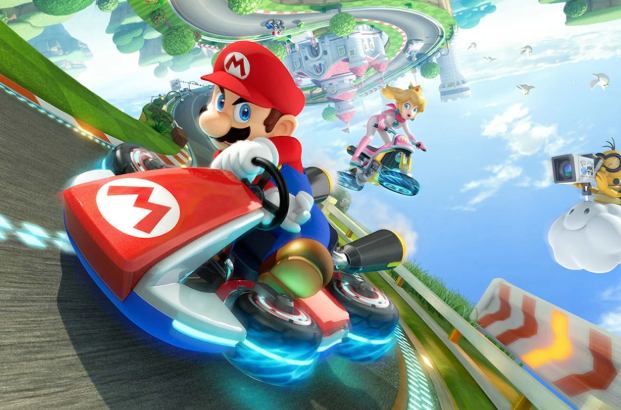
The high-pitched revving of an engine, the frantic hop before a drift, and the inevitable, friendship-ending explosion of a blue shell—these are the universal sounds of the most successful racing franchise in history. Mario Kart is not just a video game series; it is a cultural phenomenon that redefined how we interact with digital competition. It stripped away the sterile technicality of traditional racing simulators and replaced it with pure, unadulterated chaos, fueled by banana peels and red shells. But behind the vibrant colors and whimsical tracks lies a complex history of technical ingenuity and design philosophy that transformed the medium forever.
To understand the DNA of this series is to understand the evolution of multiplayer gaming itself. From the hardware limitations of the early console eras to the sophisticated physics engines of the modern day, the development of these games has always been a battle between technical constraints and creative ambition. This guide dives deep into the “engine room” of the franchise, exploring how a simple experiment in two-player racing became the blueprint for the entire “kart racer” sub-genre. Whether you are a casual racer or a competitive speedrunner, these insights offer a comprehensive look at the legacy of the Mushroom Kingdom’s favorite pastime.
1. The “F-Zero” Connection and the Two-Player Problem
The genesis of the franchise was actually born from a technical limitation rather than a creative whim. Following the success of a high-speed, futuristic racing game on the same platform, the developers wanted to create a racing title that supported two-player split-screen. However, the hardware at the time struggled to render the vast, sprawling tracks of a high-speed racer for two people simultaneously. To solve this, the team decided to slow the gameplay down, focusing on smaller tracks and more detailed environments. They realized that by lowering the speed, they could maintain the visual fidelity and performance required for a smooth multiplayer experience. This pivot from “high-speed simulation” to “tactical kart racing” inadvertently created an entirely new genre of gaming that prioritized interaction over pure velocity.
2. The “Guy in Overalls” Appearance
In the earliest stages of development, the game didn’t feature the famous Italian plumber at all. The prototype featured a generic “man in overalls” as a placeholder for the driver. It wasn’t until the developers decided to see how a recognizable character would look in the driver’s seat that they placed Mario into the kart. The moment they saw him on screen, the team realized that the whimsical nature of the characters perfectly complemented the “silly” mechanics of throwing items and navigating obstacle-filled tracks. This decision transformed a generic racing project into a cornerstone of the company’s brand, proving that character-driven narratives can breathe life into even the most mechanical of genres.
3. Mode 7: The Illusion of 3D Depth
Before true 3D environments were possible on home consoles, the first iteration of the series utilized a revolutionary technique called “Mode 7.” This was a graphics mode that allowed a flat, two-dimensional texture to be rotated and scaled, creating the illusion of a three-dimensional plane stretching toward the horizon. By laying the track out on this flat, rotating map, the developers were able to simulate the feeling of driving in a 3D space. This technical wizardry was essential for the game’s success, as it provided a sense of depth and perspective that was previously unseen in home racing games, setting a new bar for visual storytelling in the 16-bit era.
4. The Spiny Shell: A Masterclass in Rubber-Banding
Perhaps the most controversial item in gaming history, the “Blue Shell” (or Spiny Shell), was designed as a balancing tool to solve a specific gameplay problem: “rubber-banding.” In many racing games, the player in first place can become so far ahead that the race becomes boring for everyone else. The developers introduced the Spiny Shell as a “great equalizer.” By creating an item that specifically targets the person in the lead, they ensured that no one was ever truly safe and that the tension remained high until the final second. While it is often the source of player frustration, its inclusion is a brilliant piece of psychological game design intended to keep the “pack” together and maintain the thrill of the chase.
5. The Evolution of the “Mini-Turbo” Drift
The “drift” mechanic is the heart of competitive play, but its evolution was a gradual process of refinement. Originally, sliding around corners was simply a way to maintain speed, but as the series progressed, the developers added the “Mini-Turbo” reward. This mechanic encourages players to take risks by sliding for longer durations to earn a burst of speed upon exiting a turn. This changed the fundamental “rhythm” of the game, turning every corner into a high-stakes calculation of risk versus reward. The visual cues—from puffs of smoke to sparks that change color—provide the player with instant, satisfying feedback, making the mastery of physics feel like an art form.
6. The Sacred Tradition of Rainbow Road
Every entry in the franchise concludes its most difficult cup with a trek across “Rainbow Road.” This track has become a legendary rite of passage for players. Historically, the track is defined by its lack of guardrails, vibrant psychedelic visuals, and a high-energy musical theme. The design philosophy behind Rainbow Road is to test everything the player has learned: precision steering, item management, and psychological composure. It serves as the ultimate “final boss” of the racing world. Because it is set in space, it allows the designers to ignore the traditional laws of geography and gravity, resulting in some of the most imaginative and challenging architecture in gaming.
7. The Accidental Genius of Battle Mode
While the primary focus of the series is racing, “Battle Mode” introduced a completely different way to play. The idea of strapping balloons to the karts and forcing players into an arena was a stroke of genius that emphasized the combat elements of the game. It transformed the karts from racing vehicles into “gladiatorial chariots.” The mechanic of losing a balloon upon being hit provided a clear, visual representation of “health” that even a beginner could understand. This mode proved that the mechanics of the game were robust enough to support multiple types of play, further cementing the franchise as the ultimate “party game.”
8. Weight Classes and Hidden Physics
To the casual observer, the choice of character might seem purely aesthetic, but the franchise utilizes a sophisticated system of weight classes that fundamentally alters the physics of the drive. Small, light characters possess high acceleration but low top speeds and are easily “bullied” off the track by larger opponents. Conversely, heavy characters take a long time to reach their maximum speed but are nearly impossible to stop once they get there. This hidden layer of strategy allows players to “tune” their experience to their personal playstyle, creating a “rock-paper-scissors” dynamic where every choice has a meaningful consequence on the asphalt.
9. Innovations in Local and Online Connectivity
The series has often been the vanguard for how consoles handle connectivity. From the early days of using physical cables to link handheld devices to the implementation of massive online infrastructures, the franchise has pushed the boundaries of how we play together. It was among the first to prioritize “latency-free” racing, ensuring that even when playing with someone across the globe, the shells hit their targets with satisfying precision. This commitment to the “community” aspect of gaming is why the series remains a staple of social gatherings; it was built from the ground up to be a shared experience.
10. The Cultural Crossover: From Pixels to Pavement
The influence of the franchise has extended far beyond the screen and into the real world. From themed attractions in major amusement parks that utilize augmented reality to simulate item-throwing, to “karting” experiences in major cities, the brand has become synonymous with the joy of racing. This crossover is a result of the “universal language” the game speaks—one of simple controls and chaotic fun. It has transcended its medium to become a part of the global lexicon of play, proving that a well-designed game can capture the imagination of multiple generations, regardless of their familiarity with a controller.
Further Reading
- Ask Iwata: Words of Wisdom from Satoru Iwata, Nintendo’s Legendary CEO by Satoru Iwata
- The Creative Gene by Hideo Kojima (For insights into Japanese game design philosophy)
- Game Over: Press Start to Continue – The Maturing of Mario by David Sheff
- The Ultimate History of Video Games by Steven L. Kent
- 10 Things You Should Know About The Making Of And History Of The Video Game – Diablo II
- 10 Things You Should Know About The Making Of And History Of The Video Game – God of War (2018)
- 10 Things You Should Know About The Making Of And History Of The Video Game – The Legend of Zelda: Ocarina of Time
- 10 Things You Should Know About The Making Of And History Of The Video Game – Portal 2
- 10 Essential Facts About Assassin’s Creed (2007) – Video Game Facts
- 10 Essential Facts About Mortal Kombat 2 – Video Game (1993)
- 10 Essential Facts About the Making and History of ARK: Survival Evolved – Video Game Lore
- 10 Essential Facts About the Making and History of Tomb Raider (1996) – Video Game Lore
- 10 Essential Facts About the Making and History of Mario Kart – Video Game Lore
- 10 Things You Should Know About Skyrim – Video Game



