
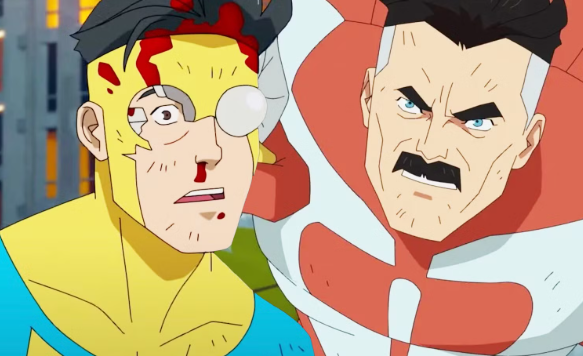
In an era saturated with capes and cowls, the Invincible animated series arrived like a seismic shock to the system. Adapted from the groundbreaking Image Comics series, the show stripped away the glossy veneer of the traditional superhero narrative to reveal something far more visceral, emotional, and unapologetically violent. While it pays homage to the archetypes of the Golden Age, Invincible is a subversion of every trope fans have come to expect from costumed crusaders. It explores the heavy toll of heroism, the fragility of the human body, and the devastating consequences of god-like power. Whether you are a newcomer drawn in by the stellar voice cast or a veteran of the source material, these ten essential facts uncover the tactical brilliance and narrative depth behind the story of Mark Grayson and his blood-soaked journey toward adulthood.
1. The Subversive “Superman” Archetype of Omni-Man
At first glance, Nolan Grayson, also known as Omni-Man, appears to be the definitive paragon of virtue—a powerful alien from a utopian planet sent to protect Earth. However, the series brilliantly deconstructs this “Superman” mythos. Unlike traditional hero archetypes who represent unwavering morality, Omni-Man’s presence introduces a chilling geopolitical and existential threat. His true mission—revealed in a twist that fundamentally altered the landscape of modern adult animation—shifts the show from a coming-of-age story into a dark, survivalist thriller. This subversion forces the audience to question the inherent danger of “saviors” who possess power far beyond human comprehension, making the central conflict less about stopping a villain and more about surviving a father.
2. The Unprecedented Level of “Real-World” Violence
One of the most jarring elements for new viewers is the show’s refusal to shy away from the physical reality of super-powered combat. In most superhero media, buildings crumble and heroes are thrown through walls with little more than a scuff mark. Invincible takes a different approach: it treats physics with terrifying honesty. When a character with super-strength hits a regular human, the result is catastrophic. The series uses this gore not just for shock value, but to emphasize the stakes of Mark Grayson’s world. The weight of every punch is felt, and the collateral damage is never ignored, serving as a constant reminder that being a “Real American Hero” or a global guardian carries a heavy, often stomach-turning, price.
3. A Masterclass in Multi-Generational Voice Acting
The series boasts one of the most prestigious voice casts in the history of the medium, blending Hollywood heavyweights with legendary voice-over veterans. Having a cast led by Academy Award winners and seasoned character actors provides a level of gravitas that grounds the more outlandish sci-fi elements. The performances are not merely “cartoony”; they are nuanced and emotionally resonant. The chemistry between the leads—particularly the tension between the youthful optimism of Mark and the cold, detached authority of Nolan—is the engine that drives the series. This high-caliber acting ensures that the domestic drama at the dinner table feels just as high-stakes as a battle in the upper atmosphere.
4. The Long Journey from Page to Screen
While the animated series felt like an overnight sensation, it was actually the result of years of careful planning by creator Robert Kirkman. After the massive success of his other major franchise, The Walking Dead, Kirkman was protective of Invincible. He waited for the right medium and the right creative partners to ensure the story’s complex tone could be captured. Animation was eventually chosen over live-action because it allowed for the grand, planetary scale of the comic book’s action without the astronomical budget constraints of CGI-heavy practical filming. This decision allowed the series to remain incredibly faithful to the original art style while expanding on scenes that were only a few panels long in the books.
5. The “Coming of Age” Story with a Deadly Twist
At its heart, the first season is a classic “coming of age” tale. Mark Grayson is a typical teenager dealing with high school crushes, part-time jobs, and the sudden onset of puberty—which, in his case, involves developing the ability to fly and lift tanks. The brilliance of the writing lies in how it balances these mundane struggles with the cosmic horrors Mark eventually faces. The show explores the loss of innocence in a way few others do; Mark’s transition into adulthood isn’t just about gaining responsibility, it’s about the trauma of realizing that the world—and even his own family—is far more complicated and dangerous than he ever imagined.
6. Breaking the “Status Quo” of Saturday Morning Cartoons
Traditional animated series often rely on a “status quo” where, by the end of the episode, everything returns to normal. Invincible completely rejects this formula. Every choice has a permanent consequence, and the world is fundamentally changed by the events of each chapter. Characters die, cities remain ruined, and psychological scars do not heal overnight. This serialized storytelling creates a sense of momentum and dread; viewers quickly learn that no one is truly safe and that “victory” often feels like a defeat. This narrative bravery is what has allowed the show to stand out in a crowded market of episodic superhero content.
7. The Deep Bench of the Global Defense Agency
The series introduces the Global Defense Agency (GDA), led by the pragmatic and morally grey Cecil Stedman. The GDA serves as a fascinating look at how a government would actually manage a world full of “supes.” Unlike the idealized versions of secret organizations seen in other media, the GDA is shown to be manipulative, secretive, and willing to make horrific ethical compromises “for the greater good.” Cecil’s relationship with Mark highlights the tension between individual heroism and state-sponsored security, adding a layer of political intrigue that enriches the broader narrative of alien invasions and monster attacks.
8. Visual Storytelling and Iconic Character Design
The art style of the series is a direct homage to the clean, vibrant lines of the original comic illustrators, Cory Walker and Ryan Ottley. The character designs are deliberately “classic,” using bright primary colors that contrast sharply with the dark themes and extreme violence. This visual juxtaposition is a key part of the show’s identity. By using a style that looks like a traditional Saturday morning cartoon, the creators lure the audience into a false sense of security before pulling the rug out. The evolution of Mark’s costume—and the literal blood that frequently stains it—symbolizes his journey from an idealistic kid to a battle-hardened survivor.
9. The Guardians of the Globe: A Satirical Starting Point
The series begins with the Guardians of the Globe, a team that clearly parodies the most famous superhero groups in history. There is a dark-clad detective, a literal “War Woman,” and a lightning-fast speedster. However, the show uses these parallels to quickly establish its own identity. By presenting these familiar archetypes and then dealing with them in a shocking, definitive manner in the very first episode, Invincible signals to the audience that this is not the world of those other heroes. It effectively clears the board of traditional tropes to make room for its own unique, often more cynical, worldview.
10. A Universe of Endless Potential and Spin-offs
The world of Invincible is not limited to just Mark and his father. The series introduces a vast “Invincible Universe” filled with various factions, from the teenage Team Up to the intergalactic Coalition of Planets. The show expertly seeds future plotlines and characters, creating a “lived-in” feeling that suggests history is happening even when the camera isn’t on the main characters. This depth ensures that the story remains evergreen; there are always new corners of the galaxy to explore, new villains with complex motivations, and new heroes who must decide if they are truly “invincible” or just waiting for their turn to fall.
Further Reading
- Invincible: Compendium One by Robert Kirkman
- The Art of Invincible by Skybound Entertainment
- Superheroes and Philosophy: Truth, Justice, and the Socratic Way by Tom Morris
- The Physics of Superheroes by James Kakalios




Leave a Reply