
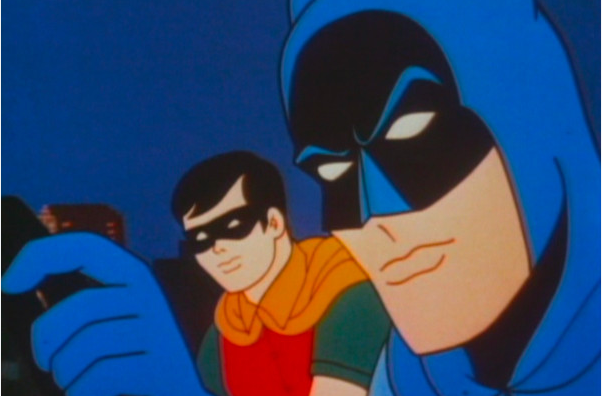
Holy Animation, Batman! 10 Secrets Behind the Caped Crusader’s 1968 Cartoon Revolution
The image of the Caped Crusader is so deeply embedded in global consciousness that it feels as though he has always been a brooding, cinematic shadow. However, there was a pivotal moment in the late 1960s when the Dark Knight made a leap that would define his legacy for decades to come: he transitioned from the psychedelic camp of live-action television into the vibrant, high-energy world of Saturday morning animation. This era gave birth to The Adventures of Batman, a series that served as the primary gateway for millions of fans into the lore of Gotham City.
Produced by the legendary Filmation Associates, this series didn’t just capitalize on “Bat-mania”; it fundamentally reshaped how superheroes were presented to a younger audience. While the live-action predecessor was famous for its “Biff! Bam! Pow!” title cards and tongue-in-cheek humor, the animated series attempted to bridge the gap between that campy charm and the more traditional heroics found in the pages of DC Comics. It was a time of bright colors, jazzy scores, and a sense of wonder that remains a cornerstone of the character’s history. To understand the DNA of every modern Batman cartoon, one must look back at this 1968 classic.
1. The Dynamic Voice Duo: Olan Soule and Casey Kasem
Long before the gravelly tones of modern voice actors became the standard for the Dark Knight, Olan Soule provided the definitive voice of Batman for an entire generation. Soule brought a sense of authoritative, paternal calm to Bruce Wayne that contrasted perfectly with his secret identity. However, his performance is often remembered most for its chemistry with his co-star, the legendary Casey Kasem, who voiced Robin, the Boy Wonder.
Kasem, who would later become world-famous as the voice of Shaggy in Scooby-Doo and the host of American Top 40, gave Robin an earnest, high-energy persona that perfectly matched the “Holy [Noun], Batman!” catchphrases of the era. This pairing was so successful that they voiced the characters across multiple different programs for over fifteen years. Their work established the vocal “vibe” of the Dynamic Duo: a mentor-protege relationship built on mutual respect and unwavering heroism. This consistency helped solidify Batman and Robin as a permanent fixture in the minds of young viewers, proving that the right voices could bring ink and paint to life as effectively as any live-action actor.
2. The Filmation “Stock Footage” Mastery and Budget Ingenuity
The studio behind the show, Filmation, was famous (and sometimes infamous) for its “limited animation” techniques. To produce a high volume of episodes on a television budget, creators Lou Scheimer and Norm Prescott utilized a system of stock footage and repetitive cycles. If you notice Batman and Robin running toward the camera with the exact same stride in every episode, or the Batmobile exiting the Batcave with the same frame-by-frame movement, you are seeing a masterclass in production efficiency.
This wasn’t just about cutting corners; it was a stylistic choice that became the “Filmation Look.” They utilized a technique called rotoscoping for certain complex movements, where animators traced over live-action footage to give the characters a sense of realistic weight. By reusing these high-quality sequences, they could afford to spend more time on the detailed character designs and the iconic “interstitial” title cards that announced the arrival of villains. This approach allowed a small studio to compete with giants, creating a visual language that felt consistent and reliable. For a child watching on a Saturday morning, these repeated sequences became comforting rituals, signaling that the action was about to hit its peak.
3. Batgirl’s Animated Debut and the Influence of Yvonne Craig
While the 1960s live-action show introduced Batgirl (Barbara Gordon) to boost ratings, the 1968 animated series was responsible for cementing her place in the heroic hierarchy of the DC Universe. Voiced by Jane Webb, this version of Batgirl was portrayed as a highly competent, independent hero who often operated on her own terms. She wasn’t just a “female Robin”; she was a librarian with a secret life who brought a unique sense of sophistication to the team.
The character design for Batgirl in the cartoon was heavily influenced by the costume worn by Yvonne Craig in the live-action series, but the animation allowed her to perform stunts and gadgets that were physically impossible on a 1960s television set. Her presence in the cartoon was a major step forward for gender representation in superhero media, showing young girls that they could also be part of the caped crusade. By featuring her prominently in the opening credits and multiple episodes, the show ensured that Barbara Gordon would be forever linked to the Batman mythos, paving the way for her evolution into one of the most important characters in comic book history.
4. The Jazz-Infused Soundscapes of Ted Nichols
One of the most underrated elements of the 1968 series is its incredible musical score, composed by Ted Nichols. Moving away from the surf-rock guitar riffs of the live-action theme, Nichols created a high-energy, brass-heavy, jazz-influenced soundtrack that gave the show a sophisticated, urban energy. The music felt like the pulse of Gotham City itself—fast-paced, slightly dangerous, and undeniably cool.
The score utilized “stings” and motifs for different villains, creating a musical shorthand that told the audience when the Joker or the Penguin was about to strike. The percussion was particularly driving, mimicking the ticking clock of a hero in a death trap. This musical direction was a departure from the whimsical scores of many contemporary cartoons, aiming instead for something that felt more like a spy thriller or a detective drama. The theme song, with its soaring trumpets and rhythmic “Batman!” chants, remains a nostalgic touchstone. It proved that animation could benefit from complex, adult-leaning musical arrangements, adding a layer of tension and excitement that purely orchestral scores sometimes lacked.
5. Moving Toward Silver Age Comic Book Accuracy
Despite the influence of the campy television show, the 1968 animated series made a conscious effort to align its visual style with the Silver Age of DC Comics. The character designs, supervised by artist Alvin Lodwig, drew heavy inspiration from the work of comic book legends like Carmine Infantino and Murphy Anderson. Batman was leaner, more athletic, and his cowl featured the longer “ears” that were common in the books at the time.
The show also leaned into the “science fiction” elements of the Silver Age. Instead of just fighting gangsters, Batman and Robin dealt with alien invaders, giant robots, and bizarre scientific experiments. This move toward comic book aesthetics helped bridge the gap between the fans of the “serious” books and the fans of the “silly” show. It treated the source material with a level of visual respect that was rare for the era. By making the cartoon look like a moving version of the monthly comic books, Filmation helped define the “standard” look for Batman that would persist until the darker, more “grim and gritty” interpretations took over in later decades.
6. The “Batman/Superman Hour” and the Birth of the Shared Universe
Before the concept of a “Cinematic Universe” was a multi-billion-dollar industry, the 1968 series was part of a revolutionary broadcast block called The Batman/Superman Hour. This was one of the first times that two major superhero franchises were paired together in a single time slot, creating a proto-shared universe for children. Each hour-long broadcast featured segments of Batman, Superman, and eventually other DC heroes like Aquaman and the Justice League.
This programming strategy was a brilliant move for network television, as it encouraged fans of one hero to stay tuned for the other. It created a sense that all these characters lived in the same world, even if they rarely crossed over in the actual episodes of this specific series. This “anthology” format allowed Filmation to build a massive library of superhero content, establishing them as the premier studio for DC Comics adaptations. For the viewers, it made Saturday morning feel like an epic event, a marathon of heroism that expanded their understanding of the wider DC landscape beyond the streets of Gotham.
7. Creative Censorship and the “No Punching” Rule
One of the most fascinating challenges the creators faced involved the strict Broadcast Standards and Practices of the time. During the late 60s, there was a significant push to reduce violence in children’s programming. This led to a peculiar “no punching” rule for animated heroes. You will notice that Batman and Robin rarely land a direct fist-to-face blow on their enemies. Instead, they utilize wrestling moves, throws, or their various gadgets to subdue criminals.
This constraint forced the writers and animators to get incredibly creative with the action. Batman became a master of the “Batarang,” using it to disarm villains or trigger traps. The “action” became more about choreography and gadgetry than brute force. This actually reinforced Batman’s identity as a “World’s Greatest Detective” and a tactical genius rather than just a brawler. By working around the censorship, the show developed a unique rhythm where the heroes used their wits and tools to win, a trait that remains central to the character’s appeal. It turned “safety-conscious” television into a showcase for Batman’s ingenuity.
8. The Introduction of Bizarre and Obscure Villains
Everyone knows the “Big Four” villains: The Joker, The Penguin, The Riddler, and Catwoman. While the 1968 series featured these icons prominently, it also delved into the weirder corners of the Batman rogue’s gallery. Viewers were introduced to animated versions of The Scarecrow, The Mad Hatter, and even obscure characters like Simon the Pieman (an original creation for the show).
This variety was important because it showed the breadth of threats in Gotham. The villains weren’t just bank robbers; they were theatrical eccentrics with specific themes. The Joker’s episodes, in particular, utilized the character’s “clown prince of crime” persona, focusing on elaborate, prank-themed crimes that worked perfectly in an animated medium. The show also featured the Justice League of America in separate segments, exposing kids to villains like Brainiac and Lex Luthor. This variety kept the formula from becoming stale and taught the audience that a hero is often defined by the creativity and madness of the villains they face. It expanded the scope of Batman’s world, making Gotham feel like a hub for the most colorful criminals in existence.
9. The Legacy of the “Bat-Climb” and Visual Tropes
The 1968 series carried over several visual tropes from the live-action era that have since become legendary bits of trivia. Perhaps the most famous is the “Bat-Climb,” where Batman and Robin would scale the side of a building using a rope. In the cartoon, this was a frequent occurrence, often used as a way to transition between scenes. While the animated version didn’t feature the famous “celebrity window cameos” of the live-action show, it kept the visual language of the climb alive.
The show also leaned heavily into the “labeled” world of the Batcave. Every machine had a sign: the “Atomic Pile,” the “Bat-Computer,” or the “Intergalactic Transmitter.” This trope, while humorous to modern eyes, was a way to make the high-concept science of the show accessible to children. It gave the Batcave a sense of organized, technological wonder. These visual shorthand techniques helped define the “Bat-aesthetic” for years, creating a world where everything had a purpose and a name. It contributed to the feeling that Batman was a man who was prepared for absolutely everything, with a tool for every possible scenario neatly tucked away in his utility belt.
10. Paving the Way for the New Adventures and the DCAU
The success of the 1968 series ensured that Batman would never truly leave the animated screen. It laid the groundwork for the 1977 series The New Adventures of Batman, which famously brought back Adam West and Burt Ward to voice the characters. More importantly, it established a “proof of concept” that Batman was a character who thrived in animation. Without the foundation laid by Filmation’s 1968 run, we might never have seen the later, critically acclaimed masterpieces like Batman: The Animated Series in the 1990s.
The 1968 show proved that the character’s core elements—the costume, the gadgets, the sidekick, and the rogues—were strong enough to survive any medium. It taught the industry how to market superheroes to children while maintaining a sense of adventure. Many of the animators and directors who worked on later, more “mature” Batman projects grew up watching the Filmation series, and its influence can be seen in the way they handle the character’s iconic silhouette and his relationship with the city. It remains a bright, energetic, and vital chapter in the history of the Dark Knight, proving that even in the colorful world of Saturday mornings, Batman is the ultimate hero.
Further Reading
- Lou Scheimer: The Animation Legend by Lou Scheimer and Andy Mangels
- The Batcave Companion by Michael Eury and Michael Kronenberg
- Batman: The Complete History by Les Daniels
- Animation by Filmation by Michael Swanigan
- 10 Things You Should Know About Foghorn Leghorn – Looney Tunes
- 10 Futurama TV SHOW Facts That Still Hold Up
- 10 Things You Should Know About Speedy Gonzales – Looney Tunes
- 10 Things You Should Know About Yosemite Sam – Looney Tunes
- 10 Things You Should Know About The Looney Tunes
- 10 Things You Should Know About Road Runner – Looney Tunes
- 10 Things You Should Know About Wile E. Coyote – Looney Tunes
- 10 Things You Should Know About Tweety Pie – Looney Tunes
- 10 Things You Should Know About Sylvester The Cat – Looney Tunes
- 10 Things You Should Know About Porky Pig – Looney Tunes



