
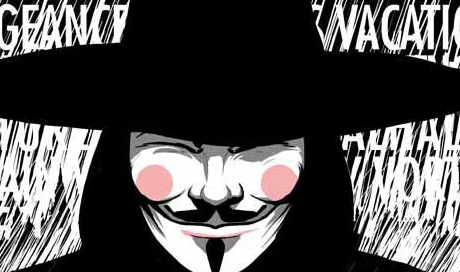
The grinning porcelain face of the Guy Fawkes mask has become a global icon of rebellion, seen everywhere from street protests to digital hacking collectives. While most people are familiar with the cinematic adaptation, the original V for Vendetta graphic novel—written by Alan Moore and illustrated by David Lloyd—is a far more intricate, haunting, and politically charged masterpiece. First serialized in the early 1980s, it remains a cornerstone of the “Grim and Gritty” era of comics, standing alongside Watchmen as a definitive deconstruction of power.
Behind the stark black-and-white (and later, muted pastel) panels lies a world far more complex than a simple “hero versus villain” narrative. The graphic novel explores the terrifying gray areas of anarchy versus fascism, the psychological breaking points of the human spirit, and a version of London that feels uncomfortably close to reality. From its origins as a rejected “detective” pitch to the profound disagreements between its creators and Hollywood, the history of this graphic novel is a revolution in itself. Here are ten things you likely never knew about the foundational text of modern political fiction.
1. The Accidental Birth of the Guy Fawkes Mask
It is impossible to separate V for Vendetta from its iconic mask, but the choice of Guy Fawkes was almost an afterthought. Initially, Alan Moore and artist David Lloyd were struggling to find a distinct “look” for their protagonist. They toyed with traditional superhero tropes and even generic “mystery man” designs that felt uninspired. It was David Lloyd who had the sudden realization: why not embrace a traditional English figure of insurrection?
Lloyd suggested that instead of a modern revolutionary, the character should dress as a “resurrected” Guy Fawkes, complete with the cone-shaped hat and the painted mask used in “Guy Fawkes Night” celebrations. This decision transformed V from a standard vigilante into a theatrical, historical ghost haunting the modern world. The mask wasn’t just a disguise; it was a link to a 1605 plot to blow up Parliament, grounding the story in a specifically British tradition of radicalism that resonated far more deeply than a standard superhero cowl ever could.
2. The Original Vision was a “Retro-Future” Detective Noir
Before it became the sprawling political epic we know today, the project started under the working title The Doll. In its earliest conceptual stages, the story was envisioned as a noir-inspired detective tale set in a stylized 1930s-style future. The protagonist was intended to be a more straightforward “mystery man” fighting a corrupt police force in a rain-slicked city.
As Alan Moore began to flesh out the world, his interest in the rise of real-world extremist politics pushed the narrative into a much darker, more urgent direction. The 1930s aesthetic was swapped for a “near-future” dystopian Britain, and the “detective” elements were subsumed by a deep dive into political philosophy. However, you can still see remnants of this noir influence in the finished graphic novel—particularly in the character of Eric Finch, the weary investigator who serves as the moral compass for the regime’s police force.
3. The “Shadow Gallery” was a Eulogy for Culture
In the graphic novel, V lives in an underground lair called the Shadow Gallery, filled with banned books, forbidden films, and “decadent” art. While the movie portrays this as a cool secret base, Moore’s writing frames the gallery as a tragic museum of everything humanity lost under the fascist Norsefire regime. V isn’t just a warrior; he is a self-appointed curator of a dead civilization.
Moore and Lloyd meticulously chose the items in the gallery to represent the height of human expression that a totalitarian state would find threatening. From jazz records to the works of Shakespeare and magic posters, the Shadow Gallery serves as a silent secondary character. It highlights the central theme that fascism doesn’t just kill people; it kills the imagination. By surrounding himself with these artifacts, V maintains his humanity in a world that has been systematically stripped of its “color” and creative spirit.
4. V is Intentionally Never Unmasked or Named
One of the most significant differences between the graphic novel and typical comic book storytelling is the total commitment to V’s anonymity. Throughout the entire run, V is never shown without his mask, and his true identity—his name, his face, his life before the Larkhill Resettlement Camp—is never revealed. While the film hints at a more personal vendetta, the comic insists that the man behind the mask is irrelevant.
This was a deliberate choice by Moore to ensure that V remained an “idea” rather than a person. If the reader knew V was “John Smith,” his actions would be tied to personal trauma. By keeping him anonymous, he becomes a vacuum that the reader fills with their own interpretations of justice or terror. He is a literal “V”—the Roman numeral for five, his cell number—and nothing more. This anonymity reinforces the chilling notion that anyone could be under the mask, or that the mask itself is the only thing that truly exists.
5. The “Norsefire” Regime was a Warning, Not a Fantasy
The villains of the story, the Norsefire party, were not intended to be “cartoonish” evil-doers. When Moore began writing in the early 1980s, he was deeply influenced by the social and political climate of the era. He took existing far-right ideologies and projected them into a future where a global nuclear conflict had left Britain isolated and desperate.
The regime’s slogans—”Strength Through Purity, Purity Through Faith”—were designed to echo the rhetoric of historical totalitarian states but with a distinctly British “stiff upper lip” veneer. Moore wanted to show how easily a democratic society could slide into fascism when people are afraid. The horror of Norsefire isn’t just their cruelty; it’s their efficiency and the way they co-opted the “Fate” computer system to monitor and control every aspect of daily life, making the oppression feel mundane and bureaucratic rather than purely fantastical.
6. The Character of Evey Hammond is the True Protagonist
While V’s name is in the title, many literary critics argue that the graphic novel is actually Evey Hammond’s story. In the comic, Evey starts as a desperate, uneducated sixteen-year-old girl—far younger and more vulnerable than the character portrayed in the film. Her journey from a victim of the state to a revolutionary is the emotional core of the book.
The most controversial and harrowing sequence involves V kidnapping Evey and putting her through a mock imprisonment and torture to “free” her from fear. In the graphic novel, this process is much longer and more psychologically grueling. It raises difficult questions about V’s morality: Is he a mentor or a secondary abuser? Moore uses Evey’s transformation to show that true freedom requires a radical, often painful shedding of one’s old self. By the end of the book, she doesn’t just join V; she transcends him, becoming the “new” V who must decide how to rebuild a broken world.
7. The Symbolism of the Violet Carson Rose
V’s signature calling card is a rare, beautiful rose known as the “Violet Carson.” In the graphic novel, these roses are more than just a theatrical flourish; they are a symbol of biological survival and a direct link to V’s past at the Larkhill camp. V spends years cultivating these flowers in secret, using them as a weapon of psychological warfare against the men who tortured him.
The choice of the Violet Carson was specific. It is a real variety of rose, known for its strong scent and delicate color. In a world where the regime has destroyed nature and beauty in favor of concrete and order, the appearance of a fresh, living rose is a terrifying sign of a variable they cannot control. It represents the “romance” of the revolutionary—the idea that even in the harshest winter of fascism, something beautiful and wild can still grow and eventually tear through the cracks of the pavement.
8. The Story was “Born” in Black and White
While most modern readers are familiar with the colored “collected edition,” V for Vendetta was originally published in the British magazine Warrior in stark black and white. This wasn’t just a budget constraint; it was a stylistic choice by David Lloyd that defined the mood of the story. Lloyd utilized a technique called “chiaroscuro”—the dramatic use of light and shadow—to create a sense of claustrophobia and dread.
When the series was later moved to DC Comics and colored, Moore and Lloyd insisted on a very specific, muted palette. They avoided the primary colors typical of American superhero comics, opting for “sour” yellows, pale greens, and bruised purples. This kept the gritty, “damp” feeling of London intact. Even in color, the shadows remained the most important part of the art, ensuring that V stayed a creature of the dark, literally blending into the ink of the page until he chose to strike.
9. The Disappearance of “The Leader”
One of the most fascinating subplots in the graphic novel involves Adam Susan (the Leader) and his obsessive relationship with the “Fate” computer system. In the comic, Susan isn’t just a power-hungry dictator; he is a lonely, deeply repressed man who has fallen in love with the machine that runs the country. He views the computer as a goddess, the only entity “pure” enough for him to admire.
This adds a layer of surrealism and psychological depth to the regime’s leadership. It suggests that the head of the fascist state is essentially hollow, having abdicated his humanity to an algorithm. V’s ultimate victory isn’t just blowing up buildings; it’s sabotaging the “Fate” computer, thereby breaking the Leader’s mind. This commentary on the intersection of technology and authoritarianism was incredibly prescient, pre-dating the modern era of “Big Data” and algorithmic social control by decades.
10. Alan Moore’s Complete Disavowal of the Film
It is a well-known fact in the comic community that Alan Moore has distanced himself from nearly every adaptation of his work, but his stance on the V for Vendetta film is particularly firm. Moore requested that his name be removed from the credits and that all royalty payments be sent to David Lloyd instead. His primary grievance was that the film “Americanized” a story that was inherently about the British political landscape.
In Moore’s eyes, the film turned a complex meditation on the struggle between fascism and anarchy into a simplified “liberalism versus neoconservatism” allegory. He felt that by making V more of a traditional hero and the regime more of a standard “evil government,” the movie lost the challenging, moral ambiguity of the graphic novel. While the film brought the story to a massive global audience, the original book remains a far more jagged, difficult, and intellectually demanding experience that refuses to give the reader easy answers.
Further Reading
- V for Vendetta by Alan Moore and David Lloyd (The definitive graphic novel)
- The Extraordinary Works of Alan Moore by George Khoury
- Deconstructing the Elements of V for Vendetta by Various Authors (Literary Analysis)
- Writing for Comics by Alan Moore (Insights into his creative process during the V era)




Leave a Reply