
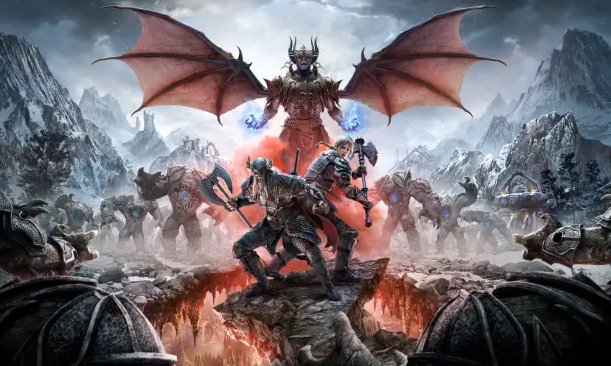
The Elder Scrolls is more than just a series of video games; it is a sprawling, living digital mythology that has redefined the open-world RPG genre. From the pixelated dungeons of Arena to the snow-capped peaks of Skyrim, millions of players have lost themselves in the province of Tamriel. Yet, even the most seasoned adventurers who have spent hundreds of hours slaying dragons and closing Oblivion Gates often only scratch the surface of this franchise’s complex history.
Behind the sweeping orchestral scores and the vast landscapes lies a development history filled with happy accidents, lore so deep it borders on the metaphysical, and design choices that changed the industry forever. Whether you are a newcomer picking up a steel sword for the first time or a veteran member of the Dark Brotherhood, there is always another layer to peel back. Let’s dive into the obscure archives of the Imperial Library to uncover the things you didn’t know about The Elder Scrolls.
1. The Franchise Originally Started as a Gladiator Combat Simulator
It is hard to imagine a world where The Elder Scrolls isn’t the gold standard for open-world exploration, but the series almost took a very different path. When development began on the first game, Arena, the team at Bethesda Softworks didn’t set out to create an epic RPG. Instead, the project was envisioned as a tactical combat game focused on a team of gladiators traveling across a world to fight in various arenas.
The “Arena” in the title was literal. However, as development progressed, the team found themselves increasingly interested in the side quests and the RPG elements they were adding between the fights. Eventually, the gladiatorial combat was sidelined in favor of a massive, procedurally generated world filled with towns and dungeons. By the time they realized the game was no longer about arenas, the marketing materials had already been printed. To fix this, they wrote lore explaining that the world of Tamriel was so dangerous it was nicknamed “The Arena,” thus keeping the title relevant to the new direction.
2. The Iconic “Arrow in the Knee” Was a Design Solution for NPCs
“I used to be an adventurer like you, then I took an arrow in the knee.” This single line of dialogue became one of the most famous internet memes in history, but its origin wasn’t a joke—it was a way to make the world feel more lived-in. When building Skyrim, the developers wanted the city guards to feel like real people with histories, rather than generic, robotic NPCs.
The writing team created a pool of “flavor text” for guards to shout as the player walked by. The “arrow in the knee” line was intended to humanize the guards, suggesting they were retired heroes who had seen combat and suffered injuries that forced them into a quieter life of city patrol. Contrary to a popular fan theory, the phrase is not old Norse slang for getting married; it was intended literally by the writers. It served its purpose so well that it became an inseparable part of the franchise’s identity, proving that small details in world-building often leave the biggest impact.
3. Procedural Generation Created a Map the Size of Great Britain
While modern titles like Skyrim focus on handcrafted, dense environments, the second entry in the series, Daggerfall, took a vastly different approach to scale. By utilizing procedural generation—algorithms that create content based on specific rules—Bethesda created a map that remains one of the largest in gaming history.
The world of Daggerfall is estimated to be around 62,000 square miles (roughly 161,000 square kilometers). To put that into perspective, it is approximately the size of Great Britain. It features over 15,000 towns and a population of 750,000 non-player characters. While much of this space was empty wilderness, the sheer ambition of creating a “true-to-scale” fantasy world was revolutionary. It allowed players to travel for hours in real-time between cities, offering a sense of isolation and scale that modern, condensed open worlds often lack in favor of constant “points of interest.”
4. The Lore Includes a Giant Robot Powered by a God’s Heart
The Elder Scrolls lore is often perceived as standard “high fantasy” involving knights and magic, but it frequently ventures into the realm of weird science fiction. One of the most significant pieces of lore involves the Numidium, a colossal brass golem or “Brass God” built by the Dwemer (Deep Elves).
The Numidium wasn’t just a big robot; it was a reality-warping machine designed to help the Dwemer transcend mortality. It was powered by the Heart of Lorkhan, the literal heart of a dead god. When the Numidium was activated, it caused “Dragon Breaks”—events where time becomes non-linear and multiple contradictory timelines happen simultaneously. This is why the series has such a flexible history; the writers used these metaphysical events to explain away different player choices in previous games. This “metaphysical” layer of the lore is what separates Tamriel from other fantasy settings, turning it into a world where reality itself is often fragile.
5. The “Lusty Argonian Maid” Was Written by a Failed Politician
One of the most recurring and humorous elements in the series is a series of in-game books titled The Lusty Argonian Maid. These short plays, which feature suggestive dialogue between an Argonian servant and her master, have appeared in almost every game since Morrowind.
The fictional author of these plays is a character named Crantius Colto, but the real-world lore behind the author of the character is even better. In the world of Morrowind, the “author” is actually Uncle Crassius Curio, a high-ranking member of House Hlaalu. He is depicted as a somewhat eccentric and lecherous nobleman who demands “favors” from the player. This character adds a layer of satire to the game, poking fun at the tropes of fantasy literature while providing a weirdly consistent piece of cultural history that spans hundreds of years within the game’s timeline.
6. Many Famous Voices Have Graced the Provinces of Tamriel
The Elder Scrolls has a long history of employing top-tier Hollywood talent to bring its characters to life. Bethesda often uses a small pool of actors for generic NPCs, but the “main” characters are frequently voiced by cinematic legends. In Oblivion, the Emperor Uriel Septim VII was voiced by Sir Patrick Stewart, and the villainous Mankar Camoran was voiced by Terence Stamp.
In Skyrim, the legendary Max von Sydow provided the voice for Esbern, the chronicler of the Blades, while Christopher Plummer voiced Arngeir, the leader of the Greybeards. Even the “wonder woman” herself, Lynda Carter, has voiced characters across multiple games, including various Nords and Orcs. This commitment to high-quality voice acting helps ground the epic stakes of the main questlines, giving the world a sense of theatrical weight that complements its massive scale.
7. The Concept of “CHIM” Explains Why Players Can Save and Load
One of the deepest and most “meta” parts of Elder Scrolls lore is the concept of CHIM (pronounced “kim”). Within the game’s mythology, CHIM is a state of enlightenment where an individual realizes that they are part of a dream being dreamt by a supreme being called the Godhead. If the individual can maintain their sense of self despite realizing they aren’t “real,” they gain the power to reshape reality.
Many fans and lore scholars interpret CHIM as a subtle nod to the player’s role. As a player, you can save the game, load a previous state, and use “console commands” to change the world. In the lore, characters like Vivec or Talos who have achieved CHIM essentially have the same powers as the player. They know they are in a simulated reality and can manipulate its “code.” It’s a brilliant way to integrate the mechanics of a video game into the actual philosophy of the world.
8. The Dwemer Aren’t Actually Dwarves in the Traditional Sense
In most fantasy settings, Dwarves are short, bearded, axe-wielding miners who live in mountains. In The Elder Scrolls, the Dwemer are actually a race of Elves (the “Mer” suffix in Dwemer, Altmer, Dunmer, etc., denotes Elven blood). While they lived underground and were master smiths, they were physically similar in height to other Elves.
The name “Dwarf” was actually a label given to them by Giants. When the two races first met, the Dwemer appeared tiny to the massive Giants, who called them Dwarves. The name stuck among the humans and other races of Tamriel, but it is technically a misnomer. The Dwemer were a highly advanced, technological society that used steam power and tonal architecture (manipulating sound waves) to build their cities, making them more like “steampunk elves” than traditional fantasy dwarves.
9. A Single “Bug” Inspired the Entire Dark Brotherhood
The Dark Brotherhood is the most famous guild of assassins in the franchise, known for their mysterious “Black Sacrament” ritual and their devotion to the Dread Father, Sithis. However, their inclusion as a playable, deep faction was inspired by a bug in the early development of the series.
During the development of Daggerfall, the developers noticed that players were finding ways to kill NPCs they weren’t supposed to, or were behaving like outlaws. Instead of just punishing the player with guards, the team decided to lean into the “criminal” playstyle. They created a secret society that would contact the player if they committed a murder, leading to the birth of the Dark Brotherhood. What started as a way to handle player agency and “deviant” behavior turned into one of the most beloved and atmospheric questlines in the history of the RPG genre.
10. The Music is Designed to be “Circular” and Everlasting
The theme music for The Elder Scrolls is instantly recognizable, specifically the soaring “Nerevar Rising” and “Dragonborn” themes. Composer Jeremy Soule designed the music of the series with a specific philosophy: it should feel like it has no beginning and no end.
The music is composed in a way that it can loop seamlessly, which is essential for a game where players might spend ten hours straight exploring a single region. More importantly, the main theme has been rearranged and re-orchestrated for every major game since Morrowind. By using the same basic melody but changing the instruments and tone (from the ethereal woodwinds of Morrowind to the brassy, masculine choir of Skyrim), the music creates a sense of “mythic recurrence.” It tells the player that while the hero and the location have changed, they are still part of the same eternal cycle.
Further Reading
- The Infernal City: An Elder Scrolls Novel by Greg Keyes
- Lord of Souls: An Elder Scrolls Novel by Greg Keyes
- The Skyrim Library, Vol. 1: The Histories by Bethesda Softworks
- The Elder Scrolls V: Skyrim – The Poster Collection by Insight Editions


Leave a Reply