
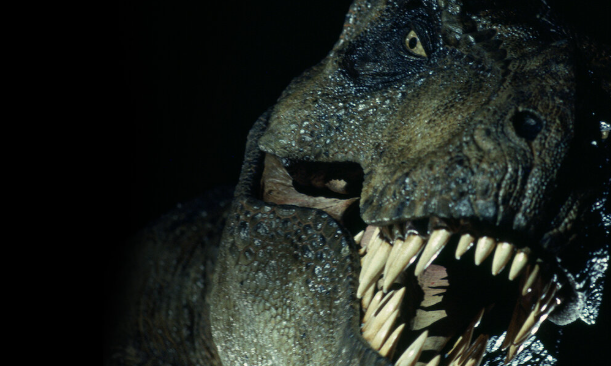
The Jurassic Park franchise is more than just a series of blockbuster movies; it is a cultural phenomenon that fundamentally changed how the world perceives the prehistoric past. When the first film roared into theaters, it didn’t just break box office records—it revolutionized visual effects and sparked a global “Dino-mania” that has never truly subsided. From the terrifying ripples in a water cup to the sprawling high-tech chaos of a modern theme park, the series has consistently pushed the boundaries of what is possible on screen.
Yet, behind the awe-inspiring spectacle of genetically engineered dinosaurs lies a production history filled with groundbreaking innovation, lucky accidents, and “what if” scenarios that could have led to a very different cinematic landscape. Whether you are a casual fan of the summer blockbusters or a die-hard enthusiast of the original novels, there are layers to this 65-million-year-old story that remain hidden in the tall grass. Let’s excavate the archives to uncover ten things you didn’t know about the Jurassic Park movies.
1. The Iconic Water Ripple Was Inspired by an Earthshaking Subwoofer
One of the most famous shots in cinematic history is the simple, rhythmic ripple in a cup of water on a jeep’s dashboard, signaling the approach of the Tyrannosaurus rex. This moment of pure tension was actually one of the most difficult shots to achieve technically. Steven Spielberg was inspired to include it after listening to a loud song by Earth, Wind & Fire in his car, which caused the rearview mirror to vibrate.
To recreate this effect on set, the production team initially struggled to get the water to move in a perfectly circular, rhythmic pattern. They tried various methods before the special effects lead, Michael Lantieri, discovered the solution. He placed a guitar string under the dashboard, fed it through the bottom of the cup, and had a crew member pluck the string. This created the exact concentric vibration Spielberg wanted. It is a perfect example of how a low-tech, practical solution created one of the most sophisticated moments of suspense in film history.
2. The T-Rex Was Terrifyingly Prone to “Coming to Life” in the Rain
The life-sized animatronic T. rex used in the first film was a marvel of engineering, weighing 12,000 pounds and standing 20 feet tall. However, the machine had a significant weakness: water. The foam rubber skin of the dinosaur acted like a giant sponge, soaking up the moisture during the iconic rainy breakout scene. As the skin absorbed water, the animatronic became much heavier than its hydraulic system was designed to handle, causing it to shake and shiver uncontrollably.
Between takes, the crew had to rush in with towels and hair dryers to literally “dry off” the dinosaur so it would stop twitching. On several occasions, the animatronic would spontaneously lurch or snap its jaws during lunch breaks because of the water-induced technical glitches. The crew described it as having a “phantom mind” of its own, creating a truly frightening atmosphere on set that likely helped the actors channel genuine fear during their scenes.
3. The Raptor Screams Are Actually Mating Tortoises
Sound design is the unsung hero of the franchise, as nobody actually knows what a dinosaur sounded like. Sound designer Gary Rydstrom had to get creative to develop the “voices” of these prehistoric predators. To create the chilling, high-pitched barks and chirps of the Velociraptors, Rydstrom recorded a variety of animals, but the core of the Raptor’s communication came from a surprising source: tortoises mating.
The raspy, rhythmic hooting sound heard when the Raptors are communicating in the kitchen was a slowed-down recording of those reptiles. Rydstrom also layered in the sounds of breathing horses and hissing geese to give the predators a more bird-like, intelligent quality. This sonic cocktail was so effective that it defined the “voice” of the Raptor for generations, proving that movie magic often comes from the most mundane (and awkward) corners of the natural world.
4. The Famous “Clever Girl” Line Was Almost Cut
The character of Robert Muldoon, the park’s gamekeeper, provided one of the most quoted lines in the series: “Clever girl,” uttered right before a Velociraptor ambushes him. This moment is essential for establishing the Raptors as strategic hunters, but early drafts of the script and different storyboard iterations focused more on a standard action-oriented death for the character.
It was actor Bob Peck’s delivery and the collaboration between the writers and Spielberg that solidified the line. They wanted to show that even the most experienced hunter in the world respected the intelligence of his prey. The line became a shorthand for the theme of the entire franchise: the hubris of man thinking he can control a superior, primal intellect. The scene’s impact was so great that “Clever Girl” became a recurring motif and an unofficial mantra for the series’ fans.
5. Harrison Ford Was the Original Choice for Alan Grant
It is hard to imagine anyone other than Sam Neill playing the world-weary paleontologist Dr. Alan Grant, but the role was originally offered to a frequent Spielberg collaborator: Harrison Ford. Ford turned down the role, reportedly stating that the part wasn’t quite the right fit for him at the time. Other actors considered for the role included Kurt Russell and William Hurt.
Sam Neill was eventually cast just weeks before filming began. Neill brought a grounded, academic stoicism to the character that balanced out the “rockstar” energy of Jeff Goldblum’s Ian Malcolm. This casting choice changed the dynamic of the “survivor” group, moving away from a traditional action-hero lead toward a character who felt like a genuine scientist forced into an extraordinary situation. Neill’s performance anchored the film’s sense of wonder and realism.
6. The “Digital Revolution” Happened During Production
The original plan for the dinosaurs in Jurassic Park was to use go-motion animation (an advanced form of stop-motion) and practical animatronics. The legendary Phil Tippett was hired to handle the creature movements. However, a small team at Industrial Light & Magic (ILM) was working on a secret project to see if they could create a fully digital T. rex using computer-generated imagery (CGI).
When they showed Spielberg a demo of a digital T. rex walking across a field in daylight, the director was stunned. He realized that the technology had finally caught up to his vision. Phil Tippett famously looked at Spielberg and said, “I think I’m extinct,” a line that Spielberg liked so much he put it into the movie (spoken by Ian Malcolm). While the film still used incredible practical effects, this moment marked the exact point in film history where CGI became a viable tool for creating realistic creatures, changing the industry forever.
7. Jeff Goldblum Made Ian Malcolm an Icon Through Improvisation
In Michael Crichton’s original novel, Ian Malcolm is a somewhat pedantic and dour mathematician who spends much of the book lecturing other characters about Chaos Theory. When Jeff Goldblum was cast, he infused the character with a quirky, charismatic, and slightly eccentric energy that wasn’t entirely on the page. Many of Malcolm’s most famous mannerisms—the staccato “uh, well, there it is,” and the famous open-shirt pose—were choices made by Goldblum on set.
Goldblum also pushed for the character to be more heroic. In the script, Malcolm was supposed to run away from the T. rex when it attacked the jeeps (just as the lawyer did). Goldblum suggested that Malcolm should instead distract the dinosaur with a flare to help save the children, giving the character a heroic arc that wasn’t in the book. This change made Malcolm the heart of the franchise and ensured his return in multiple sequels.
8. The Spinosaurus Was the Largest Animatronic Ever Built
For the third installment of the series, the production team wanted to introduce a new “apex predator” to rival the T. rex: the Spinosaurus. To bring this creature to life, the Stan Winston Studio built the largest and most powerful animatronic in movie history. It was a 12-ton mechanical behemoth powered by high-pressure hydraulics that could move with terrifying speed.
The animatronic was so powerful that it actually accidentally destroyed the T. rex animatronic during the filming of their fight scene. During one take, the Spinosaurus swung its arm with such force that it ripped the head off the T. rex model. Because the machines were so expensive and complex, the crew had to work around these massive mechanical “actors” as if they were real, unpredictable animals. The Spinosaurus remains a testament to the peak of practical creature effects before the industry shifted almost entirely to digital.
9. A Hurricane Actually Hit the Set During Filming
While the characters in the first movie were dealing with a fictional tropical storm, the cast and crew were dealing with a very real one. Toward the end of filming on the island of Kauai, Hurricane Iniki—the most powerful hurricane to hit Hawaii in recorded history—struck the island directly. The production was forced to shut down, and the entire cast and crew had to huddle in the ballroom of their hotel.
Richard Attenborough (who played John Hammond) reportedly slept through the entire hurricane, later telling Spielberg that after surviving the London Blitz in World War II, a hurricane was “nothing.” Some of the footage of the stormy waves and wind seen in the final film is actual footage of the approaching hurricane captured by the crew. The disaster brought the cast closer together and added an authentic layer of “survivor” energy to their performances when filming resumed.
10. The Franchise Changed Real Paleontology Forever
The impact of Jurassic Park went far beyond the movie theater; it fundamentally altered the field of paleontology. Before the movie, dinosaurs were often portrayed in popular culture as slow, dim-witted, cold-blooded “lumbering lizards.” Spielberg worked closely with paleontologist Jack Horner to ensure the dinosaurs moved like agile, warm-blooded animals more akin to birds than crocodiles.
This portrayal sparked a massive surge in interest and funding for paleontological research, often called the “Jurassic Park Effect.” It led to a decade of groundbreaking discoveries, including feathered dinosaurs and new theories on social behavior. While the movies took creative liberties (like the size of the Raptors or the Dilophosaurus‘s frill), they were responsible for a global paradigm shift in how humanity views its prehistoric predecessors, turning fossils from dusty relics into dynamic, living history.
Further Reading
- The Making of Jurassic Park by Don Shay and Jody Duncan
- Jurassic Park (Novel) by Michael Crichton
- The Science of Jurassic Park and the Lost World by Rob DeSalle and David Lindley
- Dinosaur Lives: Revelations from 75 Million Years by Jack Horner and James Gorman

Leave a Reply