
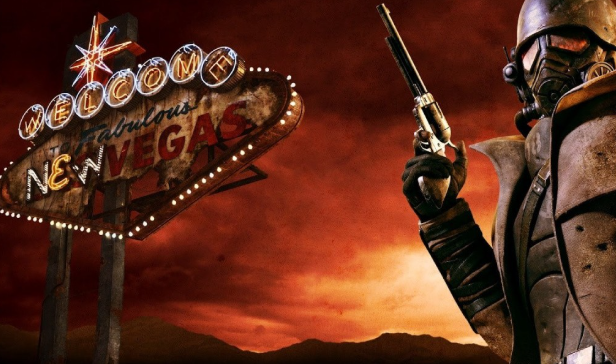
The Mojave Wasteland is a place of sun-scorched earth, mutated monstrosities, and the flickering, neon promise of New Vegas. To the casual traveler, it is a treacherous desert filled with warring factions and radioactive tumbleweeds. But to the seasoned Courier, it is a masterpiece of interactive storytelling—a game that has ascended from a cult classic to a legendary pillar of the role-playing genre.
Stepping into the boots of the Courier is like walking into a high-stakes poker game where the deck is stacked and every player has a gun under the table. While many gamers have spent hundreds of hours wandering the Strip or dodging Cazadores in the Red Rock Canyon, the history of the game’s creation is as dramatic as its plot. From its lightning-fast development cycle to the hidden connections with the original creators of the Fallout universe, there is a wealth of lore buried beneath the sand.
Whether you are a newcomer just waking up in Doc Mitchell’s house or a veteran with a perfect reputation with the NCR, these ten insights will change the way you view the Mojave forever.
1. The Impossible Sprint: A Masterpiece Built in Record Time
Most modern epic-scale RPGs spend many years in development, moving through endless cycles of prototyping and polishing. However, the story of this wasteland adventure is one of incredible efficiency and creative pressure. The developers were handed the keys to the engine and given a timeline that would make most studios shudder. In a period of time shorter than many people’s college degree programs, the team managed to craft a world with more dialogue, more branching paths, and more complex systems than its predecessor.
This rapid-fire development was possible because the team at Obsidian Entertainment was composed of many industry veterans who had already lived in this universe. They didn’t need to spend months finding the “vibe” of the world; they had invented it years prior. They utilized existing assets and focused their energy on what mattered most: writing and world-building. The result was a game that felt incredibly dense and lived-in, proving that sometimes, the most inspired work comes from having your back against the wall. This feat remains one of the most impressive “crunch” success stories in the history of interactive media.
2. The Spiritual Successor to the Canceled “Van Buren”
Long before the series transitioned into the third-person perspective we know today, there was a project codenamed “Van Buren.” This was meant to be the original third entry in the series, developed by Black Isle Studios. When that studio folded, the ideas for Van Buren seemed lost to the sands of time. However, many of the minds behind that canceled project ended up at Obsidian, and they brought their notebooks with them.
When you play through the Mojave, you are actually experiencing the “ghost” of Van Buren. Elements like Caesar’s Legion, the conflict at Hoover Dam, and even specific characters like Joshua Graham were originally conceived for that lost isometric game. This is why the narrative feels so much more “connected” to the original two games in the series compared to other modern iterations. It wasn’t just a new game; it was a decades-old vision finally being realized with modern technology. For fans of the classic era, this game isn’t just a spin-off; it’s the true completion of a story that started in the late nineties.
3. A Star-Studded Voice Cast Born from Real Fandom
The Mojave is populated by voices that might sound eerily familiar, and that’s because the game features one of the most impressive casts in gaming history. Perhaps the most famous story involves the character of Benny, the checked-suit-wearing gangster who shoots the protagonist in the opening cinematic. Benny was voiced by Matthew Perry, who was a massive fan of the series in real life. After expressing his love for the previous game on a national talk show, the developers reached out and offered him a role.
But the talent doesn’t stop there. The legendary Ron Perlman returns as the narrator, providing the iconic “War never changes” monologue. You can also hear the voices of Danny Trejo as the lovable ghoul mechanic Raul, and Felicia Day as the optimistic scribe Veronica. Even Mr. House, the enigmatic ruler of New Vegas, is voiced by Rene Auberjonois of Star Trek fame. This level of talent helped elevate the script from a standard video game story to a cinematic experience, making every conversation feel like a high-stakes encounter in a classic film noir.
4. The Secret Genius of the Wild Wasteland Perk
In most role-playing games, your character’s traits provide statistical bonuses—more strength, faster healing, or better aim. However, one specific trait in this game offers no mechanical benefit at all. Instead, the “Wild Wasteland” perk acts as a stylistic filter for the entire world. When selected, it replaces standard encounters with bizarre, surreal, and often hilarious pop-culture references that would otherwise break the “seriousness” of the post-apocalyptic setting.
From finding a refrigerator containing a skeleton wearing a fedora (a nod to a famous archeologist) to encountering “Rodents of Unusual Size,” the Wild Wasteland perk is a love letter to the fans. It allows the game to maintain its dark, gritty tone for standard players while offering a chaotic, “weird fiction” experience for those who want it. It’s a brilliant piece of game design that acknowledges the series’ roots in dark humor and B-movie tropes without forcing those jokes on players who prefer a more grounded survival experience.
5. Invisible Walls Made of Deathclaws
Open-world games often struggle with a specific problem: how do you stop a player from walking straight to the end of the game immediately? Many titles use literal invisible walls or “out of bounds” messages. The designers of the Mojave took a more organic—and terrifying—approach. If you look at a map, the city of New Vegas is directly north of the starting town. A player might think, “I’ll just walk straight there.”
To prevent this, the developers placed high-level predators like Deathclaws and Cazadores in the direct path to the north. These creatures act as “soft” gates. You can try to sneak past them, but for most beginners, these monsters serve as a clear signal: “You aren’t ready for the big city yet. Go south, learn the world, and grow stronger.” This encourages the player to follow a horseshoe-shaped path through the desert, meeting key factions and understanding the political climate before they ever set foot on the Strip. It is a masterclass in using “predatory level design” to guide player behavior.
6. The Reputation System: Beyond Good and Evil
In many games, your moral choices are tracked on a simple slider: Good on one side, Evil on the other. This Mojave adventure threw that simplistic system away in favor of a much more complex “Reputation” mechanic. Instead of the world simply knowing if you are a “saint” or a “sinner,” the game tracks how every individual faction perceives you. You can be a hero to the New California Republic while being a “Merciful Thug” to the Powder Gangers.
This system creates a world of shades of gray. You might do something objectively “good,” like helping a town, but if that action hurts a specific faction’s interests, they will hate you for it. This forces the player to think like a diplomat rather than a superhero. Your reputation isn’t just a score; it determines which towns will shoot at you on sight, which merchants will give you discounts, and which ending the world will ultimately face. It turns every quest into a political calculation, making your choices feel heavy and consequential.
7. The Tragedy of Ulysses and the Cut Content
Every great game has “the one that got away,” and for this title, that is the original vision for the character Ulysses. Long before he appeared in the final expansion pack, Ulysses was intended to be a companion in the base game. He was designed to be a complex mirror to the player—a fellow Courier with a deep, personal history with the land. Unfortunately, due to the aforementioned tight development schedule and the sheer volume of dialogue he required, he had to be cut from the initial release.
However, the developers didn’t just delete him; they left clues about him throughout the world. You can find logs and mentions of “the other Courier” long before you ever meet him. This created an accidental sense of mystery and foreshadowing that spanned the entire lifecycle of the game’s additional content. When he finally appeared, he wasn’t just a new character; he was a legend that had been whispered about since the beginning. This “planned” cut content ended up enriching the lore in a way that few other games have managed to replicate.
8. Hardcore Mode: The Birth of a New Genre Standard
Before “Survival Games” became a massive genre of their own, this title introduced a revolutionary toggle called “Hardcore Mode.” While standard play focused on combat and questing, Hardcore Mode turned the Mojave into a true test of endurance. In this mode, ammunition has weight, you must manage dehydration, hunger, and sleep, and healing items work slowly over time rather than providing an instant health boost.
Most importantly, in Hardcore Mode, your companions can actually die in combat. This changed the entire emotional weight of the game. Suddenly, your robotic dog or your sniper friend wasn’t just a “combat pet”—they were a living being you were responsible for protecting. This mode was so popular that it influenced the design of almost every first-person RPG that followed. It proved that players didn’t just want to feel powerful; they wanted to feel the struggle of surviving in a world that was actively trying to kill them.
9. The Soundtrack of the Sands
Atmosphere is everything in a post-apocalyptic world, and the audio design of the Mojave is a carefully crafted blend of nostalgia and dread. The soundtrack is divided into two distinct halves: the licensed radio music and the ambient score. The radio features “Mid-Century Modern” hits that evoke a world frozen in a 1950s vision of the future. These upbeat tunes create a haunting irony when you are fighting for your life against mutated scorpions.
The ambient score, however, is where the true storytelling happens. The composer utilized “industrial” sounds—the clanging of metal, distant desert winds, and low, ominous synths. Interestingly, many of these tracks are actually remastered versions of the music from the original Fallout games. This was a deliberate choice to trigger a sense of “musical memory” for long-time fans. When you enter a dark bunker and hear a specific, metallic drone, your brain subconsciously connects it to the terrifying experiences of the past, deepening the immersion without saying a single word.
10. A World Built on Player Agency
The final and most important secret of the Mojave is that there is no “correct” way to play. Unlike many narrative-driven games that guide you toward a “Good Ending,” this title is famous for its lack of a moral compass. You are given four distinct paths to the finale: you can support the democratic but bloated NCR, the brutal and disciplined Legion, the visionary but cold Mr. House, or you can simply throw them all out and claim the Mojave for yourself.
The developers went to incredible lengths to ensure that almost every quest could be completed in multiple ways. You can use your silver tongue to talk a boss into surrendering, use your repair skills to fix a broken machine instead of fighting, or simply go in with guns blazing. This commitment to player agency is why people still discuss the game years after its release. Every player has a different story of who they allied with and why. In the end, the game isn’t about saving the world; it’s about deciding what kind of world is worth saving.
Further Reading
- The Art of Fallout: New Vegas – A deep dive into the visual design and concept art of the Mojave.
- Blood, Sweat, and Pixels by Jason Schreier – Features a fascinating chapter on the high-pressure development of the game.
- Fallout: The Vault Dweller’s Official Strategy Guide – While technical, it offers a look at the sheer density of the game’s branching paths.
- A Canticle for Leibowitz by Walter M. Miller Jr. – A classic post-apocalyptic novel that heavily influenced the themes of the series.




Leave a Reply