
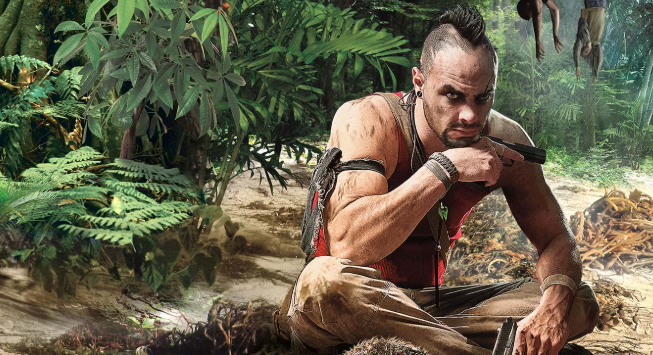
The tropical breeze carries the scent of hibiscus and salt spray, but in the world of Far Cry 3, that beauty is a lethal deception. Far from the civilized world, hidden within the emerald canopy of the Rook Islands, lies a playground of madness, violence, and primitive survival. When it first arrived on the gaming scene, it didn’t just provide a sequel; it provided a blueprint. It took the sprawling, often aimless nature of open-world exploration and injected it with a shot of adrenaline and a terrifyingly charismatic soul.
To understand Far Cry 3 is to understand the moment the “modern” shooter was born. It is a story of a boy becoming a warrior, a tourist becoming a killer, and a paradise becoming a purgatory. Whether you are a veteran who has liberated every outpost or a newcomer curious about the legend of Vaas Montenegro, the legacy of this game remains an evergreen titan of the industry. This guide delves into the 10 core pillars that make this journey into the heart of darkness an unforgettable masterpiece of interactive storytelling.
1. The Metamorphosis of Jason Brody
At the start of the journey, Jason Brody is the antithesis of a hero. He is a privileged, somewhat shallow young man on a thrill-seeking vacation with his friends and brothers. He represents the “everyman” tourist—someone who has never held a gun or faced a life-or-death situation. When their skydiving trip lands them in the clutches of ruthless pirates, Jason’s descent into the jungle is not just a physical escape; it is a psychological transformation.
As the player progresses, Jason’s dialogue, animations, and even his worldview shift. He begins as a trembling victim and evolves into a cold-blooded predator. This character arc is one of the most celebrated in gaming because it addresses the “ludonarrative dissonance” often found in shooters. The game acknowledges that killing hundreds of people should change a person. Jason’s addiction to the “power of the jungle” creates a tragic friction between his old life and his new, violent identity. By the end, the player is forced to wonder if the man they’ve built is any better than the monsters he was sent to destroy.
2. Vaas Montenegro and the “Definition of Insanity”
Though he is technically a secondary antagonist working for a larger criminal empire, Vaas Montenegro became the face of the franchise. Portrayed with terrifying intensity by actor Michael Mando, Vaas is a masterpiece of character design. He is unpredictable, poetic, and utterly broken. His “Definition of Insanity” monologue—delivered while the player is trapped and vulnerable—has become one of the most iconic moments in digital entertainment history.
Vaas works because he isn’t a world-ending threat with a complex political agenda; he is a personal nightmare. He views the world through a lens of nihilism and chaotic energy, serving as a dark reflection of what Jason Brody could become. His presence elevates the game from a standard military shooter to a psychological thriller. Even when he isn’t on screen, his influence is felt in every radio broadcast and every pirate camp. He redefined what a “video game villain” could be, moving away from mustache-twirling tropes toward a grounded, visceral sense of danger that feels uncomfortably real.
3. The Rook Islands: A Living, Breathing Ecosystem
The setting of the Rook Islands is more than just a backdrop; it is a character in its own right. Divided into a North and South Island, the environment is a lush, sprawling expanse of tropical rainforests, hidden caves, and ancient ruins. Unlike many open worlds that feel static, the Rook Islands are a “systemic” playground. This means that the various elements of the world—AI factions, wildlife, and physics—interact with each other without the player’s intervention.
You might be stalking a pirate patrol only to see a tiger leap from the brush and do the job for you. A fire started by a stray grenade can spread through dry grass, flushing out enemies or cutting off your own escape route. This unpredictability makes every excursion into the wild feel unique. The world feels “lived-in” and dangerous, rewarding players who take the time to observe the ecosystem rather than just charging in with guns blazing. It set the standard for “organic” exploration that many modern titles still struggle to emulate.
4. The Tatau: Mapping Growth on the Skin
Progression in Far Cry 3 is visually represented through the “Tatau,” a traditional warrior’s tattoo that grows on Jason’s arm as he learns new skills. Divided into three paths—The Heron (long-range and mobility), The Shark (assault and healing), and The Spider (stealth and takedowns)—the Tatau serves as a physical manifestation of the player’s playstyle. As you unlock powerful abilities, the ink becomes more intricate, marking Jason’s transition into a legendary “warrior of the Rakyat.”
This system is a brilliant way to integrate “RPG elements” into an action game. Each new skill isn’t just a stat boost; it’s a new way to interact with the world. You might learn to perform a “Death from Above” takedown or the ability to chain kills together in a blur of steel. By the time Jason’s arm is fully sleeved in ink, he looks—and feels—like a demigod of the brush. It provides a satisfying sense of progression that feels earned, tying the mechanical growth of the character directly to the cultural lore of the islands.
5. The Revolutionary Outpost System
Before Far Cry 3, many shooters relied on scripted levels and linear progression. This game introduced the concept of “liberating outposts,” a mechanic that has since become a staple of the genre. Scattered across the islands are enemy-controlled bases that serve as fast-travel points and safe houses once cleared. The brilliance of the outpost system lies in its total player freedom.
You can sit on a distant ridge with a silenced sniper rifle and pick off guards one by one. You can sneak into the heart of the base and disable the alarms to prevent reinforcements. Or, you can drive a jeep loaded with C4 through the front gate while a captured leopard you just released from a cage wreaks havoc. This “sandbox” approach to combat turned every outpost into a mini-puzzle. The rewards—map clarity and new missions—provided a constant “gameplay loop” that kept players engaged for dozens of hours, making the act of reclaiming the island feel like a tangible military campaign.
6. Crafting and the Hunt for Survival
Survival in the Rook Islands requires more than just ammo; it requires resources. Far Cry 3 popularized a crafting system that forced players to engage with the wildlife. To carry more weapons, more loot, or more syringes, you must hunt specific animals and harvest their hides. This adds a layer of tension to the exploration, as a simple trek for goatskin can turn into a desperate fight for survival when a Komodo dragon or a crocodile decides you look like lunch.
This mechanic creates a constant reason to explore the map’s far corners. You aren’t just looking for collectibles; you are looking for that one rare tiger pelt that will allow you to carry four weapons at once. The “Path of the Hunter” missions further refine this, tasking you with killing specific, legendary animals using only certain weapons. It turns the player into a true woodsman, teaching them to listen for the growl in the grass and the rustle of the leaves, reinforcing the theme that the jungle is a place of both bounty and blood.
7. The Rakyat and the Burden of Lore
The indigenous people of the islands, the Rakyat, provide the cultural and spiritual backbone of the story. Led by the enigmatic priestess Citra, they are a warrior culture struggling to reclaim their land from the pirates and privateers. Their lore is steeped in mysticism and the worship of the “Giant,” a mythical figure that Jason eventually comes to embody in their eyes.
Interacting with the Rakyat complicates the narrative. While they are Jason’s allies, their demands are heavy. They don’t just want a soldier; they want a myth. The tension between Jason’s “modern” sensibilities and the Rakyat’s “ancient” traditions creates a compelling subtext about colonialism and the seductive nature of power. For a new fan, understanding the Rakyat is key to understanding the game’s endings. They represent the “call of the wild”—a path that offers ultimate strength but demands the total sacrifice of the person Jason used to be.
8. Verticality and the Wingsuit Revolution
While many shooters are bound to the ground, Far Cry 3 embraced verticality. The game features radio towers—massive, rickety structures that players must climb to reveal portions of the map. These climbing segments serve as environmental puzzles, offering breathtaking views of the ocean and jungle once completed. But the true game-changer was the introduction of the wingsuit and the parachute.
Once unlocked, the wingsuit allows Jason to leap from the highest peaks and soar across the valleys, turning the entire island into an aerial playground. This wasn’t just a traversal tool; it was a tactical one. Being able to glide silently into an enemy camp from a thousand feet in the air added a whole new dimension to the stealth gameplay. It gave the world a sense of scale and freedom that was virtually unmatched at the time of its release, making the act of moving from point A to point B an exhilarating mini-game in itself.
9. A Masterclass in Hallucinogenic Storytelling
The journey into madness isn’t just metaphorical; it is often literal. Throughout the game, Jason is exposed to various drugs, mushrooms, and ancient rituals that trigger vivid, surreal hallucinations. These sequences are used to explore his psyche, his fears, and his growing detachment from reality. They are some of the most visually creative moments in the game, featuring gravity-defying landscapes and giant, metaphorical monsters.
These “trips” serve a vital narrative purpose. They allow the developers to break the rules of a “realistic” shooter and show the player what is happening inside Jason’s head. Whether he is fighting a giant ink demon or walking through a dreamscape of his own memories, these sequences elevate the story to a more artistic level. They reinforce the idea that the “insanity” Vaas talks about isn’t just a character trait—it’s an infection that is slowly taking hold of the protagonist and the player alike.
10. The Choice: Two Paths to the End
The conclusion of Far Cry 3 is famous for forcing the player to make a definitive choice that determines Jason’s fate. Without spoiling the specifics for new fans, the ending serves as a final examination of everything you’ve learned. Do you hold onto the shreds of your humanity and the people who knew you before the island, or do you fully embrace the “warrior” and the blood-soaked destiny the Rakyat have laid out for you?
This choice isn’t just a binary “good vs. evil” button. It is a reflection on the player’s own experience. By the end of the game, you are a master of the jungle. You are a dealer of death. The question the game asks is whether you can ever truly go home after what you’ve done. It is a haunting, evocative finale that stays with you long after the credits roll, cementing the game’s status as a profound meditation on the cost of violence and the seductive nature of the “primitive” self.
Further Reading
If you are captivated by the themes of survival, tropical isolation, and the descent into madness found in the Rook Islands, these books offer a similar atmospheric experience:
- The Beach by Alex Garland
- Lord of the Flies by William Golding
- Heart of Darkness by Joseph Conrad
- The Island of Doctor Moreau by H.G. Wells




Leave a Reply