
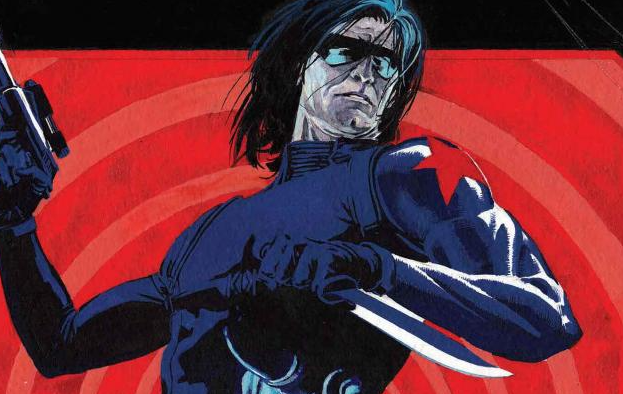
In the vast landscape of comic book lore, few characters have undergone a transformation as radical or as heart-wrenching as James Buchanan “Bucky” Barnes. For decades, he was remembered as the bright-eyed teenage sidekick who perished alongside Captain America in the closing days of World War II. He was the symbol of innocence lost—a tragedy that served as the primary motivation for Steve Rogers’ unwavering sense of duty.
However, the “Ghost of the Cold War” eventually emerged from the shadows, revealing a story of survival, brainwashing, and a grueling road to redemption. The Winter Soldier is no longer just a memory; he is a master of espionage, a formidable warrior, and a complex hero who proves that one’s past does not have to dictate their future. Whether you know him from the silver screen or the classic panels, these ten pillars of his history are essential to understanding the man behind the metal arm.
1. The Original Golden Age Sidekick
Long before he was a silent assassin, James Buchanan Barnes was the ultimate symbol of American youth during the 1940s. Unlike many other sidekicks of the era, Bucky was not just a kid tagging along; he was a trained soldier. Orphaned at a young age, he became the “mascot” of Camp Lehigh, where he eventually discovered Steve Rogers’ secret identity. Instead of reporting him, Bucky joined the war effort as Captain America’s partner.
In those early days, Bucky served a specific tactical purpose. While Captain America was the symbol of the front lines, Bucky was often tasked with the “dirtier” aspects of warfare—scouting, infiltration, and tasks that required a level of pragmatism the Star-Spangled Avenger couldn’t always embody. This duality established the foundation of his character: a man willing to do the difficult things in the shadows so that the symbols of light could remain untarnished. His early life was a whirlwind of patriotism and peril, setting the stage for the tragedy that would follow.
2. The Death That Changed Everything (Until It Didn’t)
For over forty years, one of the most famous “rules” in the comic book industry was that nobody stayed dead except for Bucky, Jason Todd, and Uncle Ben. Bucky’s “death” occurred during a mission to intercept an experimental drone plane launched by Baron Zemo. As the plane took off, Steve and Bucky leaped to disable it. Steve fell into the icy North Atlantic, but Bucky remained trapped as the plane exploded.
This event was a cornerstone of Marvel history. For decades, Steve Rogers carried the crushing weight of Bucky’s demise, believing he had failed his young friend. This survivor’s guilt defined Captain America’s character for the modern age, making him a “man out of time” mourning a lost generation. When the Winter Soldier was eventually revealed to be a survived and revived Bucky, it wasn’t just a plot twist; it was a fundamental shift in the Marvel Universe that forced every hero to re-evaluate what they knew about the cost of war and the finality of death.
3. Rebirth Through Soviet Science
Bucky didn’t actually die in the explosion; instead, the freezing waters of the Atlantic preserved his body, though he lost his left arm. He was recovered by a Soviet submarine, which hoped to find the Super Soldier Serum in his blood. Finding none, the Soviet scientists of Department X decided to turn the American hero into their own ultimate weapon. They utilized advanced cybernetics to replace his missing limb and subjected him to brutal mental conditioning.
The transformation into the Winter Soldier involved erasing his memories and replacing them with a singular loyalty to the state. To prevent him from aging or regaining his humanity, the Soviets kept him in cryostatic stasis between missions. He would be “thawed” only to perform high-stakes assassinations, earning him the reputation of a ghost—a phantom operative who appeared, struck, and vanished back into the ice for decades. This cycle of violence and sleep effectively turned Bucky into a living weapon, disconnected from time and his own soul.
4. The Iconic Cybernetic Arm
The most visually striking aspect of the Winter Soldier is his bionic left arm. While it has undergone several upgrades over the years—shifting from Soviet tech to Stark Industries designs and even Wakandan vibranium—its core function remains the same: it makes him a powerhouse. The arm grants him superhuman strength, allowing him to punch through steel, crush weaponry, and hold his own against physically superior opponents like the Hulk or Captain America.
Beyond raw power, the arm is a masterwork of espionage technology. It is capable of emitting electromagnetic pulses (EMPs) to disable electronics, firing electrical bolts, and operating independently of his body if detached. It can even be controlled remotely. However, the arm also serves as a constant, heavy reminder of his trauma. It is a piece of machinery that replaced his humanity, symbolizing the way his life was dismantled and rebuilt by others for the sake of war.
5. The “Longest Winter” and the Ghost of History
Because he was kept in cryostasis, the Winter Soldier existed as a shadow throughout the 20th century. While Steve Rogers was frozen in a block of ice, Bucky was active during the most turbulent moments of the Cold War. He was responsible for some of the most high-profile political assassinations in history, operations so clean and efficient that most intelligence agencies dismissed the “Winter Soldier” as a mere urban legend.
This era of his life is often referred to as his “Longest Winter.” He was the invisible hand behind geopolitical shifts, trained in every form of combat and fluent in multiple languages. This deep history gives the character a unique perspective on the world; he has seen the dark underbelly of history that Captain America was spared from seeing. This background as a “wetworks” operative makes him one of the most dangerous tacticians in the Marvel Universe, possessing a lethal skill set that few other heroes can match.
6. Shattering the Brainwashing
The return of the Winter Soldier culminated in a legendary confrontation with Steve Rogers. During a high-stakes battle involving the Cosmic Cube, Captain America gained control of the reality-warping artifact. Instead of using it to win the fight or change the world, Steve used his one wish to restore Bucky’s memories. He uttered the iconic command: “Remember who you are.”
The result was both a blessing and a curse. The mental barriers crumbled, and decades of repressed guilt, horror, and identity came rushing back to Bucky Barnes. While he was no longer a puppet of the Soviets, he was now a man who remembered every single life he had taken. This moment transitioned the character from a villainous antagonist into a tragic protagonist. His journey since then has not been about seeking power, but about the agonizing process of self-forgiveness and reclaiming a name that was once synonymous with heroism.
7. Taking Up the Shield as Captain America
One of the most significant chapters in Bucky’s life occurred following the supposed death of Steve Rogers. In his will, Steve requested that the mantle of Captain America be passed to Bucky, believing that only his oldest friend could truly understand the weight of the shield. Bucky initially resisted, feeling unworthy of the title given his blood-stained past, but he eventually stepped up to honor Steve’s legacy.
Bucky’s tenure as Captain America was distinct from Steve’s. He wore a reinforced, tactical suit and continued to use a pistol and his bionic arm, acknowledging that he was a different kind of soldier. He brought a grittier, more pragmatic approach to the role. During this time, he led the Avengers and proved to the world—and himself—that he could be a symbol of hope. This era solidified the fact that Bucky Barnes was not just a sidekick or an assassin, but a hero capable of standing at the center of the Marvel Universe.
8. Alliances with the Black Widow and the Thunderbolts
The Winter Soldier’s social circle is primarily composed of other characters who have lived in the gray areas of morality. He shares a deep, storied romantic and professional history with Natasha Romanoff (Black Widow). Both were trained in the same Soviet facilities, and Bucky actually served as one of her instructors during his brief periods of wakefulness. Their shared trauma and “red in their ledgers” create a bond of mutual understanding that few other characters can replicate.
Additionally, Bucky has often found a home leading the Thunderbolts, a team typically comprised of former villains seeking redemption. As a leader, Bucky uses his experience with brainwashing and state-sponsored violence to guide others who are trying to turn their lives around. He functions best with those who understand that the world isn’t black and white, acting as a mentor to the misunderstood and a guardian against the threats that “cleaner” heroes might miss.
9. A Master of Espionage and Tactical Warfare
While many heroes rely on flashy superpowers, the Winter Soldier is defined by his peak human conditioning and tactical brilliance. He is often cited as one of the greatest marksmen and hand-to-hand combatants in the world. His training allows him to assess a room in seconds, identifying exit points, weapons, and threats before a fight even begins. He is a master of stealth, able to bypass modern security systems that baffle even the most advanced hackers.
His combat style is a brutal blend of Systema, Krav Maga, and various martial arts, designed to end fights as quickly and efficiently as possible. When paired with his bionic arm, he becomes a surgical instrument of war. He doesn’t just fight; he deconstructs his opponents. This emphasis on skill over “powers” makes him a grounded character who relies on his wits and his will to survive, often acting as the “intelligence” operative for larger teams like the Avengers.
10. The Eternal Search for Redemption
The core of the Winter Soldier’s modern identity is the search for redemption. Unlike many characters who move on from their dark pasts, Bucky Barnes is perpetually haunted by his. He maintains a “list” of his former victims and their families, often working in secret to right the wrongs he committed while under Soviet control. This drive for atonement is what makes him a truly “evergreen” character; his struggle is universal and timeless.
He represents the idea that no matter how far one falls, and no matter how much one is manipulated by outside forces, there is always a path back to the light. Bucky doesn’t want to be a celebrity; he wants to be a good man. This humility and relentless pursuit of justice—carried out in the shadows—ensures his place as one of Marvel’s most compelling and relatable figures. He is the soldier who never stopped fighting, even when the war was supposed to be over.
Further Reading
To truly understand the depth of the Winter Soldier’s journey, these graphic novels are essential starting points:
- Captain America: Winter Soldier by Ed Brubaker and Steve Epting
- Winter Soldier: The Bitter March by Rick Remender and Roland Boschi
- Captain America: The Death of Captain America by Ed Brubaker
- Winter Soldier: Second Chances by Kyle Higgins and Rod Reis


Leave a Reply