
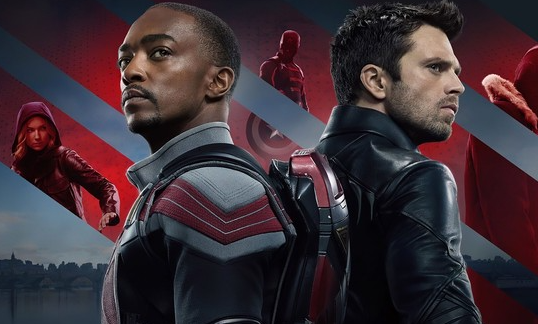
The legacy of a shield is more than just vibranium and paint; it is the weight of a nation’s history, its promises, and its failures. While the world mourned the end of an era, two unlikely allies—Sam Wilson and Bucky Barnes—were forced to step out of the shadow of a legend to define what a hero looks like in a modern, fractured world. This journey isn’t just a high-octane global adventure; it is a gritty exploration of identity, systemic injustice, and the heavy burden of the past.
As the globe grapples with the “Blip”—the return of half the population after a five-year absence—the resulting chaos creates a vacuum of power and a rise in radicalism. In this landscape, the question of who gets to carry the mantle of Captain America becomes a flashpoint for social and political tension. Whether you are a dedicated fan of the cinematic universe or a newcomer interested in a superhero story with real-world resonance, these ten pivotal moments trace the evolution of a new Captain America and the redemption of a former assassin.
1. The Relinquishing of the Shield
The story begins with a choice that reverberates through the entire narrative: Sam Wilson donating Captain America’s shield to the Smithsonian. Despite being hand-chosen by Steve Rogers to succeed him, Sam struggles with the optics and the internal weight of a Black man representing a country with a complicated history of oppression. He views the shield as a museum piece—a symbol belonging to a specific man and a specific time—rather than a mantle he is ready to claim. This act of humility, however, is met with a stinging betrayal when the government immediately introduces a “new” Captain America, proving that the symbol was never Sam’s to give away in the eyes of those in power. It sets up the central conflict of the series: Is the legacy defined by the object, or the person holding it?
2. The Rise of the Flag Smashers
In the wake of the world’s restoration, millions find themselves displaced as borders are reinstated and resources become scarce. Enter the Flag Smashers, a group of empowered activists led by Karli Morgenthau. Their motto, “One World, One People,” sounds noble, but their methods quickly turn violent. Having taken a recreated Super Soldier Serum, they possess the physical might to challenge world governments. The Flag Smashers serve as the primary ideological antagonists, representing the desperate “left-behind” population. Their existence forces Sam and Bucky to confront the fact that the world didn’t just go back to normal after the big battle; it became more divided, and the line between “terrorist” and “freedom fighter” is often a matter of perspective.
3. The Introduction of John Walker
When the U.S. government unveils John Walker as the new Captain America, the world meets a man who is the physical embodiment of a “perfect soldier.” A highly decorated military veteran, Walker is determined to do the job right, but he lacks the specific “moral compass” that made Steve Rogers unique. Unlike Steve, who was a “good man” before he was a soldier, Walker is a soldier first. His presence creates immediate friction with Sam and Bucky, who see him as an interloper wearing their friend’s “work clothes.” Walker’s arc is a tragic study of how the pressure of an impossible legacy, combined with the lack of a support system, can corrupt even the most disciplined individual.
4. The Discovery of Isaiah Bradley
In one of the most profound moments in superhero storytelling, Sam discovers a secret history hidden from the public: Isaiah Bradley. Isaiah was a Black Super Soldier who served his country during the Korean War, only to be imprisoned, experimented upon, and erased from history by the very government he fought for. His existence shatters Sam’s perception of the Captain America legacy. Isaiah’s bitterness and pain serve as a warning of what happens when a Black man serves a country that does not love him back. This encounter is the emotional core of the series, forcing Sam to decide if he wants to fight for a symbol that has historically been used to marginalize people who look like him.
5. The Unlikely Alliance with Baron Zemo
To track down the source of the new Super Soldier Serum, Sam and Bucky are forced to break an old enemy out of prison: Baron Helmut Zemo. Zemo, the man who once tore the Avengers apart, becomes a sophisticated, albeit dangerous, ally. His perspective is unique; he views “super people” as an inherent path to supremacy and fascism. While he assists the duo, he remains steadfast in his mission to eliminate all Super Soldiers, including the Flag Smashers. The trio’s journey through the criminal underworld of Madripoor adds a layer of international espionage to the story, highlighting that the world of heroes and villains is rarely black and white, but rather many shades of gray.
6. The Breaking of John Walker
The tension within John Walker finally snaps during a public confrontation in Latvia. After his partner, Lemar Hoskins (Battlestar), is accidentally killed in a fight with the Flag Smashers, Walker—who has recently injected himself with the Super Soldier Serum—loses all restraint. In a horrifying display of violence, he uses the shield to kill a surrendering Flag Smasher in front of a crowd of civilians with cell phones. The image of the shield, stained with blood, becomes an instant global symbol of the failure of the government’s “new” hero. This moment marks the definitive end of Walker’s tenure as Captain America and proves that the serum only amplifies what is already inside a person.
7. The Battle for the Shield
Following Walker’s fall from grace, Sam and Bucky confront him in an abandoned warehouse to reclaim the shield. The ensuing fight is brutal and personal. It isn’t just about a piece of equipment; it is about stripping a man of an honor he has desecrated. Sam and Bucky work in tandem, their chemistry finally solidifying as they manage to break Walker’s arm and take back the vibranium disc. This sequence serves as a physical and symbolic cleansing. By taking the shield by force, Sam is no longer waiting for permission to lead; he is taking responsibility for the legacy that was handed to him, even if he hasn’t yet decided to wear the suit.
8. Bucky’s Path to Redemption
While Sam deals with the shield, Bucky Barnes is fighting a war within himself. Haunted by his decades as the Winter Soldier, Bucky carries a notebook of names—people he wronged while under Hydra’s control. His journey is about more than just apologizing; it’s about making amends. A pivotal moment occurs when he finally confesses the truth to Mr. Nakasima, the father of a young man Bucky murdered years prior. By facing his past without the shield of his “programming” to hide behind, Bucky finally finds the peace he has been seeking since his recovery. His arc concludes with him no longer being a “weapon,” but a man who is worthy of a future.
9. The Reveal of the Power Broker
Throughout the series, the mysterious “Power Broker” of Madripoor looms as a shadow figure controlling the serum and the criminal element. The final reveal that Sharon Carter—the former S.H.I.E.L.D. agent and ally to Steve Rogers—is the Power Broker is a cynical twist. Having been branded an enemy of the state and abandoned by her country, Sharon turned to crime to survive and thrive. Her transformation reflects the dark side of the “heroic” world; she is a reminder that not everyone who gets left behind finds a noble path. Her pardoning at the end of the series, while she secretly intends to sell government secrets, sets up a dangerous new threat from within the system.
10. Sam Wilson Becomes Captain America
The climax of the story features the debut of Sam Wilson in a new, Wakandan-made Captain America suit. Flying into New York City to stop the Flag Smashers’ attack on the Global Repatriation Council, Sam doesn’t just use his fists; he uses his voice. In a powerful, televised speech to the world leaders, he challenges them to do better, acknowledging that he has no “super strength” but possesses the power of conviction. By embracing the mantle on his own terms—as a Black man who knows the history of his country but believes in its potential—Sam redefines Captain America for a new generation. He proves that the hero isn’t the one with the most power, but the one with the most empathy.
Further Reading
- Captain America: Sam Wilson Vol. 1 by Nick Spencer
- Truth: Red, White & Black by Robert Morales
- Winter Soldier: The Bitter March by Rick Remender
- Captain America: No Escape by Ed Brubaker




Leave a Reply