
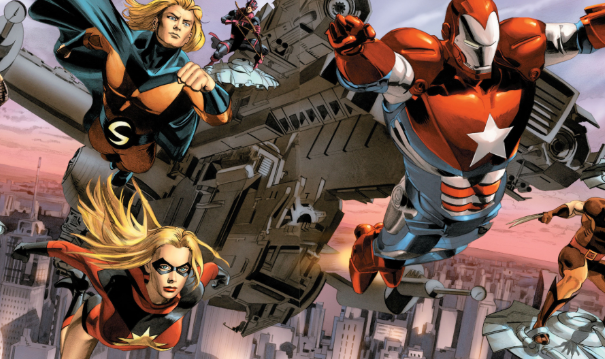
In the high-stakes world of the Marvel Cinematic Universe, the Thunderbolts are often viewed as a ragtag group of anti-heroes—the “misfit” answer to the Avengers. However, if you dive into the ink and paper of Marvel Comics history, you’ll find a legacy that is far more complex, deceptive, and groundbreaking than any film could capture in two hours. The Thunderbolts represent one of the greatest creative gambles in the medium’s history, evolving from a group of literal wolves in sheep’s clothing to a government-sanctioned strike force.
Whether you are a casual fan of the MCU or a seasoned reader, the Thunderbolts comic book origins are filled with twists that redefined what it meant to be a hero in the 1990s and beyond. Here are ten things you likely didn’t know about the comic book version of the Thunderbolts.
1. The Original Series Featured the Greatest Spoiler in Comic History
When Thunderbolts #1 hit the stands in 1997, it was marketed as a brand-new team of heroes stepping up to protect a world that had lost the Avengers and the Fantastic Four. The marketing campaign was flawless; fans genuinely thought characters like Citizen V, MACH-1, and Songbird were new, virtuous protectors. It wasn’t until the final page of the first issue that the mask was literally pulled away.
The “heroes” were actually the Masters of Evil in disguise. Citizen V was the villainous Baron Zemo, Beetle had become MACH-1, and Screaming Mimi had transformed into Songbird. This twist is still regarded as one of the most successful “gotcha” moments in the industry. Imagine buying a ticket to see a new superhero movie, only to find out in the last five minutes that the protagonists are actually the villains from the previous film. This Thunderbolts twist set the tone for a series where nothing—and no one—was ever quite what they seemed.
2. They Were Born from a Massive Power Vacuum
To understand the Thunderbolts’ debut, you have to understand the state of the Marvel Universe in the mid-90s. Following a catastrophic event known as “Onslaught,” the Earth’s greatest heroes—the Avengers and the Fantastic Four—were presumed dead. In reality, they were trapped in a pocket dimension (the “Heroes Reborn” universe), but to the citizens of New York, the city was defenseless.
Baron Zemo, ever the opportunist, realized that the public was desperate for someone to look up to. He didn’t just want to conquer the world; he wanted the world to hand him the keys. By filling the void left by Captain America and Iron Man, Zemo gained access to top-secret government databases and the Avengers’ own headquarters. It was the ultimate super-villain scheme: using the concept of heroism as a Trojan Horse to infiltrate the very systems designed to keep evil at bay.
3. Baron Zemo Used a Legacy Hero’s Identity as a Weapon
The leader of the original Thunderbolts was Citizen V, a figure clad in a patriotic, flag-themed costume. What many modern readers don’t realize is that Citizen V was a real hero from the 1940s. John Watkins, the original Citizen V, was a British operative killed by Zemo’s father, the original Nazi Baron Zemo.
By taking on this specific mantle, Helmut Zemo wasn’t just wearing a costume; he was committing a psychological act of desecration. He used the name of his father’s victim to gain the trust of the American public. It’s a layer of Zemo’s character depth that highlights his sheer arrogance and cruelty. He didn’t just want to win; he wanted to win while mocking the very idea of the “Greatest Generation.” In the comics, this choice eventually came back to haunt him when the spirit of the real Citizen V (and his descendants) sought justice.
4. Some Members Actually Found a “Vocation” in Heroism
The most fascinating part of the Thunderbolts’ redemption arc is that Zemo’s plan worked too well. While Zemo stayed evil to the core, his teammates—specifically Songbird (Melissa Gold) and MACH-1 (Abner Jenkins)—began to realize they actually enjoyed being loved by the public. For the first time in their lives, they weren’t being hunted by the police; they were being cheered in the streets.
This led to a civil war within the team. When Zemo finally revealed their true identities to the world to force them back into villainy, several members refused to go. They decided that being a hero wasn’t just a mask they wore; it was who they wanted to be. This character evolution of Songbird is a cornerstone of the series, as she eventually grew from a D-list villain into one of the most respected leaders in the Marvel Universe, proving that redemption is possible even for those who started with a lie.
5. Hawkeye Risked Everything to Mentor Them
After the original team broke away from Zemo, they were left as outlaws—villains who wanted to be good but were still wanted by the law. Enter Hawkeye (Clint Barton). Having been a reformed criminal himself (starting his career as a misguided antagonist to Iron Man), Hawkeye saw himself in the Thunderbolts. He quit the Avengers to lead the team, essentially becoming their “parole officer” and mentor.
Hawkeye’s leadership era transformed the Thunderbolts from a group of fugitives into a legitimate strike force. He taught them that heroism wasn’t about the costume, but about the sacrifices you make when no one is looking. This Hawkeye-Thunderbolts connection is a fan-favorite period of the comic, showcasing Clint Barton’s unique brand of stubbornness and his unwavering belief in the “underdog.” He even went to jail alongside them to prove his commitment to their rehabilitation.
6. Norman Osborn Turned the Team into a “Suicide Squad”
Following the events of Civil War, the Thunderbolts underwent a dark metamorphosis. The government took control of the team and placed Norman Osborn (the Green Goblin) in charge. This version of the team was comprised of unrepentant, incarcerated murderers like Bullseye and Venom (Mac Gargan), kept in check by nanites and mental conditioning.
This era, famously written by Warren Ellis, pivoted the series into a high-octane political thriller. The Thunderbolts were no longer seeking redemption; they were a government-sanctioned hit squad tasked with hunting down unregistered superheroes. This Norman Osborn era is the closest the comics ever got to the “Suicide Squad” vibe seen in the movies. It explored the terrifying reality of what happens when a psychopath is given a badge and a team of monsters to enforce “the law.”
7. Red Hulk Assembled a “Code Red” Black Ops Team
Years later, General Thaddeus “Thunderbolt” Ross took the name of the team quite literally. After becoming the Red Hulk, he assembled a version of the Thunderbolts that had nothing to do with rehabilitation or government oversight. This was a private, lethal strike force intended to “cut out the cancer” of the Marvel Universe before it could spread.
The roster was a “who’s who” of Marvel’s deadliest anti-heroes, including Deadpool, The Punisher, Elektra, and Agent Venom. Unlike the Avengers, who arrested criminals, this team focused on permanent solutions. The dynamic between Punisher and Deadpool provided a dark, comedic edge to the book, while the leadership of Red Hulk showed the military-minded approach to superheroics. This Red Hulk Thunderbolts run is often cited for its “Edge-Lord” aesthetic and over-the-top action sequences.
8. Luke Cage Used the Team for Prisoner Rehabilitation
In one of the most idealistic versions of the team, Luke Cage was appointed as the leader of the Thunderbolts program based out of the Raft (Marvel’s super-prison). Cage’s goal was to see if he could replicate the success of the original team by genuinely helping villains find a path back to society.
This era introduced the “Underbolts,” a group of lower-level criminals trying to earn their way into the main squad. Cage used a “tough love” approach, drawing on his own history as a man wrongly imprisoned. This Luke Cage leadership highlighted the social responsibility of the superhero community. It wasn’t about punching bad guys; it was about fixing the system that made them bad guys in the first place. Characters like Ghost and Juggernaut became complex, semi-heroic figures during this period, adding layers of nuance to the book’s legacy.
9. The Winter Soldier Led a Team with a Sentient Cosmic Cube
After the events of Avengers: Standoff, Bucky Barnes (The Winter Soldier) took over the mantle of the Thunderbolts. His mission was to protect the Earth from the shadows, utilizing the power of Kobik—a sentient, child-like manifestation of a Cosmic Cube. Bucky’s team consisted largely of original members like Atlas, Moonstone, and Fixer.
This run was unique because it blended gritty espionage with high-concept cosmic weirdness. Kobik could rewrite reality on a whim, making the Thunderbolts’ missions incredibly unpredictable. Bucky acted as a surrogate father to the “Cube-Girl,” trying to teach her morality while dodging S.H.I.E.L.D. agents. This Winter Soldier era emphasized Bucky’s transition from a brainwashed assassin to a man capable of leading others, even if those others were untrustworthy ex-villains.
10. The Legacy Continues with the “New Avengers” Rebrand
In very recent comic history (specifically leading into 2025 and 2026), the Thunderbolts have seen a significant shift. Following the events of the “Devil’s Reign” storyline, where Mayor Wilson Fisk (Kingpin) used his own version of the team to terrorize New York, a new group of heroes reclaimed the name to restore its honor.
Most notably, recent storylines have seen Bucky Barnes and Black Widow (Natasha Romanoff) leading a team that bridges the gap between the Thunderbolts and the Avengers. This latest iteration, sometimes teased as the “New Avengers” in certain media tie-ins, focuses on high-stakes international security. It brings the concept full circle: a team that started as a villainous lie has become so synonymous with the “work that needs to be done” that it is now a legitimate branch of the hero community. The Thunderbolts’ legacy is no longer just about the twist; it’s about the enduring idea that your past doesn’t have to define your future.
Further Reading
- Thunderbolts: Faith in Monsters by Warren Ellis – A visceral, dark look at the Norman Osborn era of the team.
- Thunderbolts (1997) #1-12 by Kurt Busiek and Mark Bagley – The essential starting point containing the legendary original twist.
- Thunderbolts: Cage by Jeff Parker – A fantastic run focusing on Luke Cage’s attempt to rehabilitate a new generation of villains.
- New Avengers (2025) Vol. 1 by Sam Humphries – A modern evolution of the team featuring Bucky Barnes and a high-stakes spy thriller tone.
- Red Hulk: Thunderbolts by Daniel Way – Perfect for fans who want to see Deadpool, Punisher, and Elektra working (mostly) together.




Leave a Reply