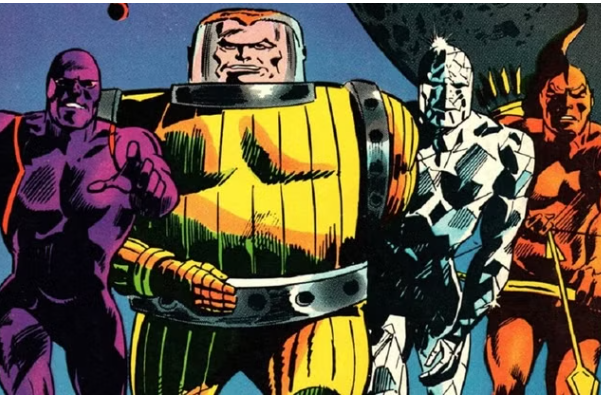
In the vast, star-studded expanse of the Marvel Universe, many creators have left their mark on the streets of New York or the halls of Asgard. However, few have shaped the very fabric of reality and the nature of godhood quite like Jim Starlin. Known as the “Cosmic Maestro,” Starlin is the visionary writer and artist who took Marvel’s fledgling space-faring concepts and transformed them into a sophisticated, philosophical, and high-stakes subgenre.
If you have ever been captivated by the purple-skinned titan Thanos or moved by the tragic weight of the Infinity Stones, you are experiencing the direct legacy of Jim Starlin. He didn’t just write superhero stories; he crafted modern myths that explored nihilism, the soul, and the heavy burden of absolute power. This guide dives into the career of the man who gave the Marvel Universe its cosmic heart and its most enduring threats.
1. The Birth of the Mad Titan: Creating Thanos
Before he was a household name and a cinematic icon, Thanos was a sketch in a college psychology class. Jim Starlin introduced the “Mad Titan” in the pages of Iron Man in the early 1970s, drawing inspiration from both psychological concepts of “Thanatos” (the death drive) and the visual language of the era’s cosmic trends. Thanos wasn’t just another villain; he was a complex philosopher-king driven by a literal and metaphorical love for the personification of Death.
Starlin’s creation of Thanos fundamentally changed the power scaling of the Marvel Universe. Up until that point, villains were often motivated by greed or revenge. Thanos, however, sought to prove a point about existence itself. Starlin imbued him with a terrifying intellect and a tragic sense of loneliness, making him a character that readers found strangely compelling despite his genocidal tendencies. By establishing Thanos as a character who could challenge both the Avengers and the cosmic entities of the universe, Starlin set the stage for decades of epic storytelling that moved beyond simple “bank robber” tropes and into the realm of grand, operatic tragedy.
2. Revitalizing the Cosmic Underdog: Captain Marvel
When Jim Starlin took over the Captain Marvel title, the character was struggling to find his footing in the Marvel lineup. Originally a Kree warrior named Mar-Vell, the character had gone through several iterations that failed to resonate with the audience. Starlin transformed Mar-Vell into the “Protector of the Universe,” granting him “Cosmic Awareness”—a metaphysical sense that allowed the hero to feel the rhythm of the galaxy.
This era of Captain Marvel is where Starlin truly began to experiment with the psychedelic and philosophical themes that would become his trademark. He introduced the villainous Nitro and the first hints of the Infinity Gems, weaving a complex narrative that elevated Mar-Vell from a generic soldier to a cosmic messiah. Starlin’s run on the series is often cited as the definitive take on the character, proving that even a “third-tier” hero could carry the weight of a universal epic if given the right thematic depth. His work on Mar-Vell established a blueprint for how to handle cosmic-scale power without losing the human (or Kree) heart of the protagonist.
3. The Existential Odyssey of Adam Warlock
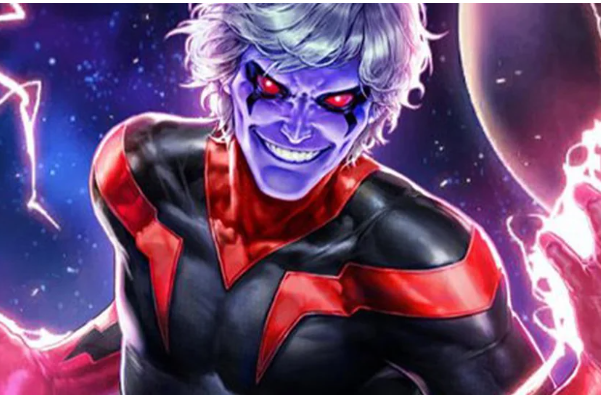
Perhaps no character is as intrinsically linked to Jim Starlin as Adam Warlock. Taking a character who was essentially a “Space Jesus” figure created by previous writers, Starlin dove headfirst into a mind-bending saga involving time travel, destiny, and the dark side of divinity. He introduced the concept of the Magus—an evil, future version of Warlock who leads a fanatical religious empire.
This storyline allowed Starlin to critique organized religion, examine the nature of the “self,” and explore the terror of becoming one’s own worst enemy. The Warlock series of the mid-70s is considered a masterpiece of the Bronze Age, featuring intricate layouts and a narrative that challenged readers to think about the consequences of power. Starlin’s Warlock was a brooding, existentially tortured figure who wielded the Soul Gem, a sentient artifact that hungered for life forces. This internal struggle between Warlock’s desire to do good and the gem’s inherent darkness remains one of the most compelling character dynamics in comic book history, cementing Starlin’s reputation as a writer of “thinking man’s” comics.
4. Crafting the First True Graphic Novel: The Death of Captain Marvel
In a medium where death is often a revolving door, Starlin produced a story that remains one of the most poignant and permanent in Marvel history. “The Death of Captain Marvel” was the first entry in the Marvel Graphic Novel line and took a radically different approach to superhero mortality. Instead of dying in a glorious battle against a supervillain, Mar-Vell succumbed to cancer—a disease he contracted from a previous encounter with toxic gas.
Starlin wrote the story as a way to process the death of his own father from cancer, and that raw, personal emotion is palpable on every page. The story depicts the greatest heroes of the Marvel Universe feeling completely powerless in the face of a biological reality they cannot punch or blast away. The final sequence, where Mar-Vell is guided into the afterlife by Thanos and Death herself, is a masterful depiction of acceptance and peace. By treating a superhero’s death with such grounded, human dignity, Starlin changed the industry’s perception of what a comic book could achieve, proving they were capable of high-level literary exploration.
5. The Infinity Gauntlet: A Universal Milestone
If you ask a comic fan to name the most influential event in Marvel history, many will point to The Infinity Gauntlet. Written by Starlin in the early 90s, this six-issue miniseries was the culmination of nearly two decades of world-building. It featured Thanos finally assembling the six Infinity Gems to become an omnipotent god, famously wiping out half of the universe’s population with a single snap of his fingers to appease Mistress Death.
The scope of The Infinity Gauntlet was unprecedented. Starlin managed to balance dozens of characters while keeping the focus on the psychological battle between Thanos and Adam Warlock. The series explored the idea that absolute power is a burden that exposes one’s deepest insecurities. Starlin’s writing, combined with the detailed art of George Pérez and Ron Lim, created a visual and narrative spectacle that set the standard for every “crossover event” that followed. It wasn’t just a fight; it was a meditation on the nature of godhood and the inherent flaws that prevent even the most powerful beings from achieving true satisfaction.
6. Creating the Foundation of the Guardians
While the Guardians of the Galaxy have evolved significantly over the years, the “modern” cosmic foundation of the team owes a massive debt to Starlin’s character creations. He is the co-creator of Drax the Destroyer and Gamora, both of whom were originally introduced as essential players in the Thanos and Warlock sagas. Drax was a being created for the singular purpose of killing Thanos, while Gamora was the “Deadliest Woman in the Galaxy,” raised and trained by the Mad Titan himself.
Starlin’s versions of these characters were darker and more focused than their later, more lighthearted adaptations. They were soldiers in a cosmic war, burdened by trauma and driven by a relentless sense of duty. By creating a supporting cast that was just as interesting and powerful as the leads, Starlin built a “Cosmic Sandbox” that other writers would play in for decades. Without the complex backstories and inter-character dynamics Starlin established between Thanos, his “daughter” Gamora, and his eternal hunter Drax, the modern cosmic landscape of Marvel would lack its emotional stakes and interconnected history.
7. The Psychedelic Visionary: Starlin’s Unique Art Style
Jim Starlin is a rare “double threat” in comics, frequently acting as both writer and artist on his most famous works. His visual style is unmistakable, characterized by muscular, expressive figures and intricate, psychedelic backgrounds. Drawing influence from the surrealist movements of the 60s and 70s, Starlin’s panels often feature shifting dimensions, kaleidoscopic energy blasts, and complex geometric structures that represent the vastness of the cosmos.
His layouts were revolutionary for the time, often breaking the traditional panel grid to convey the sense of a character’s mind unraveling or the sheer scale of a cosmic battle. Starlin’s ability to visualize abstract concepts—like “Cosmic Awareness” or the interior of the Soul Gem—allowed him to tell stories that were visually as deep as they were narratively. He didn’t just draw people in capes; he drew the feeling of being a small part of an infinite, often terrifying universe. This unique aesthetic helped define the “look” of Marvel’s space opera, distinguishing it from the more grounded, urban art styles of the era.
8. Master of Kung Fu: The Earthbound Origins
Though he is most famous for his work among the stars, Starlin played a crucial role in developing one of Marvel’s most grounded icons: Shang-Chi. Along with writer Steve Englehart, Starlin co-created the “Master of Kung Fu” during the height of the 1970s martial arts craze. While the character was initially tied to licensed properties, Starlin’s visual design and early storytelling helped establish Shang-Chi as a distinct, soulful warrior.
Even in this more “down-to-earth” setting, Starlin’s penchant for philosophy and father-son conflict was evident. The core of Shang-Chi’s story—a son rebelling against his villainous, all-powerful father—mirrors many of the themes found in his cosmic work. Starlin’s contribution to Shang-Chi showed his versatility as a creator, proving he could handle tight, rhythmic action and human-scale drama just as effectively as he could handle the end of the universe. This period of his career remains a vital part of Marvel history, bridging the gap between the street-level grit of the 70s and the epic fantasy of the years to come.
9. Defining the Cosmic Hierarchy
Before Jim Starlin, the “gods” of the Marvel Universe were somewhat loosely defined. Starlin took it upon himself to organize the cosmic hierarchy, clearly defining the roles and power levels of entities like Eternity, The Living Tribunal, Lord Chaos, and Master Order. He treated these beings not just as background dressing, but as active participants in the universal balance.
Starlin introduced the idea that the universe functions through a series of checks and balances. If one force becomes too powerful, the others must intervene. This “Celestial Chess Game” added a layer of weight to every story; a battle between Thanos and Warlock wasn’t just a personal spat, it was something that could disrupt the equilibrium of reality itself. By codifying these rules, Starlin provided a framework that allowed the Marvel Universe to feel like a living, breathing ecosystem on a galactic scale. He made the cosmos feel vast and ancient, a place where even the most powerful heroes were mere pawns in a much larger, eternal struggle.
10. The Enduring Legacy of “The End”
Starlin has a unique fascination with the “finality” of the Marvel Universe. On several occasions, he was invited back to write “The End” stories—alternate-reality tales that depict the ultimate fate of the Marvel characters. Most notably, Marvel: The End saw Thanos achieving ultimate power yet again, but this time being forced to face the consequence of a universe that had become fundamentally broken.
These stories serve as a “final word” on his themes of nihilism and rebirth. Starlin often uses these opportunities to reflect on the nature of the medium itself—how characters are constantly trapped in a cycle of conflict and how, eventually, everything must reach a resolution. His obsession with the “Big Picture” is what sets him apart. While other creators focus on the next big fight, Starlin is always looking at the horizon, contemplating the soul, the end of time, and what remains when the stars finally go out. His legacy is one of ambition, daring to ask the biggest possible questions through the lens of colorful, superpowered icons.
Further Reading
- The Infinity Gauntlet by Jim Starlin (Writer) and George Pérez/Ron Lim (Artists)
- The Death of Captain Marvel by Jim Starlin
- Warlock by Jim Starlin: The Complete Collection by Jim Starlin
- Thanos Quest by Jim Starlin
- 10 Things You Should Know About Cosmo the Spacedog – Marvel Comics

- 10 Things You Should Know About Ravagers – Marvel Comics

- 10 Things You Should Know About The Magus – Marvel Comics

- 10 Things You Should Know About The High Evolutionary – Marvel Comics

- 10 Things You Should Know About Groot – Marvel Comics