In the vast, digitized landscape of modern folklore, few entities evoke the same primal, skin-crawling dread as The Rake. While many internet monsters rely on complex backstories or supernatural gimmicks, The Rake operates on a much more visceral level. It is the thing that watches from the foot of your bed; it is the pale shape glimpsed in the headlights on a lonely country road. Often associated with the “Creepypasta” boom that redefined horror for the digital age, The Rake has transcended its humble origins to become a staple of contemporary urban legend.
Understanding The Rake requires more than just looking at a scary picture. Its lore is a patchwork of “eyewitness” accounts, historical fragments, and a pervasive sense of inevitability. Unlike a ghost that haunts a specific location, The Rake is a predator that selects a victim and lingers in their life until the psychological—or physical—toll becomes unbearable. For beginners and horror enthusiasts alike, diving into this mythology is an exercise in exploring the “uncanny valley” of human fear. Here are the ten most essential things you should know about the lore of this hairless, wide-eyed nightmare.
1. The Collaborative Birth of a Nightmare
Unlike many fictional monsters created by a single author, The Rake was birthed through a unique process of collective brainstorming on early internet imageboards. The goal was to create a “new” monster that felt like a genuine urban legend—something that could be mistaken for a real-world cryptid. Users contributed snippets of stories, grainy photoshopped images, and fake historical documents to give the creature a sense of weight and history. This collaborative origin is why the lore feels so organic and scattered; it wasn’t written as a book, but as a series of leaked “real” events.
This “crowdsourced horror” approach allowed The Rake to bypass the traditional tropes of the time. By building a mythos out of shared fear, the creators tapped into a universal anxiety about being watched by something that shouldn’t exist. This established The Rake as one of the first truly successful examples of “open-source” folklore, setting the stage for how many digital monsters would be developed in the years that followed.
2. The Defining Physical Characteristics
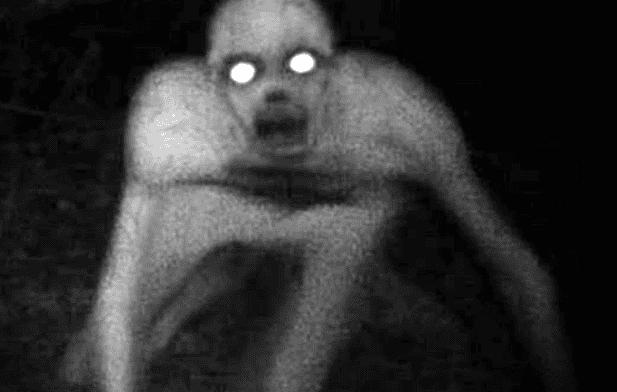
The Rake is described as a hairless, pale, humanoid creature with a posture that is often compared to a “squatting dog.” Its most terrifying feature, and the source of its name, is its hands—equipped with long, sharp, needle-like claws that resemble garden rakes. These appendages aren’t just for show; they are central to the creature’s method of movement and its violent interactions with victims. Its eyes are often described as large, glassy, and intensely reflective, similar to a nocturnal animal caught in a flash.
The creature’s anatomy is designed to trigger an instinctive “fight or flight” response. It looks human enough to be recognizable, but its distorted proportions—elongated limbs and a sunken, hollow face—place it firmly in the uncanny valley. In the lore, witnesses often mention that the creature appears to be in a state of constant physical agitation, its body twitching or contorting in ways that defy normal biology. This physical instability suggests a creature that is as much a psychological manifestation as it is a biological one.
3. The “Mariner” and Historical Fragments
To give The Rake a sense of permanence, its lore includes several “historical” documents that suggest the creature has been active for centuries. One of the most famous pieces of lore is a suicide note from the mid-20th century, where a man describes his encounter with the creature and his inability to live with the memory of its eyes. Another fragment is a “log entry” from a mariner dating back several centuries, which describes a “pale guest” appearing on a ship and causing madness among the crew.
These fragments serve a vital purpose in the mythology: they transform The Rake from a modern internet meme into an eternal predator. By suggesting that our ancestors encountered the same creature, the lore implies that The Rake is a fundamental part of the human experience—a shadow that has always followed us. This historical “depth” makes the story feel more authentic to readers, as it mimics the way real-world legends and ghost stories are passed down through the ages.
4. The Psychological Toll of “The Visit”
The Rake is not a creature that simply attacks and leaves. Its lore heavily emphasizes the psychological torture it inflicts on its victims. Most stories involve the creature appearing at the foot of a victim’s bed or in a corner of their room, simply watching them while they sleep. This “watching” phase can last for weeks or even months, during which the victim begins to suffer from extreme insomnia, paranoia, and a total breakdown of their mental health.
In many accounts, the victim eventually reaches a point where they can no longer distinguish between waking life and nightmares. The Rake becomes a constant, looming presence that ruins the victim’s life before it ever lays a claw on them. This aspect of the lore is particularly chilling because it plays on the vulnerability of the domestic space. Home is supposed to be safe, and sleep is supposed to be a refuge; The Rake violates both, turning the most private moments of a person’s life into a living hell.
5. The Infamous 12th Street Incident
The most widely cited “modern” account in The Rake lore involves a husband and wife who wake up to find the creature sitting at the foot of their bed. In this narrative, the creature’s presence is so overwhelming that the couple is momentarily paralyzed by fear. The story takes a tragic turn when the creature moves to their daughter’s room, leaving behind a scene of carnage. The mother’s frantic description of the event—and her subsequent life on the run from the creature—is the definitive text for many fans.
This specific story highlights the creature’s speed and unpredictability. It isn’t a slow-moving zombie; it is a lightning-fast predator that can cross a room in a heartbeat. The “12th Street” story also introduces the idea that once The Rake has targeted a family, there is no escape. The survivors are left with deep emotional scars and the constant, nagging fear that the pale man will return to finish what he started. It is the foundational text that established The Rake’s MO for all subsequent fan fiction.
6. The Mystery of the “Whisper”
While many monsters are silent, some iterations of The Rake lore suggest that it is capable of speech—or at least a distorted mimicry of it. Victims have reported the creature whispering to them in a raspy, guttural voice. In one of the most famous lore entries, the creature is said to have leaned over a victim and whispered, “I am the Rake,” or simply repeated the victim’s name over and over. This implies a level of intelligence and malice that goes beyond simple animal instinct.
The “whispering” adds a layer of intimacy to the horror. It means the creature isn’t just a beast; it knows who you are. This communication is rarely helpful or coherent; instead, it seems designed to maximize terror. Whether it’s a byproduct of the creature’s supernatural nature or a learned behavior intended to break the victim’s will, the voice of The Rake is considered one of the most disturbing elements of the mythos, turning a visual threat into an auditory nightmare.
7. Interaction with Other Internet Icons
As the “Creepypasta” genre grew, fans began to create a “shared universe” where various monsters would interact. In this expanded lore, The Rake is often depicted as an associate or a rival to the Slender Man. Some stories suggest that The Rake acts as a “Proxy”—a servant or agent—for the Slender Man, hunting down those who have become aware of the faceless entity. Others portray them as two distinct apex predators who occasionally cross paths in the dark forests of the digital world.
This crossover culture helped keep The Rake relevant as the internet evolved. By being part of a larger pantheon, the creature gained a broader audience and inspired more complex narratives. However, purists often argue that The Rake is scarier when it stands alone. When it is just a “beast” with no master and no agenda other than its own inscrutable desires, it retains a primal power that can be lost when it becomes just another soldier in a monster war.
8. The EverymanHYBRID Influence
Much of the visual and narrative expansion of The Rake’s lore came from the “Alternate Reality Game” (ARG) community, specifically the series EverymanHYBRID. This series took the basic concept of The Rake and integrated it into a long-running, multi-platform horror story. Through these videos, audiences got to see a more “physical” interpretation of the creature, often appearing as a terrifying, fast-moving shape in the background of seemingly normal vlogs.
The EverymanHYBRID version of the lore introduced new elements, such as the idea that The Rake could be tracked or that it had specific territorial behaviors. It moved the creature out of the realm of static text and into the world of “found footage,” making it feel much more immediate to a generation of viewers who consumed their horror on video platforms. This era of the lore solidified the creature’s image as a “glitch in reality” that could appear anywhere at any time.
9. Scientific and Cryptid Interpretations
Because The Rake was designed to look like a “real” creature, it has often been discussed in the same circles as Bigfoot, the Mothman, or the Chupacabra. Some branches of the lore attempt to explain the creature through a scientific or pseudo-scientific lens. Theories range from it being a “feral human” (a person who has lived in total isolation and mutated) to a biological experiment gone wrong, or even an extraterrestrial entity left behind on Earth.
This “cryptid” angle is a key part of the evergreen nature of the lore. It allows the story to appeal to people who don’t usually read horror fiction but are fascinated by unexplained phenomena. By blurring the lines between a “scary story” and a “potential sighting,” The Rake lore hijacks the part of the human brain that wants to believe in the hidden monsters of the world. It turns every blurry trail-camera photo or rustle in the bushes into a potential encounter with the pale man.
10. The Lasting Impact on Digital Folklore
The Rake’s most significant contribution to lore is how it defined the “stalker” archetype for the 21st century. It isn’t a ghost you can exorcise or a killer you can outrun; it is an inevitability. The lore has influenced countless indie horror games, films, and books, many of which use “Rake-like” creatures as their primary antagonists. Its legacy is found in the way we now think about internet horror—as something that is collaborative, pervasive, and deeply rooted in our shared anxieties.
The Rake remains a “go-to” resource for understanding how a simple idea can grow into a massive, multi-layered mythology. It proves that you don’t need a high budget or a major studio to create a monster that haunts the collective consciousness. As long as there are dark corners in our bedrooms and shadows in the woods, The Rake lore will continue to grow, shifting and adapting to the fears of every new generation that discovers its pale, unblinking face.
Further Reading
- Creepypasta: The Mythology of the Internet by various authors (Anthology)
- The Big Book of Ghost Stories by Otto Penzler (For context on traditional urban legends)
- Lore: Monstrous Creatures by Aaron Mahnke
- Internet Urban Legends: From Slender Man to The Backrooms by Digital Folklore Press
- 10 Creepiest Creepypastas You Should Know
- 10 Things You Should Know About The Lore Of The Creepypasta Ted the Caver
- 10 Things You Should Know About The Lore Of The Creepypasta Zalgo
- 10 Things You Should Know About The Lore Of The Creepypasta The Midnight Game
- 10 Things You Should Know About The Lore Of The Creepypasta Username: 666