
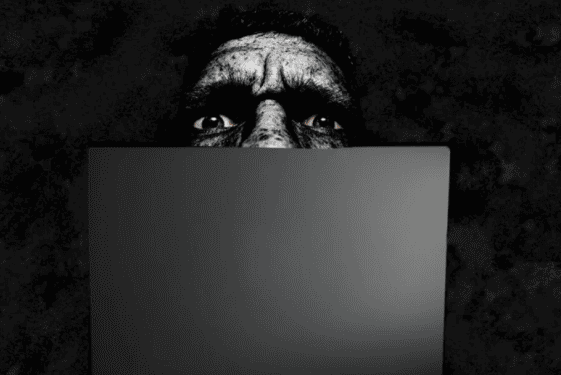
The internet was once a place of simple chat rooms and slow-loading images, but as it grew, so did its shadows. In the early days of message boards and image sharing, a new type of horror began to circulate—the “Creepypasta.” Unlike the ghost stories of old that were tied to physical locations or ancient books, these tales were digital, viral, and seemingly authorless. They relied on the “copy and paste” mechanic to spread through the collective consciousness of the web, creating a modern mythology that still haunts us today.
For those just entering the world of digital dread, the sheer volume of content can be overwhelming. Some stories are short “jump scares” in text form, while others are sprawling, multi-part epics that involve photos, videos, and complex lore. This article serves as the ultimate introductory resource, guiding you through the ten most influential and terrifying stories that defined the genre. These are the legends that moved from the fringes of the web into mainstream culture, proving that the digital age hasn’t killed the bogeyman—it’s just given him a new place to hide.
1. The Faceless Stalker: The Slender Man Mythos
The Slender Man is arguably the most recognizable figure in internet horror history. Depicted as an unnaturally tall, thin man in a black suit with a completely blank, featureless face, he is a creature of the woods and the shadows. What makes the Slender Man so effective as an “iconic creepypasta” is his lack of clear motivation. He doesn’t kill for food or revenge; he simply stalks, observes, and eventually causes his victims to vanish into thin air.
The mythos began with a simple photoshop contest but quickly evolved into a collaborative storytelling project. This creature taps into the primal fear of being watched by something that doesn’t belong in our world. Because there is no single “official” story, the Slender Man has appeared in countless formats: found-footage web series, fan-made video games, and thousands of written accounts. This faceless entity represents the existential dread of the unknown—the feeling that even in a well-lit suburban neighborhood, there are places where logic fails and something ancient and cold is waiting for you to look behind you.
2. A Smile That Cuts Deep: The Legend of Jeff the Killer
If Slender Man represents the spectral and unknown, Jeff the Killer represents the visceral and human. The story follows a young boy who, after a series of traumatic and violent events, suffers a psychotic break. The most iconic image associated with this tale is Jeff’s face: his skin bleached white by chemical burns, his eyelids seared away so he can “never stop looking,” and a permanent, horrific grin carved into his cheeks with a knife.
Jeff’s trademark phrase, “Go to sleep,” has become a staple of internet culture. The story functions as a modern-day urban legend about the fragility of the human mind and the terror of home invasion. Jeff is often depicted as a lurking presence in the dark corners of a bedroom, a monster that could be hiding right under your bed or behind your closet door. While the writing style is often simple and raw, the visual impact of Jeff’s distorted features has ensured his place as a pillar of the genre. He is the ultimate digital “slasher” icon, a reminder that the most terrifying monsters are sometimes the ones that used to be just like us.
3. The Science of Silence: The Russian Sleep Experiment
The Russian Sleep Experiment is a masterpiece of historical-flavored horror. It purports to be a leaked account of a secret military experiment where five political prisoners were kept awake for fifteen days using an experimental gas-based stimulant. The story is presented as a clinical, chronological report, which adds a chilling layer of realism to the increasingly gruesome events. As the prisoners descend into madness, the horror shifts from psychological to bodily, as they begin to mutilate themselves in ways that defy medical logic.
This story is a standout because of its “clinical terror.” By using the language of science and bureaucracy, the author makes the impossible feel plausible. The experiment suggests that sleep is not just a biological necessity, but a barrier that keeps our most primal, horrific instincts at bay. The ending of the story, featuring a haunting dialogue between a researcher and a survivor, explores the idea that there is a “monster” inside everyone that only emerges when the mind is pushed to its absolute limit. It remains a “go-to” recommendation for anyone looking for high-stakes, atmospheric horror that lingers long after the final sentence.
4. Haunted Childhoods: The Mystery of Ben Drowned
“Ben Drowned” revolutionized the genre by introducing the “haunted video game” trope. The story is presented as a series of forum posts by a college student who unknowingly buys a haunted copy of a popular fantasy adventure game from an elderly man. As the student plays, the game begins to glitch in disturbing ways—music plays backward, characters appear where they shouldn’t, and a statue of the protagonist begins to follow the player with a frozen, malevolent stare.
The brilliance of “Ben Drowned” lies in its multimedia integration. The original author provided actual gameplay footage of the glitches, which made the supernatural claims feel terrifyingly real to a digital audience. It taps into the specific fear that our technology—the things we use for escape and entertainment—can be “corrupted” by malevolent spirits. The phrase “You shouldn’t have done that” and “You’ve met with a terrible fate, haven’t you?” became viral warnings. This story proved that horror doesn’t need a dark forest or a haunted house; it can exist right inside your favorite childhood game cartridge, waiting for you to press “Start.”
5. Don’t Look at the Image: The Curse of Smile Dog
Smile.jpg, or “Smile Dog,” is a classic “cursed image” Creepypasta. The legend tells of a file that, when opened, displays a photo of a husky-like dog in a dark room, illuminated by a camera flash. The dog has an unnervingly human-looking grin filled with sharp teeth, and a bloody hand is visible in the background. According to the lore, viewing the image causes the victim to suffer from intense nightmares, eventually leading to insanity unless they “spread the word” by sending the file to someone else.
This story is a digital update of the “chain letter” urban legend. It plays on the voyeuristic nature of the internet—the urge to look at something “forbidden” even when we know it might be harmful. The horror of Smile Dog is psychological; it’s the idea of an image that “infects” the mind. The dog isn’t a physical monster that chases you; it’s a visual parasite that haunts your dreams. By framing the story as a warning from a victim who is desperate to pass the curse along, the author creates a sense of immediate, personal stakes for the reader. It is a testament to the power of a single, well-crafted image to drive a viral narrative.
6. The Puppet Master’s Secret: The Origins of Candle Cove
“Candle Cove” is a unique entry because it is written as a series of forum posts where adults reminisce about a strange, low-budget puppet show they all watched as children. At first, the memories seem innocent, if a bit eccentric. However, as the users share more details, the show reveals itself to be deeply disturbing, featuring a “Skin-Taker” skeleton character and episodes that consisted of nothing but puppets screaming in agony.
The “twist” ending of Candle Cove is one of the most famous in the genre, perfectly capturing the concept of “corrupted nostalgia.” It explores the idea that our childhood memories are unreliable and that we might have been exposed to something horrific without even realizing it. The story relies entirely on dialogue and shared memory, making the reader feel like an outsider eavesdropping on a private conversation. It successfully captures the eerie, grainy aesthetic of early television and the way that children can normalize the bizarre. Candle Cove is a haunting reminder that some “lost” memories are better left forgotten in the back of our minds.
7. Liminal Nightmares: Lost in the Backrooms
The Backrooms is a relatively modern addition to the “iconic creepypasta” pantheon, but it has quickly become a cornerstone of the genre. It describes a “glitch” in reality where a person can “noclip” out of the physical world and find themselves in an endless, nonsensical labyrinth of empty office rooms. These rooms are characterized by yellowed wallpaper, the smell of damp carpet, and the incessant, maddening hum of fluorescent lights.
The horror of the Backrooms is based on “liminal spaces”—places that feel familiar yet profoundly wrong because they are empty of people. There is an existential dread in being trapped in a space that was designed for human use but has been abandoned by logic. While later iterations of the story added monsters and levels, the original core of the legend is the isolation. It is the fear of being “outside” of reality, stuck in a repetitive, infinite wasteland where help will never come. The Backrooms perfectly captures the anxiety of the digital age: the feeling of being lost in a vast, cold system that you don’t understand.
8. The Creature in the Corner: The Rake’s Presence
The Rake is a creature-based Creepypasta that describes a pale, hairless, humanoid entity with long, needle-like claws. Unlike the Slender Man, which is often atmospheric, stories about The Rake are visceral and terrifyingly intimate. The creature is typically sighted at the foot of people’s beds in the middle of the night, staring at them with large, sunken eyes before disappearing or, in some accounts, attacking with brutal efficiency.
The Rake functions as a modern “bogeyman” for adults. The stories are often written as personal journals or police reports, which gives them a “found footage” quality. It taps into the universal fear of the “intruder”—the idea that your most private space, your bedroom, is not actually safe. The Rake is a master of suspense; many of the most effective stories focus on the anticipation of its arrival rather than the attack itself. It represents the physical manifestation of the feeling of being watched in the dark, a monster that exists just on the edge of our vision until it’s too late to scream.
9. Tight Spaces and Deep Shadows: The Legend of Ted the Caver
“Ted the Caver” is one of the earliest and most influential “long-form” Creepypastas. Written as a detailed caving journal, it follows two friends as they explore a newly discovered, incredibly narrow crawlspace in a local cave. As they dig deeper and squeeze through tighter gaps, they begin to experience strange sounds, unusual rock formations, and a growing sense of being followed by something that shouldn’t exist underground.
The power of this story lies in its claustrophobia. The author provides actual photos of the narrow tunnels, making the physical struggle of the characters feel incredibly real to the reader. It is a slow-burn horror that builds tension through technical detail and realistic dialogue. By the time the supernatural elements begin to bleed into the narrative, the reader is already deeply invested in the physical safety of the protagonists. “Ted the Caver” is the gold standard for “realistic” internet horror, proving that a story about rocks and dirt can be just as terrifying as a story about ghosts and demons if the pacing is handled with care.
10. The Bureaucracy of the Bizarre: The SCP Foundation
While often considered its own entity, the SCP Foundation began as a single Creepypasta about a living statue (SCP-173) that can only move when it is not being looked at. This evolved into a massive, collaborative wiki containing thousands of entries about anomalous objects, entities, and locations. These “files” are written in a cold, academic, and clinical tone, describing the containment procedures for everything from world-ending deities to seemingly harmless everyday items with deadly secrets.
The SCP Foundation represents the “industrialization” of horror. It moves away from individual sightings and toward a world where the supernatural is a problem to be managed by a shadowy global organization. This format allows for an incredible range of horror styles—some entries are funny, some are heartbreaking, and many are profoundly disturbing. The “clinical” style forces the reader to use their imagination to fill in the blanks, which often results in a deeper sense of dread than a traditional narrative. As a “go-to” resource, the SCP Foundation offers an endless rabbit hole of high-quality horror that has influenced games, movies, and the way we think about modern mythology.
Further Reading
- The Creepypasta Collection: Modern Urban Legends You Can’t Unread by MrCreepyPasta
- Penpal by Dathan Auerbach
- Tales from the Gas Station: Volume One by Jack Townsend
- The Slenderman Mysteries: An Internet Urban Legend Comes to Life by Nick Redfern
- Keep Calm And Read Creepypastas by Chris Fernandez
- 10 Creepiest Creepypastas You Should Know
- 10 Things You Should Know About The Lore Of The Creepypasta Ted the Caver
- 10 Things You Should Know About The Lore Of The Creepypasta Zalgo
- 10 Things You Should Know About The Lore Of The Creepypasta The Midnight Game
- 10 Things You Should Know About The Lore Of The Creepypasta Username: 666



