
The wind howls against the windowpane, and the clock inches closer to that hallowed, heavy hour where the veil between our world and the next supposedly thins. In the vast library of internet horror, few stories carry the weight of tradition and terror quite like The Midnight Game. Unlike stories that are meant to be read passively, this “ritual creepypasta” presents itself as a set of instructions—a dark dare issued to the reader to invite an ancient, malevolent force into their own home. It is the ultimate test of nerves, blending the digital age’s love for “creepypasta” with the primal, age-old fear of the dark.
The Midnight Game is often cited as the gold standard of ritual horror. It isn’t just about a monster under the bed; it is about turning your entire living space into a hunting ground where you are the prey. The lore suggests that this was once an old pagan ritual used to punish those who disobeyed the laws of their people, but in the modern era, it has evolved into a global phenomenon shared via forums and social media. It taps into the “High Stakes” psychological thrill: the idea that a single mistake—a gust of wind blowing out a candle or a moment of cowardice—could lead to a fate worse than death.
If you have ever found yourself staring at a wooden door at 11:59 PM, wondering if the legends are true, this guide is for you. We will dissect the mechanics of the ritual, the identity of the entity known as the Midnight Man, and the terrifying rules that govern this supernatural game of hide-and-seek. Prepare yourself, for once you know the rules, the game has already begun in your mind.
1. The Alleged Ancient Pagan Origins
Within the lore of the creepypasta, the Midnight Game is rarely described as a modern invention. Instead, it is framed as an “Ancient Pagan Ritual” that was once utilized as a harrowing form of capital punishment. According to the legend, those who broke the sacred laws of their community were forced to undergo the ritual as a way to prove their innocence or face the wrath of a vengeful spirit. If they survived until the early morning hours, they were considered “cleansed” or forgiven by the gods; if they failed, they were simply never seen again.
This “historical” framing is a classic storytelling device used to grant the creepypasta a sense of gravitas and weight. By anchoring the story in a vague, ancient past, the author makes the threat feel more tangible and inevitable. It suggests that the Midnight Man isn’t just a glitch in the machine or a modern ghost, but a primordial force that has been hunting humans since the dawn of civilization. This perceived antiquity makes the ritual feel less like a game and more like a brush with a forgotten, darker world that predates modern logic and science.
2. The High Price of the Blood Sacrifice
The entry fee for the Midnight Game is not paid in currency, but in biological essence. To begin the ritual, the participant must write their full name on a piece of paper and provide a single drop of their own blood. This blood must soak into the paper, signifying a literal and metaphorical contract between the summoner and the summoned. In the world of the supernatural, blood is the ultimate “ID card”; it binds the entity to the specific individual who invited it, ensuring that there is no confusion about who the target is once the game commences.
The use of blood adds a visceral, “no-turning-back” element to the experience. It moves the story from the realm of childhood ghost stories into something significantly more adult and dangerous. The act of pricking one’s finger is a moment of self-inflicted harm that cements the participant’s intent. The lore emphasizes that without this blood sacrifice, the ritual will simply fail, but with it, you have essentially broadcasted your location to the void. It is a haunting analogy for how we give pieces of ourselves away to our fears until those fears take on a life of their own.
3. The Threshold Ritual of Twenty-Two Knocks
The climax of the “setup” phase involves a specific set of actions at a wooden door. The participant must place the blood-stained paper on the floor, light a candle, and place it on top of the paper. Then, at the precise stroke of midnight, they must knock on the door twenty-two times. The final knock must occur exactly as the clock ticks over to 12:00 AM. This act is the “invitation.” You then open the door, blow out the candle, and close the door again, effectively “letting him in.”
The number twenty-two is significant in numerology and occult lore, often associated with the transition from the physical to the spiritual. By performing this ritual at the threshold of the home, the participant is breaking the protective barrier of their sanctuary. The door is a powerful symbol in horror—it represents the boundary between the known and the unknown. In this creepypasta, the door becomes a portal. The instruction to blow out the candle and then immediately relight it creates a moment of absolute vulnerability in the dark, signaling to the Midnight Man that the game has officially transitioned from invitation to pursuit.
4. The Anatomy of the Midnight Man
The antagonist of this lore is a being known simply as the Midnight Man. Unlike many horror movie villains, he is rarely described in vivid, gory detail. Instead, he is a “shadowy figure”—a tall, thin silhouette that blends into the darkness of the house. He is often described as a presence rather than a person. Witnesses in the lore report a sudden drop in temperature, the sound of a low-pitched whisper, and the overwhelming feeling of being watched by something that does not have eyes.
This lack of a concrete physical form is what makes the Midnight Man so effective as a legend. He is a “Rorschach test” of a monster; he becomes whatever the participant fears most in the dark. The lore suggests that he doesn’t kill with a weapon, but with the sheer weight of his presence. He induces a state of profound psychological paralysis, forcing his victims to confront their deepest anxieties. Because he is made of shadow, he can be anywhere—behind a door, in the corner of a room, or just a few inches behind you as you walk through a dark hallway.
5. The Candle as a Spiritual Life Support
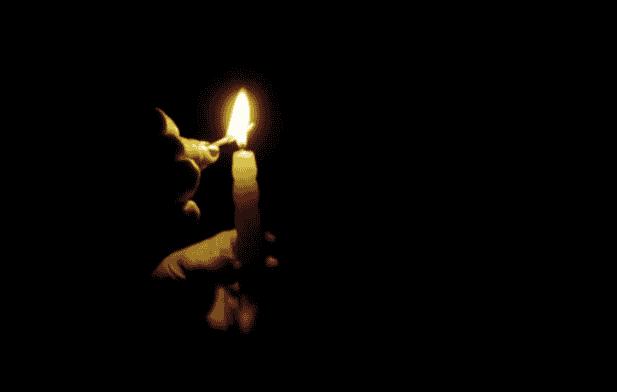
In the Midnight Game, your candle is your only lifeline. The rules are clear: you must carry the lit candle with you at all times. If the candle goes out, it means the Midnight Man is nearby. You then have exactly ten seconds to relight the candle. If you fail to do so, you must immediately surround yourself with a circle of salt. The candle represents the “light of life” or the human soul, and its flickering flame is the only thing keeping the darkness of the entity at bay.
This mechanic creates a constant state of tension. Imagine walking through your own home, shielding a tiny flame with your hand, knowing that a simple draft or a shaky breath could be your undoing. It turns a mundane object into a high-stakes survival tool. The lore uses the candle to symbolize the fragility of human existence when faced with the infinite unknown. The frantic scramble to strike a match within ten seconds is a classic horror trope that taps into our fear of being left helpless in the face of an approaching predator.
6. The Salt Circle as the Final Defense
If the candle fails and cannot be relit, the salt circle is the only thing that can save the participant. Salt has been used as a purifying agent and a barrier against evil in various cultures for centuries. In the Midnight Game, the salt circle acts as a “safe zone” where the Midnight Man cannot reach you. However, there is a catch: once you are inside the circle, you cannot leave it until the game ends at 3:33 AM. You are trapped in a tiny, circular prison while the entity stalks the perimeter just inches away.
The salt circle represents the “last stand.” It is a moment of total static terror. While the rest of the game involves movement and evasion, the circle forces the participant to stay still and endure the psychological onslaught of the entity. The lore describes the Midnight Man hovering just outside the white line, whispering, mimicking the voices of loved ones, or manifesting terrifying hallucinations to trick the victim into stepping out of the circle. It is a test of mental fortitude—will you believe your eyes, or will you trust the salt?
7. The 3:33 AM Finish Line
The game does not end at dawn; it ends at precisely 3:33 AM. This time is often referred to in paranormal circles as the “Witching Hour” or the “Devil’s Hour,” as it is the inverse of the time associated with the death of Christ in some traditions. In the context of the creepypasta, 3:33 AM is the moment the “contract” expires. The Midnight Man loses his tether to the physical world and vanishes, leaving the participant alone in the early morning stillness.
The specificity of the time adds to the “game” aspect of the lore. It gives the participant a goal to reach, but it also makes the final minutes feel excruciatingly long. The lore warns that the entity becomes most aggressive as the deadline approaches, knowing its time is almost up. Reaching 3:33 AM is the only way to “win,” but the story implies that even those who survive are forever changed. They carry the knowledge that they invited something evil into their home, and the silence of the house at 3:34 AM is often described as being heavier and more ominous than it was before the game began.
8. The Strict and Unforgiving Code of Conduct
The Midnight Game has several “meta-rules” that are designed to ensure the participant is fully immersed in the horror. You are forbidden from turning on any lights during the game. You are forbidden from using a flashlight. You are forbidden from going to sleep. You are forbidden from leaving the house. Most importantly, you are forbidden from provoking the Midnight Man in any way. Any attempt to “cheat” the game or treat it with disrespect is said to lead to an immediate and violent conclusion.
These rules serve to isolate the participant. By stripping away modern comforts like electricity and the safety of sleep, the ritual forces the person back into a primitive state of vulnerability. The rule against leaving the house is particularly effective, as it transforms the place where you should feel safest into a trap. It reinforces the idea that once the ritual begins, you are in a different “layer” of reality where the normal rules of physics and society no longer apply. The only laws that matter are the ones dictated by the game.
9. The Gruesome Price of Failure
What happens if the Midnight Man catches you? The lore is delightfully—and terrifyingly—vague, but it offers a few consistent possibilities. Some versions claim that he will induce a massive hallucination of your greatest fear, causing your heart to fail from sheer terror. Other, more visceral versions suggest that he will “remove your organs one by one” while you are still conscious, but unable to move or scream. The entity is said to feed on the fear and suffering of those who fail the challenge.
The “organ removal” trope is a common feature in many creepypastas, but in the Midnight Game, it takes on a ritualistic quality. It suggests that the victim becomes a “sacrifice” to the entity’s long-dormant hunger. Regardless of the specific method, the end result is the same: the person effectively vanishes from the world. This threat of a slow, agonizing end is what drives the tension of the story. It isn’t just about dying; it’s about being “harvested” by a shadow.
10. The Cultural Impact and the “Real” Danger
The Midnight Game has transcended its origins as a text post on a forum to become a staple of internet culture. It has inspired independent films, video games, and thousands of “YouTube challenges” where people film themselves attempting the ritual. While the supernatural elements of the story are a matter of belief, the “real” danger of the game is psychological. The combination of sleep deprivation, sensory deprivation (walking in the dark), and extreme stress can cause genuine hallucinations and panic attacks.
Psychologists note that the human brain is highly susceptible to suggestion. If you tell yourself that a monster is in the room and then spend three hours in the dark with a flickering candle, your mind will eventually see something in the shadows. This is why the Midnight Game remains an evergreen piece of lore. It doesn’t need to be “real” to be effective; it only needs to convince you to turn off the lights and wait. The legacy of the game is its ability to turn the familiar into the frightening, reminding us that the most terrifying monsters are the ones we invite in ourselves.
Further Reading
- “The Creepypasta Collection: Modern Urban Legends You Can’t Unread” by MrCreepyPasta. A curated look at the most influential stories from the era, including ritual horror.
- “Ritual: A Psychoanalytic Study” by Theodor Reik. While not about creepypasta, it provides fascinating insight into why humans are drawn to repetitive, dangerous rituals.
- “The Book of Urban Legends” by Jan Harold Brunvand. An essential guide to understanding how folklore evolves from oral tradition to the digital screen.
- 10 Creepiest Creepypastas You Should Know
- 10 Things You Should Know About The Lore Of The Creepypasta Ted the Caver
- 10 Things You Should Know About The Lore Of The Creepypasta Zalgo
- 10 Things You Should Know About The Lore Of The Creepypasta The Midnight Game
- 10 Things You Should Know About The Lore Of The Creepypasta Username: 666



