
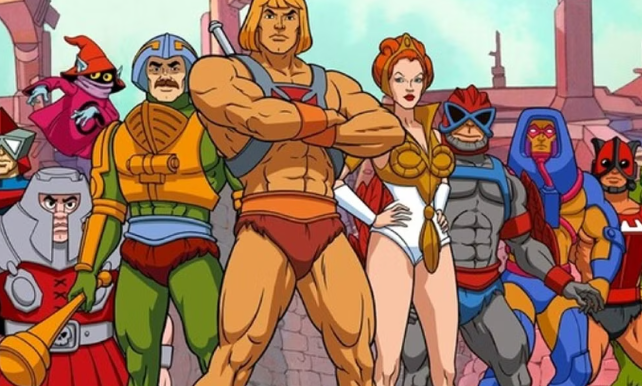
The universe is vast, filled with shimmering stars and ancient mysteries, but few corners of pop culture are as vibrant and enduring as the realm of Eternia. To the uninitiated, Masters of the Universe (MOTU) might look like a simple tale of a muscle-bound hero in a loincloth fighting a blue-skinned skeleton. However, beneath the surface of this iconic franchise lies a complex tapestry of mythology, innovative marketing, and a revolutionary blend of genres that changed the toy industry and television history forever.
Whether you grew up shouting “I have the power!” or you are a newcomer curious about why a green tiger wears red armor, understanding MOTU requires a deep dive into a world where magic and technology collide. This is a franchise built on the “Power of Grayskull,” but its true strength lies in its ability to reinvent itself for every generation. Here is everything you need to know about the masters of this legendary universe.
1. The Surprising “Conan” Connection and Toy Origins
The birth of He-Man is a story of corporate necessity meeting creative lightning. In the early 1980s, toy giant Mattel passed on the rights to produce figures for a popular space fantasy film, a decision they quickly regretted. To compensate, they tasked their lead designers with creating a new “heroic” figure that could dominate the boys’ toy aisle. For years, a persistent urban legend suggested that He-Man began as a prototype for a Conan the Barbarian toy line that was scrapped due to the film’s R-rated violence.
While the “Conan” theory has been largely debunked by the creators, the aesthetic influence is undeniable. The designers wanted to create a character that represented “pure power.” Through extensive market research with children, they found that kids felt a lack of control in their own lives. By creating a character that was the “Master” of his world, they tapped into a fundamental psychological desire. The result was a 5.5-inch figure—sturdier and more muscular than the traditional 3.75-inch figures of the time—which established a new standard for action figure proportions. This “barbarian” aesthetic was the foundation upon which an entire galaxy of lore would eventually be built.
2. Prince Adam and the Duality of Heroism
At the heart of the franchise is the dual identity of Prince Adam and He-Man. Unlike many superheroes who wear a mask to hide their face, Adam’s transformation is a metaphysical shift. Prince Adam is often portrayed as a carefree, perhaps even “lazy” royal, a stark contrast to the unstoppable warrior he becomes. This trope serves as a powerful analogy for potential: the idea that within even the most unassuming or “ordinary” person lies the strength to save the world.
The transformation sequence—signified by the raising of the Power Sword and the iconic cry—is more than just a cool visual. It represents the transition from childhood to adulthood, or from doubt to confidence. The Power Sword itself is the conduit for this energy, acting as a key to the mystical energies stored within Castle Grayskull. Interestingly, in the earliest iterations of the toy line, He-Man didn’t have a secret identity; he was simply a wandering jungle barbarian. The addition of Prince Adam and the royal court of Eternia added a “Prince and the Pauper” layer of complexity that allowed for more diverse storytelling in the animated series.
3. Skeletor: A Tragic and Terrifying Antagonist
Skeletor is arguably one of the most recognizable villains in all of fiction. With his bright yellow skull face and hooded blue physique, he is the perfect visual foil to He-Man’s golden-haired vitality. However, Skeletor is far more than a “monster of the week.” In the deep lore of Eternia, his origin is often tied to the royal family itself. Many versions of the story suggest he was originally Keldor, the half-brother of King Randor, who was scarred and driven to evil after a failed coup and a brush with dark magic.
This familial connection turns a standard “Good vs. Evil” battle into a Shakespearean tragedy. Skeletor isn’t just trying to conquer a castle; he is trying to reclaim what he believes is his birthright. His base of operations, Snake Mountain, serves as a dark mirror to Castle Grayskull. Despite his fearsome appearance, Skeletor’s personality often oscillates between a terrifying sorcerer and a high-pitched, sarcastic megalomaniac. This blend of genuine threat and campy charisma is what has allowed him to remain a fan favorite for decades, often overshadowing the hero himself in terms of sheer personality.
4. The Hybrid Genre: Where Sci-Fi Meets High Fantasy
What truly sets Masters of the Universe apart from other franchises is its refusal to stick to one genre. Eternia is a world where a knight might ride a mechanical horse, and a sorceress might defend a castle against a villain armed with a laser cannon. This “Science-Fantasy” blend was a bold move that allowed designers to pull inspiration from anywhere. You have medieval castles and magic spells existing alongside hover-disks, robots, and interdimensional portals.
This hybrid nature is best exemplified by the character Man-At-Arms (Duncan). As the royal master of technology and combat, he bridges the gap between ancient mysticism and futuristic engineering. This setting allows for a unique visual language: characters wear pelts and loincloths but carry high-tech communicators. For a child’s imagination, this meant there were no rules. A dragon could fight a tank, and it made perfect sense within the internal logic of Eternia. This genre-bending approach ensured that the franchise never felt dated, as it could always incorporate new elements from both the past and the future.
5. The Secret Lore of the Mini-Comics
Before there was a cartoon, there were the mini-comics. Packaged with each action figure, these small booklets were the first source of MOTU lore. For many “purists,” the mini-comics represent a darker, more atmospheric version of the world. In these early stories, there was no Prince Adam. He-Man was a tribal warrior from a village who was given special weapons by the Goddess to protect the planet from the extradimensional threat of Skeletor.
The mini-comics explored themes that the later television shows would soften. They depicted a world that felt “post-apocalyptic,” where the Great Wars of the past had left behind advanced technology that the current inhabitants barely understood. This created a sense of “lost history” that made Eternia feel lived-in and ancient. The art in these comics was often moody and gritty, heavily influenced by the pulp fantasy magazines of the mid-20th century. Even today, many fans prefer this “Savage Eternia” interpretation, highlighting the franchise’s versatility in tone.
6. Battle Cat and the Art of the “Repaint”
Every great hero needs a sidekick, and Battle Cat is one of the most iconic in toy history. But Battle Cat’s origin is a masterclass in toy manufacturing efficiency. When the designers needed a vehicle or mount for He-Man, they looked through Mattel’s existing molds to save money. They found a tiger from the “Big Jim” toy line. To make it fit the MOTU aesthetic, they scaled it up and realized it was too big. To hide the scale issue and make it look “alien,” they painted it green with orange stripes and added a red saddle and helmet.
Narratively, Battle Cat is the alter-ego of Cringer, Prince Adam’s cowardly, talking pet tiger. The transformation mirrors Adam’s own: Cringer is terrified of his own shadow, but when infused with the Power of Grayskull, he becomes a fearless, armored beast. This dynamic provides a relatable element for the audience; if a “cowardly” cat can become a hero, anyone can. The bond between Adam and Cringer is the emotional heart of many stories, emphasizing that true bravery isn’t the absence of fear, but the ability to overcome it.
7. Castle Grayskull: The Ultimate Prize
In many stories, the “base” is just a place where the heroes hang out. In Masters of the Universe, Castle Grayskull is a character in its own right. Its terrifying skull-shaped facade suggests a dark origin, yet it is the source of all that is good and powerful on Eternia. It acts as a fortress, a library of universal knowledge, and a mystical nexus. Skeletor’s primary goal is almost always to “breach the walls of Grayskull” to steal the secrets hidden within.
The castle is guarded by the Sorceress, a powerful being who can transform into a falcon named Zoar. She acts as a mentor to He-Man, much like Merlin to King Arthur. The mystery of why the castle looks like a giant skull is a recurring theme in the lore, with various explanations involving ancient spirits or the remains of a giant deity. As a toy, the Castle Grayskull playset became a cultural phenomenon, famous for its “trap door” and “jaw-bridge,” and it remains one of the most desired collector’s items in the world.
8. The She-Ra Connection and Etheria
The franchise expanded its reach significantly with the introduction of She-Ra, He-Man’s twin sister. Stolen at birth by the evil Hordak, Princess Adora was raised on the planet Etheria as a member of the Evil Horde. Upon discovering her true heritage and obtaining the Sword of Protection, she becomes She-Ra, the Princess of Power. This expansion did more than just market to a female demographic; it broadened the scope of the entire universe.
The “Princess of Power” spin-off introduced a more serialized form of storytelling, focusing on a Great Rebellion against a totalitarian regime. While He-Man fought to defend his kingdom, She-Ra fought to liberate hers. This added a political layer to the fantasy. The crossover events between the two siblings—most notably the “Secret of the Sword”—are considered high points of the franchise. It established that the Power of Grayskull was a family legacy, and that heroes come in many forms, regardless of gender.
9. A Rogue’s Gallery of High-Concept Henchmen
A hero is only as good as his villains, and MOTU boasts a lineup of antagonists that are as creative as they are bizarre. Skeletor’s henchmen aren’t just generic thugs; they are high-concept characters with unique abilities. You have Beast Man, who controls animals; Trap Jaw, a cyborg with a literal Swiss-army knife for an arm; and Evil-Lyn, a master of dark magic whose intelligence often rivals Skeletor’s.
Each character was designed with a “gimmick” that translated perfectly into play. For example, Ram Man had a spring-loaded base that allowed him to headbutt enemies, and Stinkor actually smelled like patchouli oil. This “high-concept” approach to character design ensured that every figure felt essential to the world-building. These villains weren’t just obstacles; they were distinct personalities with their own motivations, fears, and rivalries, creating a rich ecosystem of conflict that kept the stories fresh and engaging.
10. The Legacy of the Moral Lessons
Perhaps the most lasting impact of the Masters of the Universe animated series was the inclusion of the “PSA” or moral lesson at the end of every episode. Because of strict regulations on children’s television in the era of its inception, the show’s creators included these segments to ensure the program had educational value. He-Man, She-Ra, or their friends would speak directly to the camera, explaining the day’s lesson—ranging from the dangers of lying to the importance of physical fitness.
While these segments are often viewed with nostalgic humor today, they served a vital purpose. They grounded the fantastical battles of Eternia in real-world ethics. They taught children that while having the “Power” was great, using it responsibly was what truly made one a “Master.” This legacy of kindness, inclusivity, and integrity helped the franchise transcend being just a “toy commercial” and turned it into a foundational pillar of childhood development for millions of people across the globe.
Further Reading
- The Art of He-Man and the Masters of the Universe by Tim Seeley and Steve Seeley
- Mastering the Universe: He-Man and the Rise and Fall of a Billion-Dollar Idea by Roger Sweet and David Baerwald
- He-Man and Masters of the Universe: A Character Guide and World Compendium by Val Staples, Josh de Lioncourt, and James Eatock
- The Toys of He-Man and the Masters of the Universe by Val Staples and “Pixel” Dan Eardley



