
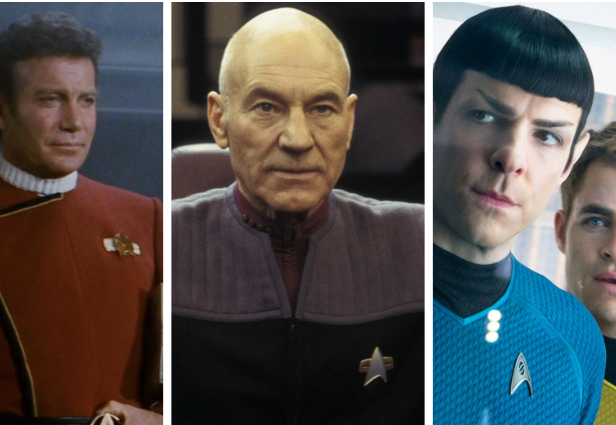
To Boldly Go: The Ultimate Beginner’s Guide to the Star Trek Universe (And Why It’s Not Just for Geeks)
Stepping into the world of Star Trek for the first time can feel like trying to board a starship that is already traveling at warp speed. With nearly sixty years of television series, blockbuster films, thousands of comic books, and enough technical manuals to fill a planetary library, the sheer volume of “Trek” can be intimidating. However, beneath the flashing consoles and the alien prosthetics lies a remarkably accessible and deeply human story. At its heart, this franchise is not about space battles or technobabble; it is an optimistic vision of what humanity could become if we finally learned to work together.
For the newcomer, the challenge isn’t just finding a place to start—it’s understanding the “why” behind the fandom’s passion. Unlike many other science fiction properties that lean into dystopian futures, Star Trek presents a world where poverty, prejudice, and war have been largely eradicated on Earth. It is a “fish out of water” experience for the modern viewer, inviting us into a future where our greatest struggles are intellectual, ethical, and exploratory. This guide is designed to be your universal translator, breaking down the essential lore, the best entry points, and the core philosophies that make this franchise a cornerstone of global pop culture.
1. The Vision of a Post-Scarcity Utopia
The most fundamental thing to understand about Star Trek is its setting: a post-scarcity Earth. In this future, humanity has moved past the need for money. Thanks to technology like “replicators”—which can materialize food, clothing, and tools out of thin air—the traditional drivers of human conflict, such as greed and resource scarcity, have vanished. This allows the characters to focus on self-improvement and the betterment of the galaxy. When you watch a captain negotiate a peace treaty or a scientist study a nebula, they aren’t doing it for a paycheck; they are doing it because they believe in the intrinsic value of discovery.
This optimistic framework is what sets the franchise apart from its contemporaries. It suggests that technology, if used wisely, can liberate the human spirit rather than enslave it. For a newcomer, this means the drama isn’t found in “how will they pay the rent?” but rather in “how do we maintain our values when faced with the unknown?” The show often acts as a laboratory for social and ethical experiments. By removing the mundane struggles of 21st-century life, the stories can laser-focus on the “human condition,” using alien races as mirrors for our own triumphs and failings.
2. The United Federation of Planets: A Galactic UN
While Earth is the “capital” of the story, the heroes don’t just represent one planet. They are members of the United Federation of Planets (UFP), an interstellar alliance of over 150 worlds. Think of the Federation as a cosmic version of the United Nations, but with more teeth and better uniforms. The members—including humans, Vulcans, Andorians, and Tellarites—share technology, defense resources, and a commitment to democratic ideals. This alliance is the primary “good guy” entity in the franchise, representing the power of diversity and collective action.
Starfleet is the operational arm of the Federation. While it maintains a military-like structure with ranks and uniforms, its primary mission is “deep space exploration” and scientific research. It is a peace-keeping force, not a conquest-driven empire. For a beginner, understanding this distinction is crucial: Starfleet officers are explorers first and soldiers second. The tension in many episodes arises when these peaceful explorers are forced into a conflict they desperately want to avoid. The Federation represents the hope that different cultures can coexist without losing their unique identities, embodied in the Vulcan philosophy of “Infinite Diversity in Infinite Combinations” (IDIC).
3. The Starting Point Dilemma: Where to Begin?
The most frequent question asked by novices is: “Do I have to start at the beginning?” The answer is a resounding “No.” Because the franchise spans so many different eras, there are several “on-ramps” for new viewers. For those who enjoy the charm and camp of 1960s television, starting with The Original Series (TOS) is the logical choice. However, many modern fans find their footing in The Next Generation (TNG). This series, set roughly a century after the original, features a more polished, philosophical approach and serves as the foundation for much of the lore used in modern iterations.
If you prefer contemporary production values and serialized storytelling, there are newer series designed specifically to welcome fresh audiences. Some shows function as prequels, exploring the early days of Starfleet, while others jump far into the future. A great strategy for a newcomer is to watch a “Top 10” list of standalone episodes from various eras to see which “flavor” of Trek resonates with you. Whether you prefer a gritty war drama, a lighthearted workplace comedy, or a cerebral mystery, there is a corner of this universe that fits your taste. You don’t need to know the history of every alien race to enjoy a well-told story about a crew facing a crisis.
4. Captain James T. Kirk and the Frontier Spirit
The face of the franchise for decades has been James T. Kirk, the swaggering, intuitive captain of the USS Enterprise in The Original Series. Kirk represents the “frontier” era of Starfleet. His missions are often about raw survival, first contacts with hostile entities, and navigating the wild, untamed corners of the galaxy. Kirk is often characterized as a “cowboy” in space, but this is a simplification. He is a deeply loyal commander who relies on the balance between his logic-driven First Officer, Spock, and his emotionally driven Chief Medical Officer, Dr. McCoy.
For a newcomer, the Kirk era is about the “Great Society” ideals of the 1960s projected into the stars. It is colorful, fast-paced, and groundbreaking. It was one of the first shows to feature a multiracial, multi-national crew during the height of the Cold War, including a Black woman in a position of authority and a Russian officer on the bridge. Watching Kirk isn’t just about the monsters he fights; it’s about the radical idea that humanity could move past its petty terrestrial divisions to face the wonders and terrors of the universe as a united species.
5. Jean-Luc Picard and the Power of Diplomacy
If Kirk is the frontier scout, Captain Jean-Luc Picard of The Next Generation is the philosopher-king. Picard brought a new level of gravitas to the franchise. He is a man of culture, a student of archaeology, and a master of the “Picard Speech”—a stirring rhetorical defense of human rights and ethical integrity. Under Picard’s command, the USS Enterprise-D became less of a battleship and more of a traveling university and diplomatic summit.
Picard represents the peak of Federation idealism. His stories often involve complex moral quandaries: “Does this sentient machine have a soul?” or “Should we intervene to save a dying civilization if it violates our laws?” For a beginner, the Picard era is the best place to understand the intellectual depth of the franchise. It proves that a “battle of wits” can be just as thrilling as a phaser fight. Picard’s leadership style—collaborative, thoughtful, and principled—has made him a role model for viewers across generations and remains a primary reason why many fans consider the 1980s and 90s era to be the “golden age” of the series.
6. The Prime Directive: The Most Important Law
One concept you will hear mentioned in almost every episode is the “Prime Directive.” This is Starfleet’s General Order Number One. It prohibits Starfleet personnel from interfering with the internal development of alien civilizations, particularly those that have not yet developed “warp drive” (faster-than-light travel). The idea is to prevent “technological contamination” and allow cultures to evolve at their own natural pace. It is a policy of non-interference intended to prevent the well-meaning but disastrous “colonization” mistakes of Earth’s past.
For the viewer, the Prime Directive is a brilliant plot device because it is constantly being challenged. It creates agonizing drama when a crew must decide whether to let a planet be destroyed by a natural disaster or break the law to save billions of lives. As a newcomer, watching how different captains interpret or struggle with this directive will give you a clear window into their character. It is the ultimate test of Starfleet’s morality: is it more “moral” to stick to your principles of non-interference, or to show compassion at the cost of the law?
7. Meet the Neighbors: Vulcans, Klingons, and the Borg
You don’t need to memorize a galactic atlas, but knowing the “Big Three” alien races will make your entry much easier. First are the Vulcans, like Spock. They were once a violent, emotional people who decided to suppress all feelings in favor of pure logic. They are humanity’s oldest allies. Next are the Klingons, an honorable but aggressive warrior race. For much of the franchise’s history, they are the “frenemies” of the Federation—sometimes at war, sometimes in a shaky alliance, but always obsessed with glory and battle.
The most terrifying of all are the Borg. Unlike other races, the Borg are a “collective” of cybernetic organisms. they don’t negotiate, they don’t have feelings, and they don’t have individuals. They “assimilate” other species, forcibly turning them into drones to add their “biological and technological distinctiveness” to the Hive Mind. The Borg represent the ultimate fear of losing one’s individuality. For a beginner, the Borg episodes are often the most action-packed and high-stakes, as they represent a threat that cannot be reasoned with through Picard’s diplomacy or Kirk’s bravado.
8. Technobabble, Warp Speed, and Transporters
Star Trek is famous (and sometimes infamous) for its “technobabble”—scientific-sounding jargon used to explain how things work. While it can sound complicated, most of it is remarkably consistent. “Warp Drive” is the engine that allows ships to travel faster than light by folding space. “Transporters” are the pads that disassemble your molecules and beam you to a planet’s surface (a concept originally invented by the 1960s producers simply to save the money it would have cost to film a spaceship landing every week).
As a newcomer, don’t worry about the physics of “chroniton particles” or “inverting the polaron field.” Usually, the “tech” is just a metaphor for the problem at hand. If the “shields are at 10%,” it simply means the heroes are in trouble and time is running out. The gadgets—like the “tricorder” (a handheld sensor) and the “communicator” (the precursor to the flip-phone)—are tools that facilitate the plot. The real “science” of the show is often found in its social science: sociology, psychology, and ethics. The tech is just the shiny wrapping paper on the gift.
9. The “Prime” Timeline vs. The “Kelvin” Timeline
To avoid confusion, you should know that there are two main “universes” in the films. The vast majority of the TV shows and the older movies take place in the Prime Timeline. This is the “main” history of the franchise. However, in the late 2000s, a series of blockbuster films created an “alternate reality” known as the Kelvin Timeline. In these movies, a time-travel event changes the past, allowing the creators to tell new stories with younger versions of Kirk and Spock without erasing the fifty years of history that came before.
If you are watching the modern big-budget movies featuring Chris Pine as Kirk, you are in the Kelvin Timeline. These are high-energy, action-focused, and very beginner-friendly. However, if you want the deep lore and the complex political world-building, you will eventually want to head back to the Prime Timeline shows. Think of the Kelvin movies as a “greatest hits” album—exciting and accessible—while the TV series are the “deep cuts” where the real world-building happens. Both are valid ways to enjoy the franchise; they just operate on different frequencies.
10. The Legacy: Science Fiction as Social Commentary
The most important thing to know about Star Trek is that it has always been a mirror for the real world. During the 1960s, it tackled the Vietnam War and the Civil Rights movement. In the 90s, it explored the fallout of the Cold War and the complexities of religious conflict. In the modern era, it continues to address identity, mental health, and the ethics of artificial intelligence. It uses the “alien” as a safe way to discuss topics that might be too controversial to handle directly in a contemporary setting.
For the newcomer, this means that even an episode about a “space cloud” might actually be a story about grief or environmentalism. This depth is why the show has survived for over half a century. It treats its audience with intelligence and asks them to consider perspectives other than their own. When you join the fandom, you aren’t just watching a show; you are joining a global conversation about how we can build a better future. The legacy of the franchise isn’t just in the movies; it’s in the real-world scientists, astronauts, and activists who were inspired by a vision of a future where everyone has a place at the table.
Further Reading
- The Star Trek Book: Strange New Worlds Boldly Explained by DK Publishing
- The Making of Star Trek by Stephen E. Whitfield and Gene Roddenberry
- Federation: The First 150 Years by David A. Goodman
- Star Trek: Nerd Search by Glenn Dakin (A fun visual guide to hidden details)



