
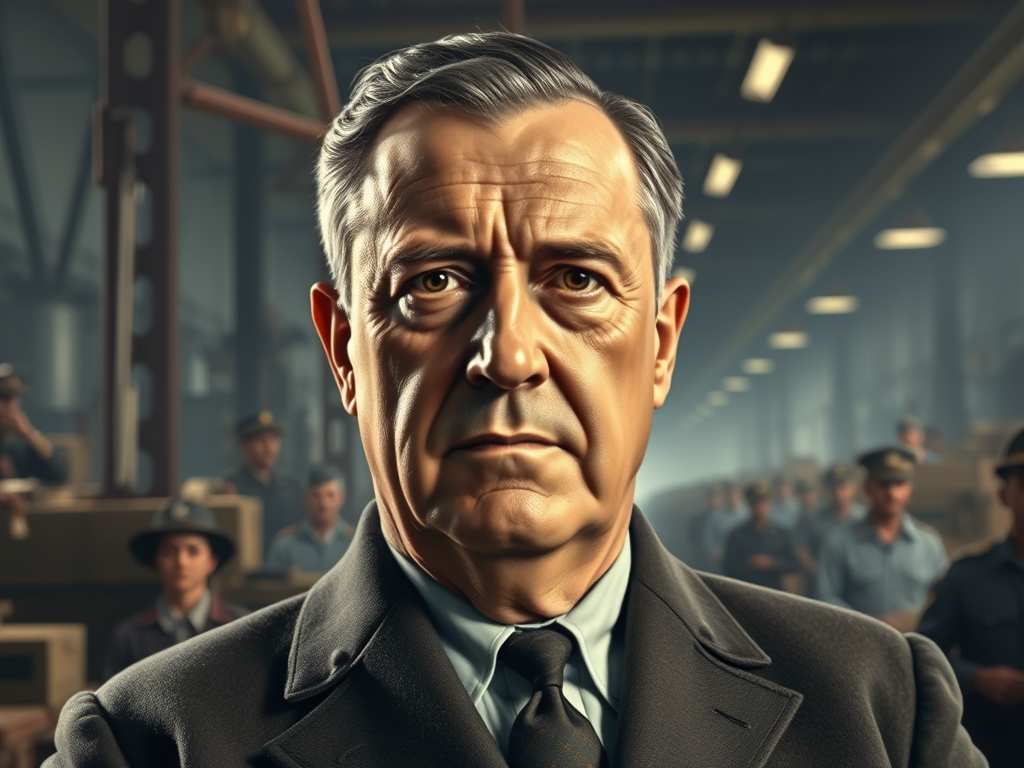
Imagine being the leader of a huge country during one of the most dangerous times in human history. Every decision you make could mean life or death for millions, and you have to balance big dreams for the future with the messy realities of the present. That was the incredible challenge faced by Franklin D. Roosevelt (often called FDR), the President of the United States during most of World War II. People often ask: was he a grand visionary with a clear plan for the world, or a clever politician who made practical choices to get things done?
The truth, as with many complex historical figures, is that he was both. FDR was a master politician, skilled at understanding what the American people wanted, building support for his ideas, and negotiating with powerful figures at home and abroad. But he also had a powerful vision for a world free from fear and want, a world where nations cooperated to prevent future wars. He had to navigate America from a deep economic crisis (the Great Depression) into a global war, all while trying to keep the country united and plan for a lasting peace.
This balancing act between his long-term ideals and the immediate political necessities shaped America’s role in World War II and the world that emerged from it. It’s a fascinating look at how leaders must often walk a tightrope, trying to achieve big goals while dealing with the day-to-day challenges. Let’s explore ten key aspects of FDR’s wartime leadership to see how his visionary ideas and political skills worked together.
1. Leading the “Arsenal of Democracy”: A Visionary Call to Action
Before the United States even officially entered World War II, FDR had a bold vision: America would become the “Arsenal of Democracy.” This wasn’t just a catchy phrase; it was a powerful idea that the U.S., with its huge industrial might, would supply weapons and materials to countries fighting against tyranny, even while remaining officially neutral.
Imagine the United States as a giant factory, working day and night to build the tools needed by friends fighting a dangerous bully, even before getting into the fight yourself. This idea came from FDR’s deep belief that American security was tied to the survival of democracies like Great Britain. It was a risky political move because many Americans wanted to stay out of the war completely. However, his powerful words and his ability to rally public opinion set the stage for America’s massive industrial mobilization, which ultimately outproduced all the Axis powers combined. This foresight wasn’t just good politics; it was a visionary understanding of the global stakes.
2. The Lend-Lease Act: A Political Masterstroke with Global Impact
To make the “Arsenal of Democracy” a reality, FDR pushed for the Lend-Lease Act. This law allowed the U.S. to “lend” or “lease” war supplies to Allied nations like Britain, the Soviet Union, and China, even if they couldn’t pay for them immediately. It was a way to help America’s allies without officially joining the war or getting bogged down in messy debts.
Imagine lending your neighbor a garden hose to put out a fire on their house, knowing that if their house burns down, yours might be next. FDR famously used this analogy to explain Lend-Lease to the American public, a clever political move to bypass isolationist arguments. This act was incredibly important because it kept the Allied powers fighting, especially when they were struggling against Nazi Germany. It demonstrated FDR’s political skill in finding a way around neutrality laws to serve a larger strategic vision for global security.
3. Forging the Grand Alliance: Diplomatic Skill in a Complex World
FDR played a crucial role in building and holding together the “Grand Alliance” – the powerful partnership between the United States, Great Britain, and the Soviet Union. This was a challenging task, as these three nations had very different political systems and leaders (Churchill, a determined democrat; Stalin, a ruthless dictator).
Imagine trying to get three strong-willed kids, who don’t always like each other, to work together on a giant school project that needs to be perfect. FDR had to be a master diplomat, balancing the strong personalities and sometimes conflicting goals of Churchill and Stalin. His close relationship with Churchill was vital, but he also had to find ways to communicate with and make promises to Stalin, despite deep mistrust. This constant diplomatic effort was a political necessity to win the war, but it also laid the groundwork for future international cooperation, reflecting a visionary outlook.
4. The Atlantic Charter: Laying the Groundwork for Post-War Peace
Even before America entered the war, FDR met secretly with Winston Churchill in 1941 to create the Atlantic Charter. This document outlined shared goals for the post-war world, including principles like self-determination (people choosing their own government), freedom from want, and freedom from fear.
Imagine two leaders meeting in secret, not just to talk about the current fight, but to draw up a blueprint for a much better, more peaceful future world. While not a formal treaty, the Atlantic Charter was a powerful statement of ideals. It was a visionary document that expressed FDR’s hope for a new world order based on cooperation and human rights. Politically, it helped to unite the Allied cause and gave people a reason to fight for something more than just defeating an enemy; it gave them hope for a truly better world.
5. Commander-in-Chief: A Hands-On Wartime Leader
Once the U.S. entered the war after the attack on Pearl Harbor, FDR fully embraced his role as Commander-in-Chief. He was not just a figurehead; he was deeply involved in setting military strategy, making major decisions, and coordinating with his generals and admirals.
Imagine the President not just sitting in the White House, but constantly reviewing battle plans, talking directly with generals on the front lines, and making big calls about where troops and resources should go. FDR decided on a “Europe First” strategy, meaning the main effort would be to defeat Nazi Germany before fully focusing on Japan. This was a complex political decision that required convincing military leaders and the public. His active involvement in military planning and his willingness to make tough strategic choices showed his hands-on political leadership, ensuring that America’s immense power was directed effectively.
6. Managing the Home Front: Unifying a Nation for War
FDR didn’t just lead the war effort abroad; he also had to manage the “home front,” mobilizing the entire American economy and society for war. This involved huge changes, like rationing food and supplies, converting factories from making cars to making tanks, and encouraging women to work in factories.
Imagine trying to get every single person in a huge country to change their daily lives, work harder, and make sacrifices for a common goal. This required immense political skill to persuade and inspire millions of Americans, many of whom had just come out of the Great Depression. He used his famous “fireside chats” (radio broadcasts) to speak directly to the American people, explaining the war’s importance and asking for their help. This mix of vision (a united nation fighting for freedom) and political pragmatism (getting people to comply with rationing) was essential for success.
7. The Atomic Bomb Decision: A Heavy Burden
One of the most profound and controversial decisions of FDR’s presidency was authorizing the secret “Manhattan Project” to develop the atomic bomb. He began this top-secret program out of fear that Nazi Germany might develop such a devastating weapon first.
Imagine making a decision that could change the future of humanity, knowing its power but not fully understanding its consequences. This was a visionary step in terms of scientific advancement and military power, aiming to create a weapon that could end the war. However, it was also a politically complex decision, kept secret from the public and even many in his own government. Though he died before the bomb was used, his decision launched the world into the nuclear age, reflecting both a far-sighted awareness of new technologies and a willingness to use them for strategic gain.
8. Planning for the United Nations: A Vision for Lasting Peace
Even as the war raged, FDR was already looking ahead, actively planning for a new international organization that would replace the failed League of Nations. He coined the term “United Nations” and worked tirelessly with other Allied leaders to lay its groundwork.
Imagine a leader fighting a fierce battle, but also spending time designing a new, better playground rulebook for all the kids after the fight is over. FDR believed deeply that international cooperation was the key to preventing future global conflicts. This was a profoundly visionary idea, aiming to create a system where countries could talk out their problems instead of fighting. Politically, it required convincing a war-weary public and skeptical allies of the need for such an organization, but his determination eventually led to the creation of the UN after his death.
9. Balancing Domestic and Foreign Policy: The Great Depression to Global War
FDR’s presidency was unique because he had to tackle two enormous challenges almost back-to-back: the Great Depression and World War II. He used many of the same political skills – like communicating directly with the public and being open to new ideas – to deal with both.
Imagine being a superhero who has to save your city from a terrible economic disaster, and then immediately switch to saving the whole world from a supervillain. FDR’s initial focus was on “The New Deal” to help Americans suffering from the Depression. As war approached, he skillfully shifted national attention and resources towards preparedness, eventually mobilizing the country for total war. This constant balancing act, moving from domestic crisis to global conflict, showed his adaptability as a politician while never losing sight of his vision for American security and prosperity.
10. The Legacy of Leadership: Inspiration and Controversy
FDR’s leadership during World War II is remembered as one of the most impactful in American history. He inspired a nation, led the Allies to victory, and laid the foundations for the post-war world order. However, his decisions also face scrutiny, especially regarding the internment of Japanese Americans and the limited response to the Holocaust.
Imagine a complex masterpiece: beautiful and inspiring in many parts, but with some darker, more difficult brushstrokes. His supporters emphasize his visionary leadership, his ability to inspire hope, and his strategic genius in winning the war. Critics point to the political compromises he made, the civil liberties that were curtailed, and the lives that might have been saved with different actions. Ultimately, FDR was a deeply pragmatic politician who used his skills to pursue a powerful vision for a safer, more prosperous world, leaving a complicated but undeniably transformative legacy.
Further Reading
- “Franklin D. Roosevelt: The New Deal and War (A Graphic History)” by Andrew Kahn (a good introduction for younger readers)
- “FDR” by Jean Edward Smith (a comprehensive biography for older readers)
- “The American Spirit: United States History as Seen by Contemporaries, Volume II” edited by Thomas Bailey and David Kennedy (includes primary sources like FDR’s speeches)
- “Eleanor Roosevelt: A Life of Discovery” by Russell Freedman (provides insight into his partner’s influence and the social context)
- “Commander in Chief: Franklin Delano Roosevelt, His Lieutenants, and Their War” by Eric Larrabee (focuses on his military leadership)
Here at Zentara.blog, our mission is to take those tricky subjects and unlock them, making knowledge exciting and easy to grasp for everyone. But the adventure doesn’t stop on this page! We’re constantly exploring new frontiers and sharing discoveries across the digital universe.
Want to dive deeper into more mind-bending Top 10s and keep expanding your world? Come join us on our other platforms – we’ve got unique experiences waiting for you on each one!
- Get inspired by visual wonders and bite-sized facts: See the world through Zentara’s eyes on Pinterest! Pin our fascinating facts and stunning visuals to your own boards. Explore Pins on Pinterest: https://uk.pinterest.com/zentarablog/
- Discover quick insights and behind-the-scenes peeks: Hop over to Tumblr for snippets, quotes, and unique content you won’t find anywhere else. It’s a different flavour of discovery! Follow the Fun on Tumblr: https://www.tumblr.com/zentarablog
- Ready for deep dives you can listen to or watch? We’re bringing our accessible approach to video and potentially audio! Subscribe to our YouTube channel and tune into future projects that make learning pop! Subscribe on YouTube: https://www.youtube.com/@ZentaraUK
- Seeking even more knowledge in one place? We’ve compiled some of our most popular topic deep dives into fantastic ebooks! Find them on Amazon and keep the learning journey going anytime, anywhere. Find Our Ebooks on Amazon: https://www.amazon.co.uk/s?k=Zentara+UK&ref=nb_sb_noss
- Connect with us and fellow knowledge seekers: Join the conversation on BlueSky! We’re sharing updates, thoughts, and maybe even asking you what wonders we should explore next. Chat with Us on BlueSky: https://bsky.app/profile/zentarablog.bsky.social
- Perfect for learning on the move! We post multiple 10-minute podcasts per day on Spotify. Pop on your headphones and fill your day with fascinating facts while you’re out and about! Listen on Spotify: https://open.spotify.com/show/3dmHbKeDufRx95xPYIqKhJ
- Follow us on Instagram for bytesize knowledge! We post multiple posts per day on our official Instagram account.
https://www.instagram.com/zentarablog/
Every click helps us keep bringing honest, accessible knowledge to everyone. Thanks for exploring with us today – see you out there in the world of discovery!




Leave a Reply