
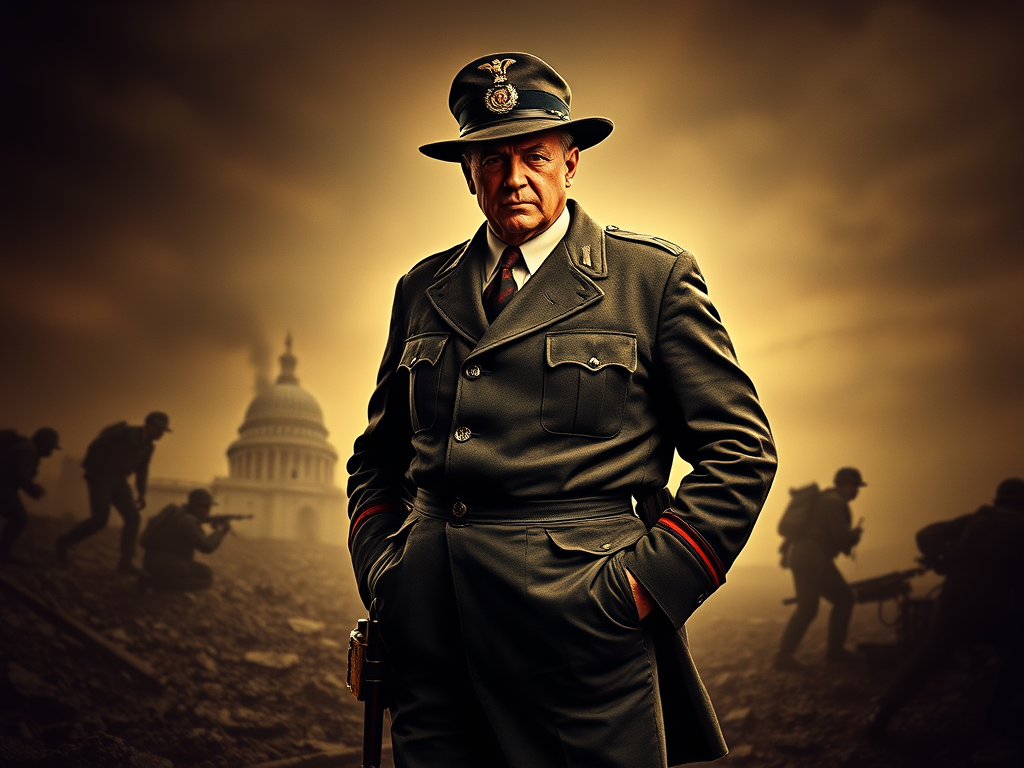
When you think of American spies and secret missions, your mind probably jumps to the CIA (Central Intelligence Agency). But did you know that before the CIA, there was another, even more daring and secretive organization that laid the groundwork for modern American intelligence? That agency was the Office of Strategic Services, or OSS, and it was America’s very first spy agency! Born out of the urgent need for intelligence during World War II, the OSS was a fascinating mix of academics, adventurers, and everyday heroes who took on some of the war’s most dangerous and crucial missions.
The OSS was only around for a short time, from 1942 to 1945, but in those few years, it achieved incredible feats, operating behind enemy lines, gathering vital information, and even helping resistance fighters. It was a time of immense challenge and innovation, where new methods of espionage and covert action were being invented on the fly. In this article, we’re going to uncover the “secret lives” of the OSS, exploring ten amazing facts about this pioneering agency and its incredible impact on America’s intelligence history. Get ready to dive into the world of spies, sabotage, and secret operations that helped win World War II!
1. Born from Necessity: The Need for Coordinated Intelligence
Before World War II, the United States didn’t have a single, unified intelligence agency. Different parts of the government and military, like the State Department, the FBI, and various military branches, each had their own intelligence operations, but they didn’t share information very well. This was like different teams on a sports field all playing their own game without talking to each other! As war raged in Europe and the threat to the U.S. grew, President Franklin D. Roosevelt realized that America needed a much more coordinated and effective way to gather information about its enemies.
He knew that understanding the enemy’s plans, strengths, and weaknesses was just as important as fighting them on the battlefield. So, in July 1941, he appointed a remarkable man named William J. “Wild Bill” Donovan to lead a new office called the Coordinator of Information (COI). Donovan was a highly decorated World War I hero and a brilliant lawyer, and Roosevelt tasked him with pulling together all of America’s intelligence efforts. This was the seed from which the OSS would later grow, showing that the agency was truly “born from necessity” to meet the unprecedented challenges of a global war.
2. “Wild Bill” Donovan: The Visionary Leader
At the heart of the OSS was its dynamic and visionary leader, William J. “Wild Bill” Donovan. He wasn’t just a desk-bound general; he was a larger-than-life figure who believed in aggressive, daring intelligence work. Donovan had seen firsthand during World War I how important intelligence was, and he was determined to build an agency that could match the best in the world, like Britain’s intelligence services. He was known for his energy, his willingness to take risks, and his ability to inspire loyalty in his agents.
Donovan had a unique vision for the OSS: it wouldn’t just collect information, but also carry out “special operations” like sabotage and supporting resistance movements behind enemy lines. He fought hard against other powerful figures in Washington who didn’t understand or trust his unconventional methods. His leadership was crucial in building the OSS from scratch, recruiting talented people from all walks of life, and getting them to work together on incredibly risky missions. “Wild Bill” Donovan truly was the “father” of American intelligence as we know it today, a fearless innovator who shaped the future of spycraft.
3. The “Oh So Social” Agency: A Mix of Brains and Brawn
The OSS quickly earned a nickname: the “Oh So Social” agency. This wasn’t because they were always at parties, but because “Wild Bill” Donovan recruited people from incredibly diverse backgrounds – a far cry from the traditional military. He believed that to fight a total war, he needed talent from everywhere. So, the OSS was filled with brilliant academics, university professors, Hollywood directors, artists, writers, wealthy socialites, businessmen, and even famous athletes.
For example, Julia Child, who later became a world-famous chef, worked for the OSS, developing shark repellent! Baseball catcher Moe Berg, a brilliant linguist, became an OSS spy. Movie director John Ford led its photographic unit. This diverse group brought unique skills and perspectives to the world of espionage, from understanding different cultures to being able to blend in anywhere. It created a vibrant, often eccentric, but incredibly effective organization that broke all the traditional rules of what a spy agency should look like. This blend of “brains and brawn” made the OSS truly unique and adaptable.
4. Spies, Saboteurs, and Propaganda: The OSS’s Main Jobs
The OSS had two main jobs, and they were both incredibly important to winning World War II. Its primary mission was secret intelligence (SI) – gathering information about enemy plans, troop movements, and resources through espionage. OSS spies operated deep behind enemy lines, collecting vital secrets that helped Allied commanders make strategic decisions. This was dangerous work, often involving secret meetings, codes, and risky communications.
Its secondary mission was special operations (SO) and morale operations (MO). Special Operations involved sabotage (damaging enemy equipment or infrastructure, like blowing up bridges or factories) and guerrilla warfare (small, independent groups fighting larger enemy forces). Morale Operations focused on psychological warfare – spreading propaganda (information designed to influence opinions) to weaken enemy morale or encourage resistance. The OSS even ran a campaign called “Operation Cornflakes,” where they dropped fake mail with anti-Nazi propaganda into German postal routes! These diverse tasks showed the OSS’s commitment to fighting the enemy on every front, not just with traditional military force.
5. Training for Danger: From Country Estates to Secret Camps
Becoming an OSS agent wasn’t easy. The agency needed to train its diverse recruits, many of whom had no military experience, for incredibly dangerous and secretive missions. They set up special training camps in remote areas, including old country estates in the U.S. and secret locations overseas. These weren’t like regular army boot camps.
Training included everything from silent killing techniques and demolitions (learning to blow things up) to parachute jumping, unarmed combat, and survival skills. Agents learned how to use different weapons, speak foreign languages, create fake identities, and communicate in code. They were taught how to resist interrogation and how to live off the land. The training was intense and designed to prepare them for the harsh realities of operating alone or in small groups behind enemy lines, where capture and torture were constant threats. These rigorous preparations ensured that OSS agents were ready for anything the enemy could throw at them.
6. Project Jedburgh: Working with Resistance Fighters
One of the most famous and impactful programs of the OSS was “Project Jedburgh.” This was a joint operation with the British Special Operations Executive (SOE), where small, three-person teams (usually one American, one British, and one local national) were parachuted into Nazi-occupied France, Belgium, and the Netherlands. Their mission was to link up with local resistance fighters, like the French Maquis, and help them fight the Germans.
The “Jedburghs” provided training in guerrilla warfare, supplied weapons and explosives, and helped coordinate sabotage missions against German forces, supply lines, and communications. They acted as a vital link between the Allied High Command and the underground resistance movements, relaying intelligence and organizing air drops of supplies. These brave teams played a crucial role in weakening the German war effort from within, tying up enemy troops, and preparing the ground for the D-Day landings. They showed the power of combining traditional military might with covert, unconventional warfare.
7. The X-2 Counterintelligence Branch: Hunting Down Enemy Spies
While many OSS operations focused on gathering intelligence and conducting sabotage against the enemy, the agency also had a very important job: protecting its own secrets and hunting down enemy spies. This was the role of the “X-2 Counterintelligence Branch.” Think of them as the spies who spied on other spies!
X-2’s mission was to uncover and neutralize enemy intelligence networks, whether they were German, Italian, or Japanese. They worked to identify enemy agents, break their codes, and prevent them from gathering information about Allied plans or sabotaging Allied operations. They often worked closely with counterintelligence agencies from other Allied countries. This branch was crucial for keeping OSS agents safe and ensuring that the vital intelligence they gathered remained secure. Their work was just as dangerous, often involving complex investigations and psychological battles to uncover enemy secrets.
8. Detachment 101: Fighting in the Jungles of Burma
Not all OSS operations took place in Europe. One of its most legendary units was “Detachment 101,” which operated in the incredibly harsh and dangerous jungles of Burma (now Myanmar) against the Japanese. This detachment was unique because it worked closely with indigenous (native) people, including the Kachin tribes, who knew the jungle terrain intimately.
Detachment 101 trained and equipped these local fighters, turning them into highly effective guerrilla forces. They conducted daring raids, ambushed Japanese patrols, rescued downed Allied pilots, and gathered vital intelligence about Japanese troop movements and supply lines. The combination of OSS training and the Kachin’s incredible jungle survival skills made Detachment 101 one of the most successful unconventional warfare units of World War II. Their bravery and effectiveness in such a difficult environment made them a legendary part of OSS history, showcasing the agency’s global reach and adaptability.
9. Julia Child and Shark Repellent: Unconventional Contributions
We often think of spies as secret agents doing daring missions, but sometimes, the contributions were much more unusual! As mentioned, even Julia Child, the famous American chef, played a role in the OSS. While she wasn’t parachuting behind enemy lines, her work in the OSS’s Emergency Sea Rescue Equipment Section involved some very inventive problem-solving.
One of her notable contributions was helping to develop a shark repellent. This might sound funny, but it was a serious problem during the war. Sharks were known to accidentally trigger underwater explosives and mines, causing them to go off prematurely. Julia Child and her team worked on a formula that could be coated onto these explosives to deter sharks. This shows how the OSS embraced all kinds of talent and tackled a wide range of challenges, proving that intelligence work could involve both daring operations and unexpected scientific innovations to help the war effort.
10. The Legacy: Forerunner to the CIA and Special Forces
The OSS was officially disbanded in September 1945, shortly after the end of World War II. Many people in the government debated whether America still needed a centralized intelligence agency in peacetime. However, the success of the OSS during the war proved the value of coordinated intelligence and special operations.
Because of the OSS’s groundbreaking work, President Harry S. Truman later signed the National Security Act of 1947, which established the Central Intelligence Agency (CIA). Many former OSS officers went on to become key figures in the early CIA, bringing their experience and methods to the new agency. The OSS also laid the foundation for America’s modern Special Forces, proving the effectiveness of unconventional warfare and specialized military units. So, while the OSS itself was short-lived, its impact was enormous, shaping the future of American intelligence, covert action, and special operations, and truly earning its title as America’s first spy agency.
Further Reading
- Wild Bill Donovan: The Spymaster Who Created the OSS and Modern American Espionage by Douglas Waller
- The Office of Strategic Services: America’s First Intelligence Agency by Patrick K. O’Donnell
- Sisterhood of Spies: The Women of the OSS by Elizabeth P. McIntosh
- Cloak and Dagger: The Secret Life of the OSS by Walter E. Dellinger III (Often simplified versions are available for younger readers or can be used as a guide)
- Spy School series by Stuart Gibbs (While fiction, these books introduce concepts of intelligence and espionage in an engaging way for kids, and can inspire interest in the real history)




Leave a Reply