
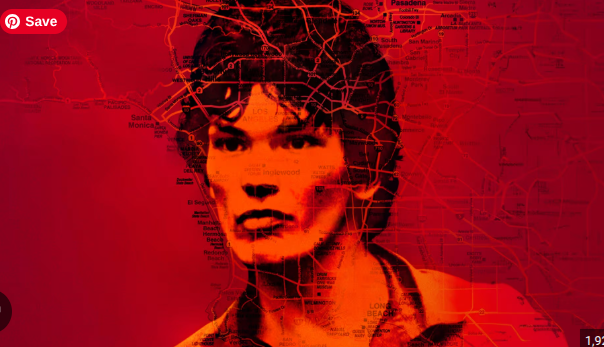
The summer of 1985 in California was marked by an unprecedented wave of terror. A predator, dubbed “The Night Stalker” by the media, stalked the darkened streets of Los Angeles and later San Francisco, breaking into homes, brutally murdering, raping, and assaulting seemingly random victims. This reign of terror, which spanned from April 1984 to August 1985, was carried out by Richard Ramirez, a deeply disturbed individual whose actions defied conventional criminal profiling. His methods were chaotic, his motives seemingly driven by a dark, internal compulsion, and his targets varied widely in age, gender, and socioeconomic status.
What made the Night Stalker’s crime spree so uniquely terrifying was its unpredictability. Unlike many serial killers who adhere to a strict victim profile or geographical pattern, Ramirez struck seemingly at random across a vast area, leaving behind a trail of fear and confusion. The sheer audacity of his “walk-in” crimes, often entering unlocked homes in the dead of night, instilled a pervasive sense of vulnerability in the affluent suburbs of Southern California. Residents resorted to sleeping with loaded firearms, installing elaborate security systems, and barricading their homes, a stark testament to the widespread panic he incited.
Richard Ramirez was not just a killer; he was a self-proclaimed Satanist who often left behind chilling symbols and invoked demonic references during his attacks. His gaunt appearance, rotting teeth, and disturbing glare became etched into the public consciousness as the manhunt intensified. The eventual capture of Ramirez was a dramatic culmination of police work and an extraordinary display of community vigilance, ending a nightmare that had gripped an entire state.
This article delves into ten horrifying facts about Richard Ramirez’s reign of terror, exploring his troubled background, his chilling methodologies, his disturbing beliefs, and the lasting impact of his crimes on a generation. It’s a descent into the mind of one of America’s most infamous and terrifying serial killers.
1. A Troubled Childhood Marked by Abuse and Violence
Richard Leyva Muñoz Ramirez’s journey into depravity began in a deeply fractured and violent childhood. Born in El Paso, Texas, in 1960, he was the youngest of five children to Mexican immigrant parents. His father was a volatile alcoholic who subjected the family, particularly Richard, to frequent physical abuse. More profoundly, at the age of 12, Ramirez was taken under the wing of his older cousin, Miguel “Mike” Valles, a Vietnam War veteran. Valles, suffering from PTSD and schizophrenia, openly boasted of gruesome war crimes, showing young Richard Polaroid photos of Vietnamese women he had allegedly raped, murdered, and dismembered. Most chillingly, at 15, Ramirez witnessed Valles fatally shoot his second wife in the face during a domestic argument. These early experiences, coupled with reported head injuries leading to temporal lobe epilepsy and early drug abuse, are widely believed to have contributed significantly to his developing psychopathy and sadistic tendencies, providing a chilling look into the Richard Ramirez early life and the profound impact of childhood trauma on serial killers.
2. Satanism as a Driving Force: The Devil’s Disciple
A deeply disturbing aspect of Richard Ramirez’s crimes was his fervent adherence to Satanism. He often left pentagrams drawn at crime scenes, spoke of the devil during his attacks, and even made victims “swear on Satan” to spare their lives, though this promise was rarely kept. During his trial, he famously flashed a pentagram drawn on his palm and declared “Hail Satan!” to the courtroom, embodying a demonic persona that fueled public terror. For Ramirez, Satanism was not merely a belief system; it was an ideological framework that justified his sadistic acts, providing a sense of power and a perverse sense of mission. He saw himself as a servant of evil, immune to moral judgment. This open embrace of the occult set him apart from many other serial killers and amplified the terror he inflicted, making his Satanic beliefs a core, horrifying element of the Night Stalker’s identity and a window into his twisted psyche.
3. The Randomness and Brutality of His Attacks
What made the Night Stalker particularly terrifying was the randomness and extreme brutality of his attacks. Ramirez did not follow a specific victim profile; his victims ranged in age from 6 to 83, and included men, women, and children from various ethnic and socioeconomic backgrounds. He rarely used the same weapon, employing handguns, knives, hammers, tire irons, and even an electrical cord to torture and kill. His modus operandi involved “walk-in” home invasions, typically entering through unlocked doors or windows in the dead of night. Once inside, he would often murder male victims first to ensure unhindered access to the women, whom he would then rape, torture, and mutilate. This indiscriminate violence instilled pervasive fear across California, as no one felt safe, highlighting the sheer unpredictability of Richard Ramirez’s crimes and the shocking breadth of his victim demographic.
4. The Chilling Use of “Trophies” and Rituals
Beyond the immediate violence, Richard Ramirez engaged in chilling post-mortem rituals and collected “trophies” from his victims. He would sometimes carve pentagrams into the bodies or walls of the crime scenes, further emphasizing his Satanic devotion. He also stole various items from his victims’ homes, not for monetary gain, but often as macabre mementos or personal tokens of his conquests. These included jewelry, IDs, and other personal effects. These acts underscored his need for psychological control and a ritualistic connection to his horrific deeds. The discovery of these unsettling details at crime scenes provided investigators with crucial insights into the killer’s disturbed mind, revealing the deeply personal and perverse nature of the Night Stalker’s rituals and his trophy collection, adding another layer of horror to the Richard Ramirez case details.
5. The “Walk-In Killer”: Exploiting a False Sense of Security
Richard Ramirez earned the ominous nickname “The Walk-In Killer” due to his preferred method of entry: unlocked doors and windows. This chilling simplicity exploited a widespread, but ultimately false, sense of security in Californian homes, particularly in the seemingly safe suburbs. Many residents, accustomed to the warm climate, routinely left their homes unsecured, unaware they were inviting a monster in. Ramirez would simply stroll into houses, often while the residents slept, beginning his assaults without any forced entry. This tactic was terrifyingly effective, creating a climate of paranoia where families frantically purchased locks, alarms, and even armed themselves, fundamentally altering the fabric of suburban life in Los Angeles and San Francisco. This reliance on unsecured entry highlights a key aspect of Richard Ramirez’s crime spree and its devastating impact on community safety.
6. The Public Panic and Citizen Vigilance
The reign of terror unleashed by Richard Ramirez plunged California into an unprecedented state of public panic. As the body count rose and details of the brutal, seemingly random attacks emerged, fear gripped Los Angeles and, later, San Francisco. Hardware stores sold out of locks, alarms, and firearms. Neighbors formed vigilante groups, patrolling streets at night. The media coverage was intense, with chilling sketches of the suspect widely circulated. This widespread terror, fueled by the killer’s unpredictable nature and the escalating body count, created a desperate plea for his capture. The public’s fear was so palpable that it ultimately played a direct role in his capture, as ordinary citizens, armed with his published mugshot, recognized and apprehended him, demonstrating the profound impact of the Night Stalker on California and the extraordinary instance of citizen capture of serial killer.
7. The Crucial Fingerprint and Mugshot Release
Despite the chaos and panic, law enforcement agencies worked tirelessly to identify the Night Stalker. A critical breakthrough came from a stolen car, a Toyota Station Wagon, that Ramirez abandoned. Investigators were able to recover a clear fingerprint from the rearview mirror. Using a relatively new computerized fingerprint system, they matched the print to a previously arrested petty criminal: Richard Ramirez. Once identified, his mugshot, from a prior car theft arrest, was immediately released to the public. This act, while controversial at the time, was pivotal. It transformed a nameless monster into a face and ignited the public’s direct involvement in the manhunt, leading to his dramatic capture just days later. The fingerprint evidence and the subsequent mugshot release were instrumental in ending the Night Stalker’s crime spree.
8. Dramatic Citizen Capture: A Mob Justice Moment
Richard Ramirez’s reign of terror ended not with a strategic police raid, but with a dramatic and spontaneous act of citizen capture. On August 31, 1985, after his mugshot had been plastered across California, Ramirez was in East Los Angeles attempting to carjack a vehicle when he was recognized by a group of local residents. As he tried to flee, a courageous mob of citizens, fueled by collective fear and outrage, chased him down. They cornered him, beat him with a steel rod, and held him until police arrived, ending his brutal spree. This extraordinary moment of vigilante justice highlighted the profound impact he had on communities and became an iconic image of a terrified public fighting back. His capture by an angry mob became a legendary part of the Richard Ramirez story, showcasing the power of community in ending a serial killer’s rampage.
9. The Chilling Courtroom Demeanor and Lack of Remorse
During his lengthy trial, which began in 1989, Richard Ramirez displayed a chilling lack of remorse and an unsettling, often theatrical, demeanor. He would often yawn, smirk, or make strange gestures in court, including flashing the pentagram on his hand and declaring his allegiance to Satan. He showed no regret or empathy for his victims or their families, who endured his disturbing presence throughout the proceedings. This detached and defiant attitude reinforced his image as a truly psychopathic individual. His infamous quote, “Big deal. Death always went with the territory. I’ll see you in Disneyland,” delivered after receiving 19 death sentences, underscored his profound absence of human feeling and his embrace of his dark destiny, a testament to the psychology of Richard Ramirez and his unwavering commitment to his evil persona.
10. Death on Death Row: Awaiting Execution
After a protracted trial, Richard Ramirez was convicted of 13 murders, 5 attempted murders, 11 sexual assaults, and 14 burglaries. He received a staggering 19 death sentences and was sent to San Quentin State Prison in California. For over two decades, he remained on death row, appealing his convictions, as is common in death penalty cases. He garnered a surprising cult following, including some women who corresponded with him, one of whom he eventually married while incarcerated. However, Ramirez never faced execution for his crimes. On June 7, 2013, he died at the age of 53 from complications related to B-cell lymphoma. His death on death row, rather than by execution, closed the final chapter on one of California’s most terrifying crime sagas, but the trauma he inflicted and the memory of the Night Stalker’s reign of terror continue to resonate, highlighting the lasting impact of Richard Ramirez’s legacy in California crime history.
Further Reading
- The Night Stalker by Philip Carlo
- The Ultimate Evil: The Search for the Satanic Cult Killer by Maury Terry (Note: While this book touches on cults, it is also highly relevant to the broader context of similar crime sprees and cultural fear.)
- Night Stalker: The Hunt for a Serial Killer (Netflix Docuseries – while not a book, it’s a comprehensive and accessible resource)
- Mindhunter: Inside the FBI’s Elite Serial Crime Unit by John E. Douglas and Mark Olshaker (Provides insight into profiling killers like Ramirez)
- Chaos: Charles Manson, the CIA, and the Secret History of the Sixties by Tom O’Neill (Explores the broader cultural context of fear and cults in California, relevant to the “Satanic Panic” of the era)
Here at Zentara.blog, our mission is to take those tricky subjects and unlock them, making knowledge exciting and easy to grasp for everyone. But the adventure doesn’t stop on this page! We’re constantly exploring new new frontiers and sharing discoveries across the digital universe. Want to dive deeper into more mind-bending Top 10s and keep expanding your world? Come join us on our other platforms – we’ve got unique experiences waiting for you on each one!
Get inspired by visual wonders and bite-sized facts: See the world through Zentara’s eyes on Pinterest!
Pin our fascinating facts and stunning visuals to your own boards. Explore Pins on Pinterest: https://uk.pinterest.com/zentarablog/
Discover quick insights and behind-the-scenes peeks: Hop over to Tumblr for snippets, quotes, and unique content you won’t find anywhere else. It’s a different flavour of discovery! Follow the Fun on Tumblr: https://www.tumblr.com/zentarablog
Ready for deep dives you can listen to or watch? We’re bringing our accessible approach to video and potentially audio! Subscribe to our YouTube channel and tune into future projects that make learning pop! Subscribe on YouTube: https://www.youtube.com/@ZentaraUK
Seeking even more knowledge in one place? We’ve compiled some of our most popular topic deep dives into fantastic ebooks! Find them on Amazon and keep the learning journey going anytime, anywhere. Find Our Ebooks on Amazon: https://www.amazon.co.uk/s?k=Zentara+UK&ref=nb_sb_noss
Connect with us and fellow knowledge seekers: Join the conversation on BlueSky! We’re sharing updates, thoughts, and maybe even asking you what wonders we should explore next. Chat with Us on BlueSky: https://bsky.app/profile/zentarablog.bsky.social
Perfect for learning on the move! We post multiple 10-minute podcasts per day on Spotify. Pop on your headphones and fill your day with fascinating facts while you’re out and about! Listen on Spotify: https://open.spotify.com/show/3dmHbKeDufRx95xPYIqKhJ
Follow us on Instagram for bytesize knowledge! We post multiple posts per day on our official Instagram account. https://www.instagram.com/zentarablog/ Every click helps us keep bringing honest, accessible knowledge to everyone. Thanks for exploring with us today – see you out there in the world of discovery!




Leave a Reply