
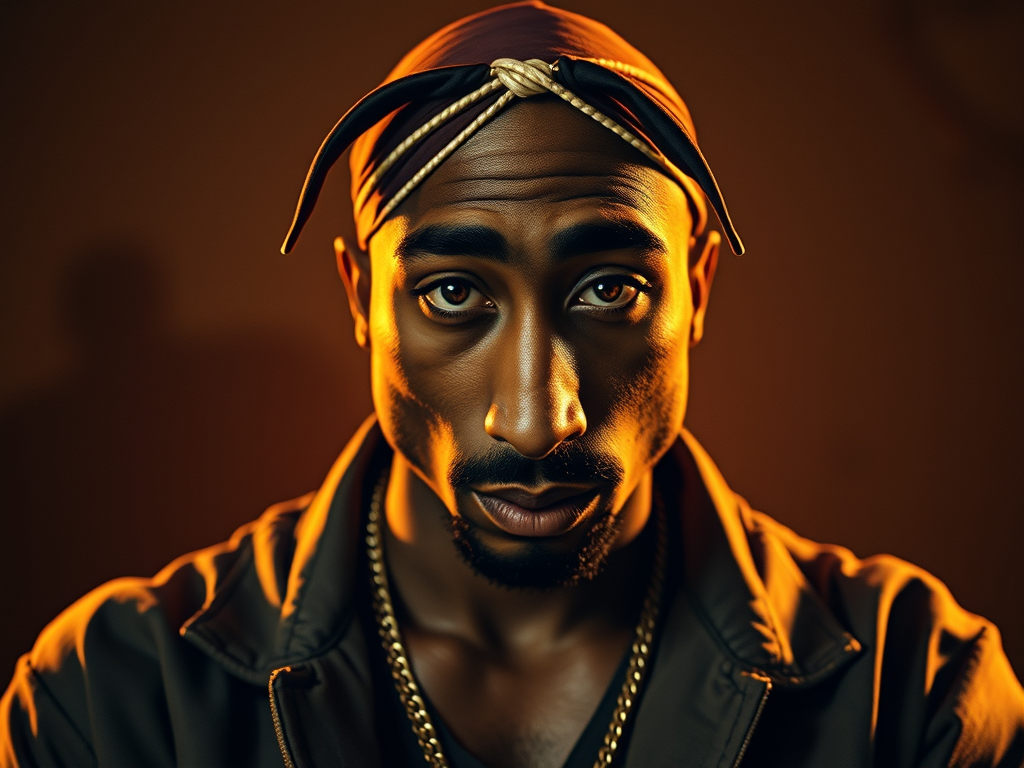
Few artists in history have made such a massive and lasting impact in such a short amount of time as Tupac Amaru Shakur. More than just a rapper, he was a poet, an actor, an activist, and a voice for a generation that often felt unheard. His music was a raw, unfiltered look into the realities of life in underserved communities, tackling issues like racism, poverty, and violence. But it also spoke of hope, ambition, and the desire for change. Tupac’s life was a whirlwind of incredible talent, sharp contradictions, and ultimately, tragedy. Even decades after his untimely death, his words echo, his image is iconic, and his influence on music, culture, and social commentary remains incredibly strong. Let’s delve into the top 10 aspects that define the influential life and death of Tupac Shakur, a figure who continues to fascinate and inspire.
Top 10 Aspects of Tupac Shakur’s Influential Life and Death
1. A Revolutionary Upbringing: The Seeds of an Activist Artist
Expectation: Many might just see Tupac as a famous rapper who came out of nowhere with raw talent. Reality: Tupac Shakur’s early life was anything but ordinary and deeply shaped his worldview and art. Born Lesane Parish Crooks in 1971, he was renamed Tupac Amaru Shakur after an 18th-century Incan revolutionary. His mother, Afeni Shakur, and stepfather, Mutulu Shakur, were active members of the Black Panther Party, a group advocating for Black empowerment and fighting against racial injustice. This meant Tupac grew up surrounded by discussions of revolution, social change, and systemic inequality. He experienced poverty and instability firsthand, moving frequently. However, his mother also nurtured his artistic talents, enrolling him in Harlem’s 127th Street Repertory Ensemble and later the Baltimore School for the Arts, where he studied acting, poetry, jazz, and ballet. This unique blend of revolutionary ideals, artistic training, and firsthand experience of hardship laid the critical foundation for the passionate, socially conscious, and often controversial artist he would become. His early life wasn’t just a backdrop; it was the very soil from which his powerful voice grew, giving authenticity to his later work.
2. Bursting onto the Scene: From Roadie to Rap Phenomenon
Expectation: One might think Tupac instantly became a solo superstar. Reality: Tupac’s journey into the music spotlight was a blend of talent, charisma, and a bit of a break. His first significant entry into the music industry was with the alternative hip-hop group Digital Underground. Initially, he joined as a roadie and backup dancer, but his undeniable stage presence and lyrical skills couldn’t be kept in the background for long. He made his recording debut on their 1991 track “Same Song” and appeared in the accompanying movie “Nothing but Trouble.” This gave him his first taste of the industry. It wasn’t long before Tupac launched his solo career. His debut album, 2Pacalypse Now (1991), immediately announced him as a new, potent force in hip-hop. The album was raw, politically charged, and controversial, with tracks exploring police brutality, poverty, and teenage pregnancy. While it sparked outrage in some circles (including criticism from Vice President Dan Quayle at the time), it also resonated deeply with many young people who felt their struggles were finally being given a voice. This was the true start of Tupac, the solo artist who wasn’t afraid to speak his mind, no matter the consequences.
3. The Voice of a Generation: Speaking Truth to Power
Expectation: People might view Tupac’s music as just entertainment or typical rap bravado. Reality: For a vast number of young people, especially African Americans, in the 1990s, Tupac Shakur was far more than an entertainer; he was a voice. His lyrics were like a newspaper from the streets, reporting on the harsh realities of racism, inner-city violence, economic disparity, and the struggles of marginalized communities. Songs like “Brenda’s Got a Baby” told heartbreaking, real-life stories that mainstream media often ignored. He wasn’t just rapping about problems; he was dissecting them with an emotional intensity and an intellectual depth that was rare. He could articulate the anger, frustration, and hopelessness felt by many, but also their dreams, resilience, and desire for a better future. This ability to connect on such a profound level made him a cultural icon. While some of his lyrics were criticized for their aggression or glorification of violence, for his core audience, Tupac was speaking their truth, validating their experiences in a way few public figures ever had. His influence came from this fearless articulation of often-uncomfortable truths.
4. Beyond the Mic: Tupac’s Promising Acting Career
Expectation: Many remember Tupac solely for his music, overlooking his significant talent as an actor. Reality: Tupac Shakur was a multifaceted artist, and his talents extended impressively into the world of film. He wasn’t just a musician making cameo appearances; he was a serious actor with considerable range and screen presence. His breakout role came in 1992 with the gritty urban drama Juice, where he played the compelling and volatile character Bishop. Critics praised his intense and charismatic performance. He followed this with other notable roles, such as Lucky opposite Janet Jackson in Poetic Justice (1993), showcasing a softer, more romantic side, and Birdie in Above the Rim (1994). He had a natural ability to command the screen, bringing depth and authenticity to his characters. Many believed he had the potential to become a major Hollywood star, bridging the gap between music and film in a way few had done before. His acting career demonstrated his artistic versatility and hinted at a future where his creative reach could have expanded even further, making his early death a loss not just to music, but to cinema as well.
5. “Thug Life”: More Than Just a Tattoo
Expectation: The term “Thug Life,” famously tattooed across Tupac’s abdomen, is often misinterpreted as a simple glorification of a criminal lifestyle. Reality: For Tupac, “Thug Life” was a philosophy, a statement, and even a code of conduct, though a controversial one. It was actually an acronym that he often stated stood for “The Hate U Give Little Infants F***s Everybody.” This interpretation suggests that the violence, poverty, and lack of opportunity fed to children in disadvantaged communities inevitably leads to negative consequences for society as a whole. Tupac saw “Thug Life” as a way to acknowledge the harsh realities faced by many young Black men, who were often labeled and dismissed by society. He aimed to give a voice to those who felt trapped by their circumstances, and even attempted to create a “Code of Thug Life” to reduce street violence among gangs. While the concept was undoubtedly controversial and often seen as contradictory given some of his own actions and lyrics, his intention was to highlight societal problems and promote a form of street-level consciousness and survival. It was a complex and debated part of his persona, reflecting his own internal conflicts and his desire to provoke thought.
6. Chart-Topping Anthems: Defining Albums and Timeless Hits
Expectation: One might not grasp the sheer scale of Tupac’s musical success and the iconic status of his specific works. Reality: Tupac Shakur’s musical output in his short career was prolific and incredibly impactful, producing albums and singles that are now considered classics of the hip-hop genre and beyond. His 1995 album Me Against the World, released while he was incarcerated, debuted at number one on the Billboard 200 and showcased a more introspective and vulnerable side, particularly with the heartfelt ode to his mother, “Dear Mama.” This song became an anthem and is widely regarded as one of his greatest. Then came All Eyez on Me in 1996, a sprawling double album that was a commercial juggernaut. It featured massive hits like “California Love” (with Dr. Dre and Roger Troutman) and “How Do U Want It,” cementing his status as a global superstar. These albums weren’t just collections of songs; they were cultural events, defining the sound of 90s hip-hop and selling millions of copies. Even songs that weren’t massive chart-toppers, like “Changes” (released posthumously), have had an enduring impact due to their poignant social commentary.
7. The Infamous Coastal Feud: East Coast vs. West Coast
Expectation: The East Coast vs. West Coast hip-hop rivalry might seem like media hype or petty arguments. Reality: The East Coast vs. West Coast hip-hop rivalry of the mid-1990s was a dangerously real and complex phenomenon, and Tupac Shakur, representing Death Row Records (West Coast), became one of its most prominent and vocal figures. The feud ostensibly pitted artists and record labels from New York (like Bad Boy Records, led by Sean “Puffy” Combs and The Notorious B.I.G.) against those from Los Angeles. It began with disses in songs and interviews but escalated dramatically, fueled by media sensationalism, personal animosities, and, some say, genuine street gang affiliations. Tupac’s fiery rhetoric, particularly after he was shot in a New York recording studio in 1994 (an event he publicly blamed on his East Coast rivals), intensified the conflict significantly. Tracks like “Hit ‘Em Up” were direct and aggressive lyrical assaults. This rivalry created a climate of tension and violence that tragically culminated in the murders of both Tupac Shakur in 1996 and The Notorious B.I.G. in 1997, marking a dark period for hip-hop culture.
8. A Tragic End: The Unsolved Murder in Las Vegas
Expectation: The details of Tupac’s death might be hazy or feel like a distant historical event. Reality: Tupac Shakur’s death was a shocking and brutal event that sent ripples across the globe. On the night of September 7, 1996, in Las Vegas, Nevada, Tupac was riding in a car driven by Suge Knight, the head of Death Row Records, after attending a Mike Tyson boxing match. As they were stopped at a red light, a white Cadillac pulled up alongside them, and an unknown assailant fired multiple shots into Tupac’s vehicle. Tupac was hit four times. He was rushed to the University Medical Center of Southern Nevada, where he fought for his life for six days. Despite multiple surgeries, he died on September 13, 1996, at the age of just 25. His murder remains officially unsolved to this day, though there have been numerous theories, investigations, and confessions over the years (as of May 2025, while arrests have been made in connection to the case, convictions are still pending). The lack of closure has fueled countless speculations and conspiracy theories, adding another layer of tragedy and mystery to his already complex legacy. His death was a profound loss, silencing one of music’s most compelling voices at the height of his career.
9. Life After Death: Posthumous Releases and Enduring Star Power
Expectation: One might assume an artist’s influence fades quickly after their death. Reality: In Tupac Shakur’s case, his death seemed to amplify his legend and his music’s reach. A significant amount of unreleased material was left behind, leading to numerous posthumous albums. The first of these, The Don Killuminati: The 7 Day Theory, released under the alias Makaveli just weeks after his death, was eerie in its dark themes and perceived prophetic lyrics. Many subsequent posthumous releases, like R U Still Down? (Remember Me), Until the End of Time, and Better Dayz, also achieved considerable commercial success, often debuting at the top of the charts. This steady stream of “new” music kept his voice alive for existing fans and introduced him to new generations. Beyond just albums, his poetry has been published, documentaries made, and his image and words continue to be referenced and revered in popular culture worldwide. This enduring popularity is a testament to the timelessness of his messages and the unique connection he forged with his audience.
10. A Legacy That Transcends: Tupac’s Lasting Influence
Expectation: Tupac might be seen simply as an influential rapper of his time. Reality: Tupac Shakur’s legacy is far broader and deeper than just his impact on 90s hip-hop. He has become a global icon whose influence touches music, fashion, activism, and even academia, where his lyrics are studied. Many contemporary artists across various genres cite him as a major inspiration, not just for his lyrical skill and flow, but for his raw honesty, his willingness to be vulnerable, and his fearless social commentary. He proved that hip-hop could be a powerful platform for discussing serious societal issues. His “Thug Life” tattoo and bandana-style headbands became iconic fashion statements. More importantly, his calls for social justice and his complex exploration of identity continue to resonate. Even in death, Tupac sparks debate and discussion about race, class, violence, and the power of art to effect change. He remains a symbol of rebellion, resilience, and the struggle for a voice, ensuring his influence will likely endure for generations to come.
Further Reading
To explore the life and impact of Tupac Shakur further, consider these books:
- Tupac Shakur Legacy by Jamal Joseph – An interactive biography with removable facsimiles of his writings.
- Holler If You Hear Me: Searching for Tupac Shakur by Michael Eric Dyson – A deep dive into Tupac’s cultural significance and the complexities of his character.
- The Rose That Grew from Concrete by Tupac Shakur – A collection of his poetry written between 1989 and 1991, showcasing his depth and sensitivity.
- Afeni Shakur: Evolution of a Revolutionary by Jasmine Guy – A biography of Tupac’s mother, offering crucial context to his upbringing and ideologies.
- Tupac Shakur: The Life and Times of an American Icon by Tayannah Lee McQuillar and Fred L. Johnson III, PhD – A comprehensive biography.
Tupac Shakur’s story is a powerful reminder of how one individual, armed with talent and conviction, can leave an indelible mark on the world, even when their life is cut tragically short. His music and messages continue to challenge, inspire, and provoke thought.
Here at Zentara.blog, our mission is to take those tricky subjects and unlock them, making knowledge exciting and easy to grasp for everyone. But the adventure doesn’t stop on this page! We’re constantly exploring new frontiers and sharing discoveries across the digital universe.
Want to dive deeper into more mind-bending Top 10s and keep expanding your world? Come join us on our other platforms – we’ve got unique experiences waiting for you on each one!
- Get inspired by visual wonders and bite-sized facts: See the world through Zentara’s eyes on Pinterest! Pin our fascinating facts and stunning visuals to your own boards. Explore Pins on Pinterest: https://uk.pinterest.com/zentarablog/
- Discover quick insights and behind-the-scenes peeks: Hop over to Tumblr for snippets, quotes, and unique content you won’t find anywhere else. It’s a different flavour of discovery! Follow the Fun on Tumblr: https://www.tumblr.com/zentarablog
- Ready for deep dives you can listen to or watch? We’re bringing our accessible approach to video and potentially audio! Subscribe to our YouTube channel and tune into future projects that make learning pop! Subscribe on YouTube: https://www.youtube.com/@ZentaraUK
- Seeking even more knowledge in one place? We’ve compiled some of our most popular topic deep dives into fantastic ebooks! Find them on Amazon and keep the learning journey going anytime, anywhere. Find Our Ebooks on Amazon: https://www.amazon.co.uk/s?k=zentara+uk&crid=2273NA7RAJ1EU&sprefix=zentara+uk%2Caps%2C90&ref=nb_sb_noss
- Connect with us and fellow knowledge seekers: Join the conversation on BlueSky! We’re sharing updates, thoughts, and maybe even asking you what wonders we should explore next. Chat with Us on BlueSky: https://bsky.app/profile/zentarablog.bsky.social
- Perfect for learning on the move! We post multiple 10-minute podcasts per day on Spotify. Pop on your headphones and fill your day with fascinating facts while you’re out and about! Listen on Spotify: https://open.spotify.com/show/3dmHbKeDufRx95xPYIqKhJ
Every click helps us keep bringing honest, accessible knowledge to everyone. Thanks for exploring with us today – see you out there in the world of discovery!



Leave a Reply to Top 10 Reasons Why Martin Luther King Jr. Still Inspires Us Today – Zentara.blog: Knowledge Made Accessible | Science, History, Tech & MoreCancel reply