
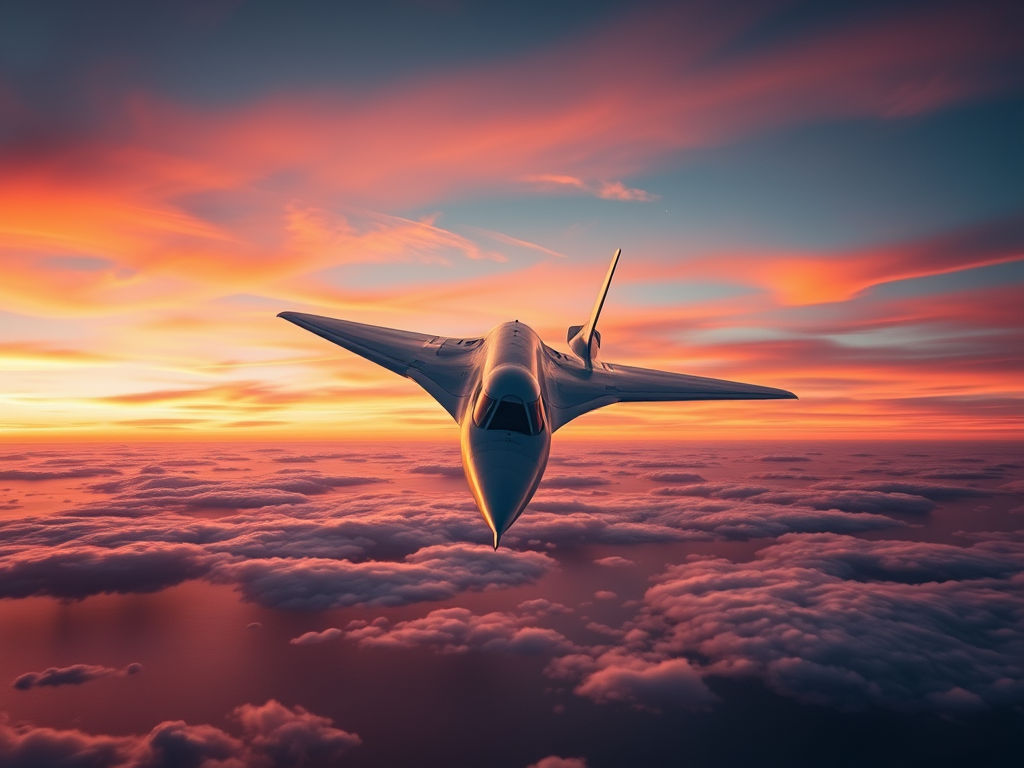
Imagine flying so fast that you could leave London after lunch and arrive in New York City before lunchtime on the same day, all thanks to zooming across the Atlantic faster than the speed of sound! That’s exactly what the legendary Concorde, humanity’s most famous supersonic passenger jet, allowed people to do. It wasn’t just an airplane; it was a symbol of incredible human ambition, brilliant engineering, and a future that felt like science fiction brought to life.
From its ambitious beginnings to its groundbreaking technology, luxurious flights, and ultimately, its sad retirement, Concorde captured the imaginations of millions. It showed us what was possible when engineers and designers dared to dream big. So, buckle up and prepare for take-off as we explore 10 jaw-dropping facts about Concorde’s incredible journey!
1. The Vision: Shrinking the World with Supersonic Flight
The idea for Concorde wasn’t just to build a faster plane; it was about making the world a smaller place. In the 1950s, engineers in both Britain and France began to dream of a passenger jet that could fly faster than the speed of sound, or “supersonic.” At the time, crossing the Atlantic Ocean took about eight hours. Imagine being able to cut that time in half, or even more! This revolutionary idea aimed to connect continents like never before, making it possible for business leaders, celebrities, and anyone with a need for speed to travel at previously unthinkable speeds. It was a vision of a future where geographical distances meant less, and global connections were stronger. This shared dream led to an amazing partnership between the two countries to build this incredible aircraft.
2. Engineering Marvel: The Delta Wing and Droop Nose
Concorde was packed with cutting-edge technology that made supersonic flight possible. One of its most distinctive features was its unique “delta wing” design. This wasn’t just for looks; the triangular shape was crucial for stable flight at both slow and super-fast speeds. Think of a dart – its shape helps it fly straight and true. Concorde’s wing worked similarly, but on a much grander scale. Another clever innovation was its “droop nose.” When flying at high speeds, the nose would be straight, helping the plane cut through the air. But during takeoff and landing, the nose would actually droop down, allowing the pilots to see the runway clearly. It was like the plane was politely bowing to the ground, giving the pilots a perfect view. These smart designs, along with powerful engines that used “afterburners” for extra thrust, made Concorde a true engineering masterpiece.
3. Speed Demon: Twice the Speed of Sound
Concorde’s most famous quality was its astonishing speed. This magnificent aircraft could travel at Mach 2.04, which means it flew more than twice the speed of sound! To put that into perspective, the speed of sound is about 767 miles per hour (1,236 kilometers per hour) at sea level. Concorde could zoom along at approximately 1,350 miles per hour (2,179 kilometers per hour) at its cruising altitude. This incredible speed drastically cut travel times. A flight from London to New York, which typically took around eight hours on a regular jet, was often completed by Concorde in just 3.5 hours! Imagine having breakfast in London and lunch in New York on the same day – that’s the kind of speed Concorde offered, truly making it a speed demon of the skies.
4. Luxury & Celebrity: Flying in Style
Stepping aboard Concorde wasn’t just about getting from one place to another quickly; it was an experience in itself. It was known for its luxurious atmosphere and attracted a glittering crowd of celebrities, royalty, and important business people. The cabin was smaller and more intimate than regular passenger jets, with comfortable seating and impeccable service. Passengers were treated to gourmet meals, fine wines, and even champagne at 60,000 feet, where they could sometimes see the curvature of the Earth! Flying on Concorde was a statement, a symbol of success and prestige. It wasn’t just transportation; it was an exclusive club in the sky, offering an unforgettable and glamorous journey that few could afford.
5. Global Impact: A Symbol of Technological Prowess
Concorde was more than just a plane; it became a powerful symbol of technological prowess and international cooperation. The joint effort between British and French engineers and manufacturers demonstrated what could be achieved when nations worked together on ambitious projects. Its sleek, elegant design and incredible speed made it instantly recognizable around the world. Concorde represented the cutting edge of aviation, a testament to human ingenuity and our endless desire to push boundaries. It showed the world that supersonic passenger travel was not just a dream, but a reality. For decades, it stood as a shining example of engineering excellence and a source of national pride for both Britain and France.
6. The Sonic Boom: A Loud and Clear Signal
One of the most talked-about aspects of Concorde was the “sonic boom.” When any object, like an airplane, travels faster than the speed of sound, it creates a powerful shockwave. Think of a boat moving quickly through water, creating a V-shaped wake behind it. A sonic boom is like that, but in the air, and it’s caused by the pressure waves building up and then suddenly releasing. This release creates a loud, thunder-like sound that can be heard on the ground. Because of the noise, Concorde was only allowed to fly at supersonic speeds over oceans, away from populated areas. This was a significant limitation, as it meant Concorde couldn’t fly super fast over land, which reduced the number of routes it could take.
7. Economic Challenges: The High Cost of Speed
Despite its amazing abilities, Concorde faced significant economic challenges. Building and maintaining such a sophisticated supersonic aircraft was incredibly expensive. The fuel consumption was enormous, and spare parts were often custom-made and pricey. This meant that the cost of a ticket on Concorde was very high, often thousands of dollars for a single flight. This limited its appeal to a small group of wealthy individuals and businesses, rather than becoming a widespread mode of travel for everyone. On top of the high operating costs, the noise regulations due to the sonic boom meant it couldn’t fly supersonic over land, further restricting its route options and making it harder for airlines to make a profit.
8. The Tragic Accident: A Turning Point
On July 25, 2000, a tragic event occurred that deeply impacted Concorde’s future. An Air France Concorde, Flight 4590, crashed shortly after takeoff from Charles de Gaulle Airport in Paris. All 109 people on board and four people on the ground lost their lives. Investigations later revealed that the crash was caused by a piece of metal on the runway, which had fallen from another aircraft. This metal strip caused a tire on the Concorde to burst during takeoff. A large piece of the tire then struck a fuel tank, causing a fire and damaging the engines. This devastating accident was a huge blow to Concorde’s reputation and led to a temporary grounding of the fleet for safety modifications.
9. The Final Flights: An Emotional Farewell
After the tragic accident in 2000, and despite safety upgrades, Concorde’s future looked uncertain. The high operating costs, declining passenger numbers (especially after the accident and the events of 9/11), and the rising price of fuel all contributed to the difficult decision to retire the fleet. In 2003, both British Airways and Air France announced that Concorde would cease commercial flights. The final flights were incredibly emotional, with thousands of spectators gathering at airports to wave goodbye to this iconic aircraft. It was a sad end to an extraordinary era, as the roar of its powerful engines, once a symbol of progress, faded into history.
10. Legacy: An Icon in Aviation History
Even though Concorde no longer flies, its legacy continues to soar. It remains an unparalleled icon in aviation history, a testament to human ambition, groundbreaking engineering, and the pursuit of speed. Concorde pushed the boundaries of what was thought possible for commercial air travel and inspired a generation of engineers and dreamers. While supersonic passenger travel isn’t common today, the lessons learned from Concorde’s design, operation, and challenges continue to influence new aerospace projects. It reminds us that sometimes, even if a dream doesn’t last forever, the journey itself can be incredibly inspiring and leave an unforgettable mark on the world. Concorde will always be remembered as the beautiful, lightning-fast “Queen of the Skies.”
Further Reading
- “Concorde: The Complete Story” by Christopher Orlebar
- “Concorde: Flying Supersonic” by Mary Firestone
- “Concorde: The Last Supersonic Passenger Jet” by Philip Birtles




Leave a Reply