
Half a Century Later: The Echoes of 1976
As we approach 2026, we are not just flipping a calendar page; we are marking the semi-centennial of a pivotal year in human history. 1976 was a year of endings and beginnings—the end of the Cultural Revolution in China, the beginning of the home computing era in a California garage, and the start of a new, faster way to travel the globe.
Looking back at 1976 from the vantage point of 2026 offers a unique perspective. It allows us to trace the DNA of our modern world—our devices, our geopolitical tensions, and even our artistic rebellions—back to their source. The events of that year didn’t just make headlines; they set tectonic plates in motion that are still shifting under our feet today.
In this list, we explore the ten most significant historical milestones turning 50 in 2026. These aren’t just trivia answers; they are the foundational moments that explain why our world looks the way it does today. From the red dust of Mars to the mosh pits of New York City, here are 10 events from 1976 that still matter.
1. The Founding of Apple Computer
Date: April 1, 1976
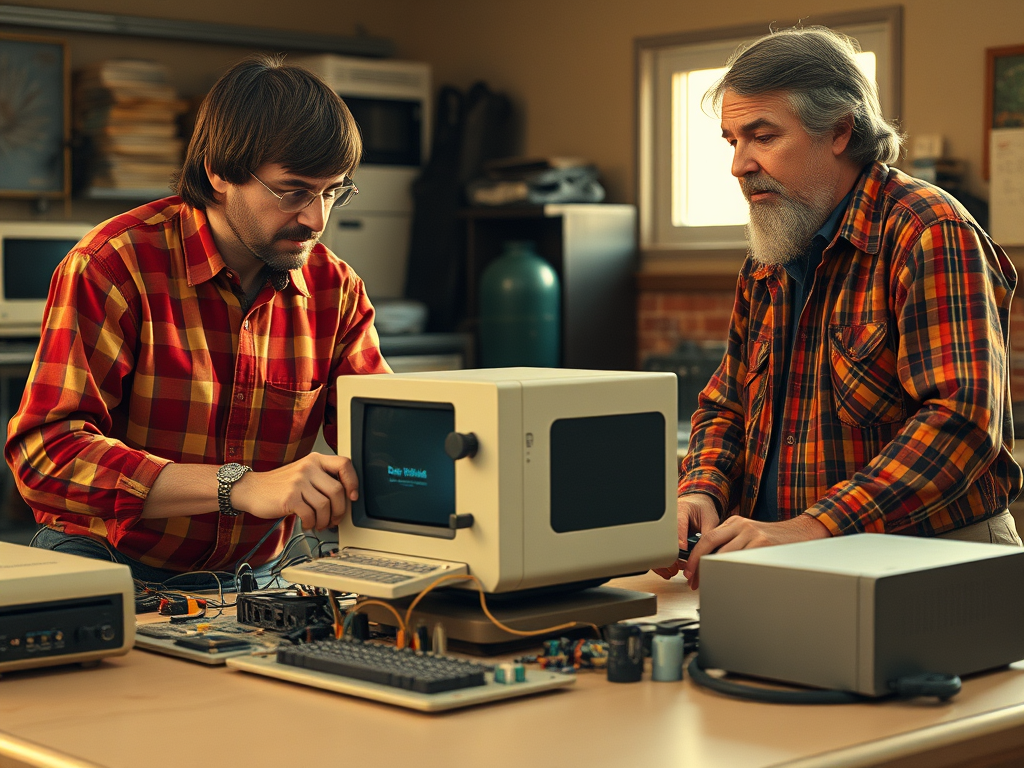
In a garage in Los Altos, California, Steve Jobs, Steve Wozniak, and Ronald Wayne signed the partnership agreement that established Apple Computer. Their first product, the Apple I, was a hand-built circuit board that looked nothing like the sleek aluminum devices of today. It was a hobbyist’s toy, but it represented a radical idea: that computers belonged in the home, not just in government labs or corporate basements.
Why It Still Matters: Fifty years later, Apple is not just a company; it is the architect of modern digital life. The founding of Apple marks the transition from the industrial age to the information age. In 2026, as we navigate the era of spatial computing and AI integration, looking back at the Apple I reminds us that massive global shifts often start with a simple, barely functional prototype. It validates the “garage startup” ethos that continues to drive the global economy.
2. Viking 1 Lands on Mars
Date: July 20, 1976
Seven years to the day after Neil Armstrong walked on the Moon, humanity touched another world. NASA’s Viking 1 lander touched down on the Chryse Planitia region of Mars, sending back the first clear, close-up images of the Red Planet’s surface. For the first time, humans stared at the rocky, rust-colored soil of an alien world, searching for signs of life in the biological experiments onboard.
Why It Still Matters: Viking 1 provided the baseline data that every subsequent Mars mission has relied upon. As we stand on the brink of sending humans to Mars in the late 2020s or 2030s, the Viking mission’s legacy is more relevant than ever. It was the mission that proved we could land safely, and its ambiguous results regarding microbial life are questions scientists are still trying to answer with the rovers currently exploring the planet.
3. The Soweto Uprising
Date: June 16, 1976
In South Africa, thousands of black students marched to protest the apartheid government’s decree that Afrikaans be used as the medium of instruction in schools. The police opened fire on the unarmed students, killing hundreds, including 13-year-old Hector Pieterson. The image of his dying body being carried by a fellow student shocked the world and galvanized the global anti-apartheid movement.
Why It Still Matters: The Soweto Uprising was the turning point that eventually led to the dismantling of apartheid. Today, it serves as a powerful reminder of the role of youth in political change. In a world still grappling with systemic racism and the power of student-led protests (from climate change to social justice), the bravery of the Soweto students remains a foundational lesson in civil resistance and the cost of freedom.
4. The Death of Mao Zedong
Date: September 9, 1976
The death of Chairman Mao Zedong marked the end of a tumultuous era in Chinese history, specifically the conclusion of the chaotic Cultural Revolution. His passing created a power vacuum that led to the arrest of the “Gang of Four” and eventually paved the way for Deng Xiaoping’s rise. Deng would go on to initiate the economic reforms that transformed China from an isolated agrarian nation into a global economic superpower.
Why It Still Matters: Modern China—the manufacturing hub, the technological giant, and the geopolitical superpower—was effectively born in the wake of Mao’s death. Understanding the shift that occurred in 1976 is essential to understanding the current global balance of power. It marks the moment China pivoted from ideological purity to economic pragmatism, a strategy that defines its role in the world economy of 2026.
5. The First Known Outbreak of Ebola
Date: August 1976
In the remote village of Yambuku in Zaire (now the Democratic Republic of the Congo), a mysterious and terrifying hemorrhagic fever emerged. It was named after the nearby Ebola River. Simultaneously, a related outbreak occurred in Sudan. Scientists scrambled to identify the pathogen, discovering a filovirus with a fatality rate that terrified the global medical community.
Why It Still Matters: The discovery of Ebola was a wake-up call regarding zoonotic diseases—viruses that jump from animals to humans. In the post-COVID-19 world, the lessons of 1976 are chillingly relevant. It highlights the constant threat of emerging pathogens and the vital importance of global health surveillance. The protocols developed to contain Ebola fifty years ago are the ancestors of the pandemic response strategies we rely on today.
6. The Reunification of Vietnam
Date: July 2, 1976
More than a year after the Fall of Saigon, North and South Vietnam were officially reunified to form the Socialist Republic of Vietnam. This political consolidation formally ended decades of conflict, foreign intervention, and division. Hanoi was declared the capital, and Saigon was renamed Ho Chi Minh City.
Why It Still Matters: For decades, the “Vietnam War” defined American foreign policy and cultural trauma. However, the reunification in 1976 allowed Vietnam to begin its slow journey toward reconstruction. Today, Vietnam is a vital manufacturing alternative to China and a strategic partner in Southeast Asia. The event serves as a case study in how nations can rebuild and rebrand themselves after devastating conflict, moving from a war zone to a key player in the global supply chain.
7. Concorde Begins Commercial Service
Date: January 21, 1976
The dream of supersonic travel became a reality for the paying public when British Airways and Air France simultaneously launched commercial Concorde flights (London to Bahrain and Paris to Rio de Janeiro). The sleek, delta-winged aircraft cruised at twice the speed of sound, turning the Atlantic Ocean into a “pond” that could be crossed in under four hours.
Why It Still Matters: While the Concorde was retired in 2003, its launch in 1976 remains the high-water mark for commercial aviation speed. In 2026, as several aerospace startups aim to reintroduce supersonic passenger travel, the Concorde serves as both a blueprint and a cautionary tale. It reminds us that engineering marvels must also be economically and environmentally viable to survive—a lesson crucial for today’s “green aviation” industry.
8. Nadia Comăneci’s Perfect 10
Date: July 18, 1976
At the Montreal Olympics, a 14-year-old Romanian gymnast named Nadia Comăneci performed a routine on the uneven bars that was so flawless the scoreboard couldn’t even display it. Designed to show only three digits (e.g., 9.95), the board flashed “1.00.” She was the first gymnast in Olympic history to be awarded a perfect score of 10.0.
Why It Still Matters: Comăneci redefined the limits of human athletic performance. Her “perfect 10” became a cultural idiom for excellence that transcends sports. However, it also sparked a conversation that continues today regarding the immense pressure placed on child athletes and the ethics of elite gymnastics. Her legacy is central to the modern dialogue about safeguarding athlete mental health while pursuing physical perfection.
9. The Cray-1 Supercomputer Installed
Date: 1976
Designed by Seymour Cray, the Cray-1 was the world’s first true “supercomputer” to see commercial success. Installed at Los Alamos National Laboratory, it featured a distinctive C-shape (to minimize wire length and increase speed) and integrated bench seating around the outside. It was capable of 160 million floating-point operations per second (FLOPS)—a laughably small number by 2026 standards, but a revolution at the time.
Why It Still Matters: The Cray-1 is the great-grandfather of the AI revolution. The computational power we use today to train Large Language Models and simulate climate change stands on the shoulders of the vector processing architecture pioneered by Cray. Celebrating its 50th anniversary acknowledges the hardware lineage that makes our software-defined world possible.
10. The Birth of Punk Rock (Ramones Debut)
Date: April 23, 1976
While the roots of punk had been growing in underground clubs, the release of the Ramones’ self-titled debut album in April 1976 codified the genre. With songs that were fast, loud, and rarely exceeded two minutes, the album stripped rock and roll down to its raw essentials. Across the pond, the Sex Pistols and The Damned (who released the first UK punk single in 1976) were fueling a similar fire.
Why It Still Matters: Punk wasn’t just music; it was a DIY (Do-It-Yourself) cultural movement that democratized art. It taught us that you don’t need virtuosity or corporate approval to create something impactful. This ethos directly influences the modern creator economy—from TikTok influencers to independent game developers. The spirit of 1976 punk is alive in every teenager who picks up a smartphone to broadcast their truth to the world without asking for permission.
Further Reading
- Steve Jobs by Walter Isaacson
- The Fate of Africa: A History of Fifty Years of Independence by Martin Meredith
- Mao: The Unknown Story by Jung Chang and Jon Halliday
- Touching Mars: The Story of the Viking Missions by John S. Varley (Note: Look for works by Gentry Lee or Carl Sagan regarding Viking as well, or The Right Stuff context). Alternative: Mission to Mars: My Vision for Space Exploration by Buzz Aldrin.
- Please Kill Me: The Uncensored Oral History of Punk by Legs McNeil and Gillian McCain
Keep the Discovery Going!
Here at Zentara, our mission is to take tricky subjects and unlock them, making knowledge exciting and easy to grasp. But the adventure doesn’t stop at the bottom of this page. We are constantly creating new ways for you to learn, watch, and listen every single day.
Watch & Learn on YouTube
Visual learner? We publish 4 new videos every day, plus breaking news shorts to keep you smarter than the headlines. From deep dives to quick facts, our channel is your daily visual dose of wonder.
Click here to Subscribe to Zentara on YouTube
Listen on the Go on Spotify
Prefer to learn while you move? Tune into the Zentara Podcast! We drop a new episode daily, perfect for your commute, workout, or coffee break. Pop on your headphones and fill your day with fascinating facts.
Click here to Listen on Spotify
Every click, view, and listen helps us keep bringing honest knowledge to everyone. Thanks for exploring with us today—see you out there in the world of discovery!




Leave a Reply