
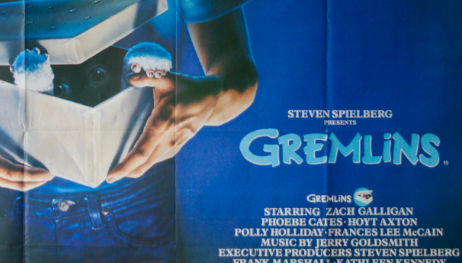
There are some movies that just defy easy description, and then there’s Gremlins. Is it a heartwarming Christmas movie? Is it a creature-feature horror flick? Is it a slapstick comedy? The brilliant, terrifying, and hilarious answer is that it’s all of those things at once. For decades, Joe Dante’s 1984 masterpiece has been the film we gleefully watch during the holidays, nestled somewhere between It’s a Wonderful Life and A Christmas Story. It introduced us to the impossibly cute Gizmo, gave us three simple rules that are now etched into pop culture history, and unleashed a horde of scaly green monsters on an unsuspecting suburban town.
Gremlins was a cinematic bolt from the blue, a movie that perfectly balanced adorable and abominable, sweet and scary. It captured the imaginations of a generation and remains a beloved, must-watch classic. But the story of how this wonderfully weird movie came to be is just as chaotic, surprising, and fascinating as the film itself. Behind the exploding microwaves and movie-loving monsters are tales of a much darker original vision, groundbreaking special effects, and a controversy that literally changed the way we rate movies forever. Here at Zentara.blog, we’ve been digging through the archives to bring you 10 incredible behind-the-scenes facts that will make you see this holiday favorite in a whole new light. Just remember the rules…
1. The Original Script Was a Hard-R Horror Movie
The Gremlins we know and love is a masterful blend of dark comedy and monster movie thrills, but the original script, penned by a young Chris Columbus (who would later direct Home Alone and Harry Potter), was no laughing matter. It was a straight-up, gruesome horror film intended to shock and terrify audiences. Columbus wrote it as a spec script, a writing sample to showcase his talents, and he didn’t pull any punches.
How dark was it? Several scenes were far more violent than what ended up on screen. In one sequence, the Gremlins attack the family home, kill Barney the dog by eating him, and then decapitate Billy’s mom, Lynn. To add to the horror, they then throw her severed head down the stairs. The infamous scene where the Gremlins attack a McDonald’s was also in this draft. And the carnage didn’t stop there. The script didn’t feature the lovable Gizmo staying a hero; instead, he was the one who transformed into the evil Stripe. It was producer Steven Spielberg who saw the potential for a wider audience. He encouraged director Joe Dante to tone down the gore and inject more dark humor, transforming the script from a brutal horror flick into the quirky, genre-bending classic that terrified and delighted a generation of kids and parents alike.
2. It Helped Create the PG-13 Rating
In the summer of 1984, two films produced by Steven Spielberg hit theaters and sent parents into a panic: Indiana Jones and the Temple of Doom and Gremlins. At the time, the movie rating system only had G, PG, R, and X. Both of these films received a PG rating, but they contained scenes that many families felt were far too intense for young children. Audiences were shocked when a man’s heart was ripped from his chest in Temple of Doom, and equally horrified by the scenes in Gremlins.
The two most cited moments of controversy were Lynn Peltzer’s kitchen showdown with the Gremlins, where one is brutally pureed in a blender and another explodes in the microwave, and the climactic finale where the villainous Stripe melts into a puddle of goo. Parents complained in droves, arguing that the PG rating was no longer a reliable guide for what was appropriate for their kids. Spielberg himself agreed. He personally called Jack Valenti, the head of the Motion Picture Association of America (MPAA), and suggested a new rating was needed to bridge the gap between PG and R. Within months of this conversation, the MPAA officially introduced the PG-13 rating. Red Dawn became the first film to receive it, but it was the one-two punch of Gremlins and Temple of Doom that forced the change and reshaped the entire movie industry.
3. Gizmo Was Supposed to Become the Villain
It’s hard to imagine Gremlins without the adorable, heroic Gizmo, but in Chris Columbus’s original script, the little Mogwai wasn’t meant to be the star. The plan was for Gizmo himself to be the one who transforms into Stripe, the mohawked, evil leader of the Gremlin horde. He would have been the film’s central villain, a cute pet that turns into a monster.
Once again, it was Steven Spielberg who intervened, making a decision that fundamentally altered the heart of the movie. He recognized that Gizmo was incredibly endearing and that audiences would form an immediate emotional connection with him. Spielberg argued that killing him off by turning him evil would be a mistake. He insisted that Gizmo should remain the hero’s loyal sidekick throughout the film, giving the audience a clear character to root for amidst all the chaos. This change required significant rewrites, but it was a stroke of genius. It created the classic good vs. evil dynamic between Gizmo and Stripe and gave the film its soul. The studio was so taken with the decision that they began marketing merchandise for Gizmo before the film was even released, correctly betting that he would become a pop culture icon.
4. The Puppets Were an Absolute Nightmare to Work With
In an era before computer-generated imagery (CGI) became the norm, bringing creatures to life required a ton of practical ingenuity. For Gremlins, this meant relying on animatronics and puppetry, a process that proved to be incredibly difficult, expensive, and frustrating for the entire cast and crew. Each Gremlin puppet, designed by Chris Walas, was a complex piece of machinery that could cost between $30,000 and $40,000 to build. They were prone to breaking down constantly, causing massive delays in filming.
Operating them was a monumental task. For a single shot of a group of Gremlins, there could be a dozen puppeteers crammed below the set, each responsible for controlling a different part of a puppet—the eyes, the mouth, the arms. The technology was so temperamental that the first cut of the film, which director Joe Dante showed to Spielberg, was a complete disaster because none of the puppet effects were finished. The cast often had to act opposite inanimate dolls or empty space. The crew’s frustration reached such a boiling point that they would sometimes take it out on the puppets themselves when the cameras weren’t rolling. The experience was so trying that Joe Dante has joked that it’s the reason many of the Gremlins in the sequel, Gremlins 2: The New Batch, are electrocuted—it was his fantasy revenge on the technology that plagued the first film.
5. Kate’s Horrifying Christmas Story Was Almost Cut
One of the most talked-about and audacious moments in Gremlins is Kate Beringer’s (Phoebe Cates) grim monologue. In the middle of a monster movie, she stops everything to explain why she hates Christmas: when she was a little girl, her father disappeared on Christmas Eve. He was later found dead, having gotten stuck and broken his neck in their chimney while trying to surprise the family dressed as Santa Claus.
This dark, tragic, and bizarrely funny story is the perfect encapsulation of the film’s unique tone, but studio executives at Warner Bros. absolutely hated it. They thought it was morbid and confusing and demanded that Joe Dante cut it from the film. Even Steven Spielberg was hesitant, feeling it was too dark and didn’t fit the rest of the movie. But Dante and writer Chris Columbus fought passionately to keep it in. They argued that the speech defined the film’s sensibility—that horrible things can happen during seemingly happy times. They believed the audience wouldn’t know whether to laugh or cry, and that this unsettling feeling was the whole point of Gremlins. Dante ultimately won the battle, and the scene remains one of the boldest and most memorable moments in any “Christmas” movie ever made.
6. The Town of Kingston Falls Is Also Hill Valley
The idyllic, snow-covered town of Kingston Falls, which becomes a playground for Gremlin mayhem, might look familiar to fans of another 1980s classic. That’s because the central set, Courthouse Square, is the very same one used for Hill Valley in Back to the Future, which was filmed on the same Universal Studios backlot just one year later.
This iconic set has a rich Hollywood history. Before it was terrorized by Gremlins or visited by a time-traveling DeLorean, it served as the backdrop for the classic 1962 film To Kill a Mockingbird. If you watch Gremlins closely, you can see the cinema marquee is advertising two films. One is A Boy’s Life, which was the secret production title for Spielberg’s own E.T. the Extra-Terrestrial. The other is Watch the Skies, which was the original title for another Spielberg classic, Close Encounters of the Third Kind. The use of this legendary backlot connects Gremlins not just to Back to the Future, but to a wider universe of cinematic history, making Kingston Falls a place where multiple movie worlds collide.
7. The Voice of Gizmo Is Howie Mandel
The sweet, cooing sounds of Gizmo are just as iconic as his cute appearance. His little songs and worried phrases are instantly recognizable, and they were all provided by one person: comedian and future America’s Got Talent judge, Howie Mandel. At the time, Mandel was a rising stand-up comedian known for his quirky voices. He was brought in to audition and came up with Gizmo’s signature voice on the spot.
The evil Gremlins, on the other hand, required a whole team of vocal talent. Their mischievous cackles and guttural speech were a blend of sounds from multiple voice actors, including Frank Welker (the legendary voice of Megatron and Scooby-Doo) and Michael Winslow. Winslow, who was famous for his role as Larvell Jones in the Police Academy series, was known as “The Man of 10,000 Sound Effects” and contributed a huge variety of noises to the Gremlin chorus. The combination of Mandel’s sweet, innocent Gizmo and the cacophony of the other voice actors created the perfect audio contrast between good and evil.
8. Tim Burton Was Almost Hired as the Director
Before Joe Dante was chosen to direct Gremlins, Steven Spielberg considered another up-and-coming filmmaker with a unique and dark sensibility: Tim Burton. At the time, Burton was working as an animator at Disney and had only directed a few short films, including his gothic, black-and-white stop-motion short, Vincent. Spielberg was reportedly a huge fan of Vincent and saw a kindred spirit in Burton’s love for the bizarre and macabre.
However, at that point in his career, Burton had never directed a full-length feature film. Spielberg ultimately decided that Gremlins, with all its technical challenges and puppetry, was too big and complex of a project to entrust to a first-time director. He chose Joe Dante instead, who had more experience directing feature films, including the werewolf horror movie The Howling. Dante’s deep knowledge of classic monster movies and B-horror films made him a perfect fit for the material. It’s fascinating to imagine what a Tim Burton version of Gremlins would have looked like, but there’s no denying that Joe Dante was the right person for the job.
9. The Studio Had No Idea How to Market the Film
When Gremlins was finished, the marketing department at Warner Bros. was completely stumped. They had a movie that was a Christmas story but also a monster movie. It was funny, but also genuinely scary. It starred a cute, cuddly creature, but also a horde of vicious killers. They simply didn’t know how to sell it to the public. Was it for kids? For adults? For horror fans? For comedy fans?
The early marketing materials reflect this confusion. The first teaser poster was brilliantly simple and mysterious, featuring only the film’s logo under a shadowy lid with the tagline: “What you see… isn’t what you get.” The trailers focused heavily on the Spielberg connection, using his name as the primary selling point to assure audiences of a quality adventure. They deliberately hid what the Gremlins looked like, building a sense of mystery and suspense. This strategy, born out of confusion, actually worked perfectly. Audiences had no idea what to expect, and the film’s shocking, genre-defying tone became its greatest strength, leading to massive word-of-mouth success.
10. A Looney Tunes Legend Helped Design the Creatures
Director Joe Dante is a massive fan of classic Warner Bros. cartoons, and he filled Gremlins with references and gags inspired by the anarchic energy of Looney Tunes. To help capture that spirit, he brought in a true animation legend to consult on the film: Chuck Jones. Jones was the creative genius behind iconic characters like Wile E. Coyote, the Road Runner, and Marvin the Martian.
Dante wanted the Gremlins to behave less like traditional monsters and more like chaotic cartoon characters brought to life. He wanted them to have distinct, mischievous personalities. Jones reportedly advised the filmmakers on how to time certain gags and imbue the Gremlins with a sense of gleeful, destructive mayhem that was his signature. You can see his influence in scenes like the one in the tavern, where Gremlins are shown flashing, playing poker, and causing general cartoonish trouble. This subtle influence from one of animation’s greatest minds is a key ingredient in what makes the Gremlins so uniquely terrifying and hilarious.
Conclusion
More than just a creature feature, Gremlins is a landmark of 1980s cinema. It’s a bold, bizarre, and brilliant film that dared to mix tones in a way few movies had before. Its journey from a dark horror script to a holiday classic is a story of creative battles, technical frustrations, and the guiding hand of a cinematic visionary like Steven Spielberg. The film’s legacy is undeniable—it didn’t just give us iconic characters and quotable rules, it literally changed the Hollywood rating system and set a new standard for the horror-comedy genre.
It remains the ultimate anti-Christmas movie, a darkly funny satire of consumerism wrapped in the guise of a monster flick. It reminds us that even during the most wonderful time of the year, chaos is just one broken rule away. So the next time you gather around to watch it, you’ll know the incredible story of the movie that broke all the rules to become a legend. Now, we have to ask: if you were given a Mogwai, what three rules would you invent to keep everyone safe? Share your ideas in the comments below!
Dive Deeper
Ready to pull back the curtain even further on this monster masterpiece? These books offer fantastic insights into the making of the film and the creative minds behind it.
- Gremlins: The Ultimate Visual History by Sam Urdl: This official “making of” book is a treasure trove for fans, filled with stunning concept art, storyboards, behind-the-scenes photography, and new interviews with the cast and crew.
- Joe Dante by Nil Baskar: A deep dive into the career of the film’s brilliant director, exploring his love for classic cinema and how it influenced Gremlins and his other films.
- Steven Spielberg: A Biography by Joseph McBride: A comprehensive look at the life and career of the film’s producer, offering context on his incredible run of classic films in the 1980s and his crucial role in shaping Gremlins.




Leave a Reply