
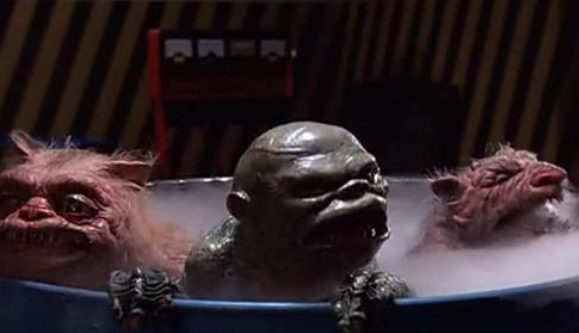
Let’s fire up the time machine and set the dials for the mid-1980s. It was a glorious era for creature features, a time when practical effects reigned supreme and video stores were magical kingdoms lined with VHS tapes promising untold horrors. In this landscape, a new breed of monster emerged: small, mischievous, and malevolent. While Gremlins may have been the subgenre’s blockbuster king, another film clawed its way out of the muck to become one of the most infamous and beloved cult classics of the decade: 1985’s Ghoulies.
The film, a bizarre concoction of occult rituals, demonic puppets, and low-budget mayhem, told the story of a young man who inherits a creepy mansion and unwittingly unleashes a horde of tiny, grotesque creatures. It was campy, it was goofy, and it was an absolute staple of sleepovers and late-night cable TV. But the story behind the film—a tale of genius marketing, creative compromises, and last-minute gambles—is arguably even more entertaining than the movie itself. Here at Zentara.blog, we’ve summoned the secrets from the great beyond to bring you 10 things you didn’t know about the little monsters that made a big splash.

1. The Iconic Toilet Poster Was a Lie (But a Genius One)
For countless movie fans, the single most enduring image from Ghoulies is its poster: a squat, green, fanged creature gleefully emerging from a toilet bowl, with the tagline, “They’ll get you in the end!” It was shocking, hilarious, and unforgettable. It’s the image that made kids beg their parents to rent the VHS tape and the reason the film became a box office hit. There’s just one small problem: that scene is not in the movie. Not once does a Ghoulie actually pop out of a toilet in the original film.
This legendary image was a brilliant, last-minute marketing invention conceived by the advertising team. They knew they needed a killer visual to compete in a crowded market. They reasoned, what’s a place where everyone is vulnerable? The toilet! The concept was so strong that the marketing department shot the photo specifically for the poster, building a section of a bathroom set just for the occasion. It was a masterstroke of advertising, creating a promise of a gross-out gag so memorable that it hardly mattered that the film itself didn’t deliver it. The poster is a testament to the power of a single, great idea and is almost single-handedly responsible for the film’s cult status and financial success. It’s a case where the advertisement became more famous than the product itself.
2. It Was Originally a Much Darker, More Serious Horror Film
While Ghoulies is now remembered for its campy, B-movie charm, that wasn’t the original plan. The first draft of the screenplay, written by director Luca Bercovici and his writing partner Jefery Levy, was titled “Beasties.” It was conceived as a much darker and more serious occult horror film. The story focused heavily on the themes of satanic rituals, black magic, and the psychological downfall of its protagonist, Jonathan. The creatures themselves were secondary, serving as demonic minions in a much grimmer tale of witchcraft.
However, the film was being produced by Charles Band’s Empire Pictures, a studio legendary for its commercially savvy approach to low-budget genre films. Band saw the potential for a creature feature, especially with the recent, colossal success of Joe Dante’s Gremlins. He pushed the filmmakers to pivot away from the serious satanic horror and lean into the monster mayhem. The script was heavily rewritten to make the Ghoulies the central attraction, injecting more humour and slapstick to make it more accessible and, most importantly, more marketable. This change in tone is why the final film feels like a strange hybrid of a dark magic movie and a silly creature comedy.
3. The Man in the Director’s Chair Was a Special Effects Artist
The film’s director, Luca Bercovici, was not a seasoned filmmaker at the time. His primary background in the industry was as an actor and, crucially, a special effects artist. He had worked on the effects for films like The Boogens and understood the ins and outs of creating monsters with practical effects like puppetry and makeup. This hands-on experience was a huge asset for a low-budget production where the creatures were the main selling point.
Bercovici’s background in effects heavily influenced the film’s style. He knew how to get the most out of his creature creations on a shoestring budget. The film prioritizes showing off the puppets and monster suits, often at the expense of plot or character development. This is a common characteristic of films directed by effects artists, who are naturally more focused on the visual spectacle of their craft. While he had a co-writer credit on the story, his true strength was in bringing the Ghoulies to life, ensuring that every frame featuring the little monsters was as slimy and memorable as possible.
4. The Ghoulies Were Brought to Life with Puppets and People
Creating the Ghoulies was a significant challenge, requiring a whole team of artists and technicians led by the legendary special effects creator John Carl Buechler. To achieve the various movements and actions required by the script, they used a combination of classic practical effects techniques. The smaller, more prominent Ghoulies—the green one from the poster and the brown, rat-like one—were primarily sophisticated hand puppets. It often took multiple puppeteers to operate a single creature: one for the head and mouth, another for the arms, and sometimes a third for body movements.
However, for the scenes that required the Ghoulies to walk or interact more broadly with the set, puppetry wasn’t enough. For these shots, the effects team turned to a tried-and-true B-movie method: actors in suits. Very small actors were hired to don full-body Ghoulie costumes for the film’s two larger, more humanoid demons. This blend of techniques, switching between detailed puppets for close-ups and costumed actors for wider shots, allowed the filmmakers to create the illusion of a whole horde of living, breathing monsters, all while keeping the budget in check.
5. Its Creepiest Human Star Was a David Lynch Regular
One of the most surprising and delightful elements of Ghoulies for film nerds is the presence of the legendary cult actor Jack Nance. Nance plays Wolfgang, the creepy, magic-practicing groundskeeper of the estate. Nance is best known for his intense and unforgettable lead performance in David Lynch’s surrealist masterpiece Eraserhead. He was a frequent collaborator and close friend of Lynch, also appearing in Blue Velvet, Wild at Heart, and the Twin Peaks series.
So how did a respected figure of avant-garde cinema end up in a B-movie about toilet monsters? The answer lies in the unpredictable nature of a character actor’s career. Nance was a working actor who took on diverse roles. Furthermore, his wife at the time, Kelly Jean Van Dyke (who tragically passed away after the film was completed), has a small role in the film as one of the party guests, Toadie. Nance’s presence lends the film a bizarre and unexpected touch of credibility, and his strange, unsettling performance as Wolfgang is one of its highlights.
6. The Film Was Shot in a Real—and Rumoured to be Haunted—Mansion
The sinister, decaying mansion that Jonathan inherits and uses as the setting for his demonic rituals provides the film with its wonderfully gothic atmosphere. This wasn’t a set built on a studio backlot. The entire film was shot on location at the Wattles Mansion, a historic landmark nestled in the Hollywood Hills. Built in 1907, the mansion and its surrounding gardens have a long and storied history, and over the years, they have developed a reputation for being haunted.
Crew members and visitors have reported strange occurrences, unexplained noises, and eerie feelings while on the property for decades. This spooky reputation made it the perfect setting for a horror film. Shooting in a real, atmospheric, and slightly decrepit location saved the production money on set construction and also lent a palpable sense of authenticity to the proceedings. The mansion’s grand but faded elegance became a character in itself, providing the perfect playground for the Ghoulies’ mayhem.
7. It Was Accused of Being a ‘Gremlins’ Rip-Off (But It’s Complicated)
Released in February 1985, just eight months after the blockbuster hit Gremlins, Ghoulies was immediately labelled by critics and audiences as a cheap, opportunistic knock-off. The timing, combined with the “mischievous little monsters” theme, made the comparison inevitable. The marketing team certainly leaned into it, hoping to capture some of the audience that had made Gremlins a phenomenon. However, the truth is a bit more complicated.
Ghoulies (under its original title, “Beasties”) actually went into production before Gremlins was released in the summer of 1984. The concept of a small-scale monster movie was very much in the air at the time, part of a larger trend in low-budget horror. While there’s no doubt that the massive success of Gremlins influenced the final marketing and the decision to inject more humour into Ghoulies, the film’s origins predate it. It’s a case of two projects independently tapping into the same zeitgeist, though one was a big-budget studio film and the other was a scrappy B-movie eager to ride its coattails.
8. The Score Was a Family Affair with a Surprising Twist
The driving, synth-heavy score for Ghoulies was co-composed by Richard Band, the brother of producer and Empire Pictures head honcho, Charles Band. The Band family is royalty in the world of low-budget horror, and Richard has scored countless cult classics, including Re-Animator and the Puppet Master series. His involvement was a natural fit.
But the film’s other credited composer adds a surprising touch of prestige. Her name was Shirley Walker. At the time, Walker was a talented orchestrator and composer, but she would go on to become a legend in the world of animation. She is best known for creating the dark, iconic, and Emmy-winning score for Batman: The Animated Series, as well as music for The Flash and Superman: The Animated Series. Her work on Ghoulies was an early step in a remarkable career, lending a surprisingly high level of musical craftsmanship to a film about puppet monsters.
9. The Film Spawned a Long and Bizarre Franchise
Despite its humble origins and critical drubbing, Ghoulies was a significant financial success, thanks in large part to its brilliant marketing and the booming home video market. And in the world of horror, success means one thing: sequels. The film spawned a surprisingly long-lived franchise that became a video store staple throughout the late 80s and 90s.
First came Ghoulies II (1988), which is often considered the best of the series. It cleverly transplanted the creatures to a travelling horror carnival and finally delivered the infamous toilet scene. Then came the truly bizarre Ghoulies III: Ghoulies Go to College (1991), a slapstick-heavy entry that featured a young Matthew Lillard in an early role. The franchise finally fizzled out with Ghoulies IV (1994), a strange, low-budget affair that brought back the original film’s protagonist, Jonathan, but featured completely redesigned creatures and had very little connection to its predecessors. The franchise’s endurance is a testament to the original’s memorable concept and the insatiable appetite of horror fans for creature features.
10. The Famous Toilet Scene Was Finally Filmed for the Sequel
The filmmakers were keenly aware that the most famous thing about their first movie was a scene that didn’t even exist. The toilet poster was a pop culture phenomenon. When it came time to make Ghoulies II, they knew they couldn’t make the same mistake twice. They had to give the people what they wanted.
And so, in the sequel, the promise of the original poster was gloriously fulfilled. The film is set in a struggling carnival funhouse, and in one memorable sequence, an obnoxious patron is using a grimy bathroom stall. Suddenly, a Ghoulie emerges from the toilet bowl and attacks him. It was a moment of pure fan service, a cinematic wink to everyone who had been drawn in by the first film’s advertising. By finally putting the scene on screen, the creators acknowledged the marketing gimmick that made them famous and solidified the toilet as the Ghoulies’ signature hunting ground.
Conclusion
Ghoulies is a perfect artifact of its time. It’s a movie that could only have thrived in the unique ecosystem of 1980s video stores, where a shocking poster was all you needed to guarantee a rental. It’s a triumph of marketing over matter, a film whose legend was built on a single, brilliant, and deceptive image. But to dismiss it as just that would be to miss its charm. It’s a heartfelt, if clumsy, love letter to the creature features of yesteryear, brought to life with slimy, goopy, practical effects.
The film is a testament to the ingenuity of low-budget filmmaking and the vision of producers like Charles Band, who knew exactly what his audience wanted: monsters, mayhem, and a good laugh. It may not be high art, but it’s endlessly watchable and undeniably fun. It’s a cult classic in the truest sense of the word—a film loved not for its perfection, but for its campy, crazy, and altogether ghastly soul.
What was your favourite “little monster” movie of the 80s? Let us know in the comments below!
Dive Deeper
Ready to crawl deeper into the world of 80s B-movie horror? Check out these essential guides.
- In Search of Darkness: The Definitive 80s Horror Documentary: While a documentary series, its comprehensive look at the decade’s horror films, including interviews with the creators of Ghoulies like John Carl Buechler, is an unparalleled resource.
- Empire of the ‘B’s: The Mad Movie World of Charles Band by Dave Jay: This book tells the incredible story of Empire Pictures and its founder, Charles Band, the producer behind Ghoulies, Re-Animator, and dozens of other cult classics.
Paperbacks from Hell: The Twisted History of ’70s and ’80s Horror Fiction by Grady Hendrix: While focused on books, this hilarious and insightful volume perfectly captures the lurid, creative, and often bizarre spirit of the era that gave birth to films like Ghoulies.




Leave a Reply