
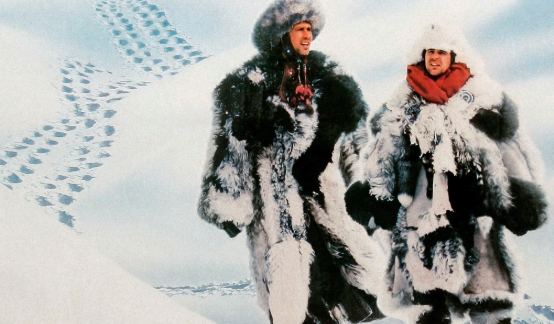
In the heart of the 1980s, when the Cold War was still a very real and chilling backdrop to everyday life, Hollywood gave us the perfect antidote: laughter. And no film captured the absurdity of global espionage with more goofy glee than 1985’s Spies Like Us. The movie brought together two of the founding fathers of Saturday Night Live, Chevy Chase and Dan Aykroyd, as a pair of bumbling, utterly incompetent government employees who are duped into becoming decoy spies. It was a match made in comedy heaven. Chase’s suave, self-assured buffoonery perfectly complemented Aykroyd’s earnest, tech-obsessed nerdiness.
Directed by the legendary John Landis, the film is a whirlwind tour of slapstick, quotable one-liners, and hilariously improbable situations, from a disastrous training exam to a surgical tent scene that lives on in comedy infamy. It’s a loving homage to the classic road trip comedies of a bygone era, retooled for the nuclear age. But behind the on-screen chaos and belly laughs lies a fascinating production story filled with legendary cameos, incredible improvisations, and surprising connections to Hollywood history. Here at Zentara.blog, we’ve infiltrated the archives to declassify the mission files. Get ready for 10 top-secret facts that will give you a whole new mission: to re-watch this comedy classic immediately.

1. It Was Conceived as a Tribute to Bob Hope and Bing Crosby
Spies Like Us feels like a classic “Road to…” movie, and that’s no accident. The iconic film series from the 1940s and 50s, starring the legendary duo of Bob Hope and Bing Crosby, was the direct inspiration for the entire project. In those films, Hope and Crosby played a pair of hapless pals who would find themselves in exotic locales, getting mixed up in some zany adventure and usually competing for the affection of the same woman. Dan Aykroyd, who co-wrote the story, was a massive fan of these comedies.
Originally, Aykroyd envisioned a similar project as a vehicle for himself and his best friend and comedic partner, John Belushi. Tragically, Belushi passed away before the idea could come to fruition. When the project was revived, Aykroyd and director John Landis decided to keep that spirit alive. They structured the film as a direct, loving homage to the “Road to…” formula. Chevy Chase, with his smooth-talking but clumsy persona, was the perfect modern stand-in for the Bing Crosby-type character, while Aykroyd’s more geeky, put-upon character mirrored Bob Hope’s classic comedic persona. The entire globe-trotting plot, from the deserts of Morocco to the snowy mountains of Norway, was designed to evoke that same sense of lighthearted, escapist adventure that made the original Hope and Crosby films so beloved.
2. A Legendary ‘Saturday Night Live’ Reunion
For fans of comedy, the pairing of Chevy Chase and Dan Aykroyd was a dream team. Both were original members of the “Not Ready for Prime Time Players,” the trailblazing cast that launched Saturday Night Live into a cultural phenomenon in 1975. Although Chevy Chase was the show’s first breakout star and left after only one season, his impact was immense. Aykroyd stayed on for four seasons, becoming famous for his hyper-articulate, obsessively detailed characters and his “Blues Brothers” partnership with John Belushi.
Spies Like Us marked the first time the two comedy giants had been brought together to lead a major motion picture. Their chemistry was immediate and undeniable, but it was built on their very different comedic styles. Chase was the master of physical comedy and a kind of charming arrogance, always confident right up until the moment he falls over a desk. Aykroyd was the master of the rapid-fire, technical dialogue and a wide-eyed earnestness that made his characters so endearing. Director John Landis expertly used this dynamic, letting Chase handle the slapstick and smooth-talking while Aykroyd delivered paragraphs of hilariously complex jargon. The result was a perfect comedic partnership that felt like a special event for anyone who grew up watching them on SNL.
3. The Film is Packed with Secret Director Cameos
Director John Landis has a famous tradition of packing his films with Easter eggs and inside jokes, and his favourite trick is to give tiny roles to his filmmaker friends. Spies Like Us is perhaps the ultimate example of this, featuring an absolutely staggering number of world-famous directors in blink-and-you’ll-miss-them cameos. If you watch closely, you can spot a who’s who of 1980s cinematic talent.
In the memorable scene where Chase and Aykroyd are herded into the examination room, two of the men at the table with them are legendary directors: Costa-Gavras, known for serious political thrillers like Z and Missing, and Terry Gilliam, the visionary genius behind Brazil and a member of Monty Python. Later in the film, the two men guarding the entrance to the drive-in movie theatre are none other than Sam Raimi, who would go on to direct the Evil Dead and Spider-Man trilogies, and Joel Coen of the famed Coen Brothers. Even Martin Brest, the director of Beverly Hills Cop, appears as a security guard. The tradition reached its peak when the film paid tribute to its own inspiration: the golf player Fitz-Hume hits in the head with a stray ball is played by the legendary Bob Hope himself, passing the torch of comedy to the new generation.
4. The “Doctor. Doctor.” Scene Was Almost Entirely Improvised
“Doctor.” “Doctor.” “Doctor.” “Doctor.” It is without a doubt the most famous and endlessly quotable scene in the entire movie. In a makeshift tent in the middle of the desert, Fitz-Hume (Chase) must perform a “procedure” on an injured Millbarge (Aykroyd). What follows is a masterclass in comedic timing, as the two men, surrounded by a horrified audience of local warriors, engage in a back-and-forth of escalating absurdity.
According to director John Landis, while the basic premise of the scene was in the script, the vast majority of the brilliant dialogue was improvised on the spot by Chase and Aykroyd. Landis simply set up the cameras and let his two stars go to work, drawing on the years of improvisational experience they honed at Saturday Night Live. The way Chase confidently lists off medical instruments (“forceps, retractors, sphincterscope”) and the way Aykroyd plays along through gritted teeth is pure comedic gold. The scene is a perfect showcase of their unique chemistry, feeling both chaotic and perfectly controlled. The final punchline, where they discover the patient they were meant to be operating on, is the perfect capstone to a scene that has left audiences in stitches for decades.
5. The Catchy Theme Song is by a Beatle
Every great 80s movie needed a killer theme song, and Spies Like Us landed one of the biggest recording artists in history: Paul McCartney. The former Beatle wrote and performed the film’s infectious title track, which became a significant international hit in its own right, climbing into the Top 10 on the Billboard Hot 100 chart in the United States.
McCartney reportedly wrote the song very quickly after seeing a rough cut of the film. Its playful, synth-heavy sound and goofy lyrics perfectly matched the tone of the movie. But what truly cemented the song in the public consciousness was its music video, which received heavy airplay on MTV. The video featured Chevy Chase and Dan Aykroyd, in character, stumbling into McCartney’s recording studio at Abbey Road. What follows is a fun, chaotic sequence of the actors “helping” McCartney record the track, playing instruments badly, and generally causing mayhem. The video’s lighthearted, self-deprecating humour made it a fan favourite and a brilliant piece of cross-promotion that helped make both the film and the song a huge success.
6. Filming in the Frigid Cold of Norway Was No Laughing Matter
While the film is a non-stop comedy, the cast and crew had to endure some genuinely harsh and dangerous conditions to bring the story to life. The scenes set in the snowy Tadzhik Soviet Socialist Republic, where our heroes must launch a nuclear missile, were actually filmed on location in the stunning but frigid landscapes of Norway during the winter.
The temperatures were often well below freezing, posing a serious challenge for the actors and the sensitive camera equipment. Chevy Chase, known for his physical comedy, had to perform slapstick routines in deep snow and on slippery ice, which was much more hazardous than it looked on screen. The crew had to contend with limited daylight hours and the logistical nightmare of transporting an entire Hollywood production team, including a giant prop missile, to remote, snow-covered locations. The actors often stayed in character between takes to keep their spirits up, but by all accounts, it was a physically gruelling shoot that tested the endurance of everyone involved. The beautiful, sweeping shots of the snow-covered mountains are real, and so was the cold.
7. John Landis’s First Film After the ‘Twilight Zone’ Tragedy
The production of Spies Like Us carried a heavy emotional weight for its director, John Landis. This was the first feature film he directed after the catastrophic accident that occurred on the set of Twilight Zone: The Movie in 1982. During the filming of his segment, a helicopter crash led to the tragic deaths of veteran actor Vic Morrow and two child actors, Myca Dinh Le and Renee Shin-Yi Chen. The incident was a devastating tragedy that shook Hollywood to its core and led to major changes in on-set safety regulations.
Landis, along with other members of the crew, faced criminal charges and intense public scrutiny. Although he was eventually acquitted of involuntary manslaughter in 1987, the legal battles were ongoing during the production of Spies Like Us. For Landis, directing this lighthearted, silly comedy was a way to return to the work he loved, but it was done under the shadow of this immense personal and professional trauma. Knowing this backstory adds a poignant layer to the film, making its successful creation a testament to Landis’s resilience in the face of unimaginable tragedy.
8. The “GLG-20” Gag Was a Satire of Real Spycraft
A central running joke in the film is that Fitz-Hume and Millbarge are “GLG-20s,” disposable decoy agents whose purpose is to draw enemy attention away from the real spies. The term is, of course, a complete fabrication for the movie, but the concept behind it is rooted in the real-world paranoia and absurdity of Cold War espionage.
In the world of intelligence, agencies have historically used decoys, misinformation, and so-called “useful idiots” to distract and confuse their adversaries. The idea of sending two complete incompetents out into the field as a diversion is a brilliant satirical take on this practice. The film hilariously lampoons the bureaucratic mindset of intelligence agencies, which are depicted as being so obsessed with convoluted plans and acronyms that they would willingly sacrifice two of their own employees for the “greater good.” The GLG-20 gag works so well because, while exaggerated for comedic effect, it feels just plausible enough to be a real, secret government designation buried in some classified file.
9. A Real U.S. Military Base Provided an Authentic Backdrop
To add a surprising touch of authenticity to its spoof of the military-industrial complex, the production secured permission to film at a real United States military installation. Many of the scenes showing Fitz-Hume and Millbarge’s disastrous training montage, as well as some exterior shots related to the missile program, were filmed at Edwards Air Force Base in California. This is a major hub for flight testing and aerospace development, adding a layer of visual realism to the film’s depiction of the American military machine.
Gaining this kind of access often requires the script to be approved by the Department of Defense, who want to ensure the military isn’t portrayed in a wholly negative light. Despite the film being a comedy that pokes fun at government incompetence, the filmmakers were clearly able to secure the necessary cooperation. This use of a real, high-tech military base as the setting for such incompetence and buffoonery makes the satire even sharper. The gleaming, state-of-the-art hardware of the U.S. Air Force serves as the perfect straight man to the comedic chaos of Chase and Aykroyd.
10. The Secret Connection to ‘Trading Places’
John Landis loves creating a shared universe for his characters. Just as Marvel populates its films with recurring characters, Landis subtly connected Spies Like Us to his previous comedy blockbuster, Trading Places (which also starred Dan Aykroyd). In Trading Places, the villains are the old, greedy, and morally bankrupt Duke brothers, Randolph and Mortimer, played by Ralph Bellamy and Don Ameche. At the end of that film, they are left ruined and penniless.
In Spies Like Us, there is a brief scene where an American officer is watching television inside a military command tent. On the screen, you can clearly see a recruitment ad featuring none other than the Duke brothers! Don Ameche, in character as Mortimer Duke, delivers the line, “The army can teach you a skill… and help you get a job.” This hilarious little Easter egg implies that after losing their fortune on the stock market, the disgraced Duke brothers have found new work making low-budget commercials for the U.S. Army. It’s a brilliant inside joke for fans of Landis’s work and a fun nod that ties two of the decade’s best comedies together.
Conclusion
Spies Like Us is a perfect time capsule of 1980s comedy. It’s a film that fires on all cylinders, powered by the incredible chemistry of its two lead stars, the anarchic vision of its director, and a script that knew exactly how to balance smart satire with pure, unadulterated slapstick. It took the anxieties of the Cold War and turned them into a source of explosive laughter, reminding us that sometimes the most powerful weapon against overwhelming fear is a good, hearty belly laugh.
From its origins as a tribute to comedy legends to its own collection of iconic moments and behind-the-scenes secrets, the film is a masterfully constructed piece of entertainment. It’s a testament to the magic that can happen when comedic geniuses are let loose in a global sandbox, armed with nothing more than a few gadgets, a terrible plan, and a license to be hilarious. The Cold War may be over, but the laughs in Spies Like Us remain eternal.
What’s your most memorable line or gag from Spies Like Us? Let us know in the comments below!
Dive Deeper
Want to learn more about the comedy legends and the era that made this film a classic? Deploy these books for your next intelligence-gathering mission.
- Live from New York: The Complete, Uncensored History of Saturday Night Live as Told by Its Stars, Writers, and Guests by James Andrew Miller and Tom Shales: The definitive oral history of SNL, this book provides incredible context for the rise of Chevy Chase, Dan Aykroyd, and the comedic revolution they started.
- John Landis by Giulia D’Agnolo Vallan: A comprehensive look at the career of the film’s director, exploring his signature style and the making of his classic films, from Animal House to The Blues Brothers.
I’m Chevy Chase… and You’re Not by Chevy Chase: The candid and often hilarious autobiography of the film’s star, offering his perspective on his career, his time at SNL, and the making of his most famous movies.




Leave a Reply