
For nearly five decades, Queen’s “Bohemian Rhapsody” has been a fixture of global culture, a song so unique and powerful that it defies easy categorization. It’s a rock opera in miniature, a six-minute journey that weaves together disparate musical styles—from a cappella harmonies and a mournful ballad to an operatic crescendo and a hard-rock finale. Its lyrical content is as enigmatic as its structure, sparking countless debates and interpretations. Released in 1975, the song was initially met with skepticism from record executives who believed its unconventional length and format would be a commercial disaster. They couldn’t have been more wrong. “Bohemian Rhapsody” became an instant global sensation, dominating charts and capturing the hearts of a generation.
Its legacy is more than just commercial success; it’s a testament to the band’s fearless creativity and Freddie Mercury’s unparalleled genius. The song broke all the rules of what a pop single could be, proving that artistic ambition could be a path to mass appeal. It’s a song that has resonated through different eras, from its initial release to its iconic revival in the film Wayne’s World and, more recently, the biopic Bohemian Rhapsody. This enduring popularity has made it one of the most streamed songs of all time, a testament to its timeless quality. This article will delve into ten fascinating facts about “Bohemian Rhapsody,” exploring its intricate creation, its groundbreaking production, and the mysteries that still surround its composition, offering a deeper appreciation for this one-of-a-kind musical masterpiece.
1. Freddie Mercury’s Secret and Inexplicable Lyrics
The lyrics of “Bohemian Rhapsody” are perhaps its most enduring mystery. Written by Freddie Mercury, the song tells a cryptic story that is open to a multitude of interpretations. The narrative follows a character who confesses to a murder (“Mama, just killed a man”), is tormented by his conscience, and seeks forgiveness before facing his ultimate fate. Mercury himself was famously cagey about the song’s meaning, once stating that he found the idea of a song’s meaning being a personal experience to be more intriguing. Many theories have emerged over the years, with some suggesting the song is an allegory for Mercury’s coming out as bisexual and leaving his past life behind. Others believe it’s a commentary on his struggle with fame, a theatrical performance of guilt and redemption. The phrase “Bismillah,” an Arabic word meaning “in the name of God,” and the name “Scaramouche” from the Italian commedia dell’arte add to the song’s theatrical and international feel, making it all the more enigmatic. The beauty of the lyrics is that they allow each listener to project their own meaning onto the story, making “Bohemian Rhapsody” a deeply personal and universal experience.
2. A Groundbreaking Production and Multi-Track Recording
“Bohemian Rhapsody” was a technical marvel for its time, pushing the boundaries of studio technology to its absolute limit. Recorded at Rockfield Studios in Wales, the song’s operatic section was particularly challenging. The band and producer Roy Thomas Baker famously spent hours, even days, recording hundreds of vocal overdubs to create the illusion of a massive operatic choir. They used a 24-track analog tape machine, a state-of-the-art piece of equipment for 1975. However, to achieve the dense layers of vocal harmonies, the band had to continuously bounce down tracks, a process of mixing several tracks onto a single new one to free up space. This process was so extensive that, according to engineer Mike Stone, the master tape itself became nearly transparent in some sections due to the repeated passes. The sheer ambition and meticulousness of this recording process, combined with the band’s own vocal prowess, resulted in a sound that was unprecedented and has rarely been matched since. It’s a testament to the band’s and the production team’s willingness to experiment and invest the time needed to bring Freddie Mercury’s vision to life.
3. The Song Was Nearly Vetoed by Record Executives
Today, it’s impossible to imagine a world without “Bohemian Rhapsody,” but at the time of its release, record executives were deeply skeptical. The prevailing wisdom of the era was that a pop single should be around three minutes long to get radio airplay. At an unprecedented five minutes and fifty-five seconds, “Bohemian Rhapsody” was nearly twice that length. The song’s complex structure, with its lack of a traditional chorus, also made it a difficult sell. Queen’s record label, EMI, was convinced it would be a commercial flop and wanted the band to edit it down. However, the band, particularly Freddie Mercury, was unyielding. The story goes that they strategically leaked the song to DJ Kenny Everett, who played it multiple times on his radio show. The immense public demand that followed proved the executives wrong and forced the record label to release the song in its full, unedited glory. This defiance of industry standards is a key part of the song’s legend and a powerful example of artistic integrity triumphing over commercial pressure.
4. The Iconic Music Video, a Pioneer of Its Time
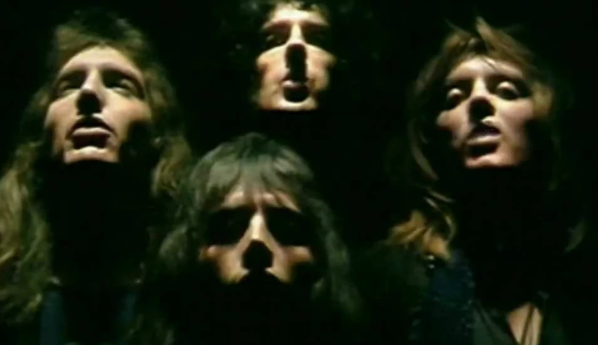
While music videos are now a standard part of the music industry, “Bohemian Rhapsody” helped pioneer the medium. In 1975, most videos were simple promotional clips of bands performing. Queen, however, wanted to create something more ambitious. Directed by Bruce Gowers, the video was shot in just a few hours at a cost of only a few thousand pounds, a small sum even for the time. The video famously features the band standing in a diamond formation, a visual inspired by their album cover Queen II. The groundbreaking use of special effects, including the iconic echoing close-up shots of the band’s faces and the swirling, distorted images, was achieved through simple but effective video manipulation. The video’s a cappella, ballad, and hard rock sections were all given distinct visual treatments, creating a cinematic experience that perfectly matched the song’s theatricality. It aired on the TV show Top of the Pops and was an instant sensation, helping to popularize the song and setting a new standard for music videos, paving the way for the MTV era that would follow years later.
5. A Massive Global Success, Despite Its Length
Despite the record label’s fears, “Bohemian Rhapsody” was a colossal commercial success. It topped the UK charts for nine consecutive weeks upon its release, a record at the time, and became the UK’s best-selling single of 1975. It also achieved significant success globally, becoming a top-10 hit in numerous countries. Its chart-topping journey was not a one-time event. Following Freddie Mercury’s death in 1991, the song was re-released as a tribute and soared to the top of the charts again, once more holding the number-one spot for several weeks. This made it the only song in UK history to become a Christmas number-one twice with the same recording. The song’s enduring popularity was further solidified by its use in the film Wayne’s World in 1992, which introduced it to a new generation and sent it back into the Billboard Hot 100 in the US. This multi-generational appeal is a rare feat and a testament to its timeless quality.
6. The Band Was Confident in Its Success
While record executives were hesitant, Queen was steadfast in their belief in “Bohemian Rhapsody.” In an interview, guitarist Brian May recalled that the band was incredibly confident in the song and its potential. This confidence came from their deep belief in Freddie Mercury’s genius and the innovative nature of the composition. They knew they had created something special and were unwilling to compromise their artistic vision for the sake of commercial viability. This conviction was not born out of arrogance, but from the deep camaraderie and trust within the band. They were a team that supported each other’s creative ideas, no matter how unconventional. It’s this collective confidence and mutual respect that allowed them to push boundaries and create music that was entirely their own. The success of “Bohemian Rhapsody” was a powerful validation of their creative risks and their unwavering belief in their own talent.
7. The Song’s Unusual A Cappella Opening
“Bohemian Rhapsody” doesn’t have a traditional beginning; it opens with a stunning, multi-layered a cappella harmony. The a cappella section, which includes the iconic line “Is this the real life? Is this just fantasy?”, was created by layering multiple vocal takes of Mercury, Brian May, and Roger Taylor. This a cappella opening immediately signals that this is not a typical rock song. It’s theatrical, dramatic, and sets a somber, questioning tone for the epic journey that is about to unfold. This bold choice to begin with unadorned vocals, rather than an instrumental intro, was a significant risk. It forces the listener to immediately engage with the song’s lyrical and vocal complexity before the full instrumental arrangement kicks in. This unique structural element is one of the many reasons the song stands out as a groundbreaking piece of music.
8. The “Bohemian” and “Rhapsody” Titles
The title of the song itself, “Bohemian Rhapsody,” offers a clue to its artistic intentions. “Bohemian” is a term often used to describe an unconventional, non-conformist artist, someone who lives outside of traditional societal norms. This perfectly describes the song’s lyrical content and its audacious structure. It’s a rebellious and free-spirited piece of music that refuses to conform to the standard pop format. A “rhapsody” is a musical term for a single-movement work that is episodic, irregular, and has an air of improvisation. This definition perfectly encapsulates the song’s own structure, which shifts dramatically between a ballad, an operatic section, and a hard rock finale. The combination of these two terms is not a coincidence; it’s a deliberate choice by Freddie Mercury to signal that this song is a unique, unconventional, and a highly personal artistic statement.
9. It’s Not Just One Song: It’s Three Distinct Parts
One of the key reasons for the song’s enduring fascination is its non-linear structure. It’s not a verse-chorus-verse song; it’s a suite of three distinct movements, each with its own musical identity. The first part is the ballad section, a somber and melodic lament that sets the stage for the dramatic confession. This transitions into the central, theatrical section, which is a mix of the operatic choir and the famous vocal interplay. This operatic section, with its soaring vocals and complex harmonies, is the heart of the song’s unique sound. Finally, the song shifts gears completely into a hard rock finale, a moment of catharsis and raw power, before returning to a quiet, piano-led conclusion. This three-part structure is why the song is often referred to as a “rock opera.” It takes the listener on a complete emotional and musical journey, from confession and torment to a fiery climax, all within a six-minute window.
10. The Most-Streamed Song from the 20th Century
In a testament to its timeless appeal, “Bohemian Rhapsody” officially became the most-streamed song from the 20th century in 2018, amassing over 1.6 billion streams across various platforms. This achievement is particularly remarkable considering the song was released decades before the advent of digital music. Its resurgence in popularity was largely fueled by the success of the 2018 biopic of the same name, which introduced the song to an entirely new generation of listeners. The fact that a song from 1975, with its complex structure and unique style, could outperform so many modern hits speaks volumes about its enduring quality and emotional resonance. It’s a song that proves that true artistic genius, when paired with a compelling story and a powerful performance, can transcend time and technology to captivate audiences for generations.
Further Reading
Bohemian Rhapsody: The Definitive Story of the Song by Andy Davis
Queen: The Ultimate Illustrated History of the Crown Kings of Rock by Phil Sutcliffe
Is This the Real Life?: The Untold Story of Queen by Mark Blake
Freddie Mercury: A Life, In His Own Words by Freddie Mercury
Queen All the Songs: The Story Behind Every Track by Benoît Clerc
Here at Zentara.blog, our mission is to take those tricky subjects and unlock them, making knowledge exciting and easy to grasp for everyone. But the adventure doesn’t stop on this page! We’re constantly exploring new frontiers and sharing discoveries across the digital universe. Want to dive deeper into more mind-bending Top 10s and keep expanding your world? Come join us on our other platforms – we’ve got unique experiences waiting for you on each one!
Get inspired by visual wonders and bite-sized facts: See the world through Zentara’s eyes on Pinterest!
Pin our fascinating facts and stunning visuals to your own boards. Explore Pins on Pinterest: https://uk.pinterest.com/zentarablog/
Discover quick insights and behind-the-scenes peeks: Hop over to Tumblr for snippets, quotes, and unique content you won’t find anywhere else. It’s a different flavour of discovery! Follow the Fun on Tumblr: https://www.tumblr.com/zentarablog
Ready for deep dives you can listen to or watch? We’re bringing our accessible approach to video and potentially audio! Subscribe to our YouTube channel and tune into future projects that make learning pop! Subscribe on YouTube: https://www.youtube.com/@ZentaraUK
Seeking even more knowledge in one place? We’ve compiled some of our most popular topic deep dives into fantastic ebooks! Find them on Amazon and keep the learning journey going anytime, anywhere. Find Our Ebooks on Amazon: https://www.amazon.co.uk/s?k=Zentara+UK&ref=nb_sb_noss
Connect with us and fellow knowledge seekers: Join the conversation on BlueSky! We’re sharing updates, thoughts, and maybe even asking you what wonders we should explore next. Chat with Us on BlueSky: https://bsky.app/profile/zentarablog.bsky.social
Perfect for learning on the move! We post multiple 10-minute podcasts per day on Spotify. Pop on your headphones and fill your day with fascinating facts while you’re out and about! Listen on Spotify: https://open.spotify.com/show/3dmHbKeDufRx95xPYIqKhJ
Follow us on Instagram for bytesize knowledge! We post multiple posts per day on our official Instagram account.https://www.instagram.com/zentarablog/ Every click helps us keep bringing honest, accessible knowledge to everyone. Thanks for exploring with us today – see you out there in the world of discovery!




Leave a Reply