
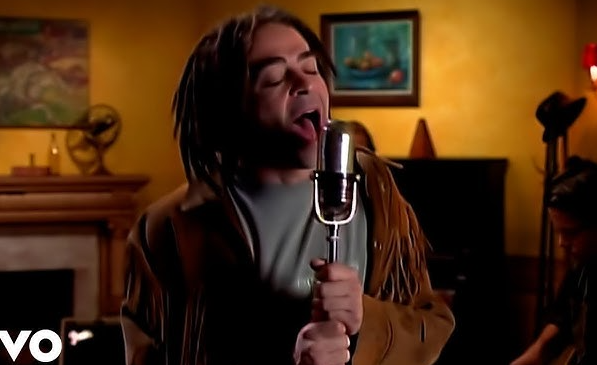
In the early nineties, while the airwaves were dominated by the heavy distortion of the Pacific Northwest, a different kind of revolution was brewing in the Bay Area of California. It wasn’t fueled by feedback and flannel, but by Hammond organs, acoustic guitars, and a level of lyrical vulnerability that felt almost uncomfortably intimate. Counting Crows didn’t just enter the musical landscape; they bled onto it. Led by the wild-haired, poetic frontman Adam Duritz, the band revived the spirit of folk-rock and injected it with a modern, alternative soul.
To be a fan of Counting Crows is to sign up for an emotional marathon. They are a band that specializes in the “blue” notes of life—the moments of transition, the ache of nostalgia, and the search for identity in a crowded room. While many casual listeners know them for their massive radio hits, the true essence of the band lies in their deep cuts and their legendary, ever-changing live performances. They are the “thinking person’s” rock band, blending the narrative weight of a novelist with the improvisational spirit of a jazz ensemble. To truly understand their legacy, one must look past the dreadlocks and the catchy choruses to find the craftsmanship and the struggle that define their history.
1. The Superstitious Origins of the Band’s Name
The name “Counting Crows” is not just a random alliteration; it is rooted in an old English nursery rhyme and a pervasive superstition regarding the birds. The rhyme, which deals with “counting crows” or magpies to predict the future, suggests that the number of birds one sees can determine one’s fate: “One for sorrow, two for mirth, three for a wedding, four for a birth…” This theme of searching for signs and omens is a perfect metaphor for Adam Duritz’s songwriting style. His lyrics often feel like a man trying to read the patterns in his own life to figure out where he stands.
This fascination with the rhyme appears directly in their music, most notably in the song “A Murder of One.” By choosing this name, the band signaled from the beginning that they were interested in the mystical, the melancholic, and the narrative. It suggests a world where everything has a deeper meaning if you look closely enough. For fans, the name represents the band’s core philosophy: that life is a series of moments to be counted and weighed, even if the result often leans toward the “sorrow” side of the ledger.
2. The Explosive Impact of August and Everything After
When the band released their debut album, August and Everything After, they didn’t just find success; they became a cultural phenomenon. The album is one of the fastest-selling debuts in the history of alternative rock, a feat made more impressive by its somber tone and poetic density. Produced by the legendary T-Bone Burnett, the record captured a “lightning in a bottle” moment of raw, organic sound. It was the antithesis of the polished, over-produced pop of the era, favoring the warmth of an analog recording and the creak of a wooden floorboard.
The album’s success was driven by a sense of shared melancholy. In an era of loud guitars, Duritz’s voice offered a different kind of power—the power of confession. Songs like “Round Here” and “Perfect Blue Buildings” resonated with a generation that felt alienated not through rage, but through a quiet sense of displacement. Understanding this debut is essential for any fan because it set the gold standard for the band’s sonic identity. It established them as a group that prioritized the “vibe” and the emotional truth of a take over technical perfection.
3. Adam Duritz and the Reality of Dissociative Disorder
One of the most defining aspects of the Counting Crows’ story is Adam Duritz’s long-standing battle with a mental health condition known as Dissociative Disorder. This isn’t just a biographical footnote; it is the lens through which much of his songwriting is filtered. Duritz has been open about how the condition makes the world feel “unreal” or like he is watching his life through a glass wall. This sense of detachment and the desperate struggle to feel “connected” to reality is a recurring motif in almost every album the band has released.
For fans, this honesty has created a profound bond. When Duritz sings about feeling like a “ghost in a house,” he isn’t just using a poetic metaphor; he is describing his daily lived experience. This transparency has made the band a beacon for listeners dealing with their own mental health struggles. It transforms the music from mere entertainment into a form of companionship. Knowing the clinical reality behind the lyrics allows fans to appreciate the bravery it takes for Duritz to step onto a stage and expose his most vulnerable, fractured states of mind to thousands of strangers.
4. The Philosophy of the “Alt-Lyrics” Live Performance
If you go to a Counting Crows concert expecting to hear the radio version of “Mr. Jones,” you might be in for a surprise. The band is famous—or perhaps infamous among casual listeners—for their radical live reinterpretations of their own songs. Adam Duritz rarely sings a melody the same way twice, often incorporating “alt-lyrics,” spoken-word segments, or entirely different musical arrangements. A five-minute studio track can easily turn into a twelve-minute improvisational epic on stage.
This approach is rooted in the band’s belief that music should be a living, breathing entity. Duritz has often stated that he cannot sing a song the same way he did years ago if he no longer feels that specific emotion. To stay honest, he must change the song to reflect who he is in the present moment. This makes every Counting Crows show a unique, unrepeatable event. For the dedicated fan, these variations are the “holy grail,” and bootleg recordings of these altered versions are highly prized. It ensures that the music never becomes a museum piece; it remains a conversation that is still happening.
5. The Real Identity of the Elusive “Mr. Jones”
“Mr. Jones” is the song that launched the band into the stratosphere, but for years, fans have speculated about who the titular character actually is. Unlike many fictionalized rock characters, Mr. Jones is a real person: Marty Jones, a childhood friend of Adam Duritz and a fellow musician. The song was written about a night the two spent out in San Francisco, watching a flamenco dancer and dreaming of the fame and validation they believed would solve all their problems.
The irony of the song is that it is a celebration of wanting to be famous, written by someone who would famously struggle with the reality of that fame once it arrived. The lyric “When I look at the television, I want to see me staring back at me” became a prophetic and somewhat tragic mantra for the band. Understanding that “Mr. Jones” is a real person adds a layer of grounded humanity to the track. It’s not a glamorized rock anthem; it’s a snapshot of two friends standing on the outside looking in, unaware that the door was about to swing wide open.
6. The “Round Here” Mythology and Narrative Songwriting
While “Mr. Jones” was the hit, “Round Here” is often cited by fans as the band’s true mission statement. The song’s protagonist, Maria, appears in several other Counting Crows tracks, creating a loosely connected narrative universe. Duritz uses characters like Maria to explore themes of shattered dreams and the weight of expectations in small-town America. The song’s opening line—”Step out the front door like a ghost into the fog”—is widely considered one of the most evocative opening lines in rock history.
The band’s narrative style is heavily influenced by literary giants and “story-song” masters like Rickie Lee Jones and Van Morrison. They don’t just write choruses; they build worlds. In “Round Here,” the music swells and recedes like the tide, mirroring the emotional instability of the characters. For the fan, deconstructing these narratives is part of the joy of the band. There is a “cinematic” quality to their writing that encourages the listener to visualize the scenes, making the music feel more like a collection of short stories than a standard rock album.
7. A Lineup Built on Loyalty and Brotherhood
Unlike many bands that suffer from constant internal strife and frequent lineup changes, Counting Crows has maintained a remarkably stable core for decades. Guitarists David Bryson and Dan Vickrey, keyboardist Charlie Gillingham, and bassist Matt Malley (and later Millard Powers) have formed a tight-knit musical family. This longevity has allowed the band to develop a telepathic musical connection, which is essential for their improvisational live style. They know how to follow Duritz’s lead even when he goes completely off-script.
This stability is a rarity in the music industry and speaks to the band’s collaborative nature. While Duritz is the primary lyricist and face of the band, the musical arrangements are a group effort. Each member brings a different flavor—Bryson’s melodic sensibility, Gillingham’s soulful organ swells, and Vickrey’s rock-and-roll grit. This brotherhood is the reason the band has been able to weather the ups and downs of the industry without imploding. They aren’t just business partners; they are a support system for one another, which is reflected in the warmth and cohesion of their sound.
8. The Independent Spirit and the “Underwater Sunshine”
In the later stages of their career, Counting Crows made a decisive move away from major record labels to reclaim their independence. This shift allowed them to experiment more freely and release projects on their own terms. One of the most notable examples of this freedom is their project Underwater Sunshine (Or What We Did on Our Summer Vacation), a collection of covers that paid tribute to the artists who influenced them. By stepping away from the corporate machine, they prioritized artistic fulfillment over chart performance.
This independent streak has allowed the band to cultivate a more direct relationship with their fans. They have embraced digital platforms to share bootlegs, acoustic sessions, and long-form stories about their songs. This “indie” mindset has helped them maintain their “evergreen” status; they are no longer chasing the latest trends or trying to replicate the success of their debut. Instead, they are focused on the “craft” of being a working band, ensuring that every new release is a genuine reflection of their current interests rather than a label-mandated product.
9. The Influence of The Band and Van Morrison
To truly “get” the Counting Crows sound, one must listen to the artists they idolize. The band’s DNA is deeply infused with the organic, Americana spirit of The Band and the soulful, stream-of-consciousness delivery of Van Morrison. You can hear the influence of Richard Manuel’s piano playing in Charlie Gillingham’s work and the echoes of Astral Weeks in the way Duritz stretches out his vowels and repeats phrases to reach a state of emotional catharsis.
They are essentially a modern link in a long chain of “roots-rock” tradition. They value the sound of real instruments playing in a real room—the “snap” of a snare drum, the “growl” of a Leslie speaker, and the harmony of human voices. By aligning themselves with these classic influences, Counting Crows created a sound that doesn’t feel dated. While other nineties bands are inextricably linked to a specific “grunge” or “pop-punk” era, Counting Crows’ music feels like it could have existed in the seventies or the twenty-twenties. They are timeless because they built their house on a foundation of classic craftsmanship.
10. The 12-Minute Masterpiece and the “Eldorado” Connection
One of the most legendary pieces of Counting Crows lore involves the song “Palisades Park.” This multi-movement epic serves as a modern-day “Bohemian Rhapsody” for the indie-rock set. It showcases the band’s ability to weave complex arrangements, changing tempos, and a sprawling narrative into a single, cohesive piece of art. The song is a nostalgic journey through a lost landscape of youth and amusement parks, serving as a reminder that the band is still capable of pushing their own boundaries.
This “long-form” songwriting is a hallmark of their later work. They aren’t afraid to take up space and demand the listener’s full attention. “Palisades Park” also ties into the band’s interest in the “mythology of America”—the forgotten corners of the country and the ghosts that haunt them. For the fan, songs like this are proof that the band’s creative well is far from dry. They continue to explore the “Superunknown” of their own abilities, proving that even after decades in the spotlight, they are still capable of surprising their audience with their ambition and their heart.
Further Reading
- Counting Crows: August and Everything After (Guitar Recorded Versions) by Hal Leonard Corp.
- The 90s: A Book by Chuck Klosterman (Includes analysis of the era’s cultural shifts)
- Adam Duritz: A Biography (Digital Series) by Various Music Journalists
- The Big Book of Rock Lists by Dave Marsh (Contextualizes the band’s place in rock history)
- 10 Things Every Fan Should Know About Sabrina Carpenter
- 10 Things Every Fan Should Know About Bad Bunny
- 10 Things Every Fan Should Know About The Weeknd
- 10 Things Every Fan Should Know About Taylor Swift
- 10 Things You Should Know About The Band Oasis
- 10 Things You Should Know About The Band My Chemical Romance
- 10 Shocking Movie Performances by Singers Who Proved Everyone Wrong
- 10 Things You Should Know About Bruno Mars
- 10 Things You Should Know About Snoop Dogg Rapper
- 10 Things Every Fan Should Know About NSYNC



