
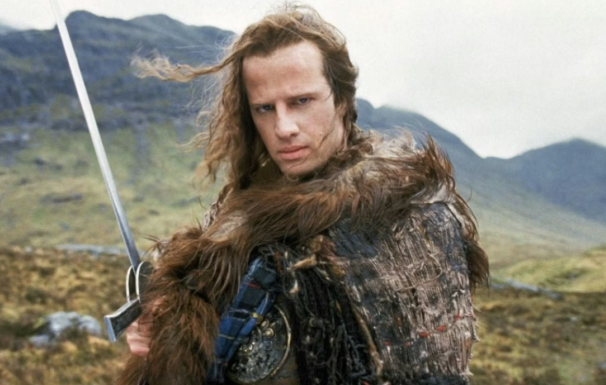
The mist clings to the rugged peaks of the Scottish Highlands as two men prepare for a duel that has spanned centuries. This is the world of Highlander, a film that defied lukewarm initial reviews to become a cornerstone of cult cinema. Combining historical epic, urban fantasy, and high-octane action, it tells the story of Connor MacLeod, an immortal who must battle his own kind through the ages until only one remains.
To understand Highlander is to understand a unique moment in film history where music video aesthetics, grand mythology, and profound loneliness collided. It is a story about the burden of living forever while everyone you love withers away. Whether you are a newcomer to the franchise or a seasoned Watcher, these ten pillars of the film’s production and lore provide a comprehensive look at why this “Kind of Magic” continues to captivate audiences across the globe.
1. The Great Casting Contradiction: A Frenchman and a Scot
One of the most fascinating aspects of Highlander is its central casting irony. Christopher Lambert, who portrays the quintessential Scottish hero Connor MacLeod, is actually French and spoke very little English at the time of filming. To play the role, Lambert had to undergo intensive dialect coaching to develop a neutral, gravelly tone that could pass for a man who had lived in various countries over several centuries. His slightly detached, ethereal performance actually worked in the film’s favor, giving MacLeod a sense of “otherness” fitting for an immortal.
In a humorous reversal, the production cast Sean Connery—the world’s most famous Scotsman—to play Juan Sánchez-Villalobos Ramírez, an Egyptian immortal masquerading as a Spanish nobleman. Connery made no attempt to hide his thick Edinburgh accent, creating a delightful cinematic paradox where the “Scot” sounds French and the “Spaniard” sounds Scottish. Despite this, the chemistry between Lambert and Connery is the emotional heart of the film. Connery’s charisma and Lambert’s soulful intensity create a mentor-student bond that feels ancient and authentic, grounding the fantastical elements of the plot in a relatable human connection.
2. The Sonic Soul of Queen
It is impossible to separate the visual identity of Highlander from its auditory masterpiece: the soundtrack by the legendary rock band Queen. Unlike many films that simply license existing songs, Queen was deeply involved in the creative process. After viewing a rough cut of the movie, the band members were so inspired that they wrote original tracks specifically tailored to the narrative beats. Brian May was particularly moved by the tragic love story between Connor and his first wife, Heather, leading him to pen the power ballad “Who Wants to Live Forever.”
The soundtrack functions as a secondary narrator. “Princes of the Universe” provides the bombastic, competitive energy of the immortals, while “A Kind of Magic” captures the whimsy and wonder of the supernatural. The music elevates the film from a standard action flick to a rock-opera epic. The collaboration was so successful that Queen eventually released the album A Kind of Magic, which features many of the film’s tracks. The soaring vocals of Freddie Mercury and the operatic guitar work of Brian May provide the emotional resonance necessary to make the high-stakes battles feel truly legendary.
3. The Legend of Bob Anderson’s Choreography
The swordplay in Highlander is renowned for its visceral, heavy-hitting style, a departure from the light, “tappy” fencing often seen in Hollywood. This is largely thanks to the legendary sword master Bob Anderson. A former Olympic fencer, Anderson was the man behind the masks of cinema’s greatest fighters, including Darth Vader in the original Star Wars trilogy. For Highlander, Anderson pushed the actors to use authentic techniques that reflected their characters’ backgrounds—MacLeod’s rugged, two-handed claymore style versus the Kurgan’s brutal, powerhouse swings.
To add a layer of visual danger to the duels, the production utilized a clever practical effect. The swords were wired to car batteries; when the blades clashed, they completed a circuit, resulting in genuine electrical sparks flying off the steel. This created a level of intensity that CGI struggles to replicate. The actors weren’t just waving props; they were wielding heavy metal blades that sparked with every impact, requiring immense physical coordination and bravery. This dedication to practical stunts ensures that the fight scenes remain thrilling and impactful, even decades after their initial filming.
4. The Kurgan: A Masterclass in Villainy
Every great hero needs an equally formidable shadow, and Clancy Brown’s portrayal of The Kurgan is arguably one of the most terrifying villains in fantasy history. The Kurgan is the antithesis of Connor MacLeod; where Connor feels the weight of loss, the Kurgan revels in the chaos of eternal life. Standing at six-foot-three and possessing a booming, gravelly voice, Brown brought a physical menace to the role that was genuinely intimidating to his co-stars.
One of the most famous sequences involving the Kurgan is the church scene, much of which was improvised. Brown’s decision to taunt the nuns and lick his lips while mocking the sacred space added a layer of unpredictable sociopathy to the character. His wardrobe—a mix of biker leather and safety-pinned scars—became an iconic look for 80s cinema. The Kurgan represents the “beast” within the immortal community, a reminder that the gift of long life can either lead to wisdom or absolute depravity. Brown’s performance is so dominant that he becomes the perfect foil, making the final showdown at Silvercup Studios feel like a battle for the very soul of humanity.
5. A Revolution in Non-Linear Storytelling
At the time of its release, the structural complexity of Highlander was quite ambitious. The film utilizes a non-linear narrative, jumping between 1980s New York City and 16th-century Scotland (with a few stops in between). This isn’t just a gimmick; the transitions are used to show how the past constantly informs the present. Director Russell Mulcahy used “match cuts” to bridge the centuries—such as a modern-day wrestling match dissolving into a clan battle on a Scottish moor.
These transitions are seamless, often triggered by a sound or a visual cue that sparks a memory for Connor. This editing style mimics the way a human mind wanders through history, making the audience feel the protagonist’s weariness and the persistence of his memories. By weaving the origin story throughout the modern-day investigation by forensic expert Brenda Wyatt, the film maintains a steady pace of revelation. It allows the audience to learn about the “Rules” of the Gathering alongside the characters, ensuring that the world-building feels organic rather than forced through heavy exposition.
6. The Music Video Aesthetic of Russell Mulcahy
Before he directed Highlander, Russell Mulcahy was a pioneer in the world of music videos, directing iconic clips like The Buggles’ “Video Killed the Radio Star.” He brought this vibrant, fast-paced, and highly stylized visual language to the big screen. Highlander is characterized by its dramatic lighting, swooping camera movements, and heavy use of atmospheric elements like smoke, rain, and neon. This was a bold departure from the gritty realism or high-fantasy tropes common in the era.
Mulcahy’s background allowed him to create a film that felt modern and ancient simultaneously. He utilized crane shots and handheld cameras to give the action a kinetic energy that was ahead of its time. The use of the Louma Crane, in particular, allowed for long, flowing takes that moved from the rafters of Madison Square Garden down to the sweat of the wrestling ring. This “visual flair” is a major reason why the film transitioned so well into the cult classic pantheon. It possesses a distinct “look” that is instantly recognizable, blending the grime of the city with the majesty of the wilderness.
7. The Physics and Practicality of the Quickening
The “Quickening” is the most iconic concept in the Highlander mythos—the explosive transfer of power that occurs when one immortal beheads another. In the film, this is depicted as a violent, supernatural event involving shattering glass, exploding masonry, and arcs of blue lightning. Without the benefit of modern digital compositing, the production team had to rely on ingenious practical effects to bring this to life.
To achieve the look of the Quickening, the crew used a combination of pyrotechnics, air cannons, and Tesla coils. For the final sequence, hundreds of small explosive charges were hidden throughout the set to create a chain reaction of destruction. The light show was achieved through hand-drawn animation layered over the film frames, a painstaking process that gave the electricity a raw, jittery energy. These physical stakes meant that the actors had to react to real explosions and flying debris, adding a sense of genuine danger to the climax. The Quickening isn’t just a visual reward; it’s a visceral representation of the heavy price of victory.
8. Location Scouting: The Soul of the Highlands
While much of the film takes place in the dark alleys of New York, the sequences filmed in Scotland provide the movie with its epic scope and emotional grounding. The production utilized stunning locations such as Eilean Donan Castle and the Cuillin mountains on the Isle of Skye. These weren’t just backdrops; the harsh, beautiful landscape of the Highlands serves as a character in its own right, representing Connor’s roots and his lost innocence.
The contrast between the lush, green vistas of the 1500s and the grey, metallic claustrophobia of modern New York highlights Connor’s isolation. In Scotland, he was part of a clan, a community, and a family. In New York, he is a ghost living under an alias, surrounded by millions of people but ultimately alone. The cinematography by Gerry Fisher captures the scale of the mountains in a way that makes the immortals look small and insignificant against the backdrop of time, reinforcing the theme that while they may live forever, the Earth itself is the only thing that is truly eternal.
9. The Tragic Weight of Loneliness
Beneath the sword fights and rock music, Highlander is a deeply melancholic film about the curse of immortality. The most poignant sequence in the movie is the montage of Connor’s life with Heather. As he remains eternally young, we see her age from a vibrant young woman to a frail elder. Connor stays by her side until her final breath, a choice that leaves him emotionally scarred and hesitant to ever love again.
This “burden of years” is what separates Highlander from other action movies. The protagonist is not a typical hero seeking glory; he is a tired man who has seen too much death. This thematic depth provides the stakes for the “Gathering.” The “Prize” at the end—the ability to grow old, have children, and die a natural death—is presented not as a loss of power, but as the ultimate reward. It reframes the concept of mortality as a gift, suggesting that life only has meaning because it ends. This philosophical core is what allows the film to resonate with audiences on a level that transcends its genre.
10. A Legacy That Refuses to Die
Despite a modest performance at the box office upon its initial release, Highlander found a massive second life on home video and television. Its unique lore was so compelling that it spawned several sequels, an animated series, and a long-running live-action television show. The phrase “There can be only one” entered the global lexicon, becoming a shorthand for any winner-take-all competition.
The film’s legacy is found in its influence on the “Urban Fantasy” genre. Before Highlander, most fantasy stories were set in secondary worlds like Middle-earth. Highlander brought the magic to our doorstep, suggesting that the person sitting next to you on the subway might be an ancient warrior with a sword hidden in their coat. This “hidden world” trope became a staple of modern storytelling. Even as the franchise expanded into complicated timelines and alien origins, the original film remains the gold standard—a perfectly contained story of love, loss, and the eternal struggle between light and dark.
Further Reading
- Highlander: The Complete Watcher’s Guide by Maureen Russell
- The Making of Highlander by Andrew J. Rausch and Marc Cerulli
- The Art of Horror Movies: An Illustrated History by Stephen Jones (Features analysis of the Kurgan’s design)
- Queen: As It Began by Jacky Gunn and Jim Jenkins (Details the band’s work on the soundtrack)
- Podcast Episode: Classic Films And Horror Icons
- 10 The Exorcist III (1990) Movie Facts You Didn’t Know
- 10 Scream (1996) Movie Facts That Changed Horror
- 10 The Lion King (1994) Facts That Made It Iconic – Classic Movie
- 10 Forrest Gump (1994) Facts That Make It Timeless – Classic Movie
- 10 Fight Club (1999) Facts That Still Surprise Fans – Classic Movie
- 10 Hostel (2005) Movie Facts That Shocked Viewers
- 10 Avatar (2009) Facts That Changed Cinema – Classic Movie
- 10 Hellraiser (1987) Movie Facts That Built Its Legacy
- 10 Jurassic Park (1993) Facts That Changed Movies Forever – Classic Movie



