
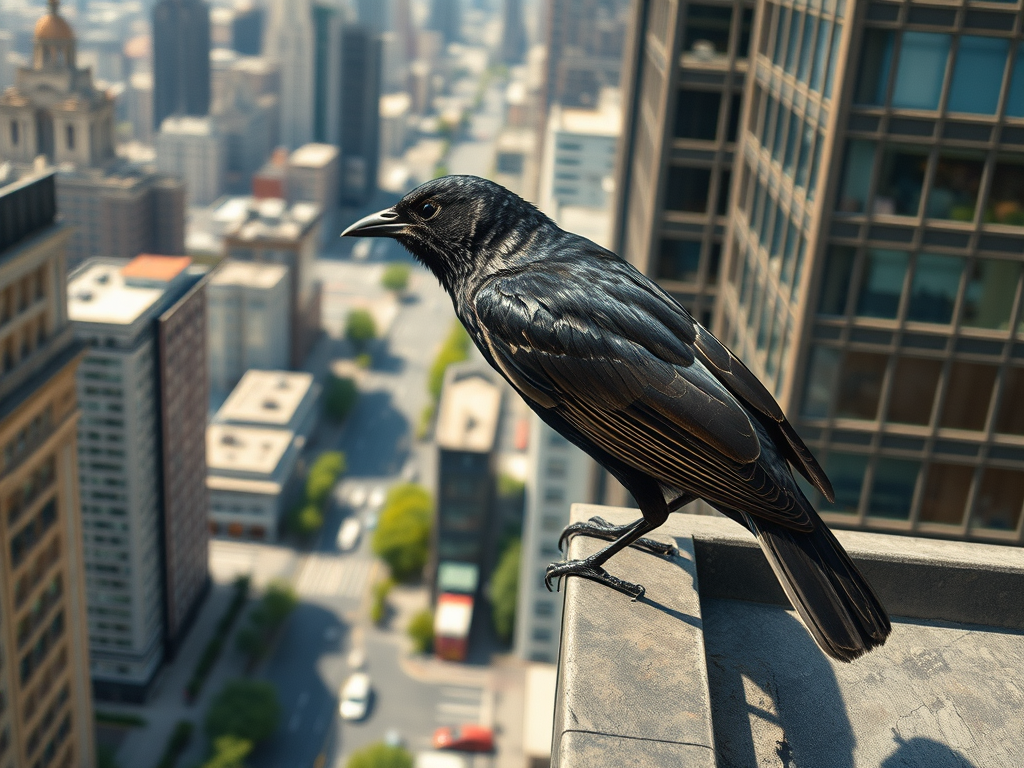
When we picture evolution, our minds often drift to remote, pristine wildernesses: the Galapagos Islands, the depths of the Amazon rainforest, or the vast Serengeti plains. We imagine slow, grand processes playing out over millions of years. But one of the most dynamic and accelerated evolutionary theaters on the planet is right outside our window. The city—with its concrete canyons, endless noise, artificial light, and strange new food sources—is a powerful and unrelenting force of natural selection. For the animals that call these urban landscapes home, it’s a simple, brutal imperative: adapt or perish.
The urban environment is an ecosystem unlike any other. It presents a unique cocktail of challenges and opportunities that is forcing wildlife to change its behaviour, its body, and even its DNA at a breathtaking pace. This process of adaptation isn’t just about animals getting used to us; in many cases, it involves tangible, measurable evolutionary shifts happening over just a few generations. Scientists are discovering that the city is a living laboratory, revealing how flexible and resilient life can be.
From changing their diet to altering their songs, and even reshaping their bodies, animals are proving to be ingenious survivors in the human-dominated world. Their story is not just a fascinating scientific curiosity; it’s a testament to the tenacity of nature and a glimpse into the future of a planet increasingly shaped by our own species. Here are 10 of the most incredible ways animals have evolved and adapted to thrive in urban environments.
1. Developing a Bolder Personality: The Confident City Dweller
In the wild, being shy and cautious is a good survival strategy. A bird that hesitates before flying into an open field might avoid a hawk. But in the city, the rules are different. Constant human presence, noisy traffic, and unfamiliar objects are the norm. An animal that is perpetually spooked would never find a meal. As a result, urban wildlife is undergoing a significant personality shift. Studies on species from European blackbirds to dark-eyed juncos in North America have consistently found that city-dwelling individuals are bolder, more aggressive, and more willing to take risks than their rural cousins.
This isn’t just learned behaviour; there’s a genetic component. Bolder individuals are more likely to successfully navigate the urban maze to find food and nesting sites, meaning they are more likely to survive and pass on their “brave” genes. This evolutionary pressure favours a personality type that is less fearful of novelty (neophobic) and more willing to explore. It’s a fundamental change in an animal’s character, sculpted by the relentless hustle and bustle of city life. They are, in essence, evolving to have the confidence needed to make a living on our crowded streets.
2. Changing Their Tune: The High-Pitched Crooners of the Concrete Jungle
Imagine trying to have a quiet conversation next to a construction site. You’d naturally raise the pitch and volume of your voice to be heard. City birds face this exact problem every day. The low-frequency rumble of traffic, machinery, and human activity—known as anthropogenic noise—drowns out the lower-pitched notes of their songs. For a bird, a song isn’t just a pretty tune; it’s a vital tool for attracting a mate and defending a territory. If you can’t be heard, you can’t reproduce.
In response, many bird species are becoming masters of acoustic adaptation. Urban great tits, for example, have been recorded singing faster and at a higher frequency than their forest-dwelling counterparts, literally shifting their song into a sonic bandwidth with less competition from city noise. European robins have taken a different approach: they’ve started singing at night when the city is quieter. This isn’t just a clever trick; it’s a powerful example of evolution in action. Birds with songs that can cut through the urban din are more successful, ensuring that the next generation of city birds will be better equipped to make themselves heard.
3. Evolving Shorter Limbs and Stickier Feet: A New Urban Body Plan
For an animal, navigating a city is physically different from moving through a forest. Instead of dodging trees and landing on rough bark, a city creature might need to scale smooth glass walls, perch on narrow ledges, or make quick, agile movements to avoid cars. These new physical demands are leading to visible changes in animal body structures. One of the most striking examples comes from Puerto Rican crested anoles, a type of lizard. Scientists found that lizards living in urban areas have evolved larger, stickier toe pads compared to their forest relatives. These specialised feet give them a better grip on smooth surfaces like painted walls and metal poles.
Furthermore, these city lizards have also developed shorter hind legs. While longer legs are great for sprinting across open ground in a forest, shorter limbs provide more agility and a lower centre of gravity, perfect for navigating the complex, three-dimensional structures of a city. Similarly, research on cliff swallows nesting near busy highways in Nebraska showed that, over 30 years, the swallows killed by cars tended to have longer wings. The surviving population evolved shorter, more pointed wings, allowing for more vertical and agile take-offs to better dodge traffic.
4. Thinking Outside the Box: Boosting Urban Brainpower
The city is a puzzle box filled with strange challenges and novel rewards. How do you open a “raccoon-proof” rubbish bin? How do you get the meat out of a nut with an impossibly hard shell? For animals with the cognitive flexibility to solve these problems, the city is a feast. This environment strongly selects for good problem-solvers, leading to observable increases in cleverness and innovation.
The most famous urban geniuses are crows and their relatives. Crows in Japan have been famously observed dropping hard-to-crack nuts into traffic lanes, waiting for cars to run them over, and then retrieving the edible contents when the light turns red. Raccoons, notorious for their intelligence and manual dexterity, have turned breaking into our bins and homes into an art form. This isn’t just instinct; it’s learning and cultural transmission. Animals that can innovate new solutions and learn from watching others are the ones that thrive. The city, in effect, acts as a giant IQ test, and only the brainiest individuals get to pass their smart genes on to the next generation.
5. Processing Our Junk Food: The Evolution of the Urban Gut
A rural coyote’s diet consists of rodents, rabbits, and fruit. A city coyote’s menu might include discarded pizza, leftover burgers, and a variety of processed human foods. This dramatic dietary shift presents a huge physiological challenge. Our foods are often high in fat, sugar, and carbohydrates that wild animals are not naturally equipped to handle. Yet, many urban species are adapting.
Researchers studying urban coyotes and mice have found subtle but significant changes in their skull shapes, reflecting a change in bite force needed for softer, processed foods compared to tearing through hide and bone. Even more profound changes are happening inside. An animal’s gut is home to a complex ecosystem of microbes that help it digest food. Urban animals are developing different gut microbiomes better suited to breaking down a high-fat, high-carb diet. Some species are even evolving genetic changes related to fat metabolism. They are essentially evolving a digestive system that can handle our leftovers, turning our waste into their survival.
6. Losing the Fear of Light: Conquering the 24-Hour City
For most of evolutionary history, life was governed by the rhythm of the sun. But our cities have erased the night, bathing the landscape in a perpetual twilight of artificial light. This light pollution has a profound effect on wildlife. For nocturnal animals, it can be confusing and dangerous, exposing them to predators. Yet, many are adapting. For instance, some populations of urban moths are evolving to be less attracted to artificial lights, a trait that makes them less likely to exhaust themselves circling a streetlamp or get eaten by a waiting bat.
Other animals are using our light to their advantage. Urban blackbirds and other songbirds are known to wake up and begin their daily foraging earlier in artificially lit areas, effectively extending their day and giving them more time to find food. Spiders have been observed building their webs near streetlights to take advantage of the insects drawn to the glow. These animals are adapting their most fundamental biological clocks and behaviours to the reality of the city that never sleeps.
7. Building Nests from Our Cigarettes: The Innovative Urban Architect
When building a home, you use the materials you have available. In the city, that means human-made materials are often incorporated into nests and burrows. Birds are the most visible innovators in this regard. It’s common to find nests woven with bits of plastic, string, and paper. But some urban birds have taken this a step further with a strangely brilliant adaptation.
House finches and sparrows in Mexico City have been observed deliberately lining their nests with cellulose from discarded cigarette butts. At first, scientists were puzzled, but they discovered a fascinating reason: the nicotine and other chemicals remaining in the filters act as a powerful pesticide, repelling parasitic mites that can harm the birds’ chicks. The more cigarette butts in a nest, the fewer parasites it has. This is a stunning example of animals repurposing our toxic waste for their own benefit, turning a pollutant into a form of protective medicine for their young.
8. Dodging Traffic: Evolving Life-Saving Reflexes
The single greatest new predator in the urban ecosystem isn’t an animal; it’s the automobile. Cars are a huge source of mortality for urban wildlife. This creates an intense selective pressure: animals that are better at judging and avoiding traffic are far more likely to survive and reproduce. While this is largely a learned behaviour, it seems to be driving evolutionary change as well.
As mentioned with the cliff swallows, physical traits like wing shape can evolve to make animals better at avoiding vehicles. Beyond this, there’s evidence that cognitive abilities are being shaped by this threat. Urban squirrels, for example, appear to be much better at assessing the speed and trajectory of an oncoming car than their rural counterparts, who might simply freeze in the face of a threat they’ve never encountered. They seem to understand the nature of the threat. This “road-smarts” behaviour, a blend of instinct and rapid learning, is a critical adaptation for life and limb in the city.
9. Thriving in the Heat: Taming the Urban Heat Island
Cities are measurably warmer than the surrounding countryside, a phenomenon known as the “urban heat island” effect. Buildings and asphalt absorb and radiate the sun’s heat, creating a unique microclimate. This extra warmth can be stressful for many species, but for others, it’s an opportunity. Some species, like the common wall lizard, thrive in these warmer conditions, and urban populations often show higher tolerance to heat than rural ones.
This warmth also allows animals to remain active for longer periods or even change their entire life cycle. Peregrine falcons, which traditionally nest on cliffs, have found that the warm, protected ledges of tall buildings make perfect artificial cliffs, allowing them to nest successfully in the heart of our biggest cities. The urban heat island is another filter, favouring species that can either tolerate or take advantage of the city’s unique thermal landscape.
10. Altering Life Cycles: A Non-Stop Urban Lifestyle
In temperate climates, the seasons dictate the rhythm of life: animals breed in the spring, raise young in the summer, and hibernate or migrate in the winter. But the city can disrupt these ancient cycles. The combination of the urban heat island effect and the year-round availability of food from our rubbish and handouts means that winter in the city isn’t as harsh as it is in the wild.
In response, some urban animals are forgoing hibernation altogether. Many city-dwelling squirrels and raccoons remain active year-round. Some species of mosquito have adapted to live and breed in underground subway systems, creating entirely new subterranean populations that never hibernate. Furthermore, the abundance of resources can allow animals like foxes and pigeons to have more breeding cycles per year than their wild counterparts. They are shifting from a seasonal life strategy to a year-round one, adapting their very biology to the endless opportunities the city provides.
Further Reading
To explore this fascinating intersection of nature and urbanisation further, these books provide a wealth of information and captivating stories:
- Darwin Comes to Town: How the Urban Jungle Drives Evolution by Menno Schilthuizen
- The New Wild: Why Invasive Species Will Be Nature’s Salvation by Fred Pearce
- Never Home Alone: From Microbes to Millipedes, Camel Crickets, and Honeybees, the Natural History of Where We Live by Rob Dunn
The story of urban evolution is a powerful reminder that nature isn’t something separate from us, confined to parks and reserves. It is all around us, constantly adapting in a dynamic, ongoing dance with the world we have built. By paying attention, we can witness evolution happening in real-time, right in our own backyards.
Here at Zentara.blog, our mission is to take those tricky subjects and unlock them, making knowledge exciting and easy to grasp for everyone. But the adventure doesn’t stop on this page! We’re constantly exploring new frontiers and sharing discoveries across the digital universe. Want to dive deeper into more mind-bending Top 10s and keep expanding your world? Come join us on our other platforms – we’ve got unique experiences waiting for you on each one!
Get inspired by visual wonders and bite-sized facts: See the world through Zentara’s eyes on Pinterest!
Pin our fascinating facts and stunning visuals to your own boards. Explore Pins on Pinterest: https://uk.pinterest.com/zentarablog/
Discover quick insights and behind-the-scenes peeks: Hop over to Tumblr for snippets, quotes, and unique content you won’t find anywhere else. It’s a different flavour of discovery! Follow the Fun on Tumblr: https://www.tumblr.com/zentarablog
Ready for deep dives you can listen to or watch? We’re bringing our accessible approach to video and potentially audio! Subscribe to our YouTube channel and tune into future projects that make learning pop! Subscribe on YouTube: https://www.youtube.com/@ZentaraUK
Seeking even more knowledge in one place? We’ve compiled some of our most popular topic deep dives into fantastic ebooks! Find them on Amazon and keep the learning journey going anytime, anywhere. Find Our Ebooks on Amazon: https://www.amazon.co.uk/s?k=Zentara+UK&ref=nb_sb_noss
Connect with us and fellow knowledge seekers: Join the conversation on BlueSky! We’re sharing updates, thoughts, and maybe even asking you what wonders we should explore next. Chat with Us on BlueSky: https://bsky.app/profile/zentarablog.bsky.social
Perfect for learning on the move! We post multiple 10-minute podcasts per day on Spotify. Pop on your headphones and fill your day with fascinating facts while you’re out and about! Listen on Spotify: https://open.spotify.com/show/3dmHbKeDufRx95xPYIqKhJFollow us on Instagram for bytesize knowledge! We post multiple posts per day on our official Instagram account. https://www.instagram.com/zentarablog/ Every click helps us keep bringing honest, accessible knowledge to everyone. Thanks for exploring with us today – see you out there in the world of discovery!




Leave a Reply