
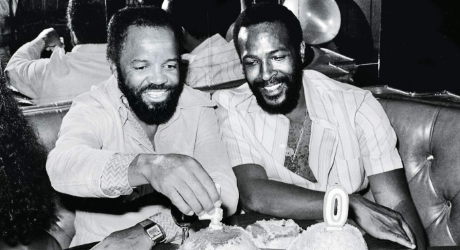
In the heart of 1960s Detroit, amidst the roar of the automotive industry, a different kind of assembly line was being perfected. Inside a small, unassuming house on West Grand Boulevard, a musical revolution was taking place. This was Motown Records, the creation of one visionary man, Berry Gordy. More than just a record label, Motown was a cultural phenomenon—a hit factory that broke down racial barriers, defined a generation, and created the “Sound of Young America.” It was the story of how a former boxer and auto worker took an $800 loan and built the most successful independent record label in history, launching the careers of musical giants like The Supremes, Stevie Wonder, Marvin Gaye, and The Temptations. The rise of Motown is a masterclass in business, creativity, and social change, built on a foundation of unforgettable facts.
1. It All Began with an $800 Family Loan
Every great empire has its origin story, and Motown’s is one of humble, bootstrap ambition. In 1959, Berry Gordy was a 29-year-old songwriter with a handful of hits for other artists under his belt, but he was frustrated with the meager royalty cheques. He knew the real power and profit lay in producing and owning the records himself. His friend and protégé, the young singer Smokey Robinson, urged him to start his own label. The only problem was capital. Gordy approached his family with his business plan, and after some deliberation, they agreed to help. He received an $800 loan from the “Ber-Berry” family co-op, a fund they had all paid into.
With that modest sum, Gordy founded Tamla Records, which would soon be incorporated as Motown Record Corporation. This small family loan was the seed money for what would become a multi-million-dollar empire. It’s a powerful reminder that Motown wasn’t born in a corporate boardroom; it was a family-backed dream. This initial investment from those who believed in him most gave Gordy the freedom to build his company his way, laying the groundwork for a business model that would soon take over the music world.
2. The Hit Factory Was a Converted Photography Studio
The legendary home of Motown Records was a former photography studio at 2648 West Grand Boulevard in Detroit. Gordy purchased the building in 1959 and, inspired by the city’s industrial spirit, hung a sign over the door that declared it “Hitsville U.S.A.” The name was both a bold statement of intent and a prophecy that would be spectacularly fulfilled. This two-storey house became the nerve centre of the entire operation, a place that buzzed with creative energy 24 hours a day.
The downstairs was converted into a small but powerful recording studio, affectionately known as “The Snakepit.” It was here that the iconic Motown Sound was forged. The upstairs was a hive of administrative activity, housing offices for publishing, sales, and A&R. Artists, songwriters, and musicians were constantly in and out, collaborating, rehearsing, and recording at all hours. This all-in-one model was incredibly efficient, allowing Gordy to oversee every aspect of the creative process. Hitsville U.S.A. was more than just a building; it was a music factory where raw talent was transformed into polished, chart-topping hits, all under one roof.
3. The Secret Weapon: An Unsung Band Called The Funk Brothers
While the singers were the glamorous faces of Motown, the true engine of the Motown Sound was a group of uncredited, underpaid, and unbelievably talented session musicians known as The Funk Brothers. This collective of Detroit’s finest jazz and blues musicians was the house band for nearly every Motown hit of the 1960s. They were the masters of groove, blending intricate rhythms, pulsing basslines, and soulful melodies that made the music impossible not to dance to. Members like bassist James Jamerson, drummer Benny Benjamin, and guitarist Robert White were musical geniuses who could turn a simple chord chart into a masterpiece.
Berry Gordy knew their value and kept them on retainer, ensuring a consistent, high-quality sound for all his productions. They would cram into the tiny “Snakepit” studio and lay down the tracks for songs like “My Girl,” “I Heard It Through the Grapevine,” and “Ain’t No Mountain High Enough.” Despite playing on more #1 hits than The Beatles, The Rolling Stones, The Beach Boys, and Elvis Presley combined, their names never appeared on the records. It wasn’t until the 2002 documentary Standing in the Shadows of Motown that The Funk Brothers finally received their long-overdue public recognition as the unsung heroes behind the hits.
4. Gordy’s “Assembly Line” Approach to Making Stars
Before founding Motown, Berry Gordy worked on the assembly line at the Lincoln-Mercury car plant in Detroit. He may have found the work repetitive, but he was deeply impressed by the efficiency of the process. He famously decided to apply the principles of automotive mass production to the creation of music. This assembly-line model became the backbone of Motown’s business strategy. He didn’t just sign artists; he manufactured stars.
The process began with raw material: talented young singers from the neighbourhoods of Detroit. They were then passed along the line. First came the songwriters and producers, like Holland-Dozier-Holland or Smokey Robinson, who would craft the perfect song for their voice. Next, they entered the studio with The Funk Brothers to record the track. Then came the crucial final stage: Artist Development. Here, artists were polished, taught how to walk, talk, and perform with elegance and grace. Just like a car, no artist left the factory until they had passed a rigorous quality control inspection. This systematic approach maximized efficiency and ensured a consistent, high-quality product every single time.
5. The Architects of the Sound: Holland-Dozier-Holland
While Berry Gordy was the visionary, the actual sound of Motown in its golden era was largely sculpted by the legendary songwriting and production team of Brian Holland, Lamont Dozier, and Eddie Holland, known as HDH. This trio was the creative powerhouse behind the label’s biggest acts, particularly The Four Tops and The Supremes. Between 1963 and 1967, Holland-Dozier-Holland wrote and produced a staggering number of hits, including ten of The Supremes’ twelve #1 singles like “Where Did Our Love Go” and “You Can’t Hurry Love.”
Their genius was in crafting songs with sophisticated melodic structures, unforgettable hooks, and emotionally resonant lyrics, all driven by the powerhouse rhythms of The Funk Brothers. They had an uncanny ability to create pop masterpieces that were both commercially irresistible and artistically brilliant. They were the master architects of the Motown Sound, building the framework that the artists and musicians would bring to life. The sheer volume and quality of their output made them the most successful songwriting team of the era and an indispensable component of the Motown hit machine.
6. The “Supreme Court” of Hits: The Quality Control Meetings
Berry Gordy had one overriding obsession: producing hit records. To ensure every release had the best possible chance of topping the charts, he instituted one of his most famous and effective business practices: the weekly Quality Control meeting. Every Friday morning, Gordy would assemble his top executives, producers, and songwriters to listen to the week’s new recordings. After each song was played, a vote was taken. The ultimate question was never “Is it a good song?” but rather, “If you were hungry and had your last dollar, would you buy the record or a hot dog?”
This process was a brutal, democratic meritocracy. It didn’t matter if the song was produced by a star like Smokey Robinson or a newcomer; if it didn’t pass the vote, it wouldn’t be released. These meetings were the final stage of the assembly line, a filter that ensured only the most commercial, catchy, and polished songs made it to the public. This relentless focus on what would sell was a key reason for Motown’s incredible strike rate on the charts, making them the envy of the entire music industry.
7. The “Finishing School” That Polished the Stars
A core part of Berry Gordy’s strategy was to create artists who could “cross over” to mainstream white audiences. He knew that talent alone wasn’t enough to break through the racial barriers of 1960s America. To achieve this, he established an in-house Artist Development department, affectionately known as the “Motown finishing school.” This department was run by the formidable Maxine Powell, a former etiquette instructor whose job was to turn rough-edged teenagers into polished, elegant performers.
Powell taught Motown’s artists how to walk, talk, and carry themselves with grace and sophistication, famously telling them they were preparing for “a command performance at the White House.” Meanwhile, legendary choreographer Cholly Atkins worked with groups like The Temptations and The Supremes, creating the slick, synchronized dance moves that became a Motown trademark. This intense focus on presentation and professionalism was designed to make the artists non-threatening and appealing to all audiences, ensuring that their image was as polished as their music. It was a deliberate and hugely successful strategy to present Black artists with unprecedented dignity on the world stage.
8. Smokey Robinson: The Label’s Creative Soul
While Berry Gordy was the business brain of Motown, his first major artist and closest collaborator, Smokey Robinson, was its creative soul. Their relationship was the bedrock upon which the label was built. It was Robinson who encouraged Gordy to start the company in the first place. As the lead singer of The Miracles, he delivered the label its first million-selling hit, “Shop Around,” in 1960. But his importance went far beyond his own incredible success as a performer.
Robinson was also a prolific and brilliant songwriter and producer for other Motown acts, penning classics like “My Girl” for The Temptations and “The Way You Do the Things You Do.” He became a vice president of the company before he was 25, and his creative instincts were so sharp that Gordy often deferred to his judgment. Robinson understood the heart of a great pop song like no one else. His poetic lyrics and sweet melodies helped define the romantic, optimistic side of the Motown Sound, making him arguably the most important single creative figure in the label’s history, second only to Gordy himself.
9. A Deliberate Strategy to Break Racial Barriers
In an era of deep racial segregation, Berry Gordy made a revolutionary business decision. He would market his music not as “rhythm and blues” or “Black music,” but as pop music for everyone. The label’s official slogan was “The Sound of Young America,” a deliberately inclusive phrase that erased racial lines. This was a conscious marketing strategy to get his records played on mainstream pop radio stations, which were often hesitant to play music by Black artists. Gordy famously designed Motown’s early album covers without pictures of the artists, so that white record buyers wouldn’t be deterred by the colour of their skin.
This strategy was profoundly successful. Motown’s infectious, universal themes of love and heartbreak resonated with teenagers of all races. The label became a beacon of Black success and entrepreneurship and a powerful force for cultural integration. Motown artists, presented with elegance and professionalism thanks to the finishing school, broke down barriers on television shows like The Ed Sullivan Show, bringing Black culture into white American living rooms in an unprecedented way. Motown didn’t just sell records; it sold a vision of a more integrated and hopeful America.
10. Unprecedented Chart Domination and Industry Firsts
The culmination of all these factors was a level of success that was simply staggering. Between 1960 and 1969, Motown placed an incredible 79 records in the top ten of the Billboard Hot 100 chart, an achievement for an independent label that has never been matched. At its peak, Motown was the most successful Black-owned business in America. The label was a hit-making machine, churning out #1s for a stunning roster of artists. The Supremes, led by Diana Ross, became the most successful female group in history with a string of twelve #1 hits.
The label was responsible for launching the careers of dozens of legends. The Jackson 5, Marvin Gaye, Stevie Wonder, The Four Tops, and Gladys Knight & the Pips all became household names under the Motown banner. This relentless chart domination proved that Berry Gordy’s assembly-line process worked. It cemented Motown’s place in history, not just as a successful record label, but as one of the most significant cultural forces of the 20th century.
Further Reading
To dive deeper into the incredible story of Motown and the visionary behind it, these books offer invaluable and captivating insights:
- To Be Loved: The Music, the Magic, the Memories of Motown by Berry Gordy – The essential autobiography from the man who started it all, offering his personal perspective on the rise and success of his legendary record label.
- Where Did Our Love Go?: The Rise and Fall of the Motown Sound by Nelson George – A critically acclaimed and comprehensive history of the label, placing the music within its broader social and cultural context.
- Standing in the Shadows of Motown: The Life and Music of Legendary Bassist James Jamerson by Dr. Licks (Allan Slutsky) – This book accompanies the famous film and is a brilliant tribute to the session musicians known as The Funk Brothers, focusing on the genius of their most important member.
- I’ll Be There: My Life with the Four Tops by Duke Fakir – A wonderful firsthand account from a founding member of one of Motown’s most beloved groups, offering an artist’s perspective on life inside the hit factory.
Here at Zentara.blog, our mission is to take those tricky subjects and unlock them, making knowledge exciting and easy to grasp for everyone. But the adventure doesn’t stop on this page! We’re constantly exploring new frontiers and sharing discoveries across the digital universe. Want to dive deeper into more mind-bending Top 10s and keep expanding your world? Come join us on our other platforms – we’ve got unique experiences waiting for you on each one!
Get inspired by visual wonders and bite-sized facts: See the world through Zentara’s eyes on Pinterest!
Pin our fascinating facts and stunning visuals to your own boards. Explore Pins on Pinterest: https://uk.pinterest.com/zentarablog/
Discover quick insights and behind-the-scenes peeks: Hop over to Tumblr for snippets, quotes, and unique content you won’t find anywhere else. It’s a different flavour of discovery! Follow the Fun on Tumblr: https://www.tumblr.com/zentarablog
Ready for deep dives you can listen to or watch? We’re bringing our accessible approach to video and potentially audio! Subscribe to our YouTube channel and tune into future projects that make learning pop! Subscribe on YouTube: https://www.youtube.com/@ZentaraUK
Seeking even more knowledge in one place? We’ve compiled some of our most popular topic deep dives into fantastic ebooks! Find them on Amazon and keep the learning journey going anytime, anywhere. Find Our Ebooks on Amazon: https://www.amazon.co.uk/s?k=Zentara+UK&ref=nb_sb_noss
Connect with us and fellow knowledge seekers: Join the conversation on BlueSky! We’re sharing updates, thoughts, and maybe even asking you what wonders we should explore next. Chat with Us on BlueSky: https://bsky.app/profile/zentarablog.bsky.social
Perfect for learning on the move! We post multiple 10-minute podcasts per day on Spotify. Pop on your headphones and fill your day with fascinating facts while you’re out and about! Listen on Spotify: https://open.spotify.com/show/3dmHbKeDufRx95xPYIqKhJFollow us on Instagram for bytesize knowledge! We post multiple posts per day on our official Instagram account. https://www.instagram.com/zentarablog/ Every click helps us keep bringing honest, accessible knowledge to everyone. Thanks for exploring with us today – see you out there in the world of discovery!




Leave a Reply