
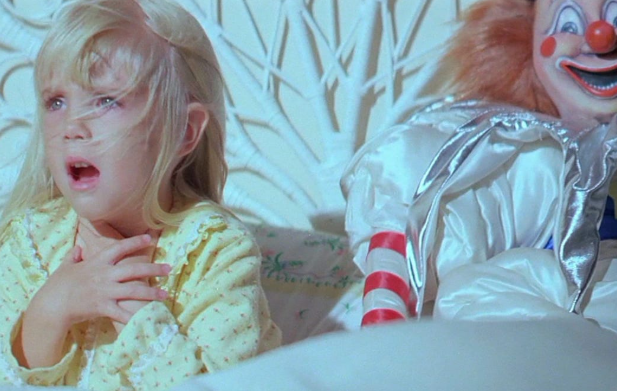
Beyond the Screen: 10 Bone-Chilling Facts About the Making of Poltergeist That Still Haunt Hollywood
The flickering blue light of a television set at midnight, the rhythmic sound of static, and a small child whispering three of the most terrifying words in cinema history: “They’re here.” Since its debut, this suburban nightmare has stood as a pillar of supernatural horror, blending the comforting warmth of Americana with the cold, visceral dread of the unknown. While many horror films rely on dark alleyways and gothic castles, this story brought the terror into the heart of the modern family home—into the very bedrooms where children sleep and the kitchens where families gather.
However, as the decades have passed, the legacy of this production has become inextricably linked to a series of events so unsettling that they have birthed one of the most persistent legends in the entertainment industry. The story of what happened behind the scenes is often cited as being just as frightening as what appeared on the silver screen. From technical mishaps that nearly turned fatal to tragic losses within the cast, the history of this film is a tapestry of creative genius and inexplicable misfortune. To understand why this masterpiece continues to resonate, one must look into the craftsmanship of its creators and the shadow that seemed to follow the production long after the cameras stopped rolling.
1. The Real Skeletons in the Swimming Pool
One of the most visceral and memorable sequences in the film occurs during the climax, when the mother of the family falls into an unfinished swimming pool during a torrential rainstorm. As she struggles to escape the muddy pit, several waterlogged corpses and skeletons float to the surface, surrounding her in a gruesome display of the supernatural. For years, audiences assumed these were high-quality medical models or props crafted by the special effects team. The truth, however, is far more disturbing.
In an era before high-fidelity plastic replicas were cheap and readily available, the production team discovered that purchasing real human remains from biological supply houses was actually more cost-effective than manufacturing realistic fakes. It was later revealed by cast members that the skeletons used in that iconic scene were genuine human remains. JoBeth Williams, the actress in the mud, reportedly had no idea she was swimming with actual skeletons until after the scene was completed. This revelation added a layer of macabre reality to her performance; her terror wasn’t just acting—it was a reaction to the genuine decay surrounding her. Many believers in the “supernatural” suggest that disturbing real remains in this manner was the primary catalyst for the perceived misfortunes that followed the production.
2. The Mysterious Case of the Dual Directors
The production is famous not just for its scares, but for a creative controversy that remains a topic of heated debate among film historians. While the credits officially list the director of The Texas Chain Saw Massacre as the man behind the lens, the presence of the film’s producer—the legendary architect of Jaws and E.T.—was so prominent on set that many questioned who was truly in charge. This “directorial mystery” suggests that the producer may have had a more hands-on role in the daily filming than typically expected.
Eyewitness accounts from the set describe a collaborative, albeit confusing, environment. Some cast members claimed that the producer was the one blocking shots and providing character direction, while the official director focused on the technical aspects and the darker, more visceral elements of the horror. The Directors Guild of America even launched an investigation into the matter at the time. Regardless of the official title, the film exists as a fascinating hybrid: it possesses the “suburban wonder” and family-centric heart of a classic blockbuster, spliced with the raw, jagged intensity of independent horror. This creative tension is likely why the film feels so unique; it is a tug-of-war between two very different cinematic philosophies.
3. The Tragic Origins of the “Poltergeist Curse”
No discussion of this film is complete without addressing the heavy shadow of the so-called “curse.” This legend is rooted in the untimely and tragic deaths of several key cast members. The most notable was the loss of the young actress who portrayed the youngest daughter. Her sudden passing due to a medical complication shortly after the third installment of the franchise wrapped production sent shockwaves through the industry. Her innocence had been the heart of the series, and her absence felt like a profound, inexplicable tragedy.
The loss was compounded by the death of the actress who played the eldest sister in the original film, who was a victim of a violent crime shortly after the first movie was released. While skeptics rightly point out that these events, though tragic, are coincidental in the context of a large production crew, the “curse” narrative has become a permanent part of the film’s folklore. It has reached a point where the legend almost overshadows the film’s artistic merits. For many, the tragedy of these young lives serves as a somber reminder of the fragility of life, casting a permanent pall over the “happy ending” the family achieves in the script.
4. The Tree That Almost “Ate” a Cast Member
The sequence where a gnarled, ancient tree comes to life and snatches a young boy through his bedroom window is a masterpiece of practical effects and childhood phobia. However, the filming of this scene nearly resulted in a real-world catastrophe. To achieve the effect of the tree “swallowing” the boy, a massive mechanical prop was constructed. During one of the takes, the mechanism malfunctioned while the young actor, Oliver Robins, was inside its “mouth.”
The mechanical arms of the tree began to tighten around the boy’s neck, causing him to genuinely choke. Initially, the crew believed his struggling was a brilliant bit of acting and continued to film. It wasn’t until his face began to change color that the producer and director realized something was horribly wrong. They rushed to the prop and pried the mechanical limbs off the actor just in time. This incident remains one of the most frightening “near-misses” in horror history. It underscores the dangers of the pre-CGI era, where massive hydraulic machines were often inches away from child actors, leaving very little room for error.
5. Spielberg’s Hands in the Mirror
One of the most effective jump scares in the film involves a paranormal investigator who, while standing in front of a bathroom mirror, begins to hallucinate that he is tearing his own face apart. It is a grueling, slow-burn sequence that transitions from a small scratch to the removal of entire chunks of flesh, revealing the skull beneath. While the makeup effects were groundbreaking, there is a hidden human element to the shot that many fans miss: the hands seen “tearing” the face are not those of the actor.
The producer was so concerned with the pacing and the specific “look” of the practical effect that he donned the prosthetic gloves himself. It is his hands that the audience sees performing the gruesome act. This level of involvement from such a high-profile filmmaker shows the dedication to the “gross-out” factor that the film required. By physically inserting himself into the movie’s most graphic scene, the producer ensured that the timing of the reveal was perfect. This “hands-on” approach is a testament to the meticulous nature of the production, where every frame was crafted to maximize the audience’s discomfort.
6. The Real-Life “Cheesman House” Inspiration
The screenplay for the film was not entirely a work of fiction; it was loosely based on a series of events that allegedly occurred in a home in Seaford, New York, during the late 1950s. Known as the “House of Bubbles” or the “Cheesman House,” the real-life family claimed that bottles were popping open on their own, furniture was moving, and strange noises echoed through the halls. The patriarch of the family even called in a detective and a parapsychologist to investigate the disturbances.
While the real-life events were far less explosive than the cinematic version—there were no portals to other dimensions or skeletons in the pool—the core idea of a modern, suburban home being invaded by the “old world” remained. The writers took the mundane dread of a family whose sanctuary had been violated and amplified it into a cosmic battle between the living and the dead. This connection to reality provides the film with an anchor of truth; even if the ghosts are fictional, the feeling of being unsafe in one’s own home is a very real human experience that many have felt during unexplained bumps in the night.
7. The Sub-Sonic Frequencies of Fear
The sound design of the film is a masterclass in psychological manipulation. The sound team didn’t just rely on screams and crashing objects; they utilized “infrasound.” These are low-frequency sounds that are below the range of human hearing but can still be physically felt by the body. Research has shown that exposure to these sub-sonic frequencies can induce feelings of anxiety, dread, and even the sensation that one is being watched.
By layering these frequencies into the audio mix of the “haunted” scenes, the filmmakers were able to trigger a biological fear response in the audience. You might not hear the ghost, but your body “feels” its presence. This technical trickery explains why the film remains so effective even when watched on a small screen. The soundscape creates a physical environment of tension that persists even during the quieter moments of the movie. It is an invisible layer of horror that works on a primal, evolutionary level, ensuring the viewer remains in a state of high alert from start to finish.
8. The Battle for the PG Rating
It is often a shock to modern viewers to realize that this film, with its face-peeling, child-snatching, and skeleton-filled pool, was originally released with a PG rating. Today, such content would almost certainly earn a restricted rating. The history of the film’s rating is a fascinating look at the politics of the film industry and the influence of high-profile creators.
Initially, the ratings board wanted to give the film an R-rating due to the intense nature of its scares. However, the production team successfully argued that because there was no profanity, no nudity, and very little “on-screen” blood (the face-peeling scene being an exception), the film was suitable for a general audience. This decision was a turning point in cinema history, as it helped highlight the need for a middle-ground rating—leading to the eventual creation of the PG-13 rating just a few years later. The fact that an entire generation of children was “traumatized” by seeing this film in theaters is a testament to how effectively it pushed the boundaries of what was considered “family-friendly” entertainment.
9. Real Paranormal Disturbances on Set
While many stories of haunted film sets are manufactured for publicity, several members of the crew insisted that strange things occurred during the months of filming. Lights would reportedly blow out for no reason, equipment would vanish and reappear in different rooms, and a general feeling of “heaviness” pervaded the soundstage. One specific instance involved the “TV people” static. During a late-night shoot, the television being used as a prop reportedly began to broadcast strange, distorted images that were not part of the planned feed.
The crew was already on edge due to the use of real skeletons and the intense subject matter, and these small, unexplained events served to heighten the tension. Whether these were actual paranormal events or simply the result of an exhausted crew working in a high-stress environment, the psychological impact was real. The fear seen on the faces of the actors in several scenes was bolstered by a genuine sense of unease that had settled over the entire production. This atmosphere of authentic anxiety was captured on film, giving the movie a “haunted” quality that feels impossible to replicate.
10. The Symbolism of the Static
In the era before digital streaming, the “snow” or static on a television screen was a common sight once a station stopped broadcasting for the night. The film turned this mundane technical artifact into a symbol of the afterlife. The “TV people” represented the idea that the spirits were all around us, existing in the frequencies and signals that we interact with every day. It was a brilliant subversion of modern technology, suggesting that our gadgets could serve as conduits for the ancient dead.
The history of this choice is rooted in the transition of American society. The film was made at a time when the television was becoming the undisputed “hearth” of the home. By making the TV the source of the evil, the filmmakers were tapping into a deeper social anxiety about the influence of media on the family unit. The “static” wasn’t just white noise; it was a void. This conceptual depth is why the image of a child touching the screen remains one of the most iconic images in the history of the genre. It captures the moment the boundary between our world and the “other side” finally dissolved.
Further Reading
- Shock Value: How a Few Eccentric Outsiders Gave Us Nightmares, Processed Our Traumas, and Redefined American Culture by Jason Zinoman A brilliant historical account of the 1970s and 80s horror revolution, including the creation of this film.
- The Poltergeist Curse: The Movie, The Deaths, The Prophecies by James Donahue A deep dive into the folklore and tragic events surrounding the franchise’s cast and crew.
- Steven Spielberg: A Biography by Joseph McBride Offers an in-depth look at the producer’s career and the specific controversies regarding his role on the set.
- 10 The Exorcist III (1990) Movie Facts You Didn’t Know
- 10 Scream (1996) Movie Facts That Changed Horror
- 10 Hostel (2005) Movie Facts That Shocked Viewers
- 10 Hellraiser (1987) Movie Facts That Built Its Legacy
- 10 Candyman (1992) Movie Facts That Still Give Chills
- 10 Essential Facts About The Texas Chainsaw Massacre (1974)
- 10 Essential Facts That Explain the World of The Walking Dead TV Show
- From – Season 1 Full Recap and Spoilers Explained
- 10 Things You Should Know About The Thing (1982) – Movie Facts and Hidden Details
- 10 Fascinating Supernatural Facts You Probably Missed – TV Show Lore



