
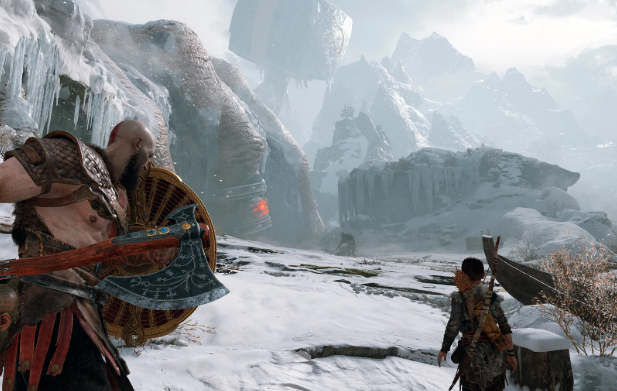
Beyond the Rage: 10 Untold Secrets Behind the God of War Norse Epic
The transformation of a character known primarily for unbridled fury into a stoic, grieving father is one of the most daring creative pivots in the history of interactive entertainment. When the team at Sony Santa Monica decided to revisit the story of Kratos, they weren’t just making a sequel; they were performing a total reconstruction of a cultural icon. This Norse-inspired journey discarded the fixed camera angles and button-mashing combat of the past in favor of a deeply personal, over-the-shoulder perspective that fundamentally changed how players experienced the Ghost of Sparta. It was a gamble that risked alienating a massive fan base, yet it resulted in a masterpiece of storytelling and technical wizardry. To understand the gravity of this achievement, one must look into the years of uncertainty, the technical “impossible” feats, and the emotional resonance that defined its production.
1. The “No-Cut” Cinematic Miracle
Perhaps the most ambitious technical feat in modern gaming is the decision to present the entire experience as a single, continuous camera shot. From the moment the game begins until the final credits roll, there are no traditional cinematic cuts, no loading screens, and no fades to black. This “one-shot” approach was championed by the creative director, who wanted to ensure that the player never felt a separation between the gameplay and the narrative. It creates an oppressive, intimate atmosphere where the camera feels like a third traveler on the journey.
Achieving this was a logistical nightmare for the development team. Every transition—whether Kratos was entering a new realm, initiating a boss fight, or simply opening a chest—had to be carefully choreographed within the engine. Traditional loading was hidden behind clever environmental interactions, such as walking through the mystic realm between worlds. This technique forced the animators and designers to rethink every aspect of the world’s layout, ensuring that the flow of movement remained unbroken. The result is a level of immersion that makes the world feel like a physical, persistent space rather than a series of disconnected levels.
2. The Battle Between Egypt and Scandinavia
Before the frozen wastes of Midgard were chosen as the setting, the creative team spent months debating where Kratos should go next. A significant portion of the early development was actually spent exploring Egyptian mythology. The team went as far as creating concept art featuring Kratos in the shadow of the Great Pyramids, facing off against Anubis and other desert deities. The allure of the Nile and the ancient Egyptian pantheon was strong, as it offered a stark visual contrast to the marble architecture of Greece.
Ultimately, the decision to pivot to Norse mythology was driven by the theme of isolation. The director felt that the Egyptian setting, while visually stunning, was “too busy” and populated for the intimate story of a father and son trying to find themselves. The vast, lonely forests and harsh winters of Scandinavia provided the perfect backdrop for Kratos to hide from his past. The Norse setting allowed for a “stranger in a strange land” dynamic that emphasized Kratos’s vulnerability and his desire to stay off the radar of the local gods, a narrative tension that might have been lost in the more sprawling civilization of ancient Egypt.
3. Redefining Kratos through Fatherhood
The evolution of Kratos from a one-note engine of destruction into a nuanced, protective father was inspired heavily by the personal lives of the creators. The director’s own experiences with fatherhood became the blueprint for the relationship between Kratos and Atreus. The goal was to show that Kratos hadn’t lost his capacity for violence, but rather that he had gained a reason to control it. This internal struggle—the fear that his son would inherit his “curse”—is the emotional engine that drives the entire plot.
To pull this off, the writers had to balance Kratos’s stoicism with subtle moments of warmth. They focused on “micro-interactions,” such as Kratos reaching out to comfort Atreus only to pull his hand away at the last second. These moments of hesitation speak volumes more than dialogue ever could. This version of Kratos is a man haunted by his history, viewing his godhood not as a gift, but as a shameful secret. This shift turned the series from a power fantasy into a cautionary tale about legacy and the difficulty of breaking cycles of violence.
4. Engineering the Leviathan Axe’s “Feel”
Replacing the iconic Blades of Chaos was considered a heresy by some early in development. The team knew that if they were going to give Kratos a new primary weapon, it had to feel revolutionary. The Leviathan Axe was designed with a focus on “weight and return.” The developers spent months perfecting the “recall” mechanic—the way the axe flies back into Kratos’s hand after being thrown. They discovered that the timing, the vibration of the controller, and the specific sound of the axe hitting the palm were critical to making the weapon feel powerful.
The axe serves as more than just a tool for combat; it is an extension of Kratos’s new identity. Unlike the wild, chaotic reach of his former blades, the axe requires precision and deliberate movement. It also functions as a puzzle-solving tool, allowing players to freeze machinery or hit distant targets. The “chunkiness” of the combat, where every hit feels like it has real physical resistance, was a deliberate departure from the faster, arcade-style action of the earlier entries. This grounded approach to combat mirrors Kratos’s attempt to live a more grounded, deliberate life.
5. The Performance Capture Leap: Christopher Judge
The change in the game’s tone necessitated a change in how the characters were brought to life. In previous eras, voice acting and motion capture were often handled separately. For this reimagining, the studio utilized full performance capture, where the actor’s voice, facial expressions, and body movements were recorded simultaneously. This required an actor who possessed both the physical presence of Kratos and a deep, resonant voice capable of carrying immense emotional weight. Christopher Judge was selected for his ability to convey a world-weary gravity.
The chemistry between Judge and Sunny Suljic (who played Atreus) was the key to the game’s success. Because they performed their scenes together on the motion-capture stage, their relationship developed naturally. Judge often treated Suljic like a son on set, and that genuine bond translated directly into the digital characters. This method allowed for subtle performances—a quiver in the lip or a glance of disapproval—that would have been impossible with traditional animation. It elevated the production to the level of high-end cinema, proving that video game characters could deliver award-winning dramatic performances.
6. Bear McCreary’s Nordic Soundscape
The musical identity of the franchise had always been defined by bombastic brass and aggressive choirs. When composer Bear McCreary was brought on board, he was tasked with reinventing that sound while maintaining its epic scale. He moved away from the Mediterranean sounds of the past and immersed himself in Northern European folk music. He utilized rare instruments like the nyckelharpa and the Hardanger fiddle to give the score a scratchy, ancient, and “wooden” quality that matched the forest setting.
McCreary also focused on character-driven themes. The main theme of the game is built on a simple, three-note motif that represents Kratos’s strength and his burden. Conversely, “Memories of Mother,” the theme for the late Faye, provides a haunting, melodic counterpoint that reminds the player of the emotional void at the heart of the family. The use of Icelandic choirs, singing in Old Norse, added an authentic layer of mythological weight. The music doesn’t just accompany the action; it acts as a narrator, signaling the shifts in the characters’ internal states.
7. The Secret of the World Serpent
One of the most awe-inspiring moments in the game is the reveal of Jörmungandr, the World Serpent. Bringing a creature of that scale to life presented a massive challenge for the design team. The serpent is so large that it effectively becomes a part of the environment, with its body wrapping around the entire Lake of Nine. To make the serpent feel truly “titanic,” the sound team experimented with low-frequency vibrations that players can feel through their speakers or headsets before they even see him.
The Serpent’s language was another layer of detail. The team worked with linguists to create a “rumbling” dialect of Old Norse that felt ancient and non-human. Interestingly, the Serpent serves as a bridge between the past and the future of the series’ lore. His presence in the lake, and his knowledge of Atreus, hints at the complex time-bending nature of Norse mythology. The technical effort to render his scales and the fluid motion of his massive body in the water remained one of the studio’s proudest achievements during the five-year development cycle.
8. Creating Atreus: The “Non-Annoying” Companion
Companion characters in action games are notoriously difficult to design; they often get in the way, repeat dialogue, or feel like a burden to the player. The developers were terrified of this “escort mission” stigma. They spent a vast amount of time ensuring that Atreus was an asset rather than a liability. He was designed to be “invisible” when the player didn’t need him, but highly effective when called upon.
Atreus’s role in combat is substantial; his bow can stun enemies, create openings, and provide crowd control. More importantly, he acts as the player’s guide to the world’s lore. Since Kratos cannot read the Norse runes, Atreus becomes the translator, making his presence essential for understanding the story. The AI was programmed to stay out of the player’s path while still feeling active and engaged in the environment. This technical balance ensured that the player felt a protective bond with the boy, rather than frustration, which was vital for the narrative’s emotional payoff.
9. The Five-Year Documentary: “Raising Kratos”
The development of this title was famously documented in a feature-length film called Raising Kratos. It revealed just how close the project came to disaster multiple times. The film shows the immense pressure on the director and the studio to deliver a hit after a long period of silence. There were moments during development where the combat didn’t feel right, the “no-cut” camera was breaking the game engine, and the studio executives were skeptical of the new direction.
This transparency provided fans with a rare look at the “human cost” of AAA game development. It highlighted the sheer number of people required to build a world of this scale—from the artists who spent months on a single troll to the programmers who had to fix thousands of bugs created by the seamless transitions. Seeing the raw, emotional reactions of the team during the first public reveal showed that this wasn’t just a product; it was a deeply personal labor of love that nearly broke the people who made it.
10. The Lore of the “Ghost of Sparta” in a New World
Despite being a fresh start, the game is deeply respectful of its history. The decision to keep the “Blades of Chaos” hidden until a pivotal moment in the second act was one of the most well-guarded secrets in the industry. The return of the blades isn’t just a fan-service moment; it represents Kratos’s acceptance that he cannot outrun his past. He must pick up the tools of his old, violent self to save his son’s future.
This thematic bridge connects the Greek and Norse eras perfectly. The game reveals that the Greek world still exists as a distant land, and Kratos’s reputation as the “Ghost of Sparta” has preceded him even to the frozen north. By incorporating artifacts and references to his former life, the developers created a sense of a “unified mythology” where different pantheons coexist in the same world. This world-building suggests a much larger universe and sets the stage for a saga that explores how different cultures and gods interact, all through the eyes of a man who once destroyed them all.
Further Reading
- The Art of God of War by Sony Santa Monica StudioA stunning visual journey through the concept art and design iterations that birthed the Norse realms.
- God of War: The Official Novelization by J.M. BarlogWritten by the director’s father, this novel provides internal monologues and deeper lore not found in the game.
- Norse Mythology by Neil GaimanThe perfect companion for understanding the source material and the gods like Thor, Odin, and Baldur.
- Lore and Legends: A God of War Retrospective by Sony InteractiveA detailed guide to the runes, history, and myths discovered by Atreus during their travels.
- 10 Things You Should Know About The Making Of And History Of The Video Game – Diablo II
- 10 Things You Should Know About The Making Of And History Of The Video Game – God of War (2018)
- 10 Things You Should Know About The Making Of And History Of The Video Game – The Legend of Zelda: Ocarina of Time
- 10 Things You Should Know About The Making Of And History Of The Video Game – Portal 2
- 10 Essential Facts About Assassin’s Creed (2007) – Video Game Facts
- 10 Essential Facts About Mortal Kombat 2 – Video Game (1993)
- 10 Essential Facts About the Making and History of ARK: Survival Evolved – Video Game Lore
- 10 Essential Facts About the Making and History of Tomb Raider (1996) – Video Game Lore
- 10 Essential Facts About the Making and History of Mario Kart – Video Game Lore
- 10 Things You Should Know About Skyrim – Video Game



