
When we think of the great hubs of innovation, our minds often drift to Silicon Valley, Edison’s bustling labs, or perhaps the industrial heartlands of Western Europe. The Soviet Union, a sprawling, enigmatic superpower that dominated much of the 20th century, is more frequently associated with stark monolithic architecture, military parades in Red Square, and the intense rivalry of the Cold War. Yet, behind the Iron Curtain, a remarkable story of scientific and technological ingenuity was unfolding. Driven by a unique blend of ideological ambition, military necessity, and sheer intellectual brilliance, Soviet scientists and engineers produced a cascade of inventions that have profoundly, and often quietly, shaped our modern world.
From the blinking light of the first satellite in the night sky to the very code that powers one of the world’s most beloved video games, the Soviet legacy is embedded in the fabric of our daily lives in ways many of us fail to realise. This was a system that, for all its faults, poured immense resources into science and education, fostering a generation of thinkers who were challenged to solve monumental problems with, at times, limited resources. Their solutions were often elegant, robust, and years ahead of their time. Join us as we pull back the curtain on this forgotten chapter of innovation and explore the top 10 most important Soviet inventions you might not know about—discoveries that reach from the depths of the atom to the far-flung cosmos.
1. The Artificial Satellite: Sputnik’s Celestial Beacon
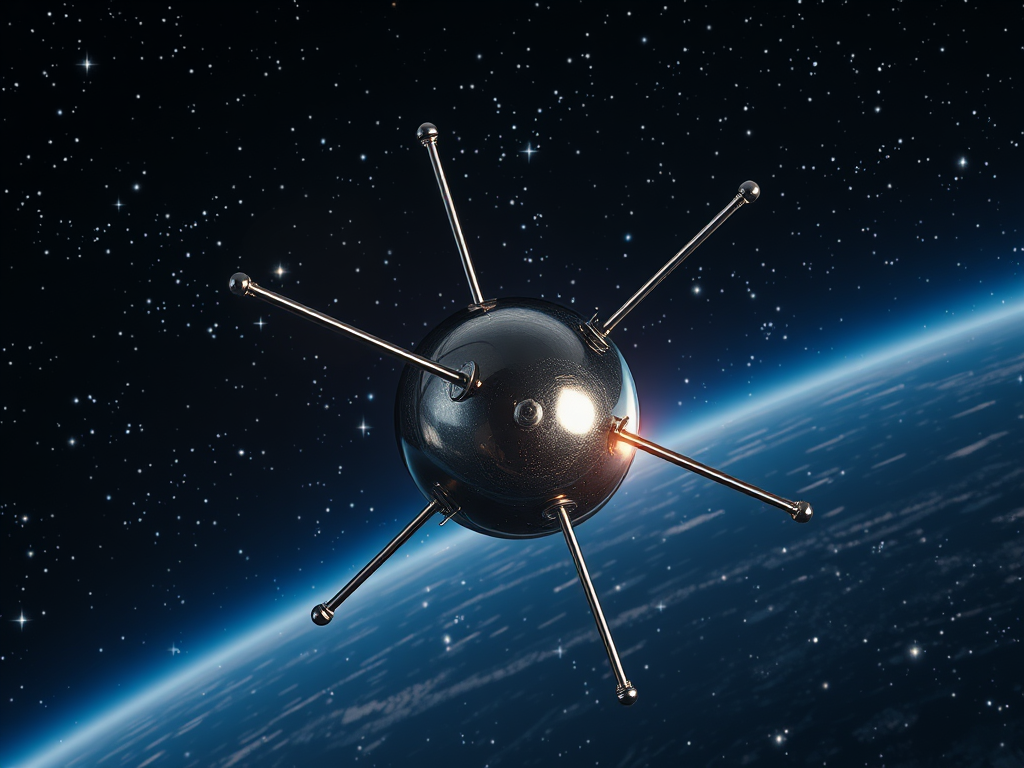
On October 4, 1957, the world changed forever. As dusk settled across the globe, a new, man-made star began its silent, steady march across the heavens. This was Sputnik 1, the first artificial satellite, a polished metal sphere just 23 inches in diameter with four long antennas trailing behind it. Launched by the Soviet Union, its incessant, otherworldly beeping, picked up by amateur radio operators everywhere, was a wake-up call to the world, and particularly to the United States. It was a stunning announcement that a new age had dawned: the Space Age.
The creation of Sputnik was not just a technological triumph; it was a masterstroke of vision and engineering led by the enigmatic Chief Designer, Sergei Korolev. The satellite itself was simple, a container for a radio transmitter powered by batteries. Its genius lay in its existence. It proved that humanity could break the bonds of Earth’s gravity and place an object in a stable orbit. This singular achievement catalysed the Space Race, a period of intense competition that would accelerate technological development at an unprecedented rate. It directly led to the creation of NASA, the push for science and engineering education in the West, and ultimately, the lunar landings. Every GPS navigation system, every satellite weather forecast, every live international television broadcast owes its existence to the fundamental principle demonstrated by that lonely, beeping sphere.
2. Tokamak: Taming the Power of a Star
Imagine holding a miniature sun in a magnetic bottle. That, in essence, is the breathtakingly ambitious goal of nuclear fusion research, and at its very heart lies a Soviet invention: the Tokamak. Conceived in the 1950s by physicists Igor Tamm and Andrei Sakharov, the Tokamak is a donut-shaped device that uses a powerful magnetic field to confine plasma—a superheated state of matter—in a stable torus. The idea is to heat this plasma to temperatures hotter than the core of the sun, forcing atomic nuclei to fuse together and release immense amounts of energy.
The term “Tokamak” is a Russian acronym for “toroidal chamber with magnetic coils” (тороидальная камера с магнитными катушками). The brilliance of its design was its ability to solve the critical problem of plasma stability, an issue that had plagued earlier fusion reactor designs. By creating a twisted magnetic field, the Soviet scientists were able to keep the volatile plasma from touching the reactor walls, which would instantly cool it and halt the reaction. The success of their T-3 Tokamak in the late 1960s produced results so impressive that the international scientific community, initially sceptical, was forced to take notice. Today, the Tokamak design is the leading candidate for future fusion power plants, with the massive international ITER project in France being its direct descendant. This Soviet concept may one day unlock a clean, virtually limitless source of energy for all humanity.
3. The Light Emitting Diode (LED): An Unsung Pioneer’s Glimmer of Light
Every time you look at a modern television screen, a digital clock, or the flashlight on your smartphone, you are witnessing the legacy of a brilliant, and tragically overlooked, Soviet scientist named Oleg Losev. While the practical, widespread use of LEDs was pioneered in the West decades later, it was Losev who, back in the 1920s, first discovered and systematically studied the phenomenon of electroluminescence from a solid-state diode. Working with silicon carbide crystals in his laboratory, he noticed that when a current was passed through them, they emitted a faint greenish light.
Losev had, in effect, created the first light-emitting diode. He published numerous papers on his discovery in Soviet, German, and British journals between 1924 and 1941, meticulously detailing his research. He even proposed a theory for how the light was being generated, a remarkable insight given that the principles of quantum mechanics were still in their infancy. He even built practical applications, using his crude LEDs to generate light. Unfortunately, his groundbreaking work was largely ignored. The scientific establishment was focused on vacuum tube technology, and the potential of these faint, “cold” lights was not recognised. Losev tragically died of starvation in 1942 during the Siege of Leningrad, his pioneering work all but forgotten until the semiconductor revolution brought his discoveries back into the light.
4. The Ekranoplan: The Caspian Sea Monster
Skimming just meters above the waves at speeds approaching that of an aircraft, the Ekranoplan was a vehicle born from the unique geography and military ambitions of the Soviet Union. Neither a plane nor a ship, but a hybrid of the two, this colossal machine utilised an aerodynamic principle known as the “ground effect.” By flying extremely close to a flat surface—like the vast expanse of the Caspian Sea—a cushion of high-pressure air is created between the wings and the surface, dramatically increasing lift and reducing drag. This allowed the Ekranoplan to carry immense payloads at incredible speeds with surprising fuel efficiency.
Developed in the 1960s under the direction of designer Rostislav Alexeyev, the largest of these craft, the KM (short for Korabl-Maket or “Ship-Prototype”), was dubbed the “Caspian Sea Monster” by Western intelligence agencies after they spotted it on satellite images. It was a true behemoth, over 100 meters long and weighing over 540 tons. The Soviets envisioned these ground-effect vehicles as perfect for rapid troop deployment and as missile launch platforms, capable of flying below enemy radar to deliver a surprise attack on naval fleets. While the collapse of the Soviet Union curtailed the full development of the Ekranoplan program, the concept remains a testament to audacious, out-of-the-box Soviet engineering.
5. Radial Keratotomy: A Sharper Vision for the World
The genesis of modern laser eye surgery can be traced back to an accidental discovery by the pioneering Soviet ophthalmologist Svyatoslav Fyodorov in the 1970s. The story goes that a young boy who had fallen and broken his glasses had shards of glass embedded in his cornea. After Fyodorov removed the glass, he was astonished to find that the boy’s nearsightedness had significantly improved. He theorised that the microscopic cuts on the cornea had altered its shape, changing the way light was focused onto the retina.
This insight led him to develop a procedure he called Radial Keratotomy (RK). Using a diamond knife, Fyodorov made a series of precise, radial incisions on the cornea, causing its central part to flatten and correcting myopia (nearsightedness). He turned the procedure into an efficient, assembly-line-like process in his Moscow clinic, treating thousands of patients and popularising the idea of refractive surgery. While RK has largely been superseded by more advanced and predictable laser-based techniques like LASIK, Fyodorov’s fundamental concept—that physically reshaping the cornea could correct vision—was revolutionary. He laid the essential groundwork and proved the viability of a field that has since given clear vision to millions worldwide.
6. The First Mobile Phone: Leonid Kupriyanovich’s Walkie-Talkie Phone
Long before the bulky “brick phones” of the 1980s, a Soviet engineer named Leonid Kupriyanovich was already demonstrating a truly portable mobile telephone. In 1957, he unveiled his “LK-1,” a device that could connect to a local base station and make calls to any landline number within a range of 20-30 kilometres. While the initial model weighed a hefty 3 kilograms, it was a remarkable achievement for its time. It was a wearable, automatic radiophone, a direct precursor to the cellular technology we all carry in our pockets today.
Kupriyanovich was relentless in his quest for miniaturisation. By 1961, he had developed a model that weighed a mere 70 grams and could comfortably fit in the palm of a hand. He was granted a patent for his “Radio-telephony Communication Device” and wrote extensively about his vision for a widespread mobile network, predicting that cars would be equipped with them and that they would become an everyday personal item. Soviet journals of the era even reported on plans to begin mass production. For reasons that remain debated—perhaps due to the military’s prioritisation of a different mobile system or the immense cost of building the required infrastructure—the project never reached commercialisation. Nevertheless, Kupriyanovich’s work in the late 1950s represents one of the earliest and most complete conceptualisations of a handheld mobile phone network.
7. Cherenkov Radiation: The Blue Glow of a Nuclear Age
In the eerie, submerged world of a nuclear reactor core, a brilliant blue glow illuminates the water. This is not science fiction; it is a real physical phenomenon known as Cherenkov radiation, and its discovery earned Soviet physicist Pavel Cherenkov the Nobel Prize in 1958, alongside his colleagues Igor Tamm and Ilya Frank who provided the theoretical explanation. In 1934, while studying the effects of gamma rays on liquids, Cherenkov noticed a faint, bluish light that persisted even when the sources of fluorescence were removed.
What he was observing was the subatomic equivalent of a sonic boom. When a charged particle, such as an electron, travels through a dielectric medium (like water) at a speed greater than the speed of light in that medium, it creates a shockwave of light. This is possible because while nothing can exceed the speed of light in a vacuum, light itself slows down when it passes through materials like water or glass. Cherenkov radiation has become an invaluable tool in particle physics. Huge detectors, often filled with thousands of tons of purified water and lined with light sensors, use this effect to detect and measure the properties of high-energy particles like neutrinos. It allows scientists to “see” the invisible, making it a cornerstone of modern experimental physics and our understanding of the universe.
8. Synthetic Rubber: Driving the Industrial Machine
In the early 20th century, rubber was a critical strategic material, essential for everything from tires to industrial machinery. However, natural rubber supplies were vulnerable and often controlled by foreign powers. For the nascent Soviet Union, determined to achieve industrial self-sufficiency, developing a viable method for producing synthetic rubber was a national priority. The challenge was taken up by the chemist Sergei Lebedev.
After years of dedicated research, Lebedev and his team developed a commercially viable method for synthesising rubber from butadiene, which in turn could be produced from ethanol derived from potatoes or grain. His process, known as the Lebedev process, became the foundation of the world’s first large-scale industrial production of synthetic rubber. In 1932, the Soviet Union opened its first synthetic rubber plant, years ahead of other industrialised nations. This breakthrough was of immense importance, freeing the Soviet economy and, crucially, its military machine from dependence on foreign rubber imports. It played a vital role in the Soviet war effort during World War II, ensuring that its tanks, trucks, and aircraft had the tires they needed to function. Lebedev’s work laid the groundwork for the modern synthetic rubber industry we rely on today.
9. Space Medicine and Life Support: The Unseen Science of Manned Flight
Sending the first human into space was more than just a rocketry problem; it was a profound biological and medical challenge. How would the human body react to the extreme forces of launch, the strange new environment of weightlessness, and the hazards of cosmic radiation? The Soviet Union, in its push to put Yuri Gagarin into orbit with the Vostok programme, became the world’s foremost pioneer in the field of space medicine.
Soviet scientists at institutions like the Institute for Biomedical Problems conducted extensive research, often using dogs as test subjects, to understand and mitigate the physiological effects of spaceflight. They developed sophisticated life support systems to manage the air, temperature, and pressure inside a tiny capsule. They designed the first effective space suits, created exercise regimens to combat muscle and bone density loss on long-duration missions, and developed psychological support strategies for cosmonauts. This vast body of research, from understanding cardiovascular deconditioning to developing closed-loop life support systems, not only made human space exploration possible but also had terrestrial applications, advancing our understanding of human physiology in extreme environments.
10. Tetris: The Perfect Puzzle That Escaped the Iron Curtain
It is perhaps the most unlikely invention on this list, a creation not of heavy industry or military might, but of pure, elegant logic. In 1984, in a quiet office at the Soviet Academy of Sciences in Moscow, a computer scientist named Alexey Pajitnov created a simple but fiendishly addictive puzzle game. Using a primitive Electronika 60 computer, he designed a program where different geometric shapes, each composed of four squares (called tetrominoes), fall from the top of the screen. The player’s task is to rotate and move these blocks as they fall, arranging them into solid horizontal lines, which then disappear. He called it Tetris.
The game’s genius lies in its simplicity and its appeal to our innate desire to create order out of chaos. It spread like wildfire among programmers in the Soviet bloc, passed from floppy disk to floppy disk. Its journey to the West was a complex saga of tangled licensing deals and Cold War-era intrigue, but it eventually found its way onto the Nintendo Game Boy, where it became a global phenomenon. Tetris is a cultural touchstone, a perfect example of how a brilliant idea can transcend borders and ideologies. It is a piece of Soviet ingenuity that has been played and loved by hundreds of millions of people, a simple game that brought a moment of joyful order to a complex world.
Further Reading
For those interested in delving deeper into the fascinating history of Soviet science and technology, these books offer accessible and enlightening perspectives:
- Red Plenty by Francis Spufford – A unique and highly readable “history-as-novel” that captures the spirit and ambition of the Soviet scientific-technical project during the Khrushchev era.
- The Chief Designer: Sergei Korolev and the Race to the Moon by Yaroslav Golovanov – A comprehensive biography of the secretive genius behind the Soviet space program, offering incredible insight into the challenges and triumphs of Sputnik and the Vostok programme.
- Stalin and the Bomb: The Soviet Union and Atomic Energy, 1939-1956 by David Holloway – A detailed and authoritative account of how the Soviet Union developed its nuclear capabilities, highlighting the interplay of science, espionage, and politics.
- Buran: The Soviet Space Shuttle by Yefim Gordon and Dmitriy Komissarov – A deep dive into one of the most ambitious and technologically advanced projects of the late Soviet era, showcasing the incredible engineering prowess of the Soviet aerospace industry.
Here at Zentara.blog, our mission is to take those tricky subjects and unlock them, making knowledge exciting and easy to grasp for everyone. But the adventure doesn’t stop on this page! We’re constantly exploring new frontiers and sharing discoveries across the digital universe. Want to dive deeper into more mind-bending Top 10s and keep expanding your world? Come join us on our other platforms – we’ve got unique experiences waiting for you on each one!
Get inspired by visual wonders and bite-sized facts: See the world through Zentara’s eyes on Pinterest!
Pin our fascinating facts and stunning visuals to your own boards. Explore Pins on Pinterest: https://uk.pinterest.com/zentarablog/
Discover quick insights and behind-the-scenes peeks: Hop over to Tumblr for snippets, quotes, and unique content you won’t find anywhere else. It’s a different flavour of discovery! Follow the Fun on Tumblr: https://www.tumblr.com/zentarablog
Ready for deep dives you can listen to or watch? We’re bringing our accessible approach to video and potentially audio! Subscribe to our YouTube channel and tune into future projects that make learning pop! Subscribe on YouTube: https://www.youtube.com/@ZentaraUK
Seeking even more knowledge in one place? We’ve compiled some of our most popular topic deep dives into fantastic ebooks! Find them on Amazon and keep the learning journey going anytime, anywhere. Find Our Ebooks on Amazon: https://www.amazon.co.uk/s?k=Zentara+UK&ref=nb_sb_noss
Connect with us and fellow knowledge seekers: Join the conversation on BlueSky! We’re sharing updates, thoughts, and maybe even asking you what wonders we should explore next. Chat with Us on BlueSky: https://bsky.app/profile/zentarablog.bsky.social
Perfect for learning on the move! We post multiple 10-minute podcasts per day on Spotify. Pop on your headphones and fill your day with fascinating facts while you’re out and about! Listen on Spotify: https://open.spotify.com/show/3dmHbKeDufRx95xPYIqKhJFollow us on Instagram for bytesize knowledge! We post multiple posts per day on our official Instagram account. https://www.instagram.com/zentarablog/ Every click helps us keep bringing honest, accessible knowledge to everyone. Thanks for exploring with us today – see you out there in the world of discovery!

Leave a Reply