
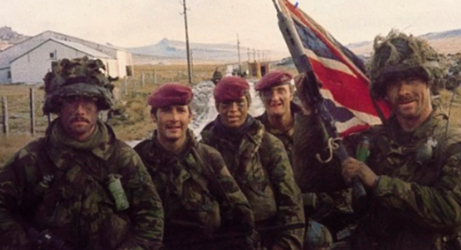
The 1982 Falklands War, a brief but brutal ten-week conflict over a remote South Atlantic archipelago, was a seismic event for both the United Kingdom and Argentina. It was a war that seemed to come out of nowhere, a 19th-century colonial dispute that had exploded in the late 20th century. When it was over, the immediate result was clear: a British military victory. However, the long-term consequences of those 74 days of fighting were far more complex, profound, and asymmetrical, setting both nations on dramatically different political and social trajectories.
For Britain, the victory was a much-needed shot in the arm, reversing a post-imperial narrative of decline and catapulting its Prime Minister into the political stratosphere. For Argentina, the humiliating defeat was a national trauma that shattered the prestige of its ruling military junta and, paradoxically, paved the way for a democratic future. The war’s shockwaves rippled through their national psyches, military doctrines, and international standing, leaving a legacy that is still being debated and felt today. Here are the top 10 ways the Falklands War impacted the United Kingdom and Argentina.
1. The Thatcher Phenomenon: Cementing a Political Legacy in Britain
Before the Argentine invasion on April 2nd, 1982, British Prime Minister Margaret Thatcher was deeply unpopular. Her government was battling a severe economic recession, soaring unemployment, and widespread public discontent. Her approval ratings were dismal, and she was widely expected to lose the next general election. The Falklands War changed everything. Thatcher’s resolute and decisive response to the invasion—dispatching a naval task force 8,000 miles to retake the islands—rallied the nation and transformed her public image.
Overnight, she went from being a divisive and struggling leader to the “Iron Lady,” a determined war leader who had stood up to aggression and restored British pride. The successful outcome of the war created a powerful “Falklands Factor,” a surge of patriotic support that propelled her to a landslide victory in the 1983 general election. This victory gave her the political capital to push through her controversial and transformative economic and social policies, including the privatization of state-owned industries and the confrontation with the trade unions. Without the Falklands War, the “Thatcher Revolution” that defined 1980s Britain might never have happened, making the conflict one of the most significant turning points in modern British political history.
2. The Junta’s Collapse: Ushering in Democracy for Argentina
While the war cemented a leader’s power in Britain, it utterly destroyed the ruling regime in Argentina. The military junta, led by General Leopoldo Galtieri, had launched the invasion for cynical political reasons: to distract from a collapsing economy, horrific human rights abuses, and their own dwindling popular support. They gambled that a quick, successful reclamation of the “Malvinas,” a deeply ingrained national cause, would unite the country behind them in a wave of patriotic fervour. Initially, this worked, with massive crowds cheering the invasion in the Plaza de Mayo.
However, the gamble backfired spectacularly with the swift and humiliating military defeat. The very armed forces that had presented themselves as the nation’s protectors were exposed as incompetent and ill-prepared. The defeat shattered their prestige and credibility, unleashing a torrent of public anger. Galtieri was forced to resign in disgrace just days after the surrender. The war discredited military rule so completely that it accelerated the transition to civilian government. In 1983, Argentines voted in free and fair elections, leading to the inauguration of President Raúl Alfonsín. In a profound paradox, the military’s greatest gamble to retain power became the direct catalyst for its downfall and the restoration of democracy in Argentina.
3. The “Falklands Factor”: A Reversal of British National Decline
In the decades following World War II and the dissolution of its empire, Britain was often seen as a nation in a state of managed decline, grappling with economic problems and a diminished role on the world stage. This narrative of post-imperial malaise was widespread. The Falklands War, for many Britons, dramatically reversed this perception. The successful military operation, conducted at extreme range without direct American assistance, was seen as a remarkable feat of arms and logistics. It was a source of immense national pride.
The victory created a powerful sense of renewed confidence and patriotism, often referred to as the “Falklands Factor.” It suggested that Britain was still a major player on the world stage, capable of projecting force and defending its interests. This psychological boost had a significant impact on the national mood throughout the 1980s. While some critics decried this as a wave of jingoism, for many, it was a moment that helped the country shed its post-colonial anxieties and rediscover a sense of self-assurance. It was a clear, unambiguous victory that seemed to prove that Britain was not a nation in irreversible decline.
4. A Deep National Trauma and the “Malvinas Question” in Argentina
For Argentina, the defeat was a profound national trauma. The initial euphoria of the invasion quickly gave way to the shock and shame of a swift surrender. The war left deep scars on the national psyche, a collective wound of humiliation and loss. The fate of the poorly equipped and badly led conscripts, many of whom suffered terribly during the conflict, became a source of lasting anger and sorrow. The war also exposed the dishonesty of the junta, which had fed the public a stream of propaganda about glorious victories right up until the final defeat.
This trauma ensured that the “Cuestión Malvinas” (the Malvinas Question) would become even more deeply entrenched in Argentina’s political and cultural identity. While the war discredited military solutions, it intensified the country’s emotional and diplomatic commitment to its sovereignty claim. The war’s fallen soldiers are revered as national heroes, and the desire to see the islands under Argentine control remains a near-unanimous national consensus, enshrined in the country’s 1994 constitution. Unlike in Britain, where the war is often seen as a historical victory, in Argentina, it is a living, unresolved issue—a symbol of loss and an enduring aspiration.
5. Modernizing the Military: Lessons in Blood for Both Sides
The Falklands War was a conventional conflict fought with modern, high-tech weaponry, and it provided a brutal testing ground that had profound impacts on the armed forces of both nations. The Royal Navy, in particular, learned hard and bloody lessons. The sinking of HMS Sheffield by a French-made Exocet missile was a wake-up call to the vulnerability of modern surface ships to sea-skimming missiles. The loss of several other ships to Argentine air attacks highlighted critical shortcomings in air defence and the need for airborne early warning systems. The lessons learned in the South Atlantic directly influenced British naval design, weapons procurement, and military doctrine for decades to come.
For Argentina, the war exposed the deep flaws within its military. While its pilots showed incredible bravery and skill, the armed forces were plagued by inter-service rivalry, poor leadership, and logistical failures. The army, largely composed of ill-equipped conscripts, was no match for the professional British soldiers. In the democratic era that followed, the Argentine military was drastically reformed, downsized, and brought under firm civilian control. Its role was redefined to focus on national defence, moving away from the internal security and political intervention that had characterized the junta years.
6. The “Fortress Falklands” Policy and the Islanders’ Future
Before 1982, the Falkland Islands were a forgotten colonial remnant with a tiny population, and the British government had been quietly negotiating with Argentina over a potential transfer of sovereignty for years. The invasion and subsequent war changed this irrevocably. The British victory was framed as a liberation of the islanders and a defence of their right to self-determination. This created a powerful political and moral obligation for Britain to guarantee their security and respect their wishes.
In the aftermath of the war, Britain adopted a “Fortress Falklands” policy. It invested heavily in the islands’ defence, constructing a major military base at RAF Mount Pleasant and stationing a significant permanent garrison of troops, fighter jets, and naval assets. This commitment put a definitive end to any discussions about sovereignty transfer against the islanders’ will. Economically, the war transformed the islands from a stagnant sheep-farming economy into a prosperous, self-sufficient community, largely thanks to the sale of lucrative fishing licenses in their territorial waters. The war secured the islanders’ British identity and gave them a prosperous and secure future they could never have imagined before 1982.
7. Diplomatic Isolation and a Shift in Argentine Foreign Policy
The Argentine junta’s invasion of the Falklands was a diplomatic disaster. They had expected support from the United States and believed other nations would remain neutral. Instead, the invasion was widely condemned as an act of aggression. The United Nations Security Council passed Resolution 502, demanding an immediate withdrawal of Argentine forces. The United States, after a brief attempt at mediation, sided firmly with its NATO ally, Britain, providing crucial intelligence and logistical support. Most European nations also backed Britain and imposed sanctions on Argentina.
This diplomatic isolation was a shock to the junta. In the democratic era that followed, Argentina’s foreign policy underwent a significant shift. While holding firm on the Malvinas claim, successive governments sought to reintegrate Argentina into the international community and improve relations with the United States and Europe. The country largely abandoned the aggressive, unilateral approach of the junta, choosing instead to press its sovereignty claim through diplomatic channels at the UN and other international forums. The war taught Argentina a harsh lesson about the consequences of violating international norms.
8. The UK-US “Special Relationship” Reaffirmed
In the lead-up to the war, the “Special Relationship” between the United Kingdom and the United States appeared to be on uncertain ground. However, the conflict ultimately served to strengthen the personal and political bond between Margaret Thatcher and US President Ronald Reagan. While the Reagan administration was initially split, with some officials wary of alienating Latin America, Reagan ultimately made the crucial decision to provide substantial, clandestine support to the British war effort.
The US provided Britain with vital military assets, including Sidewinder air-to-air missiles, aviation fuel, and, most importantly, access to American satellite intelligence that allowed the British task force to track Argentine military movements. This support was critical to the British victory. For Thatcher, it was a definitive test of the alliance, and Reagan’s decision to back the UK solidified a powerful partnership that would define the final decade of the Cold War. The war demonstrated that, despite occasional differences, the deep-rooted military and intelligence ties of the Special Relationship remained firmly intact.
9. The End of Conscription and Military Restructuring in Argentina
The performance of the Argentine military during the war, particularly the army, was a source of national shame. The force was largely made up of young, poorly trained, and ill-equipped conscripts who had been sent to fight in a harsh environment under the command of an often-incompetent officer corps. Stories of their suffering, neglect, and the stark contrast between their fate and the bravery of the professional pilots became a powerful narrative in post-war Argentina.
The disastrous experience of the conscripts in the Malvinas was a major factor leading to the eventual abolition of compulsory military service in Argentina in 1994. The war exposed the profound weaknesses of a conscript-based army in a modern conflict. In the democratic era, the focus shifted to creating a smaller, more professional, all-volunteer military force. The entire structure of the armed forces was re-evaluated, with a new emphasis on civilian oversight and a mandate strictly limited to the defence of the nation from external threats, ensuring it could never again threaten its own people or launch a similar military adventure.
10. A Lasting Cultural and Political Divide
More than four decades after the fighting stopped, the Falklands War continues to occupy vastly different spaces in the national consciousness of Britain and Argentina, creating a lasting political and cultural divide. In Britain, the war is largely a settled issue, a moment of historical pride often invoked as a symbol of Thatcher’s strength, but it does not play a significant role in everyday political discourse. For most Britons, the sovereignty of the Falkland Islands is not a matter for debate.
In Argentina, the opposite is true. The “Malvinas son Argentinas” (The Malvinas are Argentine) is a powerful, unifying national creed that cuts across all political divides. The memory of the war is actively kept alive in schools, memorials, and public life. The date of the invasion, April 2nd, is a national holiday, the “Day of the Veteran and Fallen in the Malvinas War.” This fundamental, irreconcilable difference in perspective over the islands’ sovereignty ensures that the conflict remains a major and persistent obstacle to normal bilateral relations. The war may have ended in 1982, but the dispute it was fought over is as frozen and intractable as the South Atlantic winter.
Further Reading
For those who wish to delve deeper into the conflict and its far-reaching consequences, these books offer comprehensive and insightful accounts:
- The Falklands War by Martin Middlebrook
- The Official History of the Falklands Campaign (Two Volumes) by Sir Lawrence Freedman
- The Fight for the Malvinas: The Argentine Forces in the Falklands War by Martin Middlebrook and Carlos M. Landaburu
- Forgotten Voices of the Falklands by Hugh McManners
- The Iron Lady: Margaret Thatcher, from Grocer’s Daughter to Prime Minister by John Campbell
Here at Zentara.blog, our mission is to take those tricky subjects and unlock them, making knowledge exciting and easy to grasp for everyone. But the adventure doesn’t stop on this page! We’re constantly exploring new frontiers and sharing discoveries across the digital universe. Want to dive deeper into more mind-bending Top 10s and keep expanding your world? Come join us on our other platforms – we’ve got unique experiences waiting for you on each one!
Get inspired by visual wonders and bite-sized facts: See the world through Zentara’s eyes on Pinterest!
Pin our fascinating facts and stunning visuals to your own boards. Explore Pins on Pinterest: https://uk.pinterest.com/zentarablog/
Discover quick insights and behind-the-scenes peeks: Hop over to Tumblr for snippets, quotes, and unique content you won’t find anywhere else. It’s a different flavour of discovery! Follow the Fun on Tumblr: https://www.tumblr.com/zentarablog
Ready for deep dives you can listen to or watch? We’re bringing our accessible approach to video and potentially audio! Subscribe to our YouTube channel and tune into future projects that make learning pop! Subscribe on YouTube: https://www.youtube.com/@ZentaraUK
Seeking even more knowledge in one place? We’ve compiled some of our most popular topic deep dives into fantastic ebooks! Find them on Amazon and keep the learning journey going anytime, anywhere. Find Our Ebooks on Amazon: https://www.amazon.co.uk/s?k=Zentara+UK&ref=nb_sb_noss
Connect with us and fellow knowledge seekers: Join the conversation on BlueSky! We’re sharing updates, thoughts, and maybe even asking you what wonders we should explore next. Chat with Us on BlueSky: https://bsky.app/profile/zentarablog.bsky.social
Perfect for learning on the move! We post multiple 10-minute podcasts per day on Spotify. Pop on your headphones and fill your day with fascinating facts while you’re out and about! Listen on Spotify: https://open.spotify.com/show/3dmHbKeDufRx95xPYIqKhJFollow us on Instagram for bytesize knowledge! We post multiple posts per day on our official Instagram account. https://www.instagram.com/zentarablog/ Every click helps us keep bringing honest, accessible knowledge to everyone. Thanks for exploring with us today – see you out there in the world of discovery!




Leave a Reply