
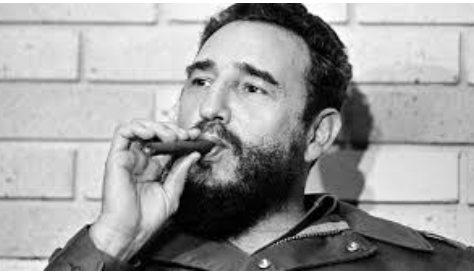
Fidel Castro’s nearly five-decade rule over Cuba was a period of profound and radical transformation. Following the successful overthrow of the Batista dictatorship in 1959, Castro embarked on a revolutionary project to reshape every facet of Cuban society. Guided by Marxist-Leninist principles and a fierce brand of Cuban nationalism, his policies ranged from sweeping land reforms and nationalizations to ambitious social programs in health and education. These policies fundamentally altered Cuba’s economic and social landscape, bringing both significant achievements and considerable hardships. Castro’s government also navigated a treacherous international climate, defined by the Cold War and a relentless embargo from the United States. Understanding these ten key policies is essential to grasping the complex and often contradictory legacy of one of the 20th century’s most iconic and controversial leaders.
1. The Agrarian Reform Laws: Seizing the Land
One of the very first and most transformative policies of Castro’s revolutionary government was the implementation of the Agrarian Reform Laws, beginning in May 1959. Before the revolution, Cuba’s fertile land was overwhelmingly concentrated in the hands of a small elite and large foreign, mostly American, corporations. The vast majority of rural Cubans were landless laborers working on sugar plantations under harsh conditions. The Agrarian Reform Laws aimed to dismantle this latifundia system by setting limits on the size of land holdings and expropriating excess land. This seized land was then redistributed to landless peasants and organized into state-run cooperatives. The policy was a direct assault on the old power structure and a fulfillment of a key promise of the revolution to the rural poor. However, this move immediately set the Castro government on a collision course with the United States, as it targeted the vast holdings of powerful American sugar companies. The expropriation of U.S. property without adequate compensation became a major point of contention, contributing significantly to the rapid deterioration of U.S.-Cuban relations and the eventual imposition of the economic embargo.
2. The Nationalization of the Economy: State Control Ascends
Following the land reforms, Castro’s government moved swiftly to assert state control over the entire Cuban economy. This policy of mass nationalization, which accelerated dramatically in 1960, saw the government seize control of key industries, from sugar mills and oil refineries to banks and utilities. Initially targeting foreign-owned assets, particularly those belonging to American corporations, the policy soon expanded to encompass virtually all private businesses, right down to small shops and street vendors. The rationale was to wrest control of the economy from foreign interests and the Cuban bourgeoisie, redirecting the nation’s wealth towards the goals of the revolution. This created a centrally planned economy, where the state became the primary employer, producer, and distributor of goods. While this policy succeeded in breaking the dominance of foreign capital, it also led to significant economic challenges. The sudden removal of experienced managers, coupled with the inherent inefficiencies of centralized planning and the devastating impact of the U.S. embargo, contributed to decades of economic stagnation, shortages, and a heavy reliance on subsidies from the Soviet Union.
3. The Cuban Literacy Campaign: A Revolution in Education
Arguably one of the most celebrated and successful policies of the Castro era was the 1961 Cuban Literacy Campaign. At the time of the revolution, illiteracy was rampant in Cuba, particularly in rural areas where over 40% of the population could not read or write. Castro declared 1961 the “Year of Education” and mobilized a massive army of volunteers, known as “brigadistas,” to travel across the country and teach their fellow citizens. Over 250,000 Cubans, many of them young students, participated in this ambitious project. They lived with rural families, sharing their daily lives while teaching them basic literacy skills in the evenings. The campaign was a resounding success. In less than a year, the national illiteracy rate was slashed from over 23% to just under 4%. This monumental achievement laid the foundation for Cuba’s future educational system, which became renowned for its quality and accessibility. The campaign was more than just an educational program; it was a powerful tool for social and political integration, fostering a sense of national unity and revolutionary fervor among the Cuban people, while also instilling the new government’s ideology across the island.
4. The Development of a Universal Healthcare System
Parallel to his educational reforms, Fidel Castro prioritized the creation of a universal healthcare system that would be free and accessible to all Cubans. Before 1959, quality medical care was largely confined to affluent urban areas, leaving the rural population with little to no access to doctors or hospitals. The revolutionary government nationalized healthcare services and began a massive program of building new clinics and hospitals, particularly in underserved rural communities. A key focus was on preventative medicine, public health, and training a large cadre of doctors and nurses. Despite severe economic constraints, Cuba managed to build a healthcare system that achieved remarkable results. Life expectancy and infant mortality rates in Cuba soon became comparable to those in developed nations, and in some cases, even surpassed them. The system’s emphasis on primary care and its high doctor-to-patient ratio earned international acclaim. Cuba also became known for its “medical internationalism,” sending thousands of doctors to assist in developing countries around the world, a policy that served as a powerful form of soft power and diplomacy for the Castro regime.
5. The Alliance with the Soviet Union: A Cold War Partnership
The escalating hostility from the United States, culminating in the failed Bay of Pigs invasion in 1961, pushed Fidel Castro firmly into the arms of the Soviet Union. This strategic alliance became the cornerstone of Cuban foreign and economic policy for the next three decades. The USSR provided Cuba with a vital economic lifeline, supplying oil, machinery, and other essential goods at subsidized prices. In return, Cuba provided the Soviets with sugar and, more importantly, a crucial strategic foothold in the Western Hemisphere, famously leading to the Cuban Missile Crisis of 1962. This partnership allowed the Castro regime to survive the U.S. embargo and fund its ambitious social programs. However, it also came at a significant cost. Cuba became an economic dependency of the Soviet bloc, and its foreign policy was often aligned with Moscow’s interests. The collapse of the Soviet Union in 1991 had a catastrophic impact on the Cuban economy, triggering a severe economic depression known as the “Special Period,” which exposed the profound vulnerability of Cuba’s reliance on its distant patron.
6. The Suppression of Political Dissent: Consolidating Power
A central and defining policy of Fidel Castro’s rule was the systematic suppression of all forms of political dissent. Upon taking power, the revolutionary government moved to consolidate its authority by marginalizing and eliminating all political opposition. Political parties other than the Communist Party of Cuba were banned, independent newspapers and radio stations were shut down, and labor unions were brought under state control. The government established a vast internal security apparatus, most notably the Committees for the Defense of the Revolution (CDRs), neighborhood watch groups that monitored the population for any signs of “counter-revolutionary” activity. Those deemed enemies of the revolution—including former Batista officials, political dissidents, artists, and activists—were often imprisoned in harsh conditions, forced into labor camps, or exiled. This policy created an atmosphere of fear and conformity, ensuring the long-term survival of the regime but at the expense of fundamental civil liberties such as freedom of speech, assembly, and the press. The lack of political freedom remains one of the most heavily criticized aspects of Castro’s legacy.
7. Intervention in Foreign Conflicts: Exporting the Revolution
Fidel Castro saw Cuba as a key player on the world stage and a champion of anti-colonial and anti-imperialist movements. This led to a policy of active military intervention in foreign conflicts, particularly in Africa, as part of a broader strategy to “export the revolution” and challenge the influence of the United States. The most significant of these interventions was in Angola, where, starting in 1975, Cuba deployed tens of thousands of troops to support the Marxist MPLA government against rival factions backed by South Africa and the United States. Cuban forces played a decisive role in the conflict, notably at the Battle of Cuito Cuanavale, which many historians argue hastened the end of apartheid in South Africa. Cuba also sent troops and military advisors to support revolutionary movements and friendly governments in other countries, such as Ethiopia and Nicaragua. This policy of military internationalism established Cuba as a significant military power, but it came at a high cost in terms of both human lives and economic resources, draining the country’s already strained budget.
8. State Atheism and the Control of Religion
In the early years of the revolution, Fidel Castro’s government adopted a policy of state atheism, viewing organized religion, particularly the Catholic Church, as a rival ideological force and a bastion of counter-revolutionary sentiment. The government nationalized all church-owned schools and property, expelled hundreds of foreign priests, and placed tight restrictions on religious practice. Religious believers were often marginalized and discriminated against, barred from membership in the Communist Party and from holding certain government jobs. For decades, religious life in Cuba was forced underground. However, the government’s stance began to soften over time, particularly after the collapse of the Soviet Union, as the regime sought new sources of legitimacy and social cohesion. In the 1990s, the constitution was amended to change Cuba’s status from an atheist to a secular state, granting greater religious freedom. This culminated in the historic visit of Pope John Paul II in 1998, which marked a significant turning point in the relationship between the Cuban state and the Catholic Church, signaling a move away from the strict atheist policies of the past.
9. The Creation of the Committees for the Defense of the Revolution (CDRs)
To ensure the consolidation and protection of his revolutionary government at a grassroots level, Fidel Castro established the Committees for the Defense of the Revolution (CDRs) in 1960. These neighborhood-based organizations were created as a system of “collective vigilance” to guard against sabotage, espionage, and counter-revolutionary activity. Virtually every city block in Cuba had its own CDR, and at their peak, a vast majority of the adult population were members. The CDRs performed a variety of functions, from organizing community projects and public health campaigns to monitoring the activities of their neighbors. They served as the eyes and ears of the state, reporting any suspicious behavior or dissenting opinions to the authorities. While they fostered a sense of community and participation for some, they were also a powerful instrument of social control and surveillance. The CDR system played a crucial role in suppressing internal opposition and ensuring the longevity of the Castro regime by creating a society where citizens were constantly observing and being observed, making organized dissent extremely difficult and risky.
10. The “Special Period in a Time of Peace”: A Policy of Survival
The sudden collapse of the Soviet Union in 1991 plunged Cuba into its most severe economic crisis since the revolution. Overnight, the island lost its primary trading partner and the source of billions of dollars in annual subsidies. This crisis prompted Fidel Castro to declare a “Special Period in a Time of Peace,” a series of emergency policies designed to ensure the survival of the revolution. This was a period of extreme austerity and hardship for the Cuban people, characterized by widespread shortages of food, fuel, and medicine. The government implemented strict rationing, promoted urban agriculture, and encouraged the use of bicycles as a substitute for cars. In a major ideological concession, Castro’s government also cautiously opened the door to foreign investment, particularly in the tourism sector, and legalized the use of the U.S. dollar. These pragmatic, and often contradictory, policies were a desperate attempt to adapt to a new world order in which Cuba was almost entirely isolated. The Special Period demonstrated the regime’s resilience and its ability to maintain control even under the most dire economic circumstances, but it also left deep and lasting scars on Cuban society.
Further Reading
For those who wish to explore the life of Fidel Castro and the complexities of modern Cuban history, these books provide excellent starting points:
- “Fidel: A Critical Portrait” by Tad Szulc: A comprehensive and detailed biography written by a former New York Times correspondent who had extensive access to Castro.
- “Che Guevara: A Revolutionary Life” by Jon Lee Anderson: While focused on Che, this definitive biography provides immense insight into the early years and ideology of the Cuban Revolution.
- “Cuba: What Everyone Needs to Know” by Julia E. Sweig: An accessible and balanced overview of Cuban history, politics, and society, perfect for understanding the context of Castro’s policies.
- “Bacardi and the Long Fight for Cuba” by Tom Gjelten: This book tells the story of the revolution and its aftermath through the eyes of the famous Bacardi family, offering a unique perspective on the nationalization of private industry.
- “Without Fidel: A Death Foretold in Miami, Havana, and Washington” by Ann Louise Bardach: An insightful look at the dynamics of power in Cuba and the Cuban-American community during the final years of Castro’s rule.
Here at Zentara.blog, our mission is to take those tricky subjects and unlock them, making knowledge exciting and easy to grasp for everyone. But the adventure doesn’t stop on this page! We’re constantly exploring new frontiers and sharing discoveries across the digital universe. Want to dive deeper into more mind-bending Top 10s and keep expanding your world? Come join us on our other platforms – we’ve got unique experiences waiting for you on each one!
Get inspired by visual wonders and bite-sized facts: See the world through Zentara’s eyes on Pinterest!
Pin our fascinating facts and stunning visuals to your own boards. Explore Pins on Pinterest: https://uk.pinterest.com/zentarablog/
Discover quick insights and behind-the-scenes peeks: Hop over to Tumblr for snippets, quotes, and unique content you won’t find anywhere else. It’s a different flavour of discovery! Follow the Fun on Tumblr: https://www.tumblr.com/zentarablog
Ready for deep dives you can listen to or watch? We’re bringing our accessible approach to video and potentially audio! Subscribe to our YouTube channel and tune into future projects that make learning pop! Subscribe on YouTube: https://www.youtube.com/@ZentaraUK
Seeking even more knowledge in one place? We’ve compiled some of our most popular topic deep dives into fantastic ebooks! Find them on Amazon and keep the learning journey going anytime, anywhere. Find Our Ebooks on Amazon: https://www.amazon.co.uk/s?k=Zentara+UK&ref=nb_sb_noss
Connect with us and fellow knowledge seekers: Join the conversation on BlueSky! We’re sharing updates, thoughts, and maybe even asking you what wonders we should explore next. Chat with Us on BlueSky: https://bsky.app/profile/zentarablog.bsky.social
Perfect for learning on the move! We post multiple 10-minute podcasts per day on Spotify. Pop on your headphones and fill your day with fascinating facts while you’re out and about! Listen on Spotify: https://open.spotify.com/show/3dmHbKeDufRx95xPYIqKhJFollow us on Instagram for bytesize knowledge! We post multiple posts per day on our official Instagram account. https://www.instagram.com/zentarablog/ Every click helps us keep bringing honest, accessible knowledge to everyone. Thanks for exploring with us today – see you out there in the world of discovery!




Leave a Reply