
Genius or Glutton for Punishment? 10 Mind-Blowing Secrets of Wile E. Coyote
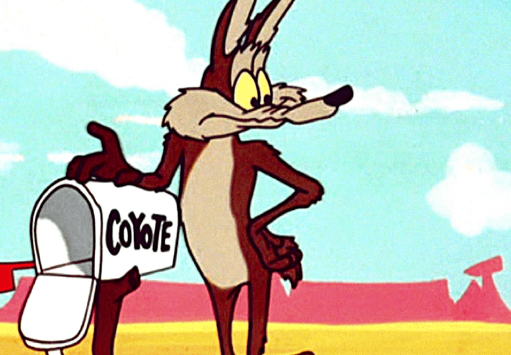
In the vast, arid expanse of the American Southwest, a drama of biblical proportions plays out daily. There are no words, only the whistling of a falling object and the distant, rhythmic beep-beep of a disappearing bird. At the center of this tragicomedy is Wile E. Coyote, a character who has become the global ambassador for persistence in the face of absolute failure. While many see him as a simple predator, he is arguably the most sophisticated character in the Looney Tunes roster—a self-proclaimed “Super Genius” whose intellect is matched only by his staggering misfortune.
Wile E. Coyote is more than a cartoon; he is a philosophical statement. Created by the visionary Chuck Jones and writer Michael Maltese, the Coyote represents the eternal human struggle against a universe that refuses to cooperate. Whether he is gravity-defyingly suspended over a canyon or meticulously reviewing a blueprint for a giant magnet, Wile E. captures our collective empathy. We don’t root for him because we want the Road Runner to be eaten; we root for him because we recognize his unwavering dedication to a goal. This comprehensive guide dives deep into the desert sand to uncover the mechanics, rules, and history of the world’s most resilient carnivore.
1. The “Super Genius” and the Burden of Ego
While he is most famous for his silent chases in the desert, Wile E. Coyote possesses a refined, highly articulate persona that emerges when he faces opponents other than the Road Runner. When hunting Bugs Bunny, Wile E. speaks with a cultured, slightly pompous accent (provided by the legendary Mel Blanc), introducing himself as “Wile E. Coyote—Super Genius.” This title is not just a joke; it defines his entire approach to life. He doesn’t want to hunt like a common animal; he wants to solve the problem of hunger through engineering, physics, and complex strategy.
This ego is ultimately his greatest weakness. His reliance on technology and “genius” over natural instinct is what leads to his downfall. A real coyote might wait in ambush, but Wile E. must build a Rube Goldberg-style contraption to prove his intellectual superiority. This makes him a uniquely modern tragic hero—a character who is “too smart for his own good.” His business cards, which list his various degrees and specialties, serve as a hilarious reminder that no matter how many books one reads, the laws of the universe (and gravity) have a final, unyielding say in the matter.
2. The Nine Inviolable Commandments of the Desert
The brilliance of the Wile E. Coyote and Road Runner shorts lies in their strict adherence to a set of internal laws. Chuck Jones famously outlined nine rules that the writers and animators had to follow to maintain the integrity of the series. These rules included constraints such as: the Road Runner can never harm the Coyote except by going “Beep-Beep,” no outside force can injure the Coyote except his own ineptitude or the failure of an ACME product, and gravity is always the Coyote’s greatest enemy.
These “commandments” created a perfect comedic vacuum. By removing variables like dialogue or external villains, the focus shifted entirely to the Coyote’s internal process. The audience knows exactly what to expect: the plan will be clever, the execution will be flawed, and the result will involve a heavy object falling from a great height. This rigidity allowed the creators to experiment with infinite variations on a single theme, turning a simple chase into a masterclass in creative problem-solving and comedic timing that remains unparalleled in animation history.
3. ACME Corporation: The Supplier of Failure
No discussion of Wile E. Coyote is complete without mentioning his primary benefactor and tormentor: the ACME Corporation. From “Dehydrated Boulders” to “Triple-Strength Fortified Leg Muscle Vitamins,” ACME provides the tools for Wile E.’s elaborate schemes. The name itself is a meta-joke; during the era of early animation, “Acme” was a common name for businesses because it started with “A,” placing it at the front of the telephone book. In the Looney Tunes universe, it stands for a company that makes everything, yet nothing ever works as intended.
The relationship between Wile E. and ACME is a satire of consumerism and the promise of “the quick fix.” Wile E. believes that the next gadget—the “Rocket-Powered Roller Skates” or the “Giant Magnet”—will finally be the one that works. The failure of these products is rarely due to a manufacturing defect; usually, it is the Coyote’s own miscalculation or the sheer spite of the physical world. ACME is the silent partner in his tragedy, an omnipresent force that provides the means for his destruction while maintaining a clean, corporate facade.
4. The Mark Twain Connection and Character Design
The visual design of Wile E. Coyote is rooted in literary history. Chuck Jones stated that he based the Coyote’s appearance on a description of the animal found in Mark Twain’s book Roughing It. Twain described the coyote as “a long, slim, sick and sorry-looking skeleton” that is a “living, breathing allegory of Want.” Jones took this description and translated it into a character with a scruffy, unkempt coat, a perpetually hungry expression, and a lanky frame that is perfect for slapstick distortion.
Wile E.’s design is intentionally pathetic to garner audience sympathy. His large, expressive eyes allow him to communicate a range of emotions—hope, realization, terror, and resignation—without saying a word. His “squash and stretch” capabilities are legendary; he can be flattened by a steamroller or stretched like a rubber band, yet he always returns to his original, slightly bedraggled shape in the next scene. This resilience is built into his very anatomy, making him a character who is literally designed to endure the impossible.
5. The Science of “Cartoon Gravity” and Timing
Wile E. Coyote is the world’s leading expert on Cartoon Physics, a branch of science where the laws of nature are governed by comedic timing rather than mathematics. One of the most famous tropes associated with the character is his ability to walk off a cliff and remain suspended in mid-air—but only until he realizes there is no ground beneath him. The “look at the camera” moment just before the fall is a crucial beat in the rhythm of the shorts.
This suspension of gravity is a psychological gag: the character’s internal reality dictates the external world. As long as he believes he is on solid ground, he stays up. The moment of realization—the “gulp” and the frantic look downward—is the catalyst for the fall. The delay is what makes it funny. It highlights the idea that in Wile E.’s world, the universe is actively waiting for the most humiliating moment to reassert its rules. His falls are never instant; they are punctuated by a tiny puff of smoke when he finally hits the canyon floor miles below.
6. A Masterclass in Silent, Visual Storytelling
While Wile E. is eloquent in his guest appearances with Bugs Bunny, his primary legacy is built on silent storytelling. Without dialogue, the animators had to rely on facial expressions, body language, and the iconic “signs” that the Coyote holds up to speak to the audience. These placards, often bearing simple messages like “In Heaven’s Name!” or “Ouch,” broke the fourth wall and invited the viewer into the Coyote’s internal state of mind.
This reliance on visual cues made the Road Runner shorts accessible to audiences worldwide, regardless of language. The humor is purely situational and physical. We see the blueprint, we see the trap, we see the bird approaching, and we wait for the inevitable twist. This format stripped animation down to its most basic elements: action and reaction. By removing the spoken word, the creators forced themselves to become more inventive with visual gags, resulting in some of the most iconic imagery in the history of cinema.
7. The Philosophical Depth of the “Sisyphus of the Desert”
Many critics and fans have compared Wile E. Coyote to the mythological figure Sisyphus, who was condemned to roll a boulder up a hill for eternity, only for it to roll back down every time. Like Sisyphus, Wile E. is trapped in a cycle of endless effort and inevitable failure. However, there is a modern twist: Wile E. chooses to continue. He is not a prisoner of a god, but a prisoner of his own obsession and his “Super Genius” identity.
This makes him a surprisingly deep character. He represents the “struggle” that defines human existence. We all have goals that seem just out of reach, and we all have “ACME” products in our lives that don’t work as promised. The fact that Wile E. never gives up—that he is back in the next scene with a brand-new plan—is actually quite inspiring. He is the patron saint of the “Try, Try Again” mentality, proving that even if the boulder (or the anvil) falls on you every single time, the act of trying is what gives life its flavor.
8. The Rare Moments of Coyote Victory
Does Wile E. Coyote ever actually catch the Road Runner? In the vast majority of the classic shorts, the answer is a resounding “no.” However, there are a few notable exceptions that play with the audience’s expectations. In one famous episode, the Coyote actually manages to shrink the Road Runner using a “Giant-to-Little” machine, only to have the bird become so small that the Coyote can’t find him—until the machine reverses, and a giant-sized Road Runner foot comes crashing down.
The most famous “victory” occurs in a short titled Soup or Sonic, where Wile E. finally corners the bird after a chase through a series of pipes that shrink him down to just a few inches tall. He successfully catches the Road Runner’s leg, but because he is now tiny and the bird is normal-sized, he realizes he can’t possibly eat him. He holds up a sign to the camera that asks, “Okay, wise guys, you always wanted me to catch him. Now what do I do?” These moments prove that the chase is the purpose of his life, not the meal. The catch is actually a logistical nightmare.
9. The Evolution of the Rivalry: Beyond the Road Runner
Wile E. Coyote’s career is not limited to the desert. His versatility as a character allowed him to be placed in various roles, most notably as a foil for Bugs Bunny and occasionally Sheepdog Sam. In his encounters with the Sheepdog, Wile E. plays the role of the “wolf” (though he is clearly a coyote), attempting to steal sheep under the watchful eye of a lethargic but hyper-competent protector. These shorts often use a “punch-clock” gimmick, where the two characters are friendly coworkers off the clock but mortal enemies during the shift.
These variations show the strength of Wile E.’s character archetype. Whether he is a refined gentleman trying to cook a rabbit or a silent predator in the desert, his core traits remain: high intelligence, low luck, and incredible resilience. These different settings allowed the animators to explore different types of humor, from the verbal sparring with Bugs to the rhythmic, time-based gags of the sheepdog shorts. Wile E. is a “character actor” in the world of cartoons, capable of fitting into any plot that requires a persistent loser.
10. The Enduring Legacy of an Animated Legend
Wile E. Coyote has moved far beyond the screen to become a permanent fixture in the global cultural consciousness. His name is synonymous with “doomed but determined,” and his influence can be seen in everything from high-tech engineering (where “ACME” is still used as a placeholder name) to modern digital animation. He has been the subject of museum exhibits, psychological studies, and even legal parodies (most famously the “Coyote v. Acme” legal brief).
His legacy is one of pure, unadulterated perseverance. In a world that often demands perfection and instant success, Wile E. Coyote celebrates the grit required to fail ten thousand times and still order a new kit from the catalog. He is the ultimate survivor, a scruffy, lanky reminder that the most important part of any journey isn’t reaching the destination—it’s having the imagination to build a rocket-powered sled to get there, even if it eventually explodes.
Further Reading
- Chuck Amuck: The Life and Times of an Animated Cartoonist by Chuck Jones
- The 50 Greatest Cartoons: As Selected by 1,000 Animation Professionals edited by Jerry Beck
- Hollywood Cartoons: American Animation in Its Golden Age by Michael Barrier
- That’s Not All Folks! by Mel Blanc and Philip Bashe
- 10 Things You Should Know About Foghorn Leghorn – Looney Tunes
- 10 Futurama TV SHOW Facts That Still Hold Up
- 10 Things You Should Know About Speedy Gonzales – Looney Tunes
- 10 Things You Should Know About Yosemite Sam – Looney Tunes
- 10 Things You Should Know About The Looney Tunes
- 10 Things You Should Know About Road Runner – Looney Tunes
- 10 Things You Should Know About Wile E. Coyote – Looney Tunes
- 10 Things You Should Know About Tweety Pie – Looney Tunes
- 10 Things You Should Know About Sylvester The Cat – Looney Tunes
- 10 Things You Should Know About Porky Pig – Looney Tunes



