
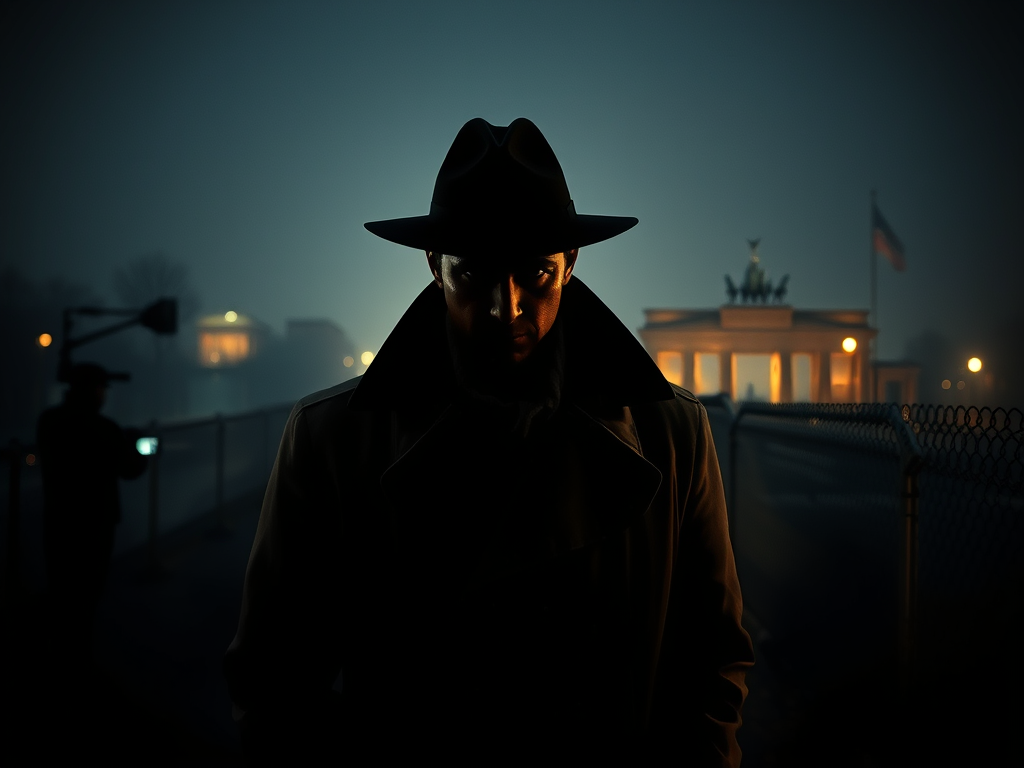
The Cold War was a period of history defined not by the roar of the battlefield, but by the whisper of the shadows. For over four decades, the world’s superpowers—the United States and the Soviet Union—engaged in a high-stakes chess match where the board was the entire planet and the pieces were often invisible. Behind the public posturing and the threat of nuclear annihilation lay a hidden world of Cold War espionage, where intelligence gathering was the most valuable currency.
This era birthed the modern spy as we know them: the covert operative navigating a labyrinth of double agents, moles, and cutting-edge surveillance technology. From the depths of the Pacific Ocean to the tunnels beneath divided Berlin, these secret operations shaped the course of history, often without the public ever knowing they occurred until decades later. These missions were the ultimate expression of geopolitical strategy, where a single stolen document or a well-placed wiretap could shift the balance of power between the CIA and the KGB.
In this exploration, we dive into ten of the most audacious, complex, and high-stakes clandestine missions of the Cold War. These stories provide a window into a world of statecraft where the line between hero and villain was often as thin as the microfilm used to transport secrets.
1. Operation Gold: The Berlin Tunnel Tap
In the early 1950s, Berlin was the “city of spies,” a fractured metropolis where the iron curtain was a physical reality. In 1954, the CIA and the British MI6 launched one of the most ambitious signals intelligence (SIGINT) missions ever conceived: Operation Gold. The plan was to dig a 1,476-foot tunnel from the American sector of West Berlin into the Soviet-occupied East, specifically to tap into the underground telephone cables used by Soviet military headquarters.
Imagine trying to tap a neighbor’s phone line by digging a secret basement hallway directly under their living room while they are watching TV. The engineering was a marvel of its time, involving the removal of over 3,000 tons of soil in total secrecy. For nearly a year, Western intelligence intercepted roughly 440,000 conversations, gaining an “intelligence bonanza” regarding Soviet military strength and intentions.
However, the operation had a fatal flaw: a mole. George Blake, a high-ranking MI6 officer and Soviet double agent, had informed the KGB of the tunnel before the first shovel hit the dirt. The Soviets allowed the tap to continue for months to protect Blake’s cover, feeding the West a mix of valuable and mundane data until they “accidentally” discovered the tunnel during a rainy week in 1956. Despite the compromise, the CIA considered it a massive foreign policy success for the sheer volume of data gathered, proving that even a “blown” operation could yield strategic rewards.
2. Project Azorian: Lifting a Submarine from the Abyss
In 1968, a Soviet Golf II-class submarine, the K-129, vanished in the North Pacific. While the Soviets failed to find it, the U.S. Navy located the wreck three miles down. This sparked Project Azorian, a clandestine mission so audacious it bordered on science fiction. The goal? To build a ship capable of lowering a giant mechanical claw to the ocean floor and lifting the 1,750-ton submarine back to the surface.
To hide the truth, the CIA enlisted billionaire Howard Hughes to create a “cover story.” They built the Hughes Glomar Explorer, a massive vessel supposedly designed for deep-sea manganese nodule mining. For years, the public and the Soviets believed the ship was a commercial venture. In reality, it was a $350 million espionage tech platform.
When the recovery attempt happened in 1974, the mechanical claw—nicknamed “Clementine”—suffered a catastrophic failure. As the sub was being raised, it snapped, and two-thirds of the vessel plummeted back to the seabed. While the U.S. recovered some nuclear torpedoes and codebooks, the ultimate prize—the full submarine—remained out of reach. This operation also gave us the famous “Glomar response”: “We can neither confirm nor deny.” It remains a testament to the lengths a superpower would go for a geopolitical edge, blending engineering brilliance with absolute covert operations secrecy.
3. Operation Ivy Bells: Tapping the Ocean Floor
While Project Azorian was about lifting a sub, Operation Ivy Bells was about listening to one. In 1971, the U.S. Navy and the NSA discovered an underwater communication cable in the Sea of Okhotsk, which the Soviets used for high-level military communications. The problem was that the sea was a protected Soviet stronghold, heavily guarded and off-limits to foreign vessels.
Using the USS Halibut, a specially modified submarine, U.S. divers saturated with helium (to survive the depth) placed a 20-foot-long recording device around the cable. It didn’t pierce the wire; instead, it used induction to “listen” to the signals flowing through it. This was surveillance at its most extreme. Every few months, a sub would return to swap the tapes.
The intelligence was pure gold. Because the Soviets believed the cable was physically inaccessible, they didn’t encrypt their conversations. The U.S. heard the raw thoughts of Soviet admirals and officers for a decade. The operation was eventually betrayed in 1980 by Ronald Pelton, a cash-strapped NSA analyst who sold the secret to the KGB. When the Soviets recovered the device, they were stunned by its sophistication. Ivy Bells remains a premier example of technical collection and the incredible risks taken to achieve global stability through information.
4. The Farewell Dossier: Sabotaging the Soviet Machine
In the early 1980s, the Soviet Union was desperate to keep up with Western technology. They created “Directorate T,” a dedicated wing of the KGB tasked with stealing industrial and scientific secrets. They were very good at it—until a high-ranking KGB officer named Vladimir Vetrov decided to become a defector in place. Codenamed “Farewell” by French intelligence, Vetrov handed over thousands of documents detailing exactly what the Soviets were stealing and who their agents were.
Instead of just arresting the spies, the CIA engaged in a brilliant piece of disinformation and sabotage. Armed with the “Farewell Dossier,” they allowed the Soviets to keep stealing, but they “salted” the technology with flaws. They leaked software for gas pipelines that would pass all tests but fail under pressure. This led to a massive explosion in the Trans-Siberian pipeline in 1982—a non-nuclear explosion so large it was visible from space.
This was economic warfare conducted through intelligence gathering. By turning the Soviets’ own espionage against them, the West caused systemic failures in the USSR’s infrastructure. Vetrov’s courage (and eventual execution) provided the “smoking gun” that showed the Soviet economy was a hollow shell built on stolen goods, hastening the end of the Cold War.
5. Project Venona: The Great Codebreak
Long before the Cold War began, the U.S. Army’s Signal Intelligence Service began Project Venona—a top-secret effort to decrypt Soviet diplomatic telegrams. For years, these messages were thought to be unbreakable because they used “one-time pads,” a system that is mathematically secure if used correctly. However, the Soviets got lazy during World War II and reused some of the pads.
This tiny crack in the door allowed American cryptology experts to eventually decode nearly 3,000 messages. The results were explosive. Venona revealed the existence of a massive Soviet spy ring within the U.S. government, including the infamous Rosenberg spy ring and high-ranking officials like Alger Hiss. It proved that the Soviets had successfully infiltrated the Manhattan Project to steal nuclear secrets.
The diplomatic victory of Venona was that it gave the U.S. a clear picture of Soviet espionage tactics for decades. Interestingly, the project was so secret that even President Harry Truman wasn’t fully briefed on it at first. It remained classified until 1995, long after the Cold War ended. Venona serves as a reminder that in the world of signals intelligence, patience and a single mathematical error can change the course of a century.
6. The Cambridge Five: The Moles at the Heart of MI6
Perhaps the most famous story of human intelligence (HUMINT) failure involves the Cambridge Five. This was a group of high-ranking British intelligence officers who were recruited by the Soviet Union while they were students at Cambridge University in the 1930s. Led by the charismatic Kim Philby, these men rose to the very top of MI6 and the British Foreign Office.
Philby was so successful that he was eventually appointed as the top liaison between British and American intelligence. He was effectively the man in charge of catching Soviet spies, while he was the Soviets’ most valuable mole. He betrayed every secret he touched, from the identities of Western agents in the Eastern Bloc to the details of the clandestine missions designed to destabilize the Soviet Union.
The impact was devastating. Hundreds of agents were captured and executed because of the Cambridge Five’s betrayal. When the group was finally unmasked in the 1950s and 60s, it shattered the trust between the U.S. and the UK. This case is the ultimate cautionary tale of counter-intelligence, proving that the most dangerous enemy is often the one sitting in the office next to you, drinking tea and discussing foreign policy.
7. Operation PIMLICO: The Great Escape of Oleg Gordievsky
Not all spy operations were about stealing documents; some were about saving lives. Oleg Gordievsky was a high-ranking KGB officer who, disillusioned by the Soviet system, began working as a double agent for MI6 in the 1970s. For years, he provided the West with high-level insights into the Kremlin’s thinking, arguably preventing a nuclear war during the “Able Archer” crisis of 1983.
By 1985, the KGB grew suspicious. Gordievsky was recalled to Moscow and interrogated. Sensing he was about to be executed, he triggered a pre-arranged escape plan: Operation PIMLICO. He met his British handlers at a specific street corner, carrying a Safeway plastic bag as a signal. He was then bundled into the trunk of a British diplomatic car and driven toward the Finnish border.
In a scene straight out of a thriller, the car was stopped at the border. KGB guards with sniffer dogs paced around the vehicle. To distract the dogs, a British diplomat’s wife supposedly changed a baby’s smelly diaper on the trunk of the car. The guards, disgusted, waved them through. Gordievsky’s successful exfiltration was a massive diplomatic victory for the West and a humiliating blow for the KGB, proving that even in the heart of the Soviet Union, the “shades” could still operate.
8. The Rosenberg Spy Ring: The Theft of the Atomic Bomb
In the late 1940s, the U.S. believed it would hold a nuclear monopoly for at least a decade. They were shocked when the Soviets detonated their first atomic bomb in 1949. The reason for the rapid Soviet progress was a dedicated spy ring led by Julius and Ethel Rosenberg.
Julius was an engineer who recruited friends and relatives—most notably his brother-in-law, David Greenglass, who worked at the Los Alamos laboratory—to pass sketches and technical descriptions of the atomic bomb to the Soviets. This was espionage at its most consequential. The Rosenbergs weren’t just stealing plans for a new tank; they were handing over the keys to the ultimate weapon.
Their arrest and subsequent execution in 1953 remain some of the most controversial events in Cold War history. While some at the time believed they were victims of “Red Scare” hysteria, the later release of the Venona decryptions confirmed Julius’s active role in the spy ring. This operation fundamentally changed the geopolitical landscape, leading to the era of “Mutually Assured Destruction” and defining the arms race for the next forty years.
9. Operation RYaN: The KGB’s Nuclear Panic
In the early 1980s, the Soviet leadership became convinced that the United States was planning a surprise nuclear first strike. In response, the KGB and Soviet military intelligence (GRU) launched Operation RYaN (a Russian acronym for Nuclear Missile Attack). This was the largest intelligence gathering operation in Soviet history.
Thousands of agents worldwide were ordered to look for specific “indicators” of an impending attack. These indicators were often bizarre: they were told to monitor whether lights stayed on late in government buildings, whether the price of meat was rising (indicating stockpiling), or even if blood donation centers were getting busier.
The danger was that the Soviets were viewing the world through a lens of extreme paranoia. When the U.S. and NATO conducted a massive military exercise called “Able Archer 83,” the RYaN monitors saw it as the actual start of the war. It was only through the reporting of Western double agents like Oleg Gordievsky that the U.S. realized the Soviets were genuinely terrified, allowing President Ronald Reagan to de-escalate his rhetoric. Operation RYaN shows how espionage can sometimes create more danger than it prevents by feeding into a nation’s worst fears.
10. Operation Rubicon: The Swiss Encryption Heist
For decades, over 100 countries—including many U.S. adversaries—purchased their top-secret encryption machines from a Swiss company called Crypto AG. These nations believed they were buying the best security in the world. In reality, they were buying machines that had been “backdoored” by the CIA and West German intelligence (BND).
In an operation codenamed Rubicon, the two intelligence agencies secretly purchased the Swiss company in 1970. For the next 48 years, they rigged the devices so they could easily read the “secret” messages of countries like Iran, India, Pakistan, and various Latin American dictatorships. It was perhaps the greatest SIGINT coup in history.While other spies were crawling through tunnels or stealing microfilm, the CIA was simply reading the mail of half the world’s governments from the comfort of their headquarters. This operation highlights the move toward technical collection and the incredible power of controlling the infrastructure of international relations. It wasn’t just a mission; it was a decades-long geopolitical strategy that gave the West an unprecedented look into the private thoughts of their rivals and allies alike.




Leave a Reply