
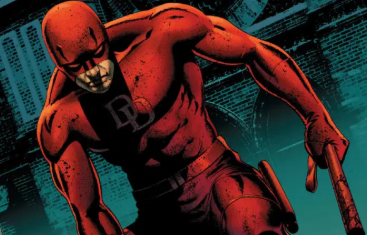
In the glittering, star-spanning pantheon of Marvel heroes, some wield magic hammers, some are armored billionaires, and others are literal gods. And then, there’s the one who guards a few square blocks of Hell’s Kitchen. He’s a man who operates not in the sky, but in the grime of the gutter. He is a walking contradiction: a devout Catholic who dresses as a devil, a lawyer who breaks the law every night, and a blind man who sees more than anyone.
He is Matt Murdock, and he is Daredevil, the Man Without Fear.
But that title is a lie—or, at all events, a profound irony. More than any other hero, Daredevil’s story is not about a lack of fear, but the daily, agonizing struggle to master it. His history is not one of cosmic conquest, but of deep personal loss, spiritual anguish, and the unshakeable belief that someone has to protect the little guy.
To understand this complex hero, we must peel back the layers of his tragic past, his unique powers, and the defining moments that forged him into one of comics’ most compelling characters. This is the top 10 list exploring the complete history and background of the Man Without Fear.
1. The Tragic Origin: “Battling” Jack and the Chemical Spill
Before the devil, there was the boy: Matthew Murdock, a bookish kid in Hell’s Kitchen, New York. His defining feature wasn’t grit, but a dedication to his studies, spurred on by his father. “Battling” Jack Murdock was a small-time boxer, a man who took his share of dives and beatings, but who desperately wanted his son to be more. He pushed Matt to study, to use his brain and not his fists, so he could become a lawyer and not a “palooka” like his old man.
Then, one fateful day, the Daredevil origin story was set in motion. Matt saw a blind man about to be hit by a truck. In a selfless act of bravery, Matt pushed the man to safety but was struck by a radioactive isotope canister falling from the truck. The chemicals blinded him, seemingly robbing him of his future.
But the accident did something else. It “overclocked” his remaining senses to a superhuman level. His world was gone, replaced by a new one. This new life was truly forged in tragedy when Battling Jack, in a final act of pride for his son, refused to throw a major fight. The promoter who fixed the bout, a man known as “The Fixer,” had him murdered in an alley. Matt, now an orphan, was left with a promise, a set of impossible senses, and a rage that his father’s law books could never satisfy.
2. The Radar Sense: A “World on Fire”
So, how did Daredevil get his powers? The radioactive isotope was the catalyst, but the result is what makes him unique. He isn’t just a blind man with “good hearing.” He possesses a “Radar Sense,” a 360-degree, omnidirectional awareness of the world around him.
Think of it like this: your senses—hearing, smell, touch, taste—all feed your brain information. Now, imagine every single one of those senses is amplified a thousand-fold. Matt can hear a person’s heartbeat from a block away, smell the ink on a newspaper from across the room, feel the minute changes in air pressure from someone walking past, and taste the chemical composition of the air. His brain acts as a super-processor, taking all this data and painting a 3D picture of his surroundings.
It’s not “sight.” He can’t see colors or read a non-braille sign. In many ways, it’s more than sight. He can “see” through walls by sensing the faint vibrations and density changes. He can “see” in the dark as easily as in the light. In the 2015 Daredevil series, this was brilliantly visualized as a “world on fire,” a psychedelic, fluctuating construct of sound, heat, and vibration. This is the Daredevil radar sense—an overwhelming, constant stream of information that he had to learn to control, or be driven mad by it.
3. The Harsh Mentor: The Training of Stick
A young boy with overwhelming sensory powers and a heart full of rage would have been consumed by one or the other. He was saved—and hardened—by a man named Stick. A mysterious, blind sensei and the leader of a secret order known as The Chaste, Stick found Matt when he was a boy. He sensed Matt’s potential, but also his pain and anger.
Stick’s training was brutal, bordering on abusive. He didn’t coddle Matt; he beat him, pushed him, and forced him to master his senses through sheer discipline. He taught him martial arts, turning his body into a weapon. But more than that, he taught him how to “see” with his new senses, how to filter the noise, and how to become a warrior.
This relationship was not a warm one. Stick was on a mission, waging a secret war against a mystical ninja death-cult called The Hand. He was training Matt to be a “soldier” in that war. But Matt’s emotional core, his compassion, and his unwillingness to kill eventually caused a rift. Stick abandoned him, believing the boy was too “soft” and too attached to the world. But the training was complete. Stick had given Matt the focus and skill to one day become Daredevil.
4. The Dual Life: Matt Murdock, Attorney at Law
This is the central, defining contradiction of the character: who is Matt Murdock? By day, he is a man of the law. He and his best friend, his college roommate Franklin “Foggy” Nelson, open a small law firm in Hell’s Kitchen: Nelson and Murdock. They are defense attorneys, often working pro bono, dedicated to helping the same people Matt protects at night.
This duality is his greatest struggle. As a lawyer, Matt believes in the system, in due process, and in the power of the law to create justice. But as a man who can hear his clients’ heartbeats, he knows when they are lying. He knows the system is flawed, corrupt, and often fails the very people it’s meant to protect.
This is the engine of his vigilantism. When a criminal like The Kingpin buys a judge or intimidates a jury, Matt Murdock the lawyer loses. But Daredevil the vigilante can step outside the courtroom and into the alley, using a different kind of “justice” to get the results the law could not. His life is a constant, agonizing tightrope walk between the two, and his greatest fear is falling off.
5. The Archenemy: Wilson Fisk, The Kingpin
A hero is defined by his villains, and Daredevil has the most personal and devastating archenemy in comics: Wilson Fisk, The Kingpin. What makes their feud so powerful is that Kingpin is not just a “Daredevil villain.” He is a Matt Murdock villain.
Fisk is a mountain of a man, a criminal mastermind who controls the city’s underworld from the shadows. He presents himself as a legitimate, even philanthropic, businessman. He and Matt are two sides of the same coin: men who love their city (Hell’s Kitchen) but have an opposing-in-every-way vision for its future.
Their battle is one of attrition. Kingpin can’t just be “punched.” He attacks Matt Murdock’s life with surgical, sadistic precision. He targets his law practice, his friends, his reputation, and his sanity. In the legendary “Born Again” storyline, Kingpin discovers Daredevil’s secret identity and proceeds to systematically destroy Matt’s life, leaving him homeless, disbarred, and broken. This is not a simple good-vs-evil fight; it’s a deeply personal, psychological war of attrition between two of Marvel’s most formidable wills.
6. The Maniacal Mirror: The Assassin Bullseye
If The Kingpin is Daredevil’s strategic, psychological opposite, Bullseye is his chaotic, moral one. Bullseye is an assassin with a truly terrifying “superpower”: he has perfect aim. He can turn anything—a paperclip, a playing card, a peanut—into a lethal projectile. He has no grand plan, no desire for a criminal empire. He is a sociopath who kills for money and, more importantly, for the sheer joy of it.
Bullseye is obsessed with Daredevil because Daredevil is the only one who can match him. He is the dark mirror of Matt’s abilities. Where Matt uses his precision to non-lethally disarm, Bullseye uses his to kill in the most creative and cruel ways possible.
His impact on Daredevil’s history is not measured in schemes, but in scars. Bullseye is the man who cemented Daredevil’s reputation for tragedy by murdering two of the most important people in his life. He is the unhinged, unstoppable force of chaos that haunts Matt’s nightmares, a constant reminder of the human cost of his war.
7. The Tragic Love: The Story of Elektra Natchios
Daredevil’s life is a tapestry of loss, and no thread is darker or more blood-red than that of Elektra Natchios. Long before she was a world-class assassin, she was Matt’s college girlfriend. She was a wild, thrilling, and dangerous force of nature who saw the same darkness and capacity for violence in Matt that he tried to hide. Their romance was passionate and brief, ending in tragedy when her father was killed.
Years later, she returned to Hell’s Kitchen, but not as the girl Matt knew. She was now Daredevil and Elektra in conflict: she was a deadly mercenary, often employed by The Kingpin, and a high-ranking member of the ninja cult, The Hand.
Their relationship is a complex dance of love, hate, and mutual respect. She is the one person who truly understands his violent side, and he is the one person who believes she can be redeemed. Her story took its most tragic turn when, in a fight to become The Kingpin’s top assassin, she was impaled and killed by Bullseye with her own sai. Her death was a defining moment of failure for Matt, and though she would later be resurrected, their relationship remains the most potent and tragic romance in his life.
8. The Catholic Conundrum: “A Devil in the Confessional”
You cannot understand Daredevil without understanding his faith. Daredevil’s Catholic faith is not just window dressing; it is his operating system. Matt Murdock is arguably the most devoutly religious mainstream superhero in comics, and his vigilantism is a direct, agonizing violation of that faith.
Think about it: He’s a Catholic who dresses as the Devil. This isn’t an accident. He’s embracing his “sinful” nature, taking the form of the one thing he fears to strike fear into others. His nights are a brutal form of penance for his “sins” of anger and violence. His days are filled with crippling guilt.
The confessional booth is as important a setting for Daredevil as the Batcave is for Batman. It’s where he unburdens his soul, questions his mission, and seeks an absolution he feels he can never truly earn. His faith gives him his unbreakable moral code (his “no-kill” rule is absolute), but it also provides his greatest source of internal torment. He is a man perpetually at war with his own soul.
9. The Defining Moment: How Frank Miller Changed Everything
In the 1960s and 70s, Daredevil was a second-string hero, a “swashbuckling” copy of Spider-Man. He was on the verge of cancellation. Then, in 1979, a young writer/artist named Frank Miller took over the book. This moment in Daredevil’s history cannot be overstated. It is, without question, the single most important event in his publication background.
Miller ripped the character down to his studs. He threw out the “happy-go-lucky” adventurer and embraced the darkness. He introduced the gritty, film noir elements. He created Elektra, fleshed out Stick and The Hand, and, most importantly, he made The Kingpin Daredevil’s archenemy (Fisk was previously a Spider-Man villain).
Miller’s run, culminating in the “Born Again” masterpiece, defined everything we now associate with Daredevil: the Catholic guilt, the ninja mysticism, the psychological warfare, and the street-level grit. He turned a failing C-list hero into one of the most complex, adult, and respected A-list characters in the Marvel Universe. Every great Daredevil writer since—from Brian Michael Bendis to Ed Brubaker to Chip Zdarsky—has built upon the dark, character-driven foundation that Frank Miller laid.
10. The Title: Why “The Man Without Fear”?
We end on his famous title: The Man Without Fear. As mentioned, it’s a profound irony. So where does it come from? In his earliest origins, it was simple marketing—a cool-sounding name. But as the character evolved, the name took on a deeper meaning.
One interpretation is that the radioactive accident that heightened his senses also altered his brain chemistry, numbing the part of his amygdala that processes fear. This makes him a “man without fear” in a literal, biological sense.
But the more compelling, and more accepted, interpretation is the psychological one. It’s not that he doesn’t feel fear. Matt Murdock is terrified. He’s afraid of his own rage, afraid of failing his city, afraid of losing the people he loves (a fear that has been validated time and time again), and afraid for the state of his own eternal soul.
“The Man Without Fear” is not a description; it’s an aspiration. It’s a title he claims, a mantra he repeats to himself as he leaps from a rooftop, his body broken and his spirit tormented. He is the man without fear because he gets up every single night, confronts his deepest terrors, and faces them down. His greatest power isn’t his radar sense; it’s his indomitable will to endure, to fight, and to never, ever give up.
📚 Further Reading
Daredevil’s history is one of the most celebrated in comics, with multiple “perfect” runs. If you want to dive deeper into the history of the Man Without Fear, these are the essential starting points.
- Daredevil: The Man Without Fear by Frank Miller & John Romita Jr.
- The definitive, modern re-telling of Daredevil’s origin, from the accident and his father’s death to his training with Stick and his first clashes with The Kingpin.
- Daredevil: Born Again by Frank Miller & David Mazzucchelli
- Widely considered one of the greatest comic book stories ever written. This is the story where The Kingpin discovers Matt’s identity and systematically destroys his life. It is the essential Daredevil text.
- Daredevil: Guardian Devil by Kevin Smith & Joe Quesada
- A story that leans heavily into Matt’s Catholicism, as he is burdened with a child who may or may not be the Antichrist. This story features Bullseye’s tragic return and has massive consequences for Matt’s life.
- Daredevil (Vol. 2) by Brian Michael Bendis & Alex Maleev
- This long-running saga (starting with “Underboss”) explores what happens when Daredevil’s secret identity is leaked to the press by a rival. It’s a masterful study of the psychological toll his life takes.




Leave a Reply