
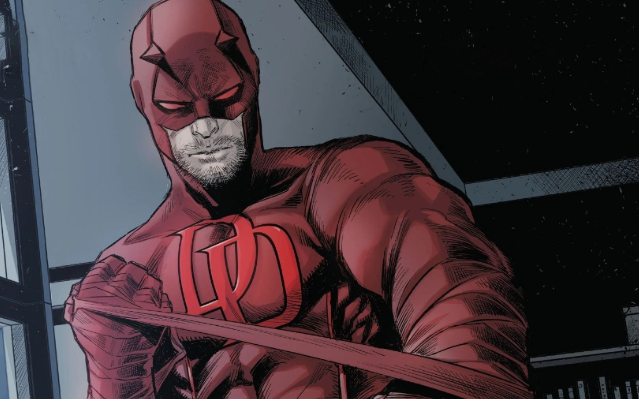
In the crowded skyline of New York City’s Marvel landscape, while Spider-Man swings through Queens and the Avengers occupy their high-tech towers, one man stalks the shadows of a single, gritty neighborhood: Hell’s Kitchen. Matt Murdock, known to the underworld as Daredevil, is perhaps the most human of all Marvel’s heavy hitters. He doesn’t have the cosmic might of Thor or the indestructible skin of Luke Cage. Instead, he possesses a sensory trade-off that is as much a curse as it is a gift, and a moral compass that is constantly spinning in the face of absolute darkness.
Daredevil is a character defined by paradoxes. He is a blind man who “sees” more than anyone else; a devout Catholic who dresses as a devil to strike fear into the hearts of the wicked; and a high-profile defense attorney who breaks the law every night to ensure justice is served. Since his debut, the “Man Without Fear” has evolved from a swashbuckling adventurer into the protagonist of some of the most sophisticated, noir-inspired stories in comic book history.
To truly understand Daredevil, one must look beyond the red suit and the billy club. His history is a tapestry of tragic romances, psychological breakdowns, and gritty street-level warfare. Whether he is dismantling a global ninja conspiracy or defending a client in a courtroom, Matt Murdock’s life is a high-stakes balancing act. Below, we uncover ten facts about the guardian of Hell’s Kitchen that reveal the depth and complexity of one of Marvel’s most enduring icons.
1. The Radioactive Connection to the Teenage Mutant Ninja Turtles
One of the most fascinating pieces of comic book trivia is the “secret” shared origin between Daredevil and the Teenage Mutant Ninja Turtles (TMNT). When Kevin Eastman and Peter Laird created the original TMNT comics, they designed the turtles’ origin as a direct parody and homage to Daredevil’s debut. In the Marvel story, young Matt Murdock saves an elderly man from a runaway truck, only to be struck in the face by a canister of radioactive isotopes. While Matt was blinded and gained his heightened senses, the TMNT creators added a clever “what if” scenario.
In the turtles’ origin story, the very same canister that struck Matt Murdock bounced off him, hit a nearby aquarium, and fell into the sewers along with four baby turtles and a man named Hamato Yoshi (Splinter). The glowing “ooze” that mutated the turtles is the exact same substance that gave Matt Murdock his powers. This connection serves as a legendary bridge between mainstream Marvel lore and the independent comic boom of the 1980s. Even the turtles’ primary antagonists, “The Foot” Clan, were created as a parody of the ninja organization Daredevil frequently fights, known as “The Hand.” While they exist in different publishing universes, they are spiritually linked by the same radioactive accident.
2. His “Radar Sense” Is Far More Than Simple Echolocation
Most people understand that Daredevil’s other four senses are hyper-attuned to compensate for his blindness, but his “Radar Sense” is a distinct, fifth ability that defies standard biological explanation. While it is often compared to a bat’s echolocation, the comics describe it as an omnidirectional, 360-degree mental map of his surroundings. This sense allows him to “see” through walls, detect the heat signatures of people in nearby rooms, and perceive the world in a way that sighted people cannot even imagine.
His radar is so precise that he can read the ink on a printed page by feeling the slight indentation of the letters or the texture of the ink against the paper. He can hear a heartbeat from blocks away and use it as a biological polygraph test, detecting the minute changes in rhythm that occur when someone tells a lie. However, this gift comes with a massive drawback: sensory overload. In environments with too much noise, perfume, or chaos, Daredevil’s radar can become a blur of agonizing static. He essentially lives in a world that never stops screaming, requiring immense mental discipline to filter out the “noise” of New York City and focus on his targets.
3. The Forgotten Era of the Bright Yellow Suit
When fans think of Daredevil, they immediately envision the sleek, blood-red tactical suit that has become his signature look. However, for his first several appearances, Matt Murdock patrolled the streets in a jarringly bright yellow, black, and red ensemble. This original costume was a tribute to his father, “Battlin’ Jack” Murdock, as it was fashioned from Jack’s old boxing robes and trunks. The look was more “circus performer” than “urban vigilante,” reflecting the early Silver Age tone where the character was portrayed as a lighthearted, quippy adventurer.
The transition to the all-red suit didn’t happen until several issues into his run. The change was more than just a fashion choice; it signaled a shift in the character’s identity toward the more “devilish” and intimidating persona we know today. While the yellow suit is often mocked by modern fans for its lack of stealth, it remains an important piece of his history, representing his initial desire to honor his father’s memory. Modern writers often bring the yellow suit back for “flashback” stories or alternate reality tales, serving as a reminder of the character’s more optimistic, albeit aesthetically questionable, beginnings.
4. The Bizarre Deception of “Mike Murdock”
One of the strangest and most humorous chapters in Daredevil’s history involves the creation of his “twin brother,” Mike Murdock. During a period where his closest friends, Foggy Nelson and Karen Page, began to suspect that Matt was actually Daredevil, Matt panicked. Instead of coming clean, he invented a fictional identical twin brother named Mike. He claimed that Mike was the “real” Daredevil and that Matt was just the boring lawyer brother.
To maintain the ruse, Matt had to adopt a completely different personality when pretending to be Mike. While Matt was reserved, studious, and stoic, “Mike” was a flamboyant, loud-mouthed, and flashy high-roller. Matt would literally change his clothes and his demeanor in the middle of a conversation to “prove” both brothers existed. This storyline is a highlight of the zanier era of 1960s comics, but it also highlighted Matt’s inherent struggle with his identity and his occasional willingness to go to absurd lengths to protect his secret life. Eventually, Matt “killed off” Mike in a faked accident to end the charade, but the legend of the “party animal” Murdock twin remains a cult favorite piece of trivia among long-time readers.
5. Guilt Is His Real Secondary Superpower
While his radar sense gets the headlines, Matt Murdock’s most defining trait is his deep-seated Catholic guilt. Unlike many heroes who view their mission as a moral absolute, Matt is constantly at war with himself. He believes he is a sinner for taking the law into his own hands, yet he feels a divine obligation to protect the innocent. This internal conflict is often visualized through his interactions with the church, where he frequently seeks confession for the violence he commits as Daredevil.
This guilt isn’t just a character quirk; it’s a narrative engine. It drives him to push himself past human limits and often leads to his greatest psychological breakdowns. Writers have described his Catholicism as the “glue” that holds his fractured psyche together. He uses his faith to justify his suffering, believing that his blindness and the tragedies in his life are a form of penance. This makes Daredevil one of the most spiritually complex characters in the Marvel Universe, as his heroism is inextricably linked to his need for redemption and his fear of eternal judgment.
6. Kingpin Wasn’t Originally a Daredevil Villain
It is impossible to think of Daredevil today without picturing his eternal nemesis, Wilson Fisk, the Kingpin of Crime. Their rivalry is one of the most intense and personal in all of fiction. However, Kingpin didn’t start out in Hell’s Kitchen. He was originally introduced as a primary antagonist for Spider-Man. For years, Fisk was a “boss” character who dealt with the wall-crawler’s wisecracks and webbing in the broader New York underworld.
The shift happened when writer Frank Miller took over the Daredevil title. Miller realized that the Kingpin’s cold, calculated corporate villainy was the perfect foil for Daredevil’s hot-blooded, street-level justice. He moved Fisk into Matt Murdock’s orbit, and the rest is history. This rivalry elevated both characters; it turned Kingpin from a “gimmick” crime boss into a terrifying force of nature who dismantled Matt’s life piece by piece. In return, Daredevil became the only hero capable of truly getting under the Kingpin’s skin. Their battle is no longer just about territory; it is a clash of two different philosophies of power and control.
7. Foggy Nelson Is the Only Reason Matt Is Functional
While Daredevil is the star, the franchise would fall apart without Franklin “Foggy” Nelson. Foggy is Matt’s best friend, law partner, and the ultimate “straight man” to Matt’s chaotic life. Their relationship is the emotional heart of the series. Foggy represents the “civilian” side of the law—the belief that the system can work if people are diligent and honest. He is the one who keeps the law firm of Nelson & Murdock running while Matt is recovering from a beating or chasing ninjas across rooftops.
What makes their friendship unique is that Foggy isn’t just a sidekick; he is often Matt’s harshest critic. He is the only person who can call Matt out on his hypocrisy, his selfishness, and the danger he puts his loved ones in. Over the years, Foggy has been framed for murder, survived cancer, and been forced into witness protection, all because of his proximity to Daredevil. Despite this, his loyalty never wavers. Foggy is the anchor that prevents Matt from fully descending into the “Devil” persona, proving that even a man without fear needs someone to tell him when he’s being a fool.
8. He Has Accidentally Broken His “No Kill” Rule
Like Batman or Spider-Man, Daredevil generally adheres to a strict “no-kill” policy. He believes in the sanctity of the legal system and that as a lawyer, he cannot be judge, jury, and executioner. However, because his world is so grounded and gritty, reality often interferes with his ideals. On several occasions, Daredevil’s actions have directly or indirectly led to the death of his opponents, leading to massive crises of conscience.
In one notable instance early in his career, he accidentally caused a man to have a fatal heart attack during a confrontation. In another, more modern arc, he accidentally caused the death of a common thief during a routine brawl. Unlike many heroes who might brush these incidents off as “occupational hazards,” these moments haunt Matt Murdock for years. They usually trigger a spiral of self-doubt where he hangs up the cowl or seeks extreme forms of atonement. These lapses in his “perfect” record make him more relatable; he is a man trying to be a saint in a world that constantly demands he be a monster, and he doesn’t always succeed.
9. The Change of Scenery: The San Francisco Years
While Daredevil is synonymous with New York City, there was a significant period where he relocated to San Francisco. This move was prompted by his relationship with Natasha Romanoff, the Black Widow. For a time, the two were a formidable duo, both in their professional lives and as a romantic pair. This era of the comic provided a much-needed breath of fresh air, moving Matt away from the cramped, dark alleys of Hell’s Kitchen to the hilly, sun-drenched streets of the Bay Area.
During his time in San Francisco, Daredevil’s adventures took on a more “international spy” flavor, reflecting Black Widow’s influence. He even operated out of a mansion and became a local celebrity. However, the move also highlighted how much Matt is tied to his roots. No matter how much he thrived in California, the pull of Hell’s Kitchen and the specific brand of corruption found in New York eventually drew him back. This period is a fascinating look at what Daredevil would be like if he were “happy” and successful, ultimately proving that he is a character who is most at home when he is fighting against the odds in his own backyard.
10. The Chaste and The Hand: A Supernatural Secret War
To the casual observer, Daredevil is a “street-level” hero who fights mobsters and muggers. However, there is a massive, supernatural underworld to his story that involves two ancient, warring ninja clans: The Hand and The Chaste. The Hand is an occult organization that serves a demonic entity known as “The Beast.” They utilize dark magic to resurrect their fallen warriors, making them an undying threat that Daredevil can never truly defeat.
Opposing them is The Chaste, a group led by Matt’s mentor, the blind master known as Stick. This adds a “Chosen One” element to Daredevil’s life that many people overlook. He wasn’t just trained to fight; he was recruited into a secret war that has been raging for centuries. This dynamic introduces characters like Elektra Natchios, the love of Matt’s life and a deadly assassin caught between the two factions. This “ninja mysticism” side of the franchise provides a grand, epic scale to Daredevil’s world, proving that even a lawyer from Hell’s Kitchen can be the focal point of a battle for the soul of the world.
Further Reading
- Daredevil: Born Again by Frank Miller and David Mazzucchelli
- Daredevil: The Man Without Fear by Frank Miller and John Romita Jr.
- Daredevil by Brian Michael Bendis & Alex Maleev Omnibus
- Daredevil: Guardian Devil by Kevin Smith and Joe Quesada




Leave a Reply