
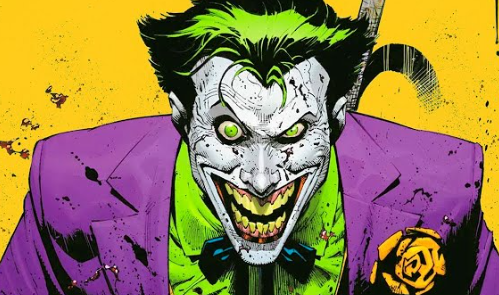
The Joker is arguably the most recognizable villain in pop culture history. With his green hair, chalk-white skin, and rictus grin, the “Clown Prince of Crime” has terrorized Gotham City for over 80 years. He is the chaotic yin to Batman’s ordered yang, a character who defies logic, reason, and often, definition. Unlike most comic book characters who have concrete origins and consistent motivations, the Joker is a shifting enigma. As he famously says in The Killing Joke, “If I’m going to have a past, I prefer it to be multiple choice.”
Because of his massive presence in movies, from Jack Nicholson to Heath Ledger and Joaquin Phoenix, many fans think they know everything about him. They know about the acid vat, the obsession with Batman, and the abusive relationship with Harley Quinn. But the comic book history of the Joker is far stranger, darker, and more complicated than the films usually portray. His history is a tapestry of editorial disputes, bizarre censorship eras, and plot twists that range from the horrifying to the hilarious.
From his original inspiration in silent film to his brief stint as a foreign diplomat, here are 10 things you didn’t know about the comic book history of the Joker.
1. He Was Based on a 1928 Silent Film Character
The Visual Inspiration: The Man Who Laughs
While the Joker’s creation is famously disputed among Batman creators Bob Kane, Bill Finger, and Jerry Robinson, there is one thing they all agreed on: the visual inspiration. The Joker’s iconic look was not entirely original; it was lifted directly from the 1928 silent film The Man Who Laughs, starring Conrad Veidt.
In the film, Veidt plays Gwynplaine, a man whose face has been disfigured into a permanent, grotesque grin. Jerry Robinson (or Bob Kane, depending on who you ask) brought a photo of Veidt to the drawing board. The resemblance is uncanny—the slicked-back hair, the elongated smile, and the haunting eyes are practically identical. The Joker was essentially a colorized version of this tragic black-and-white character, proving that the most terrifying monsters often have roots in human tragedy.
2. He Was Supposed to Die in His First Issue
The Editorial Save: Batman #1 (1940)
It is impossible to imagine the Batman mythos without the Joker, but he almost didn’t make it past his debut. In Batman #1, the Joker is introduced as a cold-blooded killer who murders wealthy citizens with “Joker Venom.” The original script called for him to die at the end of the issue, accidentally stabbing himself in the heart during a fight with Batman.
The creative team felt that recurring villains made Batman look incompetent—if he couldn’t catch them permanently, was he really a good hero? However, editor Whitney Ellsworth saw the potential in the grinning villain and intervened. He forced the team to add a hasty panel at the very end revealing that the Joker had survived the ambulance ride. Without that last-minute editorial mandate, the Joker would have been a one-off villain of the week, and comic history would look very different.
3. The Comics Code Turned Him into a Prankster
The Censorship Era: The Neutered Clown
If you read Batman comics from the 1950s and early 60s, you will notice a drastic shift in the Joker’s behavior. He stops killing people and starts committing elaborate, goofy crimes based on puns and giant props. This wasn’t a natural character evolution; it was a legal necessity.
In 1954, the Comics Code Authority (CCA) was established to regulate comic content, banning gore, violence, and sympathy for criminals. The Joker, originally a serial killer, had to be rebranded. For nearly two decades, he became a harmless “prankster” who stole things like humiliating report cards or committed crimes to confuse Batman rather than kill him. This is the version of the Joker that inspired Caesar Romero’s portrayal in the 1966 Batman TV series—a cackling nuisance rather than a homicidal maniac.
4. The “Red Hood” Origin Predates The Killing Joke
The Origin Story: Detective Comics #168 (1951)
Most fans cite Alan Moore’s 1988 graphic novel The Killing Joke as the definitive origin of the Joker, where a failed comedian falls into a vat of chemicals while wearing a Red Hood costume. However, Moore didn’t invent the Red Hood concept; he was expanding on a story from 1951.
In Detective Comics #168, titled “The Man Behind the Red Hood!”, Batman investigates an old case involving a master criminal who wore a red domed helmet to hide his identity. It is revealed that the Red Hood was actually a lab worker who, while trying to escape Batman, swam through a vat of chemical waste. The chemicals bleached his skin and hair, turning him into the Joker. While Moore added the tragic backstory and the emotional depth, the core mechanics of the Joker’s birth—the Red Hood identity and the chemical bath—had been canon for nearly 40 years prior.
5. He Briefly Became an Iranian Ambassador
The Political Twist: A Death in the Family (1988)
One of the weirdest plot twists in Joker history occurred in the same storyline where he famously murdered Robin (Jason Todd). In A Death in the Family, after brutally beating Robin with a crowbar and blowing him up, the Joker flees to the Middle East.
When Batman finally tracks him down, he discovers that the Joker has been appointed as the diplomatic representative of Iran to the United Nations. (This was later retconned to the fictional nation of Qurac in some reprints to avoid real-world political tension). The Joker appears at the UN General Assembly in traditional diplomatic attire, claiming diplomatic immunity to avoid arrest for his crimes. It was a bizarre attempt to mix superhero stakes with geopolitical thriller elements, resulting in the surreal image of the Joker addressing world leaders while Batman watched helplessly from the gallery.
6. He Had a Sidekick Before Harley Quinn (And He Was Terrifying)
The Forgotten Henchman: Gaggy the Dwarf
Everyone knows Harley Quinn, the Joker’s long-suffering girlfriend and sidekick introduced in the 1990s. But back in the Silver Age, the Joker had a different partner in crime: a little person named Gaggy.
First appearing in Batman #186 (1966), Gaggy (Arthur Gagsworth) was a former circus clown who, like the Joker, resented the audience for laughing at him rather than with him. The Joker hired him because he wanted a “court jester” to make him laugh. Gaggy would often participate in the crimes, but his main job was to cheer the Joker up when schemes failed. Unlike the sympathetic Harley, Gaggy was mean-spirited and vicious. He vanished from comics for decades until being brought back recently as a bitter, terrifying villain jealous of Harley Quinn’s position.
7. He Once Cut Off His Own Face
The Modern Horror: Death of the Family (2012)
In the modern “New 52” era, writer Scott Snyder and artist Greg Capullo took the Joker’s madness to a visceral new level. To prove a point about rebirth and his lack of humanity, the Joker voluntarily allowed the villain Dollmaker to surgically remove his face.
For a year of publication, the Joker was missing, leaving his face pinned to a wall in Gotham Police Department. When he returned in the Death of the Family arc, he stole his rotting face back and strapped it to his head with a belt and fishing hooks. As the story progressed, his face began to decay, slip, and attract flies. It was a grotesque visual metaphor for the character’s “mask” of sanity slipping away, making him look more like a horror movie slasher than a comic book villain.
8. There Are Actually Three Jokers
The Canon Shift: Batman: Three Jokers (2020)
For decades, the inconsistency in the Joker’s personality—sometimes a prankster, sometimes a cold anarchist, sometimes a calculated mastermind—was attributed to bad writing or his own insanity. However, in 2016, Batman sat in the Mobius Chair (a god-like device that knows all answers) and asked for the Joker’s true name. The chair told him: “There are three.”
This concept was explored in the Three Jokers miniseries by Geoff Johns. It revealed that there hasn’t been just one Joker terrorizing Gotham all these years, but three distinct individuals operating simultaneously: “The Criminal” (the Golden Age philosophical mastermind), “The Clown” (the Silver Age prankster), and “The Comedian” (the modern sadistic killer). This revelation attempted to explain the character’s shifting continuity by suggesting it was never just one man.
9. He Refuses to Work With Nazis
The Moral Code: Batman & Captain America (1996)
The Joker is a mass murderer, a terrorist, and a chaotic evil entity, but he surprisingly draws the line at fascism. In the 1996 crossover Batman & Captain America, the Joker is hired by the Red Skull (Captain America’s nemesis) to steal an atomic bomb.
The Joker assumes the Red Skull is just a guy in a costume like him. When he realizes the Red Skull is an actual Nazi from World War II, the Joker is appalled. He turns on his partner, famously shouting, “I may be a criminal lunatic, but I’m an American lunatic!” He then sacrifices his own chances of escape to try and stop the Red Skull from dropping the bomb on the U.S. It is a rare, patriotic glimpse into the Joker’s twisted psyche—he loves chaos, but he hates the orderly tyranny of Nazism.
10. He Tried to Copyright Fish
The Absurdist Scheme: “The Laughing Fish”
One of the most celebrated Joker stories of all time, Detective Comics #475, showcases the perfect blend of his horror and his absurdity. In this story, the Joker dumps his chemicals into the harbor, causing all the fish to mutate and develop his signature white face and red grin.
Instead of holding the city for ransom, he marches into the copyright office and demands to legally copyright the fish, arguing that since they share his face, he should receive a percentage of every fish sold in Gotham. When the clerk explains you can’t copyright a natural resource, the Joker begins murdering bureaucrats until he gets his way. It is the quintessential Joker plot: a scheme that makes absolutely no financial or logical sense, executed with terrifying lethality simply because he thinks it’s funny.
Further Reading
- “The Killing Joke” by Alan Moore and Brian Bolland – The definitive, albeit controversial, origin story exploring the “one bad day” theory.
- “Batman: The Man Who Laughs” by Ed Brubaker – A modern retelling of the Joker’s first appearance, bridging his origin with his debut.
- “Joker” by Brian Azzarello and Lee Bermejo – A gritty, noir-style look at the Joker through the eyes of a low-level henchman.
- “Batman: A Death in the Family” by Jim Starlin – The historical arc where the Joker kills Robin and becomes a diplomat.
- “Batman: Three Jokers” by Geoff Johns and Jason Fabok – The recent miniseries that redefines the character’s mythology.
Keep the Discovery Going!
Here at Zentara, our mission is to take tricky subjects and unlock them, making knowledge exciting and easy to grasp. But the adventure doesn’t stop at the bottom of this page. We are constantly creating new ways for you to learn, watch, and listen every single day.
📺 Watch & Learn on YouTube
Visual learner? We publish 4 new videos every day, plus breaking news shorts to keep you smarter than the headlines. From deep dives to quick facts, our channel is your daily visual dose of wonder.
Click here to Subscribe to Zentara on YouTube
🎧 Listen on the Go on Spotify
Prefer to learn while you move? Tune into the Zentara Podcast! We drop a new episode daily, perfect for your commute, workout, or coffee break. Pop on your headphones and fill your day with fascinating facts.
Click here to Listen on Spotify
Every click, view, and listen helps us keep bringing honest knowledge to everyone. Thanks for exploring with us today—see you out there in the world of discovery!




Leave a Reply