To truly grasp the magnitude of the Harry Potter saga, one must look beyond the castle walls of Hogwarts and peer into the deep well of history that precedes the boy with the lightning scar. The timeline of this universe is a complex tapestry of ancient magic, ideological wars, and personal vendettas that span over a millennium. While the books focus on a specific seven-year window, the events that set those years in motion were centuries in the making. Understanding this chronology is like solving a grand puzzle where every piece—from an old diadem to a childhood friendship—holds the weight of destiny.
The history of the wizarding world is defined by a cyclical struggle between the desire for power and the necessity of love. It is a world where the past is never truly buried; it breathes through the portraits on the walls and the ghosts in the corridors. This guide navigates the major epochs of magical history, providing a comprehensive overview for those looking to understand how the wizarding world evolved from a collection of scattered magical families into a complex society governed by law, secrecy, and the looming shadow of two Dark Lords. Prepare to travel from the dawn of magical education to the final resolution of a conflict that shook the foundations of magic itself.
1. The Medieval Foundation of Hogwarts and the Great Schism
The story begins over a thousand years ago during a time of great peril for magical folk. Fearing persecution from non-magical people, the four most brilliant witches and wizards of the age—Godric Gryffindor, Helga Hufflepuff, Rowena Ravenclaw, and Salazar Slytherin—joined forces to build a sanctuary for education. This era established the four-house system, intended to categorize students by their most dominant virtues. For a time, the founders worked in harmony, creating a bastion of knowledge that would remain the premier school of magic in Great Britain.
However, this golden age was cut short by the first major ideological rift in wizarding history. Salazar Slytherin, believing that magical learning should be restricted to those of “pure” magical heritage, grew increasingly distrustful of Muggle-born students. When the other three founders refused to adopt his elitist views, Slytherin departed the school, but not before constructing a hidden Chamber of Secrets. Inside, he concealed a monster—a Basilisk—designed to purge the school of those he deemed unworthy. This foundational conflict planted the seeds of blood-purity prejudice that would fuel the fires of war for centuries to come, proving that the school’s history was built on a foundation of both unity and deep-seated division.
2. The Peverell Legacy and the Origin of the Deathly Hallows
Long before the rise of modern dark wizards, three brothers known as the Peverells—Antioch, Cadmus, and Ignotus—emerged as figures of legend. According to “The Tale of the Three Brothers,” they used their magical prowess to cross a treacherous river, supposedly meeting Death himself. In exchange for their ingenuity, they were granted three powerful objects: the Elder Wand, the Resurrection Stone, and the Invisibility Cloak. While many wizards view this tale as a mere fable intended to teach a moral lesson about the inevitability of death, the objects were very real.
The history of the Hallows creates a hidden thread through the wizarding timeline. The Elder Wand passed through history in a trail of blood, sought by those obsessed with power. The Resurrection Stone was eventually set into a ring and kept as a family heirloom by the Gaunts, descendants of Cadmus Peverell and Salazar Slytherin. The Invisibility Cloak, meanwhile, was passed down through the Potter line, representing the wisdom of Ignotus Peverell, who sought only to live a long life and greet death as an old friend. This lineage connects Harry Potter directly to the ancient roots of magical lore, making him part of a story that was already ancient when he was born.
3. The Dumbledore-Grindelwald Alliance and the Greater Good
In the era preceding the modern wars, a young Albus Dumbledore and an expelled Durmstrang student named Gellert Grindelwald met in Godric’s Hollow. Both were exceptionally gifted and shared a dangerous vision: the overturning of the International Statute of Wizarding Secrecy. They dreamed of a world where wizards ruled over Muggles “for the greater good,” believing that their superior abilities gave them a moral right to lead. This brief but intense partnership was fueled by an obsession with finding the Deathly Hallows and becoming “Masters of Death.”
The alliance collapsed in tragedy during a three-way duel involving Albus’s brother, Aberforth, which resulted in the accidental death of their sister, Ariana. This event shattered Dumbledore’s ambitions and turned him toward a life of teaching and humility. Grindelwald, however, fled to Europe to build an army and wage a global wizarding war. This period is crucial because it shaped Dumbledore into the mentor he would eventually become. It also established the precedent for a Dark Lord rising to power through ideological manipulation, a blueprint that Tom Riddle would later refine with devastating efficiency in his own pursuit of absolute control.
4. The Transformation of Tom Riddle and the Rise of Lord Voldemort
The middle of the last century saw the emergence of a boy who would become the most feared dark wizard in history. Born into the impoverished and bitter House of Gaunt, Tom Riddle was a descendant of Salazar Slytherin who grew up in a Muggle orphanage. Upon discovering his heritage at Hogwarts, he became obsessed with proving his superiority and achieving immortality. He was a model student on the surface, but in secret, he delved into the darkest corners of magic, discovering the secret of Horcruxes—the act of splitting one’s soul through murder to prevent death.
Riddle’s time at Hogwarts was marked by the first reopening of the Chamber of Secrets, resulting in the death of a student. He successfully framed Hagrid for the crime, ensuring his own reputation remained spotless. After graduation, he disappeared into the shadows, traveling the world to deepen his knowledge of the Dark Arts. When he eventually resurfaced as Lord Voldemort, he had shed his human appearance and his birth name. He gathered a following of “Death Eaters,” largely recruited from his former schoolmates in Slytherin House, and began a campaign of terror that would paralyze the wizarding world for over a decade.
5. The Marauders Era and the First Rise of the Order
While Lord Voldemort’s power grew, a new generation of students arrived at Hogwarts who would become central to the resistance. This group included James Potter, Sirius Black, Remus Lupin, and Peter Pettigrew—collectively known as “The Marauders.” They were famous for their mischief and their creation of the Marauder’s Map, a magical document that revealed every inch of the castle. This era was characterized by a brewing civil war outside the castle walls, which began to seep into the hallways of the school.
During this time, Albus Dumbledore founded the Order of the Phoenix, a secret society dedicated to fighting Voldemort and his Death Eaters. James and Lily Potter, along with their friends, became key members of this resistance. The tragedy of this era lies in its broken friendships; the betrayal of the Potters by Peter Pettigrew and the subsequent framing of Sirius Black are the pivotal events that led to the first war’s conclusion. This period serves as a bridge between the ancient history of the founders and the immediate story of Harry Potter, establishing the deep-rooted loyalties and grudges that define the later years of the timeline.
6. The First Wizarding War and the Prophecy’s Shadow
The First Wizarding War reached its peak when a prophecy was made by Sybill Trelawney, foretelling the birth of a child with the power to vanquish the Dark Lord. Voldemort, hearing only a portion of the prophecy, became convinced that the child of James and Lily Potter was the threat he needed to eliminate. This led to the fateful night at Godric’s Hollow where Voldemort attempted to murder the infant Harry. Instead of succeeding, his curse rebounded due to the sacrificial protection of Lily Potter, destroying Voldemort’s physical form and leaving him as a spectral shadow.
The immediate aftermath was a period of both celebration and confusion. The wizarding world believed the terror was over, and Harry was hailed as “The Boy Who Lived.” However, the cost was high: the Order of the Phoenix was decimated, many Death Eaters escaped justice by claiming they were under the Imperius Curse, and the Longbottom family was tortured into insanity by Bellatrix Lestrange. This era left the wizarding world in a state of fragile peace, with Harry placed in the care of his non-magical relatives to ensure his safety from Voldemort’s remaining followers.
7. The Interregnum: Harry’s Decade in the Muggle World
For ten years, the magical world remained largely stagnant, recovering from the wounds of the war while Harry Potter grew up in the “Muggle” world, completely unaware of his identity. This decade is a vital part of the timeline because it illustrates the total disconnect between the two societies. While Harry was forced to live in a cupboard under the stairs, Voldemort’s spirit survived in the forests of Albania, biding its time and possessing small animals to maintain a foothold in the physical realm.
During this interregnum, the Ministry of Magic worked tirelessly to erase the traces of the war, often ignoring the signs that Voldemort’s influence hadn’t entirely vanished. Lucius Malfoy and other Death Eaters maintained their social standing, subtly influencing the government and ensuring that the old prejudices remained alive. This period of relative calm was essential for the “legend” of Harry Potter to grow; by the time he re-entered the wizarding world on his eleventh birthday, he was not just a boy, but a symbol of hope that many were not yet ready to see challenged.
8. The Return of the Dark Lord and the Ministry’s Denial
The timeline shifts dramatically during Harry’s fourth year of schooling. Following the events of the Triwizard Tournament, Voldemort used Harry’s blood in a dark ritual to regain a physical body. This marked the beginning of the Second Wizarding War. However, unlike the first war, the conflict began with a period of psychological warfare. The Ministry of Magic, led by Cornelius Fudge, refused to believe Harry and Dumbledore, fearing the loss of stability and their own political power.
This denial allowed Voldemort to operate in the shadows for a full year, rebuilding his army and infiltrating the government. The Ministry’s campaign to discredit Harry and Dumbledore—spearheaded by the tyrannical Dolores Umbridge—created a deep rift within the wizarding community. Students were forced to take matters into their own hands, forming “Dumbledore’s Army” to learn the defensive magic the school refused to teach. It wasn’t until a violent confrontation at the Department of Mysteries that the public could no longer ignore the truth: the Dark Lord had returned, and the world was once again at the brink of collapse.
9. The Horcrux Hunt and the Fall of the Ministry
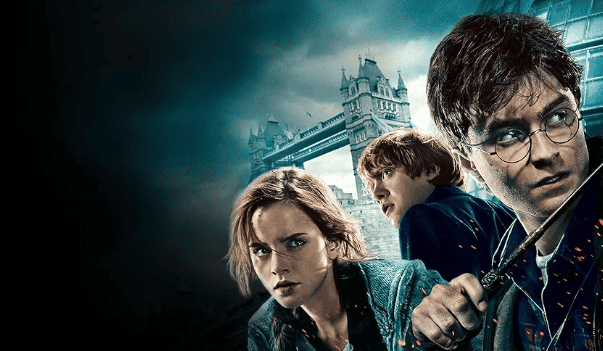
Following the death of Albus Dumbledore, the wizarding world plummeted into its darkest hour. The Ministry of Magic fell to the Death Eaters, and a puppet government was installed to enforce blood-purity laws. Harry, Ron, and Hermione did not return to Hogwarts for their final year; instead, they embarked on a desperate mission to locate and destroy Voldemort’s remaining Horcruxes. This was a war of attrition, fought in isolated forests and hidden locations across the country.
The stakes of the timeline were never higher than during this period of displacement. While the trio hunted for fragments of Voldemort’s soul, the resistance at Hogwarts, led by Neville Longbottom, fought a grueling battle from within. The search for the Horcruxes eventually merged with the quest for the Deathly Hallows, as Harry realized he needed to understand both to truly defeat his enemy. This segment of the timeline emphasizes the transition from a school-based mystery to a full-scale revolutionary conflict, where the fate of all magical and non-magical people hung in the balance of a few teenagers’ bravery.
10. The Battle of Hogwarts and the Nineteen Years Later
The climax of the timeline occurred at the castle where the story began. The Battle of Hogwarts was a final, devastating confrontation between the forces of light and the Death Eater army. It was here that the Horcruxes were finally eliminated, and Harry Potter made his ultimate sacrifice. By walking into the Forbidden Forest to face death willingly, Harry invoked the same ancient protection his mother once had, shielding the defenders of the castle from Voldemort’s spells.
The death of Lord Voldemort at the break of dawn signaled the end of the Second Wizarding War and the beginning of a long process of healing. The timeline concludes with a glimpse “Nineteen Years Later,” showing a world where the scars of the past have faded into a peaceful present. Harry and his friends have grown into adults, sending their own children off to Hogwarts. This epilogue brings the chronology full circle, suggesting that while history is marked by conflict, the ultimate destination of the timeline is the restoration of normalcy and the enduring strength of the families that survived the storm.
Further Reading
- The Harry Potter Series (Books 1-7) by J.K. Rowling
- The Tales of Beedle the Bard by J.K. Rowling
- Hogwarts: An Incomplete and Unreliable Guide by J.K. Rowling
- Short Stories from Hogwarts of Heroism, Hardship and Dangerous Hobbies by J.K. Rowling
- Unlock the Magic: The Ultimate Guide to Watching the Harry Potter Movies in Perfect Order
- The Boy Who Lived Returns: Everything We Know About the Epic Harry Potter TV Series Adaptation
- Beyond the Seven Books: The Definitive Chronological Journey Through the Harry Potter Universe
- The Boy Who Lived: The Ultimate Guide to the Harry Potter Saga and Its Hidden Depths
- 10 Things You Should Know About Fantastic Beasts: The Secrets of Dumbledore (2022)
- 10 Things You Should Know About Fantastic Beasts: The Crimes of Grindelwald (2018)
- 10 Things You Should Know About Fantastic Beasts and Where to Find Them (2016)
- 10 Things You Should Know About Harry Potter and the Deathly Hallows – Part 2 (2011)
- 10 Things You Should Know About Harry Potter and the Deathly Hallows – Part 1 (2010)
- 10 Things You Should Know About Harry Potter and the Half-Blood Prince (2009)