
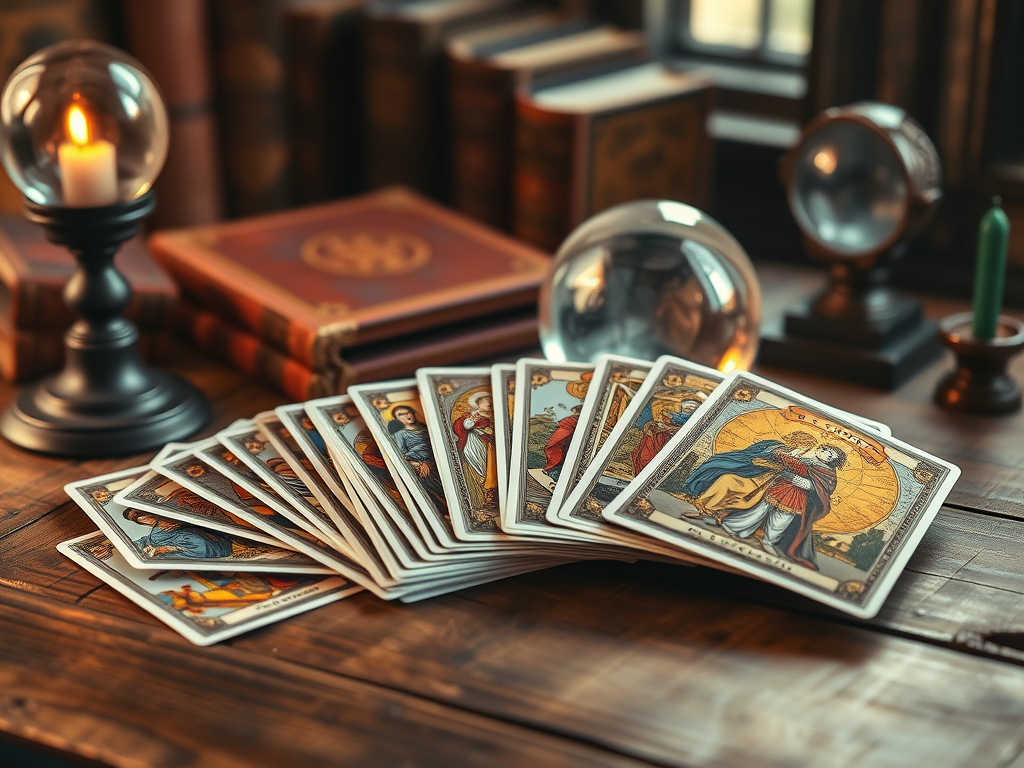
For many, the mention of Tarot cards conjures images of dimly lit rooms, crystal balls, and mysterious figures whispering about “the wheel of fortune” or “the tower.” We often view them as ancient, occult artifacts steeped in the secrets of Egypt or the mysticism of the Middle East. However, the true history of the Tarot is far more surprising and, in many ways, more relatable than the legends suggest.
The evolution of Tarot is a journey from the high-society parlors of Renaissance Italy to the mystical societies of London and Paris, eventually becoming a global phenomenon of personal reflection and psychological insight. Behind the beautiful artwork and symbolic archetypes lies a narrative of human play, artistic innovation, and the power of storytelling. Here are ten facts that reveal the true, fascinating history of the Tarot.
1. They Started as a Simple Card Game, Not a Divination Tool
Despite their modern reputation for predicting the future, the earliest Tarot cards had nothing to do with magic. They were invented in the early 15th century in northern Italy—specifically in cities like Milan, Ferrara, and Bologna—as a trick-taking game called tarocchini or trionfi (triumphs).
Think of it like a precursor to modern Bridge or Spades. Wealthy aristocrats would commission hand-painted decks to play games that were purely for entertainment. At the time, they were simply considered “playing cards” with an extra set of trump cards added for more complex gameplay. It wasn’t until centuries later that anyone thought to use these cards to “read” someone’s destiny. For the first few hundred years of their existence, they were just a fun way to pass a rainy afternoon in a Renaissance palace.
2. The Famous “Major Arcana” Began as “Triumphs”
In a modern Tarot deck, the 22 cards with names like The Magician or The Star are known as the Major Arcana. In the 1400s, these were simply called trionfi—the trumps. The imagery on these cards wasn’t meant to be “occult”; rather, it was a reflection of the cultural and religious world of 15th-century Italy.
The sequence of the trumps originally told a story of the human condition and the social order of the time. You had the lowliest figures (The Fool and The Magician/Juggler), the heights of social power (The Empress, The Emperor, The Pope), and eventually the inescapable forces of nature and divinity (Death, The Sun, The Day of Judgment). These were familiar archetypes to the people of the Renaissance, much like how we recognize characters in a movie today. They weren’t “secret codes”—they were the “celebrities” and “concepts” of the era.
3. The Oldest Surviving Decks Were Painted for Royalty
Because early Tarot cards were hand-painted by master artists, they were incredibly expensive luxury items. The most famous of these is the Visconti-Sforza deck, created in the mid-1400s for the Duke of Milan. These cards were often gilded with real gold leaf and featured portraits of family members as the various characters on the cards.
Because they were so valuable, these decks were handled with care and preserved by wealthy families, which is why we still have fragments of them today. It’s a bit like having a custom-designed, diamond-encrusted deck of cards today—it was a way for the rich to show off their status and their appreciation for fine art. The average person in the 15th century wouldn’t have owned a Tarot deck; they would have played with much simpler, woodblock-printed cards that didn’t survive the wear and tear of time.
4. The “Egyptian Origin” Theory Was Actually 18th-Century Fan Fiction
If you’ve heard that Tarot cards were a secret “Book of Thoth” from ancient Egypt, you’ve been misled by some very creative 18th-century writers. In 1781, a French clergyman named Antoine Court de Gébelin published a theory claiming that Tarot was an ancient Egyptian repository of wisdom hidden in plain sight as a game.
This was during a time of “Egyptomania” in Europe, where everything Egyptian was seen as mysterious and profound. De Gébelin had no historical evidence for his claim—in fact, he couldn’t even read Egyptian hieroglyphics—but his theory captured the public’s imagination. This “fake history” is what transformed the Tarot from a parlor game into an “occult” tool. People began to look at the cards through the lens of mysticism rather than recreation, effectively rebranding the deck for a new, more superstitious era.
5. A Seed Merchant Created the First Professional “Tarot Reader” Persona
Shortly after de Gébelin’s “Egyptian” theory took off, a man named Jean-Baptiste Alliette (who went by the pseudonym Etteilla) took it to the next level. Etteilla was originally a seed merchant, but he saw the growing interest in the cards and became the world’s first professional cartomancer—someone who uses cards for divination.
Etteilla didn’t just read the cards; he redesigned them. In 1789, he released the first deck specifically intended for fortune-telling, adding astrological symbols and specific “meanings” to each card. He also popularized the practice of “reversals,” where a card has a different meaning if it lands upside down. Before Etteilla, the cards were just images; after him, they were a vocabulary for the future. He turned Tarot into a business, and his influence is still felt in almost every reading done today.
6. Your Standard Deck of Cards and Tarot Are Close Cousins
Ever notice how a Tarot deck has four suits? They are typically Swords, Wands (Batons), Cups, and Pentacles (Coins). These correspond almost perfectly to the Spades, Clubs, Hearts, and Diamonds we use in a standard 52-card deck today.
The primary difference is that the Tarot has a 14th card in each suit (the Knight) and, of course, the 22 Major Arcana cards. In fact, if you take a Tarot deck and remove the Knight and all the Major Arcana cards, you basically have a standard deck of playing cards. This shared DNA exists because both decks evolved from the same ancestors—the Mamluk cards of Egypt that arrived in Europe in the late 1300s. They are two branches of the same family tree: one stayed focused on games (playing cards), while the other took a detour into storytelling and mysticism (Tarot).
7. The Most Famous Deck in the World Was Created by a “Pixie”
If you look at a Tarot deck today, chances are it is the Rider-Waite-Smith deck. Published in 1909, this is the yellow-boxed deck you see in movies and bookstores. While Arthur Edward Waite (an academic mystic) gets most of the credit, the actual artist was a woman named Pamela Colman Smith, nicknamed “Pixie.”
Smith was a visionary artist and set designer who brought the cards to life. Her most significant contribution was illustrating the “pip” cards (the numbered cards like the 3 of Swords). Before Pixie, these cards were often just simple icons (like three swords on a blank background). Smith turned them into evocative scenes—like the famous three swords piercing a heart. This made the Tarot much easier for beginners to interpret, as they could “read” the story in the picture rather than memorizing a list of meanings. Despite her massive impact, she died in relative obscurity and poverty, only gaining true recognition decades later.
8. Tarot Was Banned in England Under the “Witchcraft Act”
Believe it or not, for a period in the 20th century, using Tarot cards for fortune-telling could get you in legal trouble in the United Kingdom. Under the Witchcraft Act of 1735, “pretending to exercise or use any kind of witchcraft, sorcery, enchantment, or conjuration” was a crime.
This wasn’t just ancient history; as late as the 1940s, psychics and tarot readers were being fined or even jailed. The act was famously used during World War II to convict a medium named Helen Duncan. It wasn’t until 1951, when the Act was replaced by the Fraudulent Mediums Act, that Tarot reading moved out of the legal shadows. This period of “illegality” added to the Tarot’s “forbidden” allure, reinforcing the idea that these cards held a dangerous power that the authorities were afraid of.
9. The “Death” Card Rarely Means Actual Death
One of the biggest misconceptions in Tarot history is that drawing the Death card is a literal omen of someone’s demise. In reality, the history of this card is about transformation and the natural cycles of life.
In the 15th-century games, the Death card was a “leveler”—a reminder that everyone, from the king to the beggar, eventually faces the end. When the cards transitioned into spiritual tools, this meaning evolved. Most readers today view it as a symbol of an “ending” that makes room for a “beginning”—like a caterpillar turning into a butterfly. The fear surrounding the card is largely a creation of Hollywood movies and spooky stories. Historically, it’s one of the most positive cards in the deck because it signals the clearing away of the old to make way for the new.
10. Modern Science Sees Tarot as a Mirror for the Subconscious
Today, the Tarot is moving away from the world of “fortune-telling” and into the world of psychology and self-reflection. Many modern therapists and life coaches use Tarot cards as a tool for “storytelling” or “visual prompts.”
This is based on the idea of archetypes, a concept popularized by psychiatrist Carl Jung. Jung believed that certain symbols (like the Mother, the Hero, or the Wise Old Man) are universal across human cultures. When you look at a Tarot card, you aren’t seeing a “magical prediction”; you are seeing a mirror of your own subconscious. Your brain naturally tries to find patterns and stories in the images, helping you uncover feelings or perspectives you might have been ignoring. In this sense, the “magic” of the Tarot isn’t in the cards themselves, but in the person looking at them.
Further Reading
- The Tarot: History, Symbolism, and Divination by Cynthia Giles
- The Cultural History of Tarot by Helen Farley
- Tarot: The Story Machine by Jim Carroll
- Seventy-Eight Degrees of Wisdom by Rachel Pollack
- Mystical Origins of the Tarot by Paul Huson
Keep the Discovery Going!
Here at Zentara, our mission is to take tricky subjects and unlock them, making knowledge exciting and easy to grasp. But the adventure doesn’t stop at the bottom of this page. We are constantly creating new ways for you to learn, watch, and listen every single day.
Watch & Learn on YouTube
Visual learner? We publish 4 new videos every day, plus breaking news shorts to keep you smarter than the headlines. From deep dives to quick facts, our channel is your daily visual dose of wonder.
Click here to Subscribe to Zentara on YouTube
Listen on the Go on Spotify
Prefer to learn while you move? Tune into the Zentara Podcast! We drop a new episode daily, perfect for your commute, workout, or coffee break. Pop on your headphones and fill your day with fascinating facts.
Click here to Listen on Spotify
Every click, view, and listen helps us keep bringing honest knowledge to everyone. Thanks for exploring with us today—see you out there in the world of discovery!




Leave a Reply