
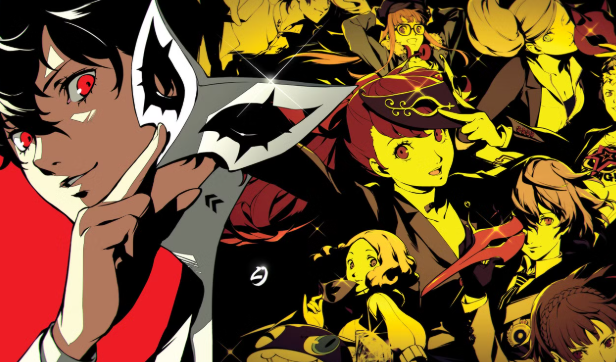
In the vibrant world of Japanese Role-Playing Games (JRPGs), few franchises have achieved the cult-to-mainstream status of the Persona series. What began as a niche experiment has evolved into a global phenomenon, celebrated for its stylish aesthetics, infectious music, and a unique gameplay loop that balances the mundane stresses of high school life with the supernatural dangers of a hidden reality. At its core, Persona is a story about identity—the masks we wear to navigate society and the hidden “Shadows” we keep tucked away in our subconscious.
To the casual observer, the series might look like a colorful anime adventure. However, beneath the flashy menus and pop-infused soundtracks lies a profound exploration of human psychology and mythology. The series asks a fundamental question: Do you have the courage to face your true self? Whether you are a veteran “Phantom Thief” or a newcomer stepping into the Velvet Room for the first time, understanding the DNA of this franchise reveals a masterclass in game design and narrative depth. These ten insights will pull back the curtain on the mysteries of the Dark Hour, the Midnight Channel, and the Metaverse.
1. The Hidden Roots: A Spin-Off of Shin Megami Tensei
Many fans are surprised to learn that the Persona series did not start as a standalone franchise. It is actually a “branch” of the much older and darker Shin Megami Tensei (SMT) series. While the mainline SMT games typically deal with post-apocalyptic settings, religious wars between angels and demons, and silent protagonists navigating the literal end of the world, Persona took a more intimate approach. It was born from a specific entry titled Shin Megami Tensei: if…, which explored a “what if” scenario where the demonic invasion happened within a high school setting.
This transition from global apocalypse to teenage angst allowed the developers at Atlus to focus on character development in a way the main series couldn’t. However, the SMT DNA is still visible in the franchise’s mechanics. The “demons” of the main series became the “Personas” of the spin-off, and the elemental combat system—where hitting a weakness grants extra turns—remains a staple of both. This lineage is why the series feels so much “grittier” than other school-based RPGs; it carries the weight of a franchise built on philosophical conflict and high-stakes survival.
2. The Jungian Blueprint: Psychology as Gameplay
The most defining characteristic of the Persona series is its deep integration of Jungian psychology, named after the Swiss psychiatrist Carl Jung. The very word “Persona” refers to the social mask an individual presents to the world, designed to leave a particular impression while concealing their true nature. In the games, when a character “awakens” to their Persona, they are essentially gaining the power to use their social mask as a literal shield and weapon against the “Shadows”—the repressed, darker parts of the psyche that people refuse to acknowledge.
This psychological framework informs every aspect of the game’s narrative. Characters often have to confront their Shadow—a monstrous version of themselves that shouts their deepest insecurities out loud—before they can harness its power. This isn’t just a fantasy trope; it’s a relatable analogy for mental health and self-acceptance. By framing magical battles as internal psychological breakthroughs, the series provides a cathartic experience for players. It suggests that our “demons” aren’t something to be destroyed, but something to be understood and integrated into our complete selves to achieve “Individuation,” or psychological wholeness.
3. The Velvet Room: A Hub Beyond Time and Space
In every Persona game, there is a recurring location known as the Velvet Room. This mysterious space, existing “between dream and reality, mind and matter,” serves as the player’s base for fusing new Personas and managing their power. The room is always blue, always accompanied by the haunting “Aria of the Soul” operatic theme, and always overseen by the long-nosed master, Igor. Interestingly, the room changes its appearance to reflect the protagonist’s internal state: it has appeared as a luxury elevator, a high-end limousine, and even a prison cell.
The lore of the Velvet Room is steeped in the works of Mary Shelley and other classic literature. Igor’s assistants—such as Elizabeth, Margaret, and Lavenza—are all named after characters from Frankenstein. This subtle naming convention hints at the “artificial” nature of the protagonist’s growth; they are essentially “creating” a powerful being out of the remnants of their experiences. The Velvet Room acts as a sanctuary for the player, a place where the chaos of the outside world is distilled into a structured system of “Equivalent Exchange,” where old identities are sacrificed to birth more powerful ones.
4. The Social Link Revolution: Investing in Empathy
One of the most revolutionary additions to the JRPG genre was the introduction of Social Links (later called Confidants). This system requires the player to manage their limited calendar days by choosing which friends and acquaintances to spend time with. On the surface, it looks like a dating sim or a casual side activity. However, these relationships are directly tied to the player’s combat prowess. As your bond with a character grows, the Personas associated with their “Arcana” receive massive power boosts and new abilities.
This mechanic changed the way players perceive non-player characters (NPCs). In a traditional RPG, an NPC is often just a shopkeeper or a quest-giver. In Persona, every character is a potential source of strength. This creates a compelling gameplay loop: you want to be a better friend because it makes you a better warrior. It gamifies empathy, encouraging players to listen to the struggles of a diverse cast—ranging from elderly widows to struggling athletes—to unlock the “Wild Card” potential within themselves. It’s a vivid example of how narrative and mechanics can perfectly harmonize to tell a story about the power of human connection.
5. The Visual Identity: A Masterclass in Graphic Design
If you see a single screenshot of a modern Persona game, you instantly know what it is. This is thanks to the distinct visual direction of Shigenori Soejima and the team’s commitment to a specific “color theme” for each entry. The franchise uses high-contrast colors and stylized UI (User Interface) menus that move with an energy rarely seen in video games. For instance, one entry might use a cool, melancholic blue to represent themes of death and memory, while another uses a vibrant red to signify rebellion and passion.
The UI isn’t just a list of commands; it’s an extension of the game’s personality. Menus often explode across the screen with jagged edges, comic-book-style “BAM!” sound effects, and smooth transitions that make even a turn-based battle feel fast-paced. This “Style over Substance” approach is a bit of a misnomer, as the style is the substance. The fashionable character designs and pop-art aesthetics make the games feel “cool” and modern, distinguishing them from the more traditional “swords and sorcery” look of other RPGs. It turns the act of navigating a menu into an aesthetic experience in itself.
6. Shoji Meguro’s Auditory Magic: More Than Just Music
It is impossible to discuss Persona without mentioning the music of Shoji Meguro. Unlike most RPGs that rely on orchestral scores to evoke a sense of “epicness,” the Persona series utilizes a fusion of acid jazz, J-pop, rock, and hip-hop. The music is often “diegetic,” meaning it feels like the kind of music the characters themselves would be listening to on their headphones. The use of English vocals in many Japanese tracks creates a “city pop” vibe that makes the fictional cities feel lived-in and contemporary.
Meguro’s compositions are designed to stick in your head, often looping during long dungeon crawls or school days without becoming tiresome. But the music also serves a narrative purpose. Key themes are rearranged and “remixed” throughout the story to reflect the shifting mood. A bright, upbeat track might become distorted or melancholic as the plot thickens. The music acts as the emotional heartbeat of the series, bridging the gap between the player and the protagonist’s daily life. It’s the reason why “Persona concerts” are massive events in the real world, as the soundtrack has a life and identity independent of the game itself.
7. The Arcana and Tarot: Mapping the Human Experience
The series heavily utilizes the Major Arcana from the Tarot deck (The Fool, The Magician, The Priestess, etc.) to categorize its characters and Personas. This isn’t just for flair; it provides a structural map of the “Hero’s Journey.” The protagonist almost always begins as The Fool (Arcana number 0), representing infinite potential and the start of a journey. As they meet new people, those individuals are assigned an Arcana that matches their personality traits and life struggles.
For example, a character under the Chariot Arcana is usually driven, athletic, and perhaps a bit impulsive, while the Hermit Arcana might represent someone who is withdrawn or seeking wisdom in isolation. By using this ancient system of symbolism, the series taps into universal archetypes that have existed for centuries. It gives the player a sense of destiny and cosmological order. When you “rank up” a relationship, you aren’t just getting to know a person; you are completing a chapter of your own spiritual evolution as defined by the Tarot’s narrative arc.
8. The Silent Protagonist and the “Wild Card”
In most Persona games, the protagonist is a “silent” character. While they have a name and a design, they rarely speak, allowing the player to choose their dialogue responses. This is a deliberate design choice to foster immersion. The protagonist is meant to be a blank slate that the player “fills in” with their own choices. However, within the game’s lore, this emptiness is explained as the power of the Wild Card.
Most characters can only summon one Persona—the one that represents their specific personality. The protagonist, however, has the unique ability to hold multiple Personas and switch between them at will. This is a metaphor for the adaptability of youth. While the supporting cast is defined by their specific roles, the protagonist is a “Fool” who can become anything. This “Wild Card” status makes them the focal point of the Velvet Room’s interest and the only force capable of stopping the cosmic threats that loom over humanity. It reinforces the idea that an individual is not fixed but is a collection of many different potential “selves.”
9. Global Mythology: A Pantheon in Your Pocket
While the story is set in Japan, the Personas themselves are a global collection of gods, demons, and legendary figures. You can lead a team consisting of the Greek god Thor, the Japanese sun goddess Amaterasu, and the Irish folk hero Cu Chulainn. The series acts as a digital encyclopedia of world mythology, often providing “demon lore” snippets that explain the origins of each creature.
This diversity serves two purposes. First, it emphasizes the “All is One” philosophy of the collective unconscious—the idea that all human cultures share the same basic myths and archetypes. Second, it provides immense strategic depth. Each mythological figure has elemental strengths and weaknesses based on their legends. For instance, a fire-breathing dragon will likely be weak to ice. This creates a “collect-em-all” mentality similar to other monster-catching games, but with a much darker, more sophisticated edge. It turns the player into a “cultural traveler,” wielding the myths of the world to solve modern-day problems.
10. Localization and the “Revelations” Era
The Persona series has a complex history with its transition to the Western market. The very first game was released in North America under the title Revelations: Persona, and it underwent significant “Americanization.” Character designs were changed, names were altered (protagonist “Naoya” became “Boy with Earring”), and even the setting was moved from Japan to a fictional US city. This was a common practice in the 1990s, as publishers feared Japanese cultural elements wouldn’t appeal to Westerners.
However, as the series progressed, the developers realized that the “Japanese-ness” of the game—the school uniforms, the ramen shops, the Shinto shrines—was actually a huge part of the appeal. Modern entries are celebrated for their faithful depiction of Japanese daily life, serving as a form of “virtual tourism” for international players. This shift in localization philosophy mirrors the growth of the global gaming community, which has become far more open to experiencing different cultures authentically. Today, the series is a bridge between East and West, proving that deeply specific cultural stories can have universal emotional resonance.
Further Reading
- The Archetypes and The Collective Unconscious by Carl Jung (The core psychological foundation)
- The Hero with a Thousand Faces by Joseph Campbell (Understanding the “Wild Card” journey)
- Persona 5: Mementos Reports by Famitsu (Deep dives into the setting’s lore)
- The Art of Persona 5 by Prima Games (For an exploration of Soejima’s design philosophy)




Leave a Reply