
Table of Contents
In the grand hierarchy of the domestic household, the cat often occupies a position somewhere between “enigmatic roommate” and “benevolent deity.” While dogs wear their hearts on their wagging tails, felines are masters of the subtle nuance. To the casual observer, a cat might seem indifferent, perhaps even a bit patronizing. However, beneath that velvet exterior lies a complex architecture of respect and devotion. Understanding cat behavior meanings is less like reading a book and more like deciphering a sophisticated code.
The reality is that your cat doesn’t just tolerate you for the kibble; they genuinely admire you as a superior—or at least equal—member of their social clowder. This admiration is rooted in feline communication and evolutionary survival tactics. When your cat chooses to interact with you, they are utilizing a specialized “Digital Nervous System” of scent, sound, and movement to signal that you are their chosen person. From the “slow blink” to the “quivering tail,” here are the top 10 reasons your cat secretly admires you.
1. The “Cat Kiss”: Why the Slow Blink is the Ultimate Sign of Trust
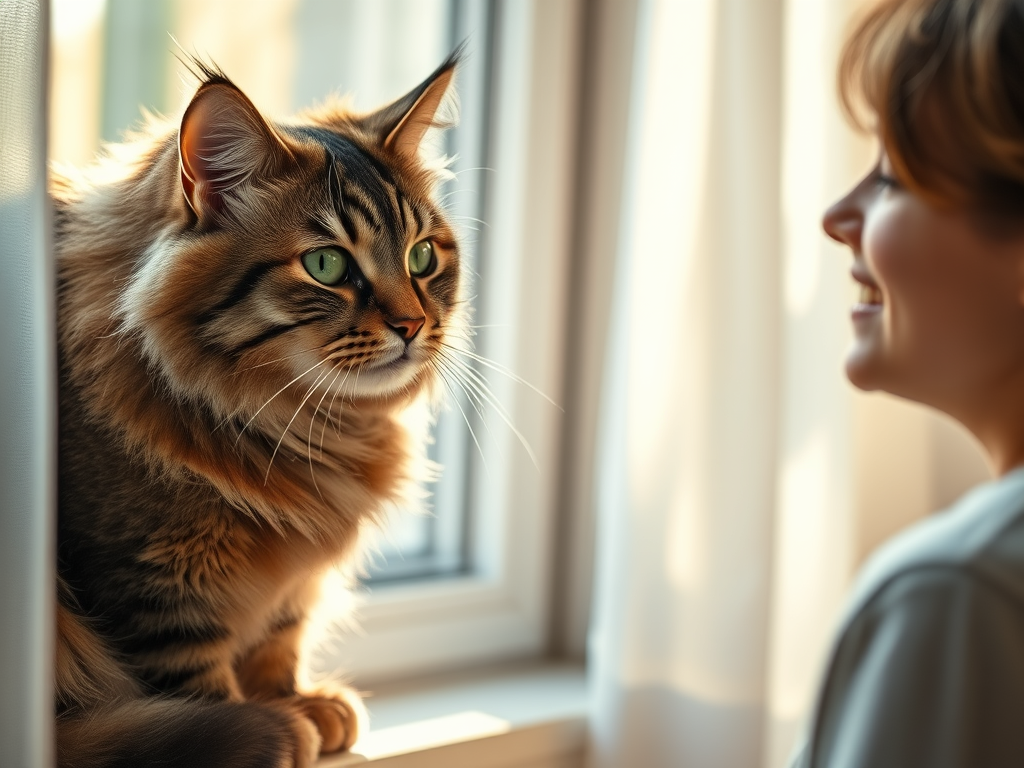
If you’ve ever caught your cat staring at you from across the room, only to have them slowly close and then open their eyes, you haven’t just witnessed a sleepy reflex. You’ve received a “cat kiss.” In the wild, closing one’s eyes is the ultimate vulnerability. For a predator, blinking in the presence of another creature is an admission that they do not perceive that creature as a threat.
When your cat gives you a slow blink, they are effectively saying, “I trust you with my life.” This is a cornerstone of cat body language that transcends the need for words. It’s an acknowledgement of your peaceful presence. Think of it as a silent “I love you” delivered with the gravitas of a secret handshake. By mirroring this behavior—blinking slowly back at them—you are engaging in a cross-species dialogue that reinforces the cat-human bond. It’s a sophisticated display of mutual admiration that proves they feel entirely safe in your territory.
2. Head Bunting: The Scent-Based “Seal of Approval”
When your cat marches up to you and thumps their forehead against your shin or cheek, they aren’t just being pushy; they are “bunting.” Cats possess specialized scent glands in their cheeks, forehead, and chin. By rubbing these areas against you, they are engaging in a process of scent marking that effectively labels you as “safe” and “part of the family.”
From a feline perspective, the world is a map of smells. By depositing their pheromones on your skin or clothes, they are creating a shared “colony scent.” This is an act of high-level social inclusion. They are essentially putting their signature on you, claiming you as a vital asset in their environment. This feline communication tells any other animal that you belong to a formidable social unit. They admire you enough to want to share their very identity with you, ensuring that wherever you go, you carry the olfactory evidence of their devotion.
3. “Making Biscuits”: A Regression to Pure Contentment
The rhythmic kneading of paws—often called “making biscuits”—is one of the most endearing signs your cat loves you. This behavior is an “atavistic” or primitive reflex carried over from kittenhood. When nursing, kittens knead their mother’s belly to stimulate milk flow. When an adult cat performs this on your lap, they are experiencing a profound state of regression and comfort.
Essentially, they are associating you with the most secure and nurturing figure in their life: their mother. This cat behavior meaning goes beyond simple relaxation; it is a physical manifestation of feeling nurtured. If they are purring while they do it, they are signaling a peak “flow state” of happiness. While their claws might occasionally make the experience a bit “stabby,” the intent is pure. They admire the comfort you provide so much that they physically treat you like the ultimate provider of safety and sustenance.
4. The “Trophy” Presentation: Respecting Your (Lacking) Hunting Skills
We’ve all been there: you wake up to find a toy mouse—or worse, a real one—deposited squarely on your rug. While your human instinct might be one of horror, your cat’s intent is remarkably noble. In a feline social group, successful hunters bring prey back to the “nest” to feed the young or the less capable members of the colony.
By bringing you a “gift,” your cat is acknowledging your role as a family member who, quite frankly, seems incapable of catching your own dinner. They admire you, but they also worry about your survival! This cat-human bond is strengthened by their desire to contribute to the group’s welfare. Whether it’s a sodden felt bird or a moth, it is a tribute to your shared life. They are inviting you into the most fundamental aspect of their “Physical AI” life—the hunt and the harvest—viewing you as a partner worthy of their hard-earned spoils.
5. The Question Mark Tail: A High-Value Greeting
A cat’s tail is the “mood ring” of the feline world. When you walk through the front door and see your cat approaching with their tail held high, often with a slight crook at the tip like a question mark, you are witnessing a “social signal of peace.” If that tail is also quivering or vibrating, they aren’t just happy—they are ecstatic to see you.
This upright tail greeting is a sign that the cat is open to interaction and feels a high degree of confidence in your presence. In the wild, a low or tucked tail indicates fear or submission, while a puffed tail signals aggression. The vertical “antenna” tail is reserved for friends and allies. It is a visual shout of admiration that cuts through the house, signaling that your arrival is the highlight of their day. They aren’t just acknowledging your presence; they are celebrating it with the most positive cat body language they possess.
6. Allogrooming: The Art of Social Licking
If your cat has ever decided to give your hand or forehead a thorough “sandpaper” wash, you’ve been the recipient of allogrooming. In the animal kingdom, social grooming serves two purposes: hygiene and social bonding. Cats generally only groom other cats they view as part of their “inner circle.”
By licking you, your cat is performing a “bonding ritual” that reaffirms your status as a trusted peer. It is also an exchange of scents; as they lick you, they are removing “foreign” smells and replacing them with their own familiar pheromones. This feline communication is their way of saying, “You are one of us.” They admire your place in their life enough to spend their precious energy maintaining your “fur” (or skin). It is a gesture of profound intimacy and a clear sign that you have achieved the highest rank in their personal social hierarchy.
7. The Belly Flash: A Display of Ultimate Vulnerability
The sight of a cat rolling onto its back to reveal its soft, fuzzy underbelly is often mistaken for an invitation for a belly rub (often with painful results). However, in the world of cat behavior meanings, the “belly flash” is actually a testament to your trustworthiness. A cat’s stomach is its most vulnerable area, housing all its vital organs.
By exposing this area to you, they are demonstrating that they do not believe you would ever cause them harm. It is a “passive trust exercise.” They admire the safety of the environment you have created. When they sprawl out in the middle of the floor, belly up, they are effectively saying the “coast is clear” because you are there to guard the perimeter. It is the ultimate compliment to your protective presence, even if it’s a “look but don’t touch” situation.
8. The “Shadow” Effect: Following You into the Bathroom
Have you ever wondered why your cat insists on following you into the most private rooms of your home? While it might feel like a “privacy violation” to us, to a cat, it’s a “security detail.” Cats are very aware of their surroundings and the potential for “unstructured” threats. By following you, they are maintaining their social connection and ensuring that the “clowder” stays together.
This kitten-like attachment behavior often persists into adulthood with humans. They admire you as a leader or a “giant, friendly cat” whose movements are worth monitoring. Their curiosity is fueled by a desire to be near the source of their security. If they sit outside the door or wait for you, they are essentially “standing guard.” It’s a subtle but constant reminder that they view your presence as the center of their world, and they don’t want to miss a single moment of your day.
9. Purring as a “Vibrational Hug”
The low rumble of a cat purring is one of the most soothing sounds in nature, but its purpose is surprisingly complex. While we often associate it with pure joy, cats also purr to heal themselves and to communicate “all is well” to those around them. When a cat purrs specifically while sitting on or near you, they are creating a “vibrational bond.”
Research suggests that the frequency of a cat’s purr (between 25 and 150 Hertz) can actually improve bone density and promote healing in both the cat and the human. By purring in your lap, your cat is essentially sharing their “internal medicine” with you. They admire the relationship enough to want to keep the “vibes” high and healthy. It is their way of acknowledging the “symbiotic” nature of your bond—they provide the peace, and you provide the lap.
10. High-Frequency Trills: The “Human-Only” Vocalization
Did you know that adult cats almost never meow at other cats? Meowing is a behavior they develop specifically to communicate with humans. However, even more special than the meow is the “trill” or “chirp”—a short, musical sound that sounds like a cross between a purr and a squeak.
When your cat greets you with a trill, they are using a “friendly solicitation” sound. It is a polite and affectionate way of saying, “Hello, friend!” This vocalization is a clear indicator of feline admiration. They have learned that you respond to these specific sounds, and they use them to invite you into their space for play or affection. By developing a “private language” just for you, they are acknowledging that your relationship is unique and worthy of its own special dialect.
Further Reading
- The Inner Life of Cats: The Science and Secrets of Our Feline Companions by Thomas McNamee.
- Cat Sense: How the New Feline Science Can Make You a Better Friend to Your Pet by John Bradshaw.
- Think Like a Cat: How to Raise a Well-Adjusted Cat—Not a Sour Puss by Pam Johnson-Bennett.
- Decoding Your Cat: The Ultimate Experts’ Guide to Learning Your Cat’s Language by American College of Veterinary Behaviorists.
Keep the Discovery Going!
Here at Zentara, our mission is to take tricky subjects and unlock them, making knowledge exciting and easy to grasp. But the adventure doesn’t stop at the bottom of this page. We are constantly creating new ways for you to learn, watch, and listen every single day.
Watch & Learn on YouTube
Visual learner? We publish 4 new videos every day, plus breaking news shorts to keep you smarter than the headlines. From deep dives to quick facts, our channel is your daily visual dose of wonder.
Click here to Subscribe to Zentara on YouTube
Listen on the Go on Spotify
Prefer to learn while you move? Tune into the Zentara Podcast! We drop a new episode daily, perfect for your commute, workout, or coffee break. Pop on your headphones and fill your day with fascinating facts.
Click here to Listen on Spotify
Every click, view, and listen helps us keep bringing honest knowledge to everyone. Thanks for exploring with us today—see you out there in the world of discovery!




Leave a Reply