
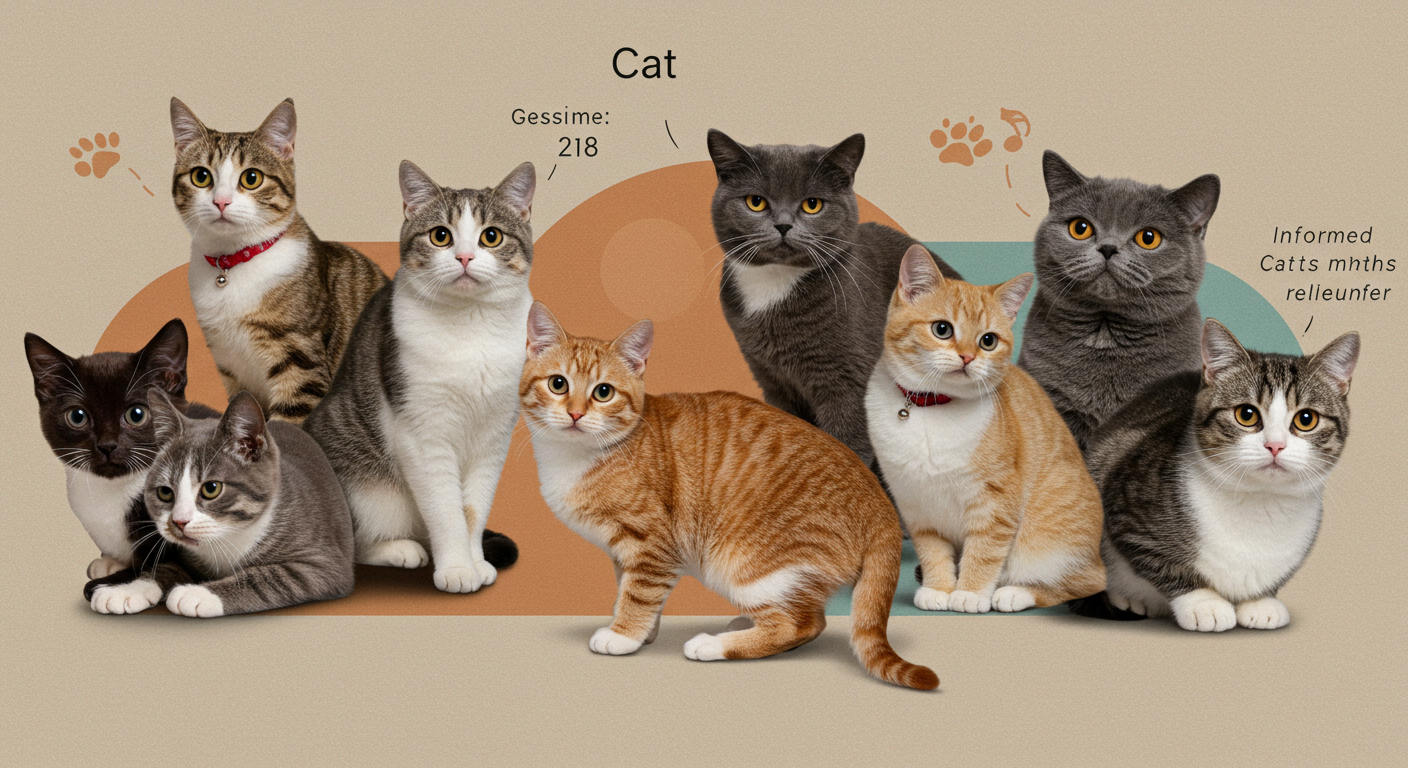
Cats! They’re mysterious, graceful, and sometimes a little bit quirky. For centuries, humans have shared their homes with these furry friends, and in that time, all sorts of stories and ideas about them have popped up. From ancient whispers about their magical powers to common sayings we hear every day, many of our beliefs about cats are more like tall tales than true facts. It’s time to shine a light on these popular cat myths and discover the amazing scientific truths that truly explain our feline companions. Get ready to swap those old wives’ tales for real feline facts!
1. Myth: Cats Always Land on Their Feet
This is probably one of the most famous cat myths, and while cats are incredibly athletic and have an amazing ability to twist their bodies in the air, it’s not a superpower! Cats possess something called a “righting reflex.” Think of it like this: if you drop a piece of toast, it often lands butter-side down, right? Well, a cat’s body is designed to quickly orient itself when falling, usually twisting so its feet are underneath. This allows them to land with remarkable agility, spreading the impact across their paws and legs.
However, this impressive ability isn’t foolproof. A cat’s age, how healthy they are, and especially the height of the fall can all affect their landing. Vets often see something called “high-rise syndrome,” which refers to the injuries cats get from falling out of windows or off balconies. These injuries can be severe, including broken bones, punctured lungs, and internal damage. Interestingly, studies have sometimes shown that cats falling from very high places (like over seven stories) might get less injured than those falling from a few stories up. This is because they have time to relax their bodies and reach “terminal velocity,” which means they’re no longer speeding up, giving them a slightly better chance. But make no mistake: falling from a height is dangerous for cats, and the “always land on their feet” idea is a myth.
2. Myth: Cats Are Solitary Creatures
Many people picture cats as loners, happy to just do their own thing and not really needing anyone else. While it’s true that cats can be very independent and enjoy their alone time, the idea that they are purely solitary creatures is a big misconception. Cats are actually social animals, and they have complex ways of communicating with each other and with their human families.
If you have a cat, you’ve probably seen them show affection. They rub against your legs (this is called “allorubbing” and is a way they share their scent and bond with you), knead on your lap, or even groom your hair. These are all signs of social bonding. In the wild, where cats live in colonies, you can see very organized social structures, with groups of cats sharing territories, raising kittens together, and even grooming each other. Cats are considered “facultative social animals,” which means they can adapt to living alone or in groups, depending on their environment and experiences. So, while your cat might enjoy a quiet nap in a sunbeam by themselves, they also deeply value their connections with you and any other pets in the household. They just show their affection in unique, subtle ways!
3. Myth: Cats Purr Only When They’re Happy
The gentle rumble of a cat’s purr is one of the most comforting sounds for a cat owner. We often associate purring with a contented cat curled up on a lap, happy and relaxed. And while it’s certainly true that cats purr when they’re feeling joyful, this charming sound is actually much more complex and has multiple functions.
Cats also purr when they are feeling stressed, anxious, scared, or even when they are injured or giving birth. It’s like a self-soothing mechanism, a way for them to calm themselves down. Think of it like a human humming to themselves when they’re a little nervous. Scientists have even explored the idea that purring might have healing properties! The low-frequency vibrations of a cat’s purr (usually between 25 and 150 Hertz) are within a range that has been shown to promote bone growth, help repair muscles and tendons, and even reduce pain and swelling. So, while a happy purr is a wonderful thing, if your cat is purring while seeming unwell or agitated, it might be their way of trying to feel better or cope with discomfort. It’s truly a multi-purpose vocalization!
4. Myth: Cats Hate Water
This myth is a common one, likely because most domestic cats will quickly run away if you try to put them in a bath! While it’s true that many cats have a strong aversion to getting wet, this isn’t a universal trait for all felines, nor is it always an innate characteristic. In fact, some cat breeds absolutely love water and are known for their swimming abilities.
Take the Turkish Van, for example, often nicknamed the “swimming cat.” These cats genuinely enjoy playing in water and are natural swimmers. Other breeds, like the Maine Coon, also show a greater tolerance for water than many of their feline cousins. The aversion to water in most cats is often a learned behavior. Perhaps a negative experience, like being accidentally sprayed or forcibly bathed, created a strong dislike. Or, because cats are so fastidious about grooming themselves, they might dislike the feeling of wet fur. However, with early, positive exposure, individual cats can absolutely learn to tolerate, and even enjoy, playing with water. You might see a cat batting at a dripping faucet, playing in a shallow bowl of water, or even trying to dip a paw into your bath. So, while most cats might not be eager for a swim, don’t assume every cat will be terrified of water!
5. Myth: Cats Need Milk
The image of a cute kitten lapping up a saucer of milk is deeply ingrained in popular culture. However, this heartwarming scene is actually a bad idea for most adult cats! While kittens absolutely need their mother’s milk (or a special kitten milk replacer if their mother isn’t available) for proper growth and nutrition, adult cats do not need, and often cannot tolerate, cow’s milk.
The reason for this is simple: most adult cats are lactose intolerant. Just like many humans, their bodies stop producing the enzyme (lactase) needed to break down the sugar in milk (lactose) once they are weaned from their mother’s milk. Giving cow’s milk to a lactose-intolerant cat can lead to digestive upset, including vomiting, diarrhea, and stomach cramps. It’s not only unnecessary for their diet but can actually make them feel quite ill. Cats need a balanced diet of high-quality cat food appropriate for their age and health status, and fresh, clean water should always be available. So, next time you think about offering your feline friend a saucer of milk, remember that water is always the best choice for their hydration and health!
6. Myth: A Cat’s Whiskers Are Just for Show
A cat’s whiskers are much more than just cute facial adornments; they are incredibly sensitive and vital sensory organs that play a crucial role in how a cat interacts with its environment. These long, stiff hairs, scientifically known as “vibrissae,” are deeply rooted in areas with a rich supply of nerves and blood vessels, making them highly sensitive to touch and vibration.
Think of whiskers as a cat’s highly sophisticated radar system. They help cats navigate in the dark, sense changes in air currents, and determine if they can fit through narrow spaces. When a cat is exploring, its whiskers move, sending detailed information about its surroundings directly to its brain. They can detect subtle changes in air pressure, which helps them detect prey or obstacles even before they see them. A cat’s whiskers are also a key part of their body language; a cat with whiskers pushed forward might be curious or alert, while whiskers flattened against the face often signal fear or aggression. Because they are so important, cats should never have their whiskers trimmed or cut, as this can disorient them and make them feel vulnerable.
7. Myth: Cats Have Nine Lives
This is perhaps the most enduring and fanciful myth about cats, likely originating from their incredible agility, ability to survive falls (as we discussed in Myth 1), and general resilience. The saying “cats have nine lives” suggests they are somehow immune to harm or have multiple chances at life. In reality, this is a charming but completely false exaggeration.
Cats have one life, just like humans and any other animal. They are susceptible to the same kinds of injuries, illnesses, and dangers as any other living creature. While their flexibility and quick reflexes can sometimes help them escape perilous situations that might be fatal to other animals, they are by no means invincible. Cats can get sick, they can get injured, and sadly, they do die. This myth can be dangerous because it might lead some people to be less careful with their cats, thinking they can always bounce back from a dangerous situation. The truth is, cats require just as much care, attention, and protection from harm as any other beloved pet, including regular veterinary check-ups, a safe environment, and a nutritious diet.
8. Myth: Cats Are Nocturnal
When you see your cat running around at 3 AM, or hear them scratching at your bedroom door in the dead of night, it’s easy to assume they are nocturnal, meaning they are most active during the night. However, this isn’t entirely accurate. Cats are actually “crepuscular” animals.
Being crepuscular means that cats are most active during dawn (just before sunrise) and dusk (just after sunset). This activity pattern is deeply rooted in their evolutionary history as predators. Many of their natural prey animals, such as rodents and small birds, are also most active during these low-light hours. A cat’s eyes are exceptionally well-adapted for seeing in low light, with large pupils that let in more light and a special reflective layer behind their retina called the tapetum lucidum that bounces light back through the retina, enhancing their vision in dim conditions. So, while they might seem to be awake and energetic when you’re trying to sleep, it’s not because they’re strictly night owls, but because they are wired to be most active during the twilight hours, which is prime hunting time!
9. Myth: Cats Can See in Complete Darkness
Following on from their crepuscular nature, another common myth is that cats can see in absolute, complete darkness. While it’s true that cats have extraordinary low-light vision, far superior to humans’, they cannot see in zero light. No animal can. Vision, by its very nature, relies on light reflecting off objects and entering the eye.
So, how do they navigate so well in dimly lit rooms? As mentioned before, their large pupils and the tapetum lucidum (a mirror-like layer at the back of their eyes that reflects light) allow them to maximize the tiny amounts of available light. This means they can see clearly in light levels that would appear as total darkness to a human. In addition to their amazing eyes, cats also rely heavily on their other senses in low light. Their incredibly sensitive whiskers (vibrissae, as discussed in Myth 6) help them detect obstacles and changes in air currents, and their acute sense of hearing allows them to pinpoint sounds, helping them to navigate and hunt even when light is scarce. So, while your cat might seem to glide effortlessly through a room you perceive as pitch black, they are actually using a combination of faint light, super-sensitive whiskers, and sharp hearing to get around.
10. Myth: Black Cats Are Bad Luck
This myth is rooted in superstition and has caused a lot of harm to black cats throughout history. In many Western cultures, black cats have been associated with witchcraft, evil, and bad omens, leading to cruel treatment and even persecution, particularly during the Middle Ages. This unfortunate belief persists in some areas today, making black cats in shelters harder to adopt.
However, the color of a cat’s fur has absolutely no bearing on its personality, intelligence, or luck. Black cats are just as loving, playful, and charming as cats of any other color. In some cultures, ironically, black cats are actually considered good luck! For instance, in parts of the UK and Japan, a black cat is seen as a sign of prosperity and good fortune. The traits and behaviors of a cat are determined by its breed, genetics, socialization, and individual personality, not by the pigment in its fur. It’s crucial to challenge this harmful superstition and recognize that judging an animal based on its color is as illogical and unfair as judging a person based on their skin color. Every cat, regardless of its coat, deserves a loving and safe home.
By debunking these common myths, we can gain a more accurate and nuanced understanding of our fascinating feline companions. Replacing folklore with scientific facts fosters a deeper appreciation for their complex behaviors, unique needs, and truly remarkable abilities, allowing us to be better caretakers and enjoy our relationships with them even more.
Further Reading
- Cat Sense: How the New Feline Science Can Make You a Better Friend to Your Pet by John Bradshaw
- The Cat: Its Behavior, Nutrition & Health by Linda P. Case
- Decoding Your Cat: The Ultimate Experts Explain Common Cat Behaviors and Reveal How to Care for Your Feline Friend by American College of Veterinary Behaviorists (edited by Debra Horwitz, DVM, DACVB, and John Ciribassi, DVM, DACVB)
- Think Like a Cat: How to Raise a Well-Adjusted Cat—Not a Sour Puss by Pam Johnson-Bennett
- Total Cat Mojo: The Ultimate Guide to Life with Your Cat by Jackson Galaxy
Here at Zentara.blog, our mission is to take those tricky subjects and unlock them, making knowledge exciting and easy to grasp for everyone. But the adventure doesn’t stop on this page! We’re constantly exploring new frontiers and sharing discoveries across the digital universe.
Want to dive deeper into more mind-bending Top 10s and keep expanding your world? Come join us on our other platforms – we’ve got unique experiences waiting for you on each one!
- Get inspired by visual wonders and bite-sized facts: See the world through Zentara’s eyes on Pinterest! Pin our fascinating facts and stunning visuals to your own boards. Explore Pins on Pinterest: https://uk.pinterest.com/zentarablog/
- Discover quick insights and behind-the-scenes peeks: Hop over to Tumblr for snippets, quotes, and unique content you won’t find anywhere else. It’s a different flavour of discovery! Follow the Fun on Tumblr: https://www.tumblr.com/zentarablog
- Ready for deep dives you can listen to or watch? We’re bringing our accessible approach to video and potentially audio! Subscribe to our YouTube channel and tune into future projects that make learning pop! Subscribe on YouTube: https://www.youtube.com/@ZentaraUK
- Seeking even more knowledge in one place? We’ve compiled some of our most popular topic deep dives into fantastic ebooks! Find them on Amazon and keep the learning journey going anytime, anywhere. Find Our Ebooks on Amazon: https://www.amazon.co.uk/s?k=Zentara+UK&ref=nb_sb_noss
- Connect with us and fellow knowledge seekers: Join the conversation on BlueSky! We’re sharing updates, thoughts, and maybe even asking you what wonders we should explore next. Chat with Us on BlueSky: https://bsky.app/profile/zentarablog.bsky.social
- Perfect for learning on the move! We post multiple 10-minute podcasts per day on Spotify. Pop on your headphones and fill your day with fascinating facts while you’re out and about! Listen on Spotify: https://open.spotify.com/show/3dmHbKeDufRx95xPYIqKhJ
Every click helps us keep bringing honest, accessible knowledge to everyone. Thanks for exploring with us today – see you out there in the world of discovery!




Leave a Reply